 Sudden Valley Siding
 Exterior Work Built for the Columbia Neighborhood Climate
Homes in the Columbia area sit close enough to Bellingham Bay and the greater Whatcom County coastline that salt-laden air is a daily fact of life, not an occasional nuisance. Add in the driving rain that rolls off the Pacific through fall and winter, plus a moss season that can stretch from October well into spring, and you have a combination that punishes exterior materials faster than most homeowners expect. We've built our business around exterior systems that hold up to exactly this kind of weather, and Columbia is squarely in the territory we know best.
Sudden Valley Siding Contractors works throughout the Sudden Valley area and the surrounding Whatcom County communities, and Columbia is one of the neighborhoods where we spend a lot of time. The housing stock here runs from older single-family homes with original wood or aging vinyl siding to newer construction that's still working through its first decade of Pacific Northwest weather. Whatever stage a home is at, the climate story is the same: moisture management is everything.
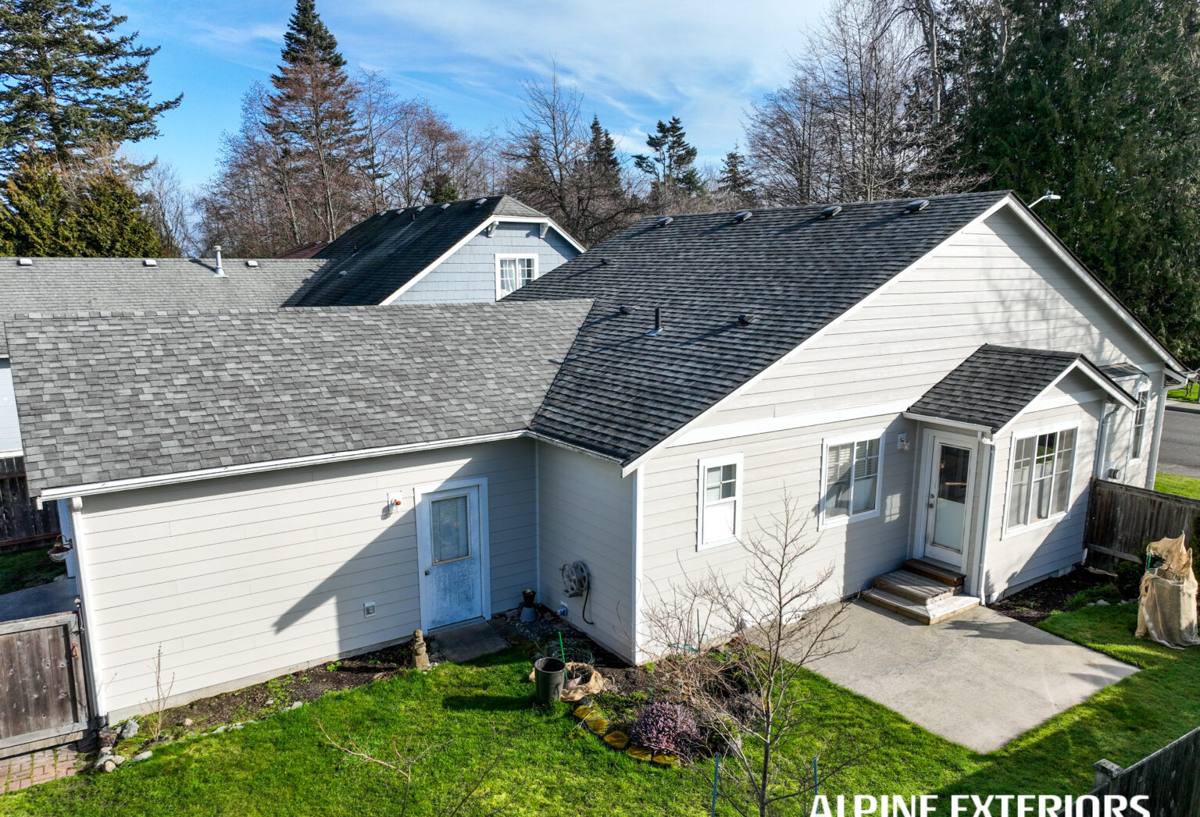
What Salt Air and Driving Rain Actually Do to a House
It's worth being specific about the mechanisms at work, because "coastal weather is tough on siding" undersells what's really happening.
Salt Air
Airborne salt is hygroscopic — it pulls moisture out of the air and holds it against whatever surface it lands on. On metal fasteners and trim, that means accelerated corrosion. On painted wood siding, it means the paint film breaks down faster and the wood underneath stays damp longer between rain events. Vinyl doesn't corrode, but salt residue combined with UV exposure can dull and chalk the surface over the years, and vinyl's expansion and contraction in temperature swings can loosen fastener points near the coast faster than in drier inland areas.
Driving, Wind-Driven Rain
Columbia's exposure means rain rarely falls straight down — wind pushes it sideways into wall assemblies, especially on west and south-facing elevations. This is where installation quality matters as much as the material itself. Flashing details, house wrap laps, and caulk joints that would be marginal in a sheltered inland location become real vulnerabilities here. Water finds the smallest gap and, given enough repetition over a Pacific Northwest winter, it will get behind the cladding.
Moss and Sustained Dampness
A moss season that runs half the year means siding, trim, and roofing surfaces stay damp for extended stretches, especially on north-facing walls and anywhere shaded by mature trees — common throughout Whatcom County's wooded lots. Sustained dampness is what wood rot, mildew staining, and coating failure all have in common. Materials that shed water quickly and dry out fast simply perform better here than materials that absorb and hold moisture.
Why We Standardized on James Hardie Fiber Cement
We install James Hardie fiber cement siding exclusively. We don't install vinyl, LP SmartSide, Cemplank, Allura, primed spruce, or cedar, and that's a deliberate professional standard, not a sales gimmick. Here's the honest reasoning behind it, given everything above.
- Non-combustible material — fiber cement doesn't burn, which matters for wildfire-adjacent risk and simply for peace of mind.
- Engineered for this climate — Hardie's HZ10 product line is specifically formulated for regions with cold, wet winters like ours, resisting moisture-related damage better than wood-based composites.
- Factory-applied ColorPlus finish — the color and protective coating are baked on at the factory under controlled conditions, which holds up far longer against salt air and UV than field-applied paint, and it's backed by its own finish warranty separate from the product warranty.
- Dimensionally stable — fiber cement doesn't expand and contract with humidity the way wood and vinyl do, so caulk joints and fastener points stay tighter over time, which matters directly for wind-driven rain resistance.
- Strong, transferable warranty — Hardie's product warranty is one of the more robust in the category and can transfer to a new owner if the home sells, which matters to buyers evaluating an older Columbia-area home.
To be fair to the alternatives: vinyl is inexpensive and low-maintenance in mild climates, LP SmartSide performs reasonably well when detailed correctly, and cedar has an appearance many homeowners genuinely love. None of them are "bad" products in the abstract. But when we weigh moisture behavior, long-term maintenance burden, and how each performs specifically against salt air and driving rain, fiber cement is what we're willing to stand behind with our own installation crews.
How We Approach a Siding Project in Columbia
Every job starts with an assessment of the existing wall assembly, not just the visible siding. That's especially important on older Columbia homes where the water-resistive barrier and flashing details may be decades old and hidden behind the current cladding.
Our General Process
- On-site inspection of existing siding, trim, and any visible moisture damage or staining
- Assessment of house wrap, flashing, and window/door integration where accessible
- Removal of failing material and repair of any sheathing or framing damage found underneath
- Installation of new or corrected weather-resistive barrier and flashing per manufacturer specification
- James Hardie fiber cement installation following Hardie's published fastening and clearance requirements
- Final trim, caulking, and touch-up work at seams and penetrations
That flashing and house-wrap step is not optional in our process, even when it adds time to a project. In a wind-driven-rain climate, the siding is only as good as what's behind it.
Roofing, Windows, and Decks — The Rest of the Envelope
Siding doesn't work in isolation. Roofing, windows, and decks all interact with the same moisture and salt exposure, so we handle all four as one exterior envelope rather than treating them as separate trades.
Roofing
Roof-wall transitions and step flashing are common failure points, and a roof that's shedding water improperly will undermine even a well-installed siding job at the point where they meet.
Windows
Window flashing integration is one of the most common sources of hidden water intrusion we find during siding tear-offs. Replacing siding is a natural point to correct window flashing details if they were done poorly the first time.
Decks
Deck ledger board attachment to the house is another moisture-sensitive junction, particularly relevant in a neighborhood where outdoor living space is common and decks see direct rain exposure most of the year.
Cost Factors Homeowners Should Understand
We don't quote prices without seeing the home, but the variables that drive cost are consistent across Columbia-area projects.
| Factor | Why It Matters |
|---|---|
| Home size and wall complexity | More corners, gables, and dormers mean more cutting, flashing, and labor time |
| Condition of existing sheathing | Rot or moisture damage found during tear-off requires repair before new siding goes on |
| Siding profile and accessories | Lap width, trim style, and soffit/fascia work all affect material cost |
| Access and site conditions | Steep lots, mature landscaping, or limited driveway access can affect labor time |
| Tear-off vs. overlay | Full removal of old siding costs more up front but allows inspection and repair of what's underneath |
Maintenance in a Moss-Heavy, Salt-Air Environment
Even the right material benefits from some basic upkeep in this climate.
- Rinse siding periodically to remove salt residue and organic buildup, especially on shaded or north-facing walls
- Keep gutters clear so water isn't overflowing directly onto siding or trim during heavy rain
- Trim back vegetation that keeps wall surfaces shaded and damp longer than necessary
- Inspect caulk joints around windows, doors, and trim annually and re-caulk where it's cracked or pulled away
- Address any moss growth on adjacent roofing promptly, since runoff carries spores onto siding below
Why a Local Crew Matters Here
Manufacturer specifications are written for a range of climates, but knowing which details actually matter in Whatcom County's specific combination of salt exposure, wind-driven rain, and extended damp seasons comes from working in it repeatedly. A crew that installs siding across the whole Pacific Northwest may follow the same manual page by page; a crew based in this area sees, year after year, which flashing shortcuts show up as callbacks three winters later and which fastening patterns actually hold at the coast. That's the kind of judgment we bring to every Columbia project, along with the accountability of being a name you can find in your own community if you ever need us back.
If your home in Columbia is due for new siding, or you're weighing roofing, window, or deck work alongside it, we're happy to take a look and give you a straightforward, no-pressure estimate — no hard sell, just an honest read on what your home actually needs.