 Sudden Valley Siding
 Why Color Is a Bigger Decision Than It Looks
Picking a siding color feels like the fun part of a project, right up until you realize you're choosing something you'll look at every day for the next few decades. In Sudden Valley, the decision carries extra weight because of where we sit: tucked against Lake Whatcom under heavy tree canopy, with marine air rolling in off the Whatcom County coastline and a wet season that runs long. A color that looks sharp on a sample chip in a showroom can behave very differently after five winters of driving rain, humidity, and moss pressure. This guide walks through how James Hardie's ColorPlus Technology actually works, what the real color and product options are, and how to choose a finish that still looks good a decade from now — not just on install day.
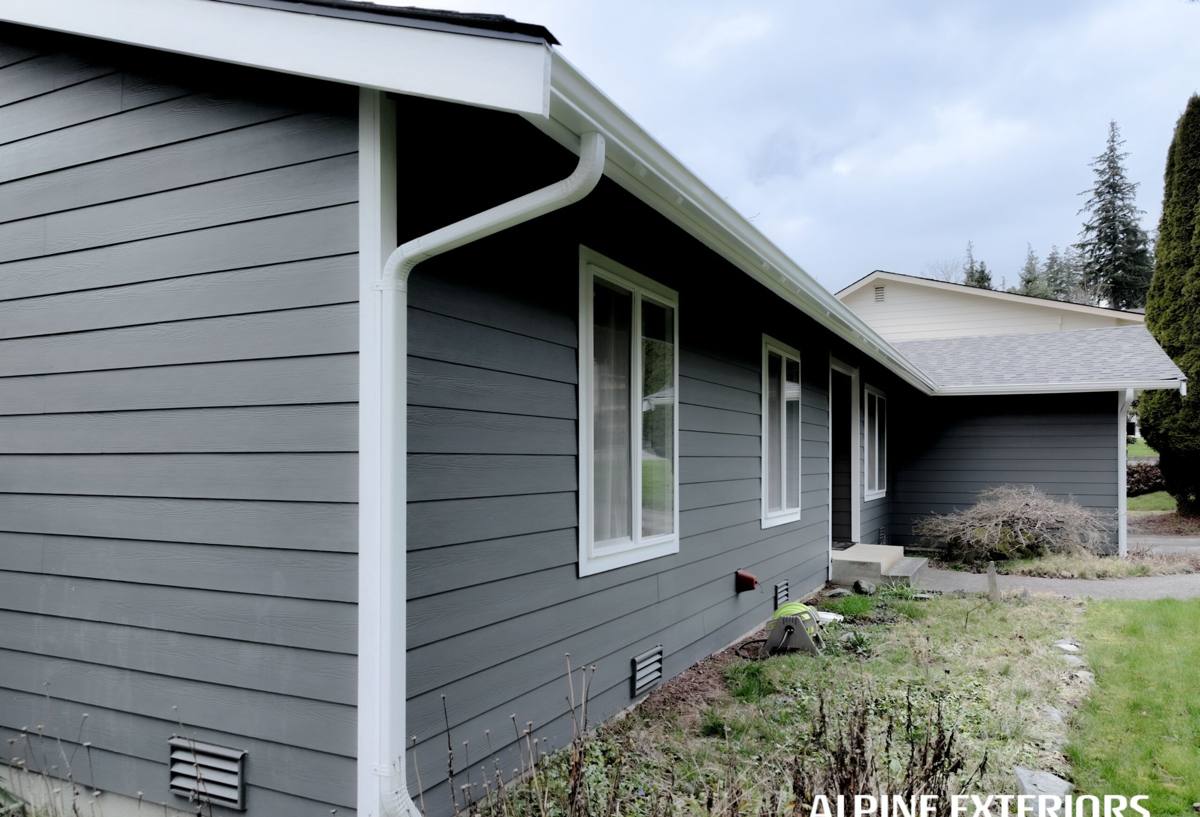
What ColorPlus Technology Actually Is
ColorPlus is not paint you can buy in a can. It's a factory-applied, baked-on finish that James Hardie cures onto the fiber cement board in a controlled environment before it ever reaches a job site. The color goes on in multiple coats, each one cured before the next is applied, which produces a more uniform, denser finish than anything achievable with a brush, roller, or sprayer in the field. Because the color is baked into the board at the factory, it isn't dependent on the weather conditions on your street the week your siding gets installed — no wind-blown debris in wet paint, no rushed coat because rain is moving in off the Sound.
The practical result is a finish that resists fading, chipping, and cracking better than standard field-applied paint, and it's backed by a specific finish warranty separate from the substrate warranty on the board itself. That distinction matters: you're not just buying a color, you're buying a manufactured finish system with its own performance standard.
The Sudden Valley Climate Factor
Whatcom County exterior finishes deal with a specific combination of stressors that doesn't show up everywhere. Salt-laden marine air moves inland off the coast and settles into low-lying, tree-covered neighborhoods like Sudden Valley. Add driving rain that comes in sideways during fall and winter storms, and a moss season that can run eight or nine months a year under conifer canopy, and you've got a finish being tested from multiple directions at once — not just UV fade like you'd worry about in a drier climate.
Field-applied paint on wood or fiber cement tends to show its weak points here first: hairline checking at butt joints, chalking on south and west exposures, and dark streaking where moss and algae get a foothold in constantly damp corners. A factory-cured finish with a tighter, denser paint film gives moss and mildew less texture to grip onto, which is one of the more underrated advantages of ColorPlus in a climate like ours — it's not just about color retention, it's about surface behavior in constant moisture.
ColorPlus vs. Field-Applied Paint
Homeowners often ask why they can't just buy primed Hardie board and have it painted on-site to save money. You can, technically — but you're trading a manufactured finish system for a field process with more variables. Here's the honest comparison:
| Factor | ColorPlus Factory Finish | Field-Applied Paint |
|---|---|---|
| Application environment | Controlled factory, multiple baked-on coats | Job-site conditions — temperature, humidity, wind all matter |
| Finish warranty | Separate finish warranty backed by James Hardie | Typically only the paint manufacturer's product warranty, if any |
| Color uniformity | Consistent panel to panel, batch to batch | Depends on painter technique and coverage |
| Repaint interval | Often 15+ years before repaint is even a conversation | Typically needs attention within 5-10 years in our climate |
| Touch-up availability | Matched touch-up kits available for nicks and scratches | Depends on whether original paint records are kept |
| Upfront cost | Built into the ColorPlus board price | Primed board is cheaper, but painting adds labor and material cost |
The upfront savings on primed board narrow quickly once you price out a quality paint job, and they can disappear entirely once you factor in a repaint cycle that arrives years sooner than it would with a factory finish.
The Color Collections
Statement Collection
This is Hardie's broader, most flexible palette — a wide range of hues from muted neutrals to deeper, more saturated tones. Most homeowners doing a full siding replacement in Sudden Valley end up picking from this range because it covers everything from traditional Pacific Northwest grays and greens to warmer farmhouse tones.
Dream Collection
A smaller, curated set of colors developed with design input, generally leaning toward sophisticated, timeless tones. It's a good starting point if you want a shorter list to choose from rather than the full Statement lineup.
Designer Collection / Regional Palettes
James Hardie periodically develops region-specific or designer-partnered palettes suited to local architectural styles. Availability shifts over time, so the right move is confirming current options for our area rather than assuming a color you saw online is stocked locally.
Board Profiles and How Color Reads Differently on Each
The same ColorPlus color can look noticeably different depending on the product line and profile it's applied to:
- HZ5 lap siding — the most common choice in our climate zone, with a smooth or cedar-textured face; color reads as broad, even bands across the wall.
- Shingle-style panels — creates more shadow lines and texture, which can make the same color appear slightly darker or more dimensional.
- Board and batten (vertical) — reads more modern, and the vertical reveal lines change how light hits the color throughout the day.
- Trim boards — usually run in a contrasting or complementary ColorPlus color, and this pairing matters as much as the field color itself.
If you're choosing color from a small sample, ask to see it on the actual profile you're installing, in daylight, on an exterior wall if at all possible — indoor lighting and small swatches are notoriously misleading.
Choosing a Color That Holds Up Here
A few practical notes specific to a shaded, lake-adjacent, marine-influenced setting like Sudden Valley:
Lighter vs. darker tones
Darker colors absorb more heat and can show dust, pollen, and moss shadowing sooner in shaded lots. Lighter and mid-tone colors tend to hide the gradual buildup that comes with heavy tree cover better, though darker tones remain popular for their clean, modern look on homes with good sun exposure.
Sheen and texture
A smoother finish sheds surface debris more easily than a heavily textured one. In a moss-prone environment, that's a small but real advantage over time.
HOA and neighborhood context
Sudden Valley has its own community character, and many homeowners want a color that fits the surrounding tree line and existing homes rather than standing out. If your property is part of an association with exterior guidelines, confirm approved colors before finalizing a selection.
Warranty and What It Actually Covers
ColorPlus finishes carry a warranty structure separate from the fiber cement substrate warranty. In practical terms, that means the color and finish performance (fading, chipping, cracking, peeling under normal conditions) is backed independently of the board's structural integrity warranty. Warranty terms are transferable in most cases if you sell the home, which is a real selling point buyers increasingly ask about. Warranty coverage assumes correct installation to Hardie's specifications — improper fastening, inadequate clearance from grade, or skipped flashing details can void coverage regardless of how good the finish itself is. This is one of the biggest reasons installation quality matters as much as the color choice.
Maintenance Reality Check
ColorPlus reduces maintenance, it doesn't eliminate it. A realistic maintenance routine in our climate looks like this:
- Rinse siding with a garden hose (not a pressure washer aimed directly at seams) once or twice a year to clear pollen, dust, and early moss growth.
- Keep gutters clear and downspouts directed away from siding to limit constant water contact at specific wall sections.
- Trim back vegetation and branches that keep siding shaded and damp longer than the rest of the house.
- Inspect caulking at trim joints and penetrations annually — caulk failure, not the ColorPlus finish itself, is usually the first thing to need attention.
- Use manufacturer-matched touch-up paint for any scratches or nicks rather than a generic hardware-store match.
Choosing Your Color: A Practical Checklist
- View sample colors on the actual board profile you're installing, outdoors, in different light.
- Check any HOA or neighborhood covenant restrictions before finalizing.
- Consider your lot's tree cover and sun exposure when weighing light vs. dark tones.
- Decide on trim and field color pairing together, not separately.
- Confirm which collection your chosen color belongs to and current local availability.
- Ask your contractor to walk through the finish warranty terms in writing, not just verbally.
Getting It Right the First Time
Color choice and installation quality are tied together more than most homeowners expect. A great color on a poorly flashed, poorly fastened install will still show problems within a few years, warranty or not. If you're weighing James Hardie ColorPlus options for a home in Sudden Valley, we're happy to bring physical samples out, walk the property, and talk through what's held up well on similar homes in this climate. Reach out for a free, no-pressure estimate — no obligation, just straight answers.