 Sudden Valley Siding
 Silver Beach and the Climate It Sits In
Silver Beach is one of the older lakeside communities on the south and west side of Lake Whatcom, just down the road from Sudden Valley. It's a mix of long-time cabins turned year-round homes, newer builds tucked into the trees, and everything in between. What almost all of these homes share is exposure to the same demanding conditions: heavy tree cover that keeps siding shaded and damp longer than it should be, moisture rolling off the lake, and moist marine air that drifts inland from Bellingham Bay and the greater Puget Sound region. That marine influence carries a faint salt content that, combined with near-constant humidity, is harder on exterior materials than most homeowners realize.
Add in Whatcom County's long stretch of driving rain from fall through spring, and a moss and algae season that can run eight months or more in shaded lots, and you have a climate that is genuinely tough on siding, trim, and roofing. This isn't a place where a "good enough" exterior product gets a pass. It's a place where the wrong material shows its weaknesses within a few years.
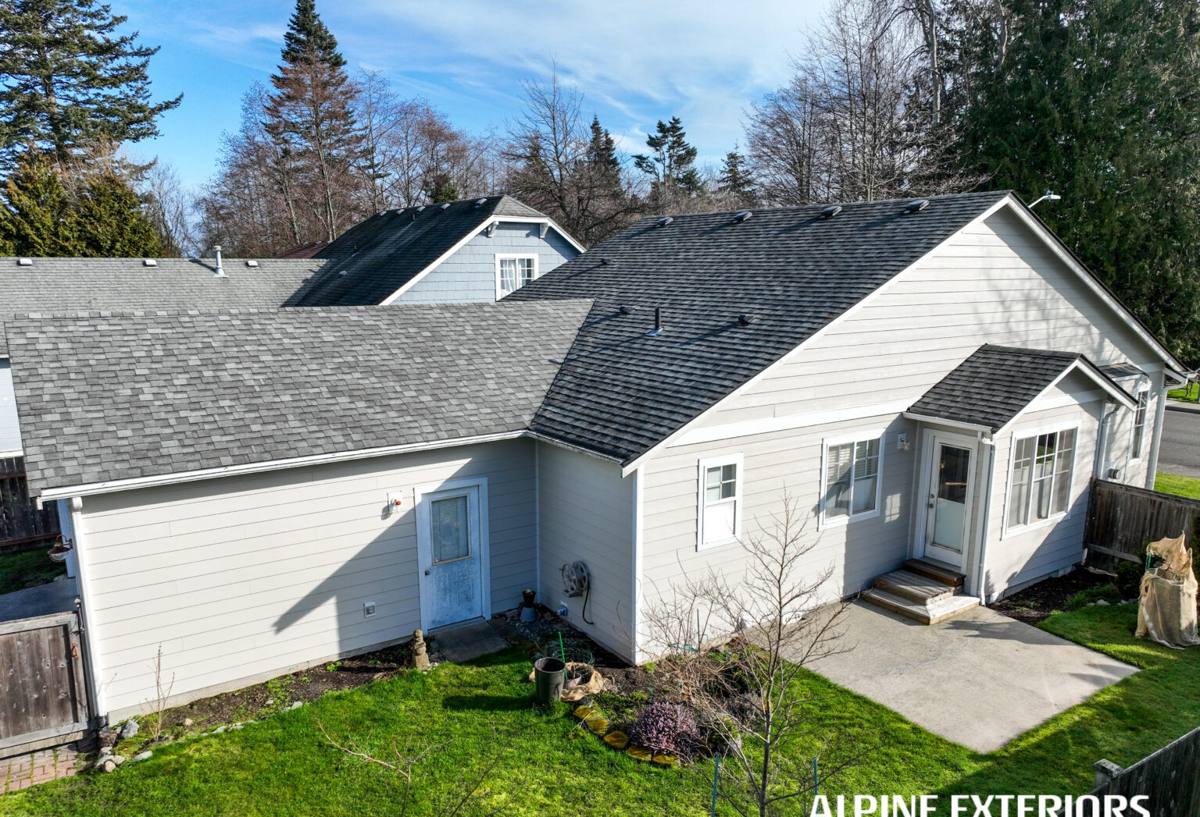
What Moisture and Shade Do to Exterior Materials Here
Moss, Algae, and Shade
Homes tucked under fir and cedar canopy near the lake dry out slowly after rain. That extended dampness is exactly what moss and algae need to take hold on siding, especially on north-facing walls and anywhere gutters overflow or splash back onto the wall below. Over time, trapped moisture under moss growth can work its way into seams and fastener points on materials that aren't built to handle it.
Driving Rain and Wind-Driven Moisture
Storms coming off the water don't just fall straight down — wind pushes rain sideways into wall assemblies, corners, and window trim. Siding and flashing details that aren't installed with real attention to water management will eventually let moisture behind the cladding, where it can sit against sheathing and framing.
Salt-Tinged Marine Air
Even away from open saltwater, homes in this part of Whatcom County pick up trace salt in the air carried inland off the Sound. Combined with constant humidity, that salt content accelerates corrosion of fasteners and metal trim, and it speeds up the breakdown of paint films and lower-grade coatings on wood and composite products.
Why We Standardized on James Hardie Fiber Cement
We install James Hardie siding exclusively — not vinyl, not LP SmartSide, not Cemplank or Allura fiber cement, not primed spruce or cedar. That's a deliberate call based on what actually holds up in this climate over decades, not just what looks good on install day.
Non-Combustible Material
Fiber cement is non-combustible, which matters more every year as wildfire smoke seasons and regional fire risk get more attention across the Pacific Northwest. It's one less thing to worry about on a home surrounded by trees.
ColorPlus Factory Finish
Hardie's ColorPlus finish is baked on at the factory under controlled conditions, rather than field-painted. In a climate with this much rain and humidity, a factory finish resists fading and holds its color line at seams far better than paint applied on-site, and it comes with its own finish warranty separate from the substrate warranty.
Climate-Engineered HZ Product Line
Hardie manufactures regional formulations — HZ5 for colder, wetter climates like ours — engineered specifically for freeze-thaw cycling and moisture exposure. That's a meaningfully different approach than a one-size-fits-all product.
What We Turn Down, and Why
Vinyl siding can crack in hard freezes and tends to fade unevenly under years of UV and moisture cycling; it also has limited ability to manage water that gets behind it. LP SmartSide, Cemplank, and Allura are reasonable products in the right application, but we've made a standardization decision: one product line, installed to one spec, backed by one warranty structure, so every home we touch gets the same long-term performance. Primed wood siding — spruce, cedar, or otherwise — looks great on day one, but in a shaded, wet lakeside lot it demands a repainting and caulking schedule most homeowners don't want to keep up with indefinitely.
Comparing the Options for a Lakeside Property
| Material | Moisture Resistance | Maintenance Burden | Typical Lifespan Here |
|---|---|---|---|
| James Hardie fiber cement | Engineered for wet climates, factory-sealed edges when installed to spec | Low — occasional wash, no repainting for years | Multiple decades with proper install |
| Vinyl siding | Sheds water on the surface but manages trapped moisture poorly | Low, but limited repair options if damaged | Variable; prone to cracking in freezes |
| Primed wood (spruce/cedar) | Absorbs moisture without diligent upkeep | High — regular paint, caulk, and moss treatment | Shorter without consistent maintenance |
| Competing fiber cement (LP, Cemplank, Allura) | Generally solid, product-dependent | Low to moderate | Comparable, but we standardize on one system |
Beyond Siding: Roofing, Windows, and Decks in the Same Climate
Siding is only one piece of a home's defense against this weather. We also handle roofing, windows, and decks, because they all face the same enemy: sustained moisture and shade.
Roofing
A roof under heavy tree cover near Lake Whatcom collects moss and needle debris fast, and a roof system that isn't ventilated and flashed correctly will trap moisture against the deck below. Roofing and siding work should be coordinated, since poor flashing at the roofline is one of the most common sources of siding failure.
Windows
Old or poorly flashed windows are a direct path for wind-driven rain to get behind exterior walls. Replacing windows at the same time as siding lets us properly integrate flashing and house wrap in one continuous system, rather than patching around openings that were never sealed right to begin with.
Decks
Decks near the lake take a beating from standing moisture, shade, and freeze-thaw cycling on fasteners and structural connections. Composite and properly treated decking, installed with attention to drainage and ledger flashing, holds up far better than a deck left to soak season after season.
Why a Local Crew Matters for a Silver Beach Job
A crew that works Whatcom County lakeside properties regularly knows things a crew unfamiliar with the area doesn't: which walls take the worst of the driving rain based on lot orientation, how much extra ventilation a shaded, tree-covered site needs behind the cladding, and how permitting and inspection work with Whatcom County versus inside Bellingham city limits. That local familiarity shows up in the details — flashing choices, starter strip placement, fastener spacing — that determine whether siding performs for 10 years or 40.
What to Expect During a Siding Project Here
A typical project moves through a predictable sequence, though timelines shift depending on weather windows and site access on wooded lots.
- On-site assessment of existing siding, trim, moisture damage, and roofline flashing conditions
- Discussion of Hardie product line, plank profile, and color options suited to the home
- Removal of old siding and inspection of sheathing for hidden moisture damage before anything new goes up
- Installation of house wrap or weather-resistive barrier, corrected as needed for proper drainage
- Hardie plank, panel, or trim installation following manufacturer fastening and clearance specs
- Final detailing at windows, corners, and roofline transitions where water intrusion risk is highest
- Walkthrough and cleanup before final sign-off
Living With the Climate After Installation
Even the right siding benefits from basic homeowner upkeep in this environment. Keeping gutters clear so water doesn't sheet down walls, trimming back branches that keep siding in constant shade, and doing an annual rinse to knock down early moss growth all extend the life of any exterior. Fiber cement doesn't demand the repainting cycle wood does, but it still lives in a wet climate and benefits from a homeowner who pays attention.
Cost Factors Homeowners Should Weigh
Every home is different, but the same variables tend to drive cost on Silver Beach and Sudden Valley projects: the amount of existing damage found once old siding comes off, site access on sloped or wooded lots, how much trim and window flashing work is needed alongside the siding itself, and whether roofing or window replacement is bundled into the same project. A thorough on-site look is the only reliable way to scope any of this — broad estimates without seeing the home tend to miss what's actually driving the number.
If you own a home in Silver Beach or anywhere around Sudden Valley and want a straight answer on what your siding, roof, windows, or deck actually need, we're happy to take a look. The estimate is free, there's no pressure, and you'll get a clear picture of what's going on with your home's exterior before you decide anything.