 Sudden Valley Siding
 What LP SmartSide Actually Is
LP SmartSide is an engineered wood siding product — strand-based wood fiber (similar in concept to OSB) treated with zinc borate for insect and fungal resistance, then coated with a resin-saturated overlay and factory primer. It's manufactured by Louisiana-Pacific and has been on the market for decades under a few different generations of the product. It comes in lap siding, panel siding, and trim, and it installs a lot like traditional wood siding — nail it up, caulk the seams, paint it.
We get asked about it often, especially from homeowners comparing bids around Sudden Valley and the rest of Whatcom County. It's a legitimate product with real advantages over old-school cedar or primed spruce. But we made a decision years ago to install James Hardie fiber cement exclusively, and LP SmartSide is one of the products we walked away from. This page explains why, honestly, without the sales spin.
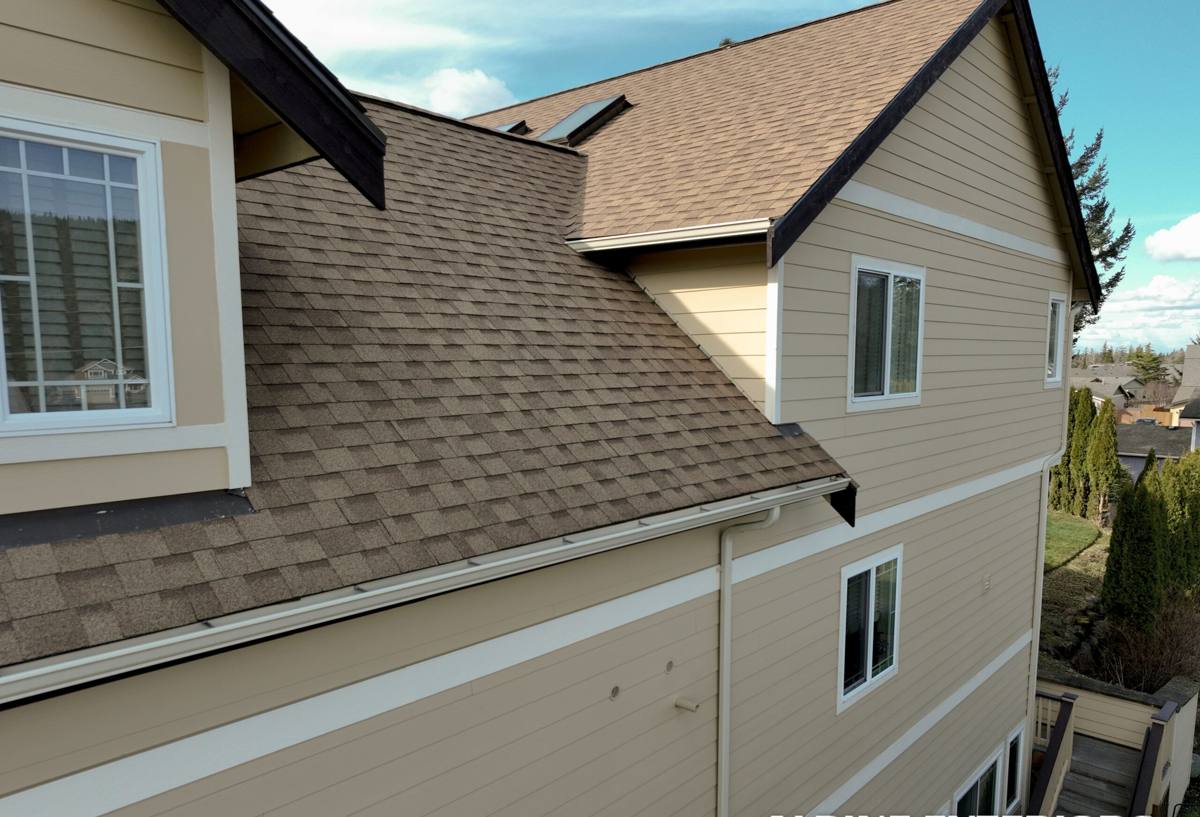
What LP SmartSide Gets Right
Credit where it's due, because a fair comparison only works if we're honest about the strengths:
- Lighter than fiber cement — easier and faster to handle on a job site, which can mean lower labor cost.
- Easier to cut and nail — standard wood-cutting tools work fine; no silica dust concerns like fiber cement.
- Better than raw wood — the zinc borate treatment and resin overlay genuinely outperform untreated cedar or primed spruce against rot and insects.
- Lower material cost — it's typically priced below fiber cement siding, which matters on a tight budget.
If a homeowner's priority is staying as close to a wood look as possible at the lowest cost while still getting some engineered protection, LP SmartSide is a step up from bare wood. We're not disputing that.
The Trade-Off That Matters Here: Moisture and Wood Fiber
The core of the product is still wood fiber. Engineered and treated, yes — but wood fiber swells when it takes on water and it can degrade at cut edges, seams, and fastener penetrations if the factory coating gets breached and water sits there. LP has issued class-action settlements in the past over moisture-related failures on earlier generations of the product, and while the company has made real improvements to the coating and installation specs since, the fundamental material is still moisture-sensitive in a way fiber cement simply isn't.
That distinction matters a lot in our climate. Sudden Valley sits up against Lake Whatcom with heavy tree cover and persistent shade on a lot of lots — conditions that keep siding damp longer after rain than an open, sun-exposed site would. Add in the driving rain and salt-tinged marine air that moves through this part of Whatcom County off the Puget Sound, and you have a climate that tests every seam, cut edge, and caulk joint on a wood-based product year after year.
Where It Shows Up
On engineered wood siding, moisture problems don't usually show up as a dramatic failure in year one. They show up gradually, usually starting at the vulnerable points:
- Bottom edges of lap boards near grade, deck ledgers, or splash zones
- Butt joints and factory cut ends that weren't field-sealed exactly to spec
- Areas under gutters or downspouts with a history of overflow
- North-facing or heavily shaded walls that stay damp longer between dry spells
- Nail penetrations where the coating gets compromised over time
None of that is unique to LP SmartSide — it's true of any wood-based siding to some degree. The difference is that fiber cement doesn't have this failure mode at all, because there's no wood fiber to swell or rot in the first place.
Installation Sensitivity Is the Real Issue
Here's the part that actually drove our decision more than the material science: LP SmartSide's long-term performance depends heavily on installation being done exactly to the manufacturer's spec, every time, on every cut and seam.
That means field-priming every factory cut edge before it goes up, maintaining correct clearance from grade and roof lines, caulking every seam with the right product, keeping fasteners in the specified zone, and not skipping steps under schedule pressure. Miss one cut edge on one board, and years later that's where a homeowner's siding starts to fail — long after the crew that installed it has moved on to other jobs.
We install a lot of siding, and we know how job sites actually run: weather windows close, crews are moving fast, and a product that tolerates zero shortcuts is a product where the margin for error sits on the homeowner's roof for the next 20 years. Fiber cement isn't immune to installation mistakes either, but it isn't punished nearly as hard for the small ones, because the substrate itself doesn't rot or swell.
How LP SmartSide Compares to James Hardie Fiber Cement
| Factor | LP SmartSide | James Hardie Fiber Cement |
|---|---|---|
| Core material | Engineered wood strand, resin-coated | Cement, sand, and cellulose fiber |
| Combustibility | Combustible (wood-based) | Non-combustible |
| Moisture behavior | Can swell/degrade at breached cuts or seams | Does not rot, swell, or support insect activity |
| Finish | Factory-primed; typically field-painted | ColorPlus factory finish or field-painted |
| Cut-edge treatment | Requires field priming/sealing, every cut | Recommended but far less failure-critical |
| Weight/handling | Lighter, faster to install | Heavier, requires fiber cement tooling |
| Typical material cost | Lower | Higher |
| Manufacturer warranty structure | Limited warranty, varies by generation | Long-term, transferable non-prorated coverage on most lines |
The cost gap is real and we don't pretend otherwise. But a lower material price that carries a higher long-term maintenance and repair risk isn't actually cheaper over the life of the siding — it's a different set of costs, paid later instead of now.
Why We Standardized on James Hardie
We install exclusively James Hardie fiber cement siding — no LP SmartSide, no vinyl, no Cemplank, no Allura, no primed spruce or cedar. That's a deliberate standard, not a default. A few reasons it matters specifically here:
- Non-combustible core. Cement-based siding doesn't feed a fire the way wood-based products can, which matters anywhere in Washington with wildfire exposure in dry summer months.
- Climate-engineered product lines. Hardie's HZ5 line is formulated for the wetter Pacific Northwest climate zone, which lines up with what Whatcom County actually throws at a house — sustained rain, humidity, and moss-friendly shade.
- No rot risk from the material itself. Cut edges and seams still need to be installed correctly, but a lapse there doesn't set off the same slow degradation you get with wood fiber.
- Long, transferable warranty. That's easier to stand behind when the underlying material doesn't have a known moisture failure mode.
- One product, one crew standard. Every install follows the same spec because it's the only siding system we run — no juggling installation requirements across four or five different product lines.
Moss, Shade, and the Sudden Valley Environment Specifically
Sudden Valley's tree canopy and lakeside setting make for a genuinely beautiful place to live, but it's also close to a worst-case scenario for anything moisture-sensitive on the exterior of a house. Long moss season, shaded north walls that rarely see direct sun, and consistent driving rain off the water all add up to siding that stays damp longer than it would on a more open, sun-exposed lot. Moss and algae growth on siding isn't just cosmetic — sustained organic growth holds moisture against the surface, which is exactly the condition that stresses any wood-based product at its weak points. Fiber cement doesn't feed that same slow degradation cycle, which is a big part of why it holds up better here specifically, not just in general.
What We'd Tell a Homeowner Considering LP SmartSide
If a homeowner is set on LP SmartSide, or their current siding is that product and they're weighing repair versus replacement, here's the honest checklist we'd walk through:
- Get the manufacturer's current installation spec and confirm the original install actually followed it — field-primed cuts, correct clearances, proper caulking.
- Inspect bottom edges near grade, deck ledgers, and any area under gutters for swelling, soft spots, or paint failure.
- Check shaded and north-facing walls first — that's where problems show up earliest in a climate like ours.
- Ask any contractor bidding the work how they handle field-priming every cut edge, not just some of them.
- Compare the manufacturer's warranty terms in writing, including what voids coverage.
- Weigh the lower upfront cost against realistic long-term maintenance — repainting cycles, caulk maintenance, and potential board replacement.
That's not a scare tactic — it's the same diligence we'd want applied to any exterior product before it goes on a house that has to survive Whatcom County winters for the next couple of decades.
Our Bottom Line
LP SmartSide is a real improvement over untreated wood siding, and for the right budget and expectations, it's a defensible choice. We simply don't install it, because we've built our business around one product system — James Hardie fiber cement — that we believe holds up better against the specific conditions Sudden Valley and the broader Whatcom County coastline throw at a house: sustained rain, marine humidity, heavy shade, and long moss seasons. That's not a knock on every homeowner who has or wants LP SmartSide. It's just where we drew our own line on what we're willing to put our name behind.
If you're weighing your options — whether you're comparing new siding products or trying to figure out what's really going on with siding you already have — we're happy to walk the house with you and give you a straight, no-pressure estimate.