 Sudden Valley Siding
 Siding Built for Life Near the Water
Edgemoor homes sit close enough to Bellingham Bay that the weather off the water becomes part of daily life. That's a wonderful thing for the view and a genuinely hard thing for exterior building materials. Salt-laden air, wind-driven rain coming off the Sound, and the long gray stretch of fall through spring when moss and algae have every opportunity to take hold — all of it adds up to conditions that separate siding products that merely look good on install day from siding that still looks good in year fifteen.
We're a Whatcom County exterior contractor, and Edgemoor is exactly the kind of neighborhood our approach was built around. We install one siding system — James Hardie fiber cement — because we've seen what a marine-influenced climate does to the alternatives over time, and we'd rather stand behind one product we trust completely than offer a menu of options with different failure points.
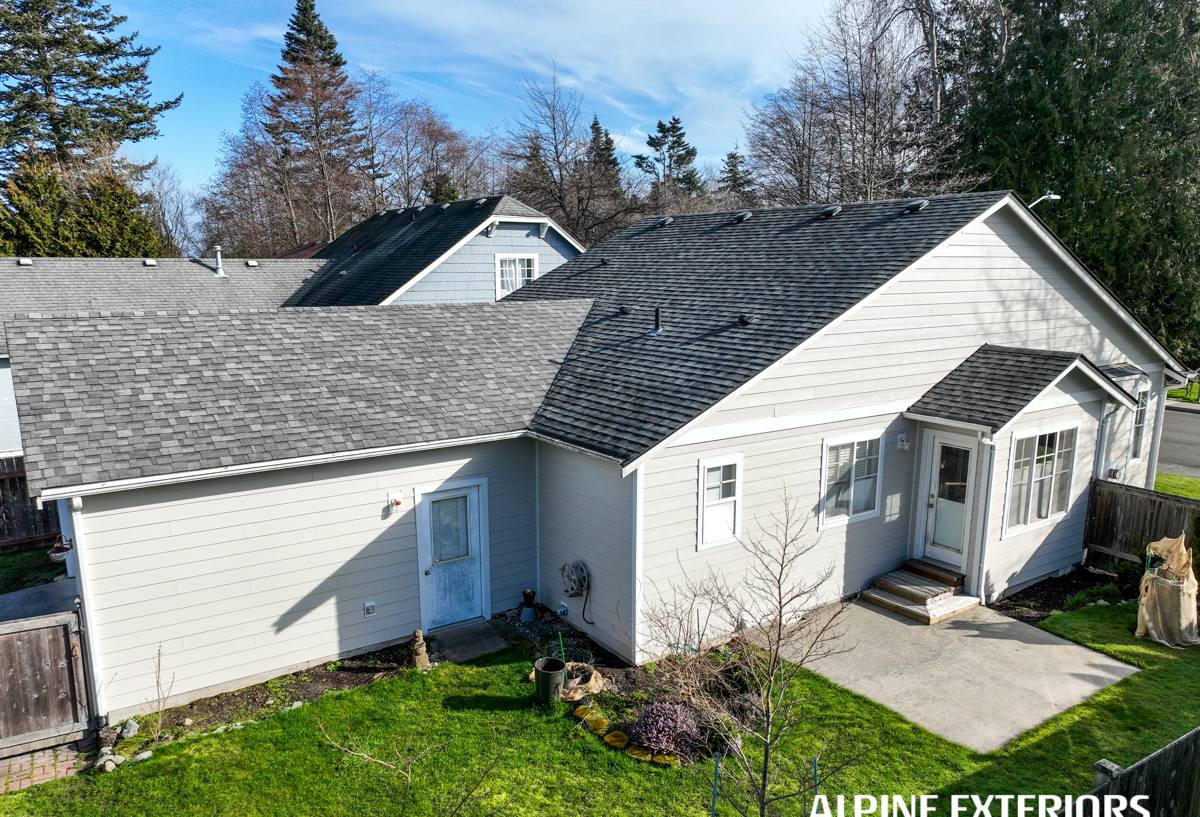
What This Climate Actually Does to a House
Salt Air and Metal Fasteners
Proximity to saltwater means airborne salt settles on every exterior surface, including the fasteners, flashing, and trim that hold your siding system together. Over years, that accelerates corrosion on lower-grade hardware and can stain or degrade materials that aren't engineered to resist it. It's a slow process, which is exactly why it's easy to underestimate until a home is 10 or 15 years in.
Driving Rain and Wind-Driven Moisture
Whatcom County storms don't always fall straight down. When wind pushes rain sideways against a wall, water finds every seam, lap, and penetration point. Siding materials that swell, wick moisture, or rely on paint film alone to stay sealed are at a real disadvantage here. What matters more than the surface look is how a product handles water at the joints and how it dries out afterward.
Moss, Algae, and the Shade Line
Between the marine layer, regular rainfall, and mature tree cover common in established Edgemoor lots, exterior surfaces stay damp for long stretches of the year. That's ideal growing conditions for moss and algae, particularly on north-facing walls and anywhere siding sits close to landscaping or under eaves that don't get much sun. Porous or absorbent siding materials give moss more to hold onto and more moisture to feed on.
Why We Standardized on James Hardie
We made a deliberate decision years ago to install only James Hardie fiber cement siding — not vinyl, not LP SmartSide, not the composite panel products, not primed wood. That's a narrower offering than a lot of contractors give homeowners, and we think that's the right trade-off for this climate.
- Non-combustible material: fiber cement doesn't feed a fire the way wood-based products can, which matters in a region where wildfire smoke seasons have become a regular part of Pacific Northwest summers.
- Engineered for wet climates: James Hardie's HZ5 product line is formulated specifically for the moisture and freeze-thaw patterns of the Pacific Northwest, not a one-size-fits-all national spec.
- Factory-applied ColorPlus finish: the color is baked on under controlled conditions rather than field-painted, which gives a more consistent, longer-lasting finish than site-applied paint on wood or composite siding.
- Doesn't absorb water the way wood-based composites can: fiber cement is dimensionally stable and doesn't swell, delaminate, or rot the way engineered wood products are prone to when moisture gets past the surface.
- Backed by a strong transferable warranty when installed to manufacturer specification — which is exactly why correct installation, not just the product itself, is where most siding problems actually originate.
We're not going to claim other products are junk — plenty of them perform reasonably well in drier climates or under ideal maintenance. But for a bay-adjacent Whatcom County home, we've made our call, and it's Hardie.
How We Approach a Siding Project in Edgemoor
Every project starts with an honest look at what's actually happening behind the existing siding, not just what's visible from the curb. That matters more here than in drier inland areas, because moisture problems on the coast tend to hide behind the surface longer before they show themselves.
- Assessment: we check the current siding, sheathing, and flashing details for signs of trapped moisture, rot, or past water intrusion — especially around windows, corners, and any wall that faces prevailing weather off the water.
- Water management plan: proper house wrap, flashing, and drainage gap details go in before a single piece of Hardie is hung. This is the step that determines whether the siding performs for 30 years or 10.
- Installation to manufacturer spec: correct fastener spacing, gapping, and caulking following James Hardie's published installation guidelines — this is also what keeps the manufacturer warranty intact.
- Trim and detail work: corners, window trim, and transitions are where most siding failures actually start, so we treat them as first-class parts of the job, not an afterthought.
- Final walkthrough: we go over the finished work with you before calling the project done.
Beyond Siding: Roofing, Windows, and Decks
Siding doesn't work in isolation — it's one piece of the building envelope. We also handle roofing, window replacement, and deck construction, because a house near the water needs all of its exterior systems working together against the same conditions: wind-driven rain, salt exposure, and moss.
Roofing
A roof in poor condition undermines even a perfect siding job, since water that gets past bad flashing or aging shingles eventually finds its way down the wall assembly. We look at roof condition as part of any full exterior evaluation.
Windows
Window flashing and integration with the siding plane is one of the most common places for leaks to originate. Replacing windows at the same time as siding lets us tie the two systems together correctly instead of patching around an old installation.
Decks
Outdoor living space near the water takes its own beating from rain and moisture cycling. We build decks with materials and detailing suited to the same climate realities that drive our siding choices.
What to Look for in a Local Contractor
Whatcom County has no shortage of contractors, but not all of them are set up for coastal, moisture-heavy conditions or trained specifically on fiber cement installation. A few things worth checking before you hire anyone:
- Are they licensed and insured in Washington State, and will they show you proof without hesitation?
- Do they have specific experience with James Hardie products, or is it one of several siding types they install occasionally?
- Will they explain their water management and flashing details before install, not just the finished appearance?
- Do they offer a written scope of work and warranty terms in plain language?
- Are they familiar with local conditions — salt exposure, wind-driven rain, moss — or applying a generic approach regardless of climate?
- Can they provide references from other homes in the area, not just photos?
Cost Factors to Understand
Every home is different, so we won't quote a number without seeing the project, but these are the main factors that drive siding costs for homes in this area:
| Factor | Why It Matters |
|---|---|
| Home size and wall complexity | More corners, dormers, and wall planes mean more cutting, trim work, and labor time |
| Condition of the existing wall assembly | Hidden rot or moisture damage found during tear-off adds repair scope before new siding goes on |
| Siding profile and color selection | Lap width, shingle-style panels, and ColorPlus finish options carry different material costs |
| Trim and accent detail | Window casings, corner boards, and accent bands add labor and material beyond flat wall coverage |
| Access and site conditions | Slopes, mature landscaping, and proximity to the shoreline can affect staging and crew logistics |
| Tear-off vs. install over existing siding | Full removal costs more upfront but lets us properly inspect and address what's underneath |
Maintaining Hardie Siding in a Coastal Climate
One of the advantages of fiber cement is how little ongoing maintenance it actually needs compared to wood or vinyl — but "low maintenance" isn't "no maintenance," especially this close to the water.
- Rinse siding periodically to clear salt residue and organic buildup, particularly on shaded or north-facing walls.
- Keep gutters clear so water isn't overflowing and running down the siding face.
- Trim back landscaping that keeps siding shaded and damp for extended periods.
- Check caulking at trim joints and penetrations every year or two, and address any cracking before it lets water in.
- Watch for moss or algae starting to establish and address it early rather than letting it spread.
If you're weighing a siding project for an Edgemoor home, or want a second opinion on a roof, window, or deck issue tied into the exterior, we're happy to take a look. Reach out for a free, no-pressure estimate using the form below.