 Sudden Valley Siding
 Why Siding Ages Differently in Sudden Valley
Homes around Lake Whatcom sit in a microclimate that's tougher on exterior cladding than most people realize. You're close enough to the water that salt-laden air off the Puget Sound and Bellingham Bay reaches the siding, you get long stretches of driving rain off the water, and the tree cover that makes Sudden Valley beautiful also means shade, damp air, and a moss season that can run from October through May. Add in wood smoke, sap, and pollen from the surrounding forest, and you have a set of conditions that will find every weakness in a siding system faster than a drier inland neighborhood would.
That doesn't mean every home here is in trouble. It means the warning signs of siding failure show up earlier and matter more here than they would in a milder climate, and catching them early is the difference between a maintenance item and a full re-side.
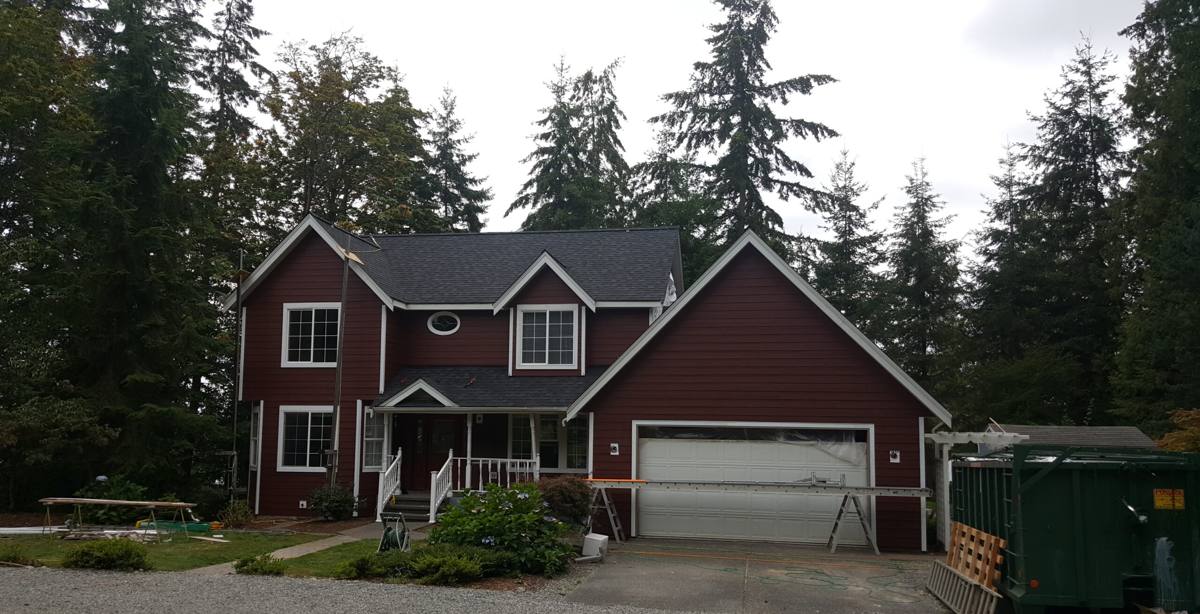
The Early Warning Signs Most Homeowners Walk Past
Siding failure is rarely dramatic. It starts small and gets ignored because it doesn't look urgent. Here's what to actually look for on a walk around the house:
Surface and Paint Signs
- Paint that's chalking, peeling, or bubbling, especially on the north and west-facing walls that take the most weather
- Hairline cracks running along seams or at panel edges
- Discoloration that doesn't wash off with a hose and mild soap
- Nail heads popping through the surface or leaving rust streaks
Structural and Texture Signs
- Soft spots you can press in with a thumb, particularly near the bottom few feet of the wall
- Panels that look swollen, wavy, or no longer sit flat against the wall
- Gaps opening up at butt joints or around window and door trim
- Visible sagging where siding has pulled away from fasteners
Any one of these on its own might be minor. Several showing up in the same area, or on the same wall, usually means moisture has been getting in for a while.
Moss, Mildew, and Algae: What's Normal and What's a Problem
In a place with Sudden Valley's tree canopy and rainfall, some greenish tinge on siding in shaded areas is close to unavoidable. That alone isn't a red flag. What matters is where it grows and how it behaves.
Surface Growth (Usually Cosmetic)
A light film of algae on a north-facing wall that comes off with a gentle wash is a maintenance issue, not a structural one. It's common on almost any siding material in this climate and doesn't by itself mean the siding is failing.
Growth That Signals a Deeper Problem
Moss establishing itself inside a seam or at a butt joint, rather than just on the surface, is different. Moss holds moisture directly against the substrate for months at a time during our wet season, and on materials that aren't engineered to handle sustained moisture contact, that's exactly the condition that leads to soft, swollen, or rotting material underneath. If you can pick moss up in a clump and see damp, darkened material behind it, that's not a cleaning job anymore — that's a sign the siding underneath has been compromised.
Moisture Intrusion You Can't See From the Ground
The most expensive siding problems aren't the ones you can see from the driveway — they're the ones happening behind the cladding, out of sight, for months or years before anything shows on the surface.
Where It Starts
Water gets behind siding through failed caulking, gaps at trim, poorly flashed windows, or seams that have opened up. Once it's behind the panel, it doesn't dry out quickly in our climate — the same humidity and shade that make Sudden Valley good for moss growth also slow down evaporation once moisture is trapped.
Where It Shows Up (Eventually)
| Hidden Cause | Visible Sign Once It Surfaces |
|---|---|
| Failed caulk joint at trim | Staining or a soft edge radiating out from window and door corners |
| Water trapped behind a seam | Bubbling paint or a slightly raised, spongy panel section |
| Rot in the sheathing behind the siding | Visible sagging, or the wall feeling slightly "give" when pressed |
| Long-term moisture at the base of a wall | Darkened, crumbling material near the foundation line |
By the time these signs are visible, the damage usually extends further behind the wall than what you can see. That's why catching the earlier warning signs — cracking paint, small gaps, isolated soft spots — matters so much more than waiting for something obvious.
Why Some Siding Materials Show These Signs Sooner Than Others
Part of why we pay close attention to warning signs on every job is that we've seen how differently materials behave once water finds a way in. This isn't about any one product being bad — it's about how each one handles the specific combination of moisture, shade, and salt air that Whatcom County homes deal with.
| Material | Common Early Warning Sign | Why It Happens |
|---|---|---|
| Vinyl siding | Warping, cracking in cold snaps, fading | Expands and contracts with temperature swings; brittle in cold, can distort near heat sources |
| Wood-based composite (e.g. LP SmartSide) | Swelling at edges, soft spots at seams | Wood fiber core is vulnerable if the factory edge seal is compromised or caulking fails |
| Primed spruce or cedar | Peeling paint, checking, moss holding moisture at the grain | Solid wood moves with humidity and needs repainting on a strict cycle to stay protected |
| Fiber cement (James Hardie) | Rare — mainly caulk/paint touch-up needs at trim | Cement-based core doesn't swell, rot, or feed moss the way organic materials can |
This is exactly why our company installs only James Hardie fiber cement. It's not that the other products are junk — vinyl and wood-based sidings have real markets and can perform reasonably well in the right conditions. But after years of working on homes in this specific climate, watching where problems actually start, we made a professional call to standardize on the one material that holds up best against sustained damp, shade, and salt exposure with the least ongoing vulnerability.
A Seasonal Inspection Checklist for Sudden Valley Homeowners
You don't need to climb a ladder to catch most warning signs early. A slow walk around the house twice a year — once before the wet season ramps up in fall, once in spring — covers most of it.
- Check all four sides, not just the street-facing wall — north and west walls take the worst weather here
- Look closely at the bottom two feet of siding near grade, where splashback and standing moisture do the most damage
- Inspect caulk lines around every window, door, and utility penetration for cracking or gaps
- Press gently on any area that looks discolored or slightly swollen
- Check gutters and downspouts — misdirected water is one of the most common causes of localized siding damage
- Look at areas shaded by trees or the house itself for moss establishing in seams, not just on the surface
- Note any new staining, streaking, or paint texture change since the last check
Watch It vs. Call Someone Now
Not every warning sign needs an emergency call, but some do. Knowing the difference saves money.
Fine to Monitor
Light surface algae on a shaded wall, minor paint fading, or a single small hairline crack you plan to caulk this season are all things you can watch and handle on a normal maintenance timeline.
Worth a Prompt Look
Soft spots you can press in, moss growing inside a seam rather than on the surface, visible gaps that have opened wider since the last check, or staining that keeps returning after cleaning are all signs that moisture has a foothold. The earlier a contractor can look at those, the smaller the repair — and the more likely it's a localized fix rather than a section of wall needing to be opened up.
What We Look For When We Inspect a Home
When we walk a property in Sudden Valley or elsewhere in Whatcom County, we're checking the same things this page describes, plus what's happening at the details that fail first: flashing above windows, the transition where siding meets the roofline, and any spot where two materials meet. Those transition points are where water finds its way in on almost every home, regardless of siding material. We also check how the current siding is holding up against our specific mix of salt air, rain, and shade, and give a straight answer about what's cosmetic, what needs monitoring, and what's a genuine problem.
If you're noticing any of the signs above, or it's just been a while since anyone looked closely at your siding, we're happy to walk the property with you. There's no pressure and no cost for a straightforward look — just a clear read on where things stand and what, if anything, needs attention. You can request a free estimate using the form below.