 Sudden Valley Siding
 Siding Fails From the Inside Out
When siding starts to look bad — bubbling paint, dark streaks, a soft spot near a window — the damage you can see is almost never where the problem started. Siding's real job isn't to look nice, it's to manage water: keep the bulk of it out, and let anything that does get behind the cladding dry out before it causes harm. When that system breaks down, it breaks down quietly, behind the wall, for months or years before anything shows on the surface.
That's the part most homeowners never see, and it's why "the siding looks fine" and "the wall is fine" are two very different statements. Understanding what's actually happening back there helps you catch problems early, and it explains why some siding materials hold up to our climate a lot better than others.
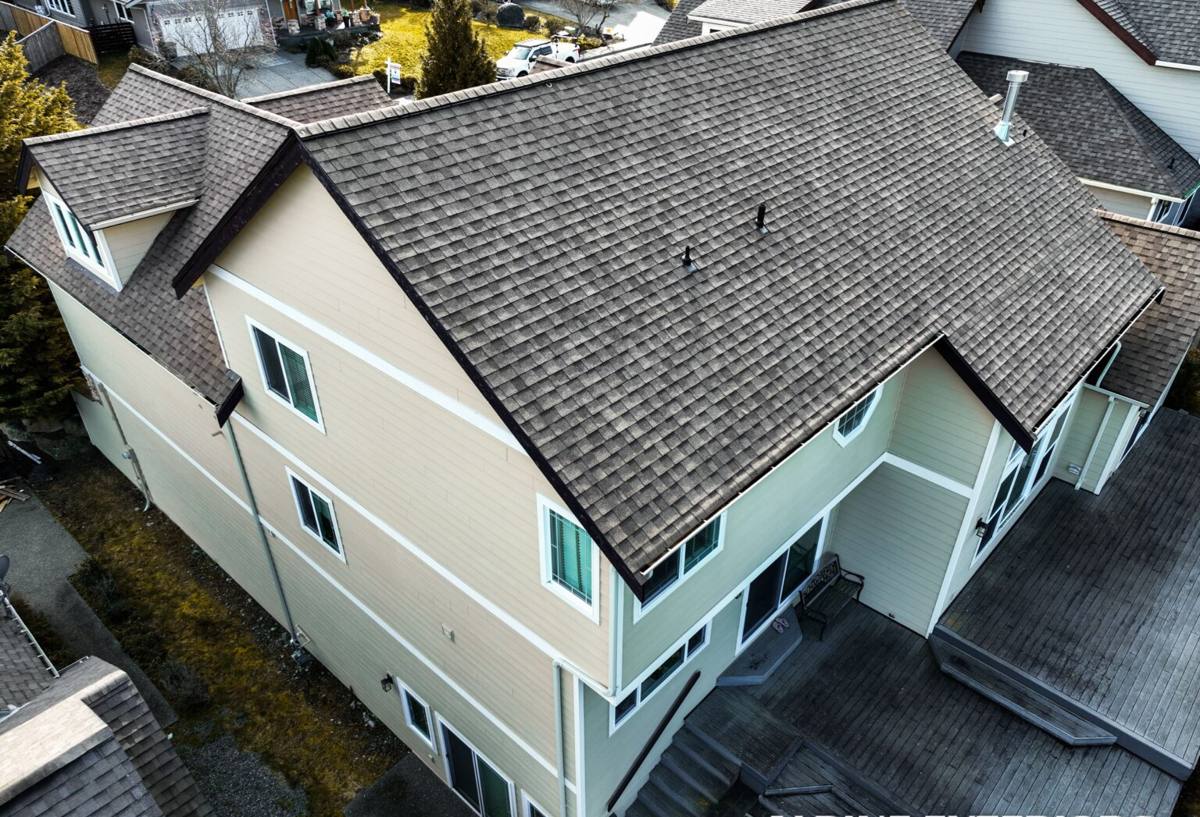
Why Whatcom County Weather Is Hard on Siding
Sudden Valley sits in a part of Whatcom County that gets a demanding combination of weather: long stretches of driving rain pushed in off the water, marine air carrying salt inland from Bellingham Bay and the Sound, and short, mild winters that never fully dry things out. Add tree cover and shade around many Lake Whatcom-area lots, and you get a long moss and algae season that keeps exterior surfaces damp well past when a drier climate would have shed the moisture.
None of that is unusual for western Washington. But it does mean siding here is under more sustained moisture load than the same product would face in a drier part of the country. A siding system that's marginal in Arizona can be a real liability in Whatcom County.
What "driving rain" actually does
Wind-driven rain doesn't just run down a wall — it gets pushed sideways and upward, working into laps, seams, butt joints, and anywhere caulk has shrunk or cracked. A siding product's ability to shed that kind of rain, and a installer's attention to flashing and joint detail, matter more here than in calmer climates.
What's Actually Happening Behind the Siding When It Fails
Most siding failure follows a similar sequence, regardless of the material on the outside:
- Water finds a way in. Through a butt joint without proper flashing, a nail hole, a cracked caulk line, a poorly sealed window trim, or simple capillary action drawing moisture into a seam.
- It gets trapped. If there's no drainage plane or ventilation gap behind the cladding, that water has nowhere to go. It sits against the sheathing and framing.
- The sheathing absorbs it. OSB and plywood sheathing swell, soften, and eventually rot when they stay wet. This is slow — it can take a full wet season or several before it's visible from outside.
- Mold and rot set in. Once framing and sheathing stay damp long enough, fungal growth starts. This is a structural problem, not just a cosmetic one.
- The surface finally shows it. Paint bubbles or peels, siding cups or swells, boards feel soft, or you see dark staining at seams. By the time you notice this, the interior damage is usually well ahead of what's visible.
The dangerous part of this sequence is the gap between step 2 and step 5 — often a year or more where nothing looks wrong, but moisture is actively damaging the wall assembly.
Warning Signs Homeowners Often Miss
Most of these get written off as cosmetic when they're actually early moisture signals:
- Paint that bubbles, peels, or won't hold near seams, corners, or trim — often the first visible sign of moisture behind the surface
- Persistent moss or dark green-black streaking that keeps returning even after cleaning, especially on north-facing or shaded walls common on wooded Sudden Valley lots
- Boards that feel soft, spongy, or crumble slightly under light pressure
- Visible cupping, warping, or swelling along board edges
- Musty smells or visible staining on interior walls that back up to exterior siding
- Gaps or separation at butt joints and corner trim where caulk has shrunk or failed
- Rusty streaking from fasteners, which often means the fastener itself is corroding due to sustained moisture contact
Any one of these is worth a closer look. Several together usually mean there's been moisture intrusion for a while.
Why Some Siding Materials Handle Moisture Differently
Every siding material manages moisture differently, and that difference matters more in a climate like ours than it does in drier regions. Here's an honest comparison of how common materials tend to behave over time when exposed to sustained wet-climate conditions:
| Material | Moisture behavior | Long-term concern in this climate |
|---|---|---|
| Cedar / primed spruce | Natural wood, absorbs and releases moisture; performance depends heavily on maintenance | Requires ongoing refinishing; rot risk rises quickly if paint/stain schedule slips |
| Vinyl | Doesn't absorb water itself, but doesn't manage what gets behind it either; relies entirely on the drainage plane and installation | Can trap moisture against sheathing if installed tight or without ventilation; expands/contracts with temperature |
| OSB-based lap siding (e.g. LP SmartSide) | Engineered wood strand product with a treated/resin coating; performs well when the factory edges and field cuts are fully sealed | Any exposed, unsealed cut edge is a direct path for water absorption and swelling |
| Fiber cement (James Hardie) | Cement-based, doesn't absorb and swell the way wood-based products do; dimensionally stable wet or dry | Performance still depends on correct flashing and installation, but the material itself isn't the weak link |
This isn't to say every wood-based or vinyl job fails — plenty don't, especially with diligent maintenance. But the margin for error is much smaller with moisture-sensitive materials, and in a climate with this much sustained rain and humidity, that margin matters.
Installation Matters as Much as the Material
No siding material, including the ones we install, survives bad installation. The details that actually keep water out of a wall assembly include:
Flashing at every transition
Windows, doors, roof-to-wall intersections, and deck ledgers are the highest-risk spots on any house. Proper step flashing, head flashing, and kick-out flashing redirect water away from the wall instead of letting it run behind the siding.
A drainage plane behind the cladding
A correctly lapped weather-resistive barrier, and ideally a rainscreen gap, gives any water that does get behind the siding a path to drain and dry instead of sitting against the sheathing.
Fastener and joint discipline
Correct nail placement, factory-primed or sealed cut edges, and proper caulking at butt joints all reduce the number of entry points water has to work with.
We bring this same level of installation discipline to every job, because we've seen firsthand how much of what gets blamed on "bad siding" is actually a flashing or drainage detail that was skipped.
Why We Install Only James Hardie Fiber Cement
We made a deliberate decision to install only James Hardie fiber cement siding, and it comes down to moisture behavior above almost everything else. Fiber cement doesn't swell, rot, or absorb water the way wood and wood-strand products can. It's non-combustible. James Hardie's HZ product lines are climate-engineered for regions like ours, and the ColorPlus factory finish holds up to UV and moisture without the repainting cycle that wood siding demands. It also carries a strong transferable warranty, which matters when you're planning to stay in a home for decades or eventually sell it.
We're not saying every other product is a bad choice for every homeowner. We're saying that after years of tearing into walls and seeing what moisture does behind different claddings in this climate, fiber cement is the standard we're willing to put our name behind.
A Simple Moisture Checklist for Your Home
- Walk the exterior twice a year and look closely at seams, corners, and trim for gaps or soft spots
- Check for moss or algae that keeps coming back on the same section of wall — it often signals a wet spot underneath
- Inspect caulk lines at windows, doors, and butt joints for cracking or shrinkage
- Look inside for any staining, bubbling paint, or musty smell on walls that back up to exterior siding
- Have flashing checked wherever a roofline meets a wall, especially above decks and porches
- Don't wait for visible siding damage to investigate a soft spot — by then the sheathing is usually already affected
If you're seeing any of these signs on your Sudden Valley home, or you'd just like a straight answer on what's really happening behind your siding, we're happy to take a look. We offer free, no-pressure estimates and will tell you honestly what we find — no upsell, no scare tactics.