 Sudden Valley Siding
 Exterior Work Around Lake Whatcom
Homes around Lake Whatcom and the Sudden Valley area sit right at the edge of two things that are hard on a house: a big body of water that keeps humidity high year-round, and dense stands of fir and cedar that shade roofs and walls for much of the day. Add in Whatcom County's long, wet winters and the marine air that moves inland off the Sound, and you get an exterior environment that punishes cheap materials and sloppy installation faster than most inland parts of the state. We've worked on homes throughout this corridor and the pattern repeats: siding, trim, and roofing that were never matched to this climate start failing years before they should.
We handle siding, roofing, windows, and decks as one contractor, which matters here more than in drier climates. Water doesn't respect trade boundaries — a marginal roof detail, a poorly flashed window, or a deck ledger with no gap behind it will all eventually show up as a siding problem, and vice versa. Treating the whole envelope as one system is how we keep small issues from becoming rot.
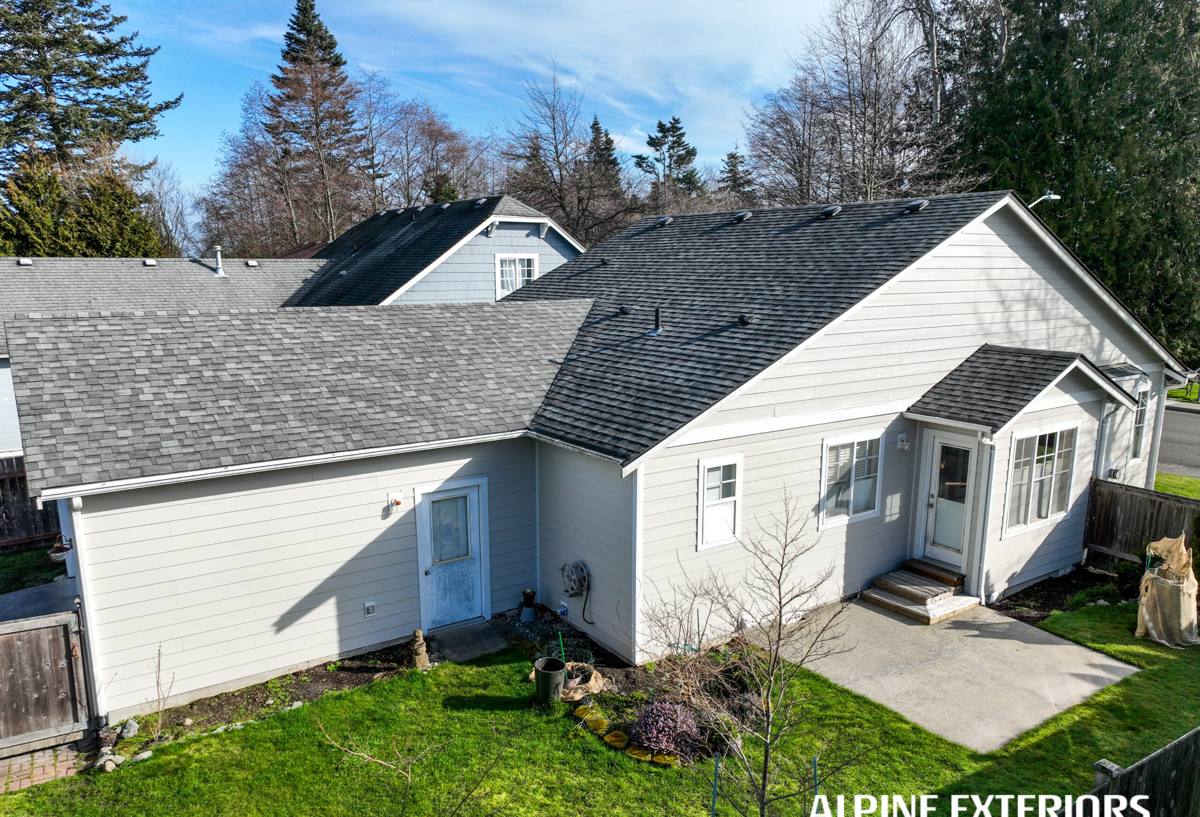
What the Local Climate Actually Does to a Home
Driving Rain and Wind-Driven Moisture
Weather off the Sound doesn't just fall straight down here — wind pushes it sideways into walls, especially on west- and south-facing elevations that catch the prevailing storms. Over years, wind-driven rain finds every gap in flashing, every under-caulked seam, and every joint where a lesser siding material has started to separate. Materials that swell, cup, or delaminate when wet are a poor match for this kind of exposure.
Salt-Laden Marine Air
Whatcom County's proximity to Puget Sound means homes at elevation or with open exposure pick up salt-bearing air even well inland. Salt air accelerates corrosion on fasteners, flashing, and any metal trim that isn't rated for it, and it speeds up the breakdown of paint films on materials that rely on field-applied coatings rather than a factory-cured finish.
Moss, Algae, and a Long Wet Season
The tree canopy around the lake keeps a lot of siding and roofing in shade for large parts of the day, which means surfaces stay damp longer after every rain. That's exactly the environment moss and algae need. On roofs, moss lifts shingles and holds moisture against the deck. On siding, sustained dampness feeds rot in wood-based products and telegraphs through paint on lower-grade materials. A short, dry summer isn't enough time for these surfaces to fully recover before the wet season starts again.
Signs Your Siding Is Losing the Fight
- Soft or spongy spots when you press on siding near the bottom courses or under windows
- Paint that's peeling, bubbling, or chalking heavily, especially on shaded walls
- Visible moss or dark algae streaking that comes back within weeks of cleaning
- Gaps opening at seams, corners, or where siding meets trim
- Warping, cupping, or boards that no longer sit flat against the wall
- Rising energy bills that suggest the wall assembly is no longer doing its job
Why We Install Only James Hardie Fiber Cement
We made a deliberate decision to install one siding system on every job: James Hardie fiber cement. We don't offer vinyl, LP SmartSide, Cemplank, Allura, primed spruce, or cedar, and that's not a marketing position — it's a standard we hold ourselves to because of what we've seen this climate do to alternatives over time.
Fiber cement is non-combustible, which matters increasingly across Washington as wildfire smoke seasons stretch longer and insurers pay closer attention to exterior materials. It doesn't rot, because there's no wood fiber for moisture to feed on the way there is in engineered wood products. And Hardie's ColorPlus finish is baked on at the factory under controlled conditions, not brushed on at the jobsite where weather and temperature swings affect how well paint cures and bonds.
HZ5 Engineering for This Climate
Hardie makes different formulations for different climate zones, and the HZ5 line is engineered for regions with more freeze-thaw cycling and moisture exposure — which describes Whatcom County well. That's a meaningful difference from a one-size-fits-all siding product; the board itself is built for the conditions it's going on, not just painted to match them.
The Warranty Behind It
Hardie backs its siding with a long, transferable non-prorated product warranty, and the ColorPlus finish carries its own separate finish warranty. Transferability matters for resale — a documented warranty on the exterior is something buyers and their inspectors actually look for, particularly on a lake-adjacent property where exterior condition gets scrutinized.
How Fiber Cement Compares to What We Don't Install
We get asked why we won't install other well-known siding products, so here's the honest comparison — not a takedown of the alternatives, just the trade-offs that led us to standardize on one system.
| Material | What it does well | Why it's a tougher fit here |
|---|---|---|
| Vinyl | Low upfront cost, easy installation | Can warp or crack in temperature swings; seams and butt joints are entry points for wind-driven rain; color isn't repairable if damaged |
| LP SmartSide | Engineered wood, easier to cut than fiber cement | Wood-based core is more moisture-sensitive; edge sealing and caulking have to be maintained exactly on schedule or rot risk climbs |
| Cedar | Natural look many homeowners want | Needs regular refinishing to resist moisture and moss in a shaded, wet environment; higher long-term maintenance burden |
| Primed spruce / Cemplank / Allura | Lower material cost than premium fiber cement | Field-applied or lower-grade finishes don't hold up to marine air and UV as long as a factory-cured finish |
| James Hardie fiber cement | Non-combustible, factory finish, climate-specific formulation, strong transferable warranty | Higher material and labor cost; requires correct fastening and flashing to perform as designed |
Roofing, Windows, and Decks — Why We Do All Four
Siding failures around Lake Whatcom rarely start with the siding itself. Roof water that isn't shed properly runs down behind gutters and soaks the top courses of siding. Windows that were installed without correct flashing send water into the wall cavity behind the trim. Decks attached without a proper gap or flashing at the ledger board hold moisture against the house year-round.
Because we do roofing, windows, decks, and siding under one roof, we catch these connections during the estimate instead of after a problem shows up. If your roof's moss buildup is holding water against the deck, or a window's flashing is failing behind newer siding, we'll flag it rather than install around it.
What Correct Installation Looks Like
Fiber cement performs the way it's supposed to only when it's installed to Hardie's published specifications. That includes proper fastener spacing and type, correct clearance from grade, roof lines, and decks, weather-resistant barrier and flashing details behind every seam and penetration, and factory-mitered or properly caulked joints rather than butted, unsealed cuts. Skipping these details is the single most common reason fiber cement siding underperforms — it's very rarely the product itself.
Our Process
- On-site assessment of existing siding, trim, flashing, and any related roof or window issues
- Moisture and rot check at vulnerable points — bottom courses, window sills, deck ledgers, roof-to-wall transitions
- Detailed estimate covering material, tear-off, and any flashing or sheathing repair needed underneath
- Installation to Hardie spec, including correct fastening, clearances, and weather barrier detailing
- Final walkthrough covering care and what to watch for going forward
Maintenance in a Moss-Heavy, Shaded Environment
Fiber cement needs far less upkeep than wood-based siding, but no exterior material is maintenance-free in this climate. A yearly rinse to knock down algae and moss buildup, keeping gutters clear so water isn't overflowing onto siding below, and trimming back branches that keep walls in permanent shade all go a long way. Watch trim and caulked joints for any separation after a hard winter, since that's where wind-driven rain finds its way in first.
What Siding Work Tends to Cost
Every home is different, but these are the factors that move the price on a fiber cement siding project in this area:
| Factor | Why it matters |
|---|---|
| Home size and wall complexity | More corners, gables, and dormers mean more cuts, flashing, and labor time |
| Condition of existing sheathing | Rot or water damage found underneath old siding adds repair scope before new siding goes on |
| Siding profile and color | Lap width, shingle-style panels, and ColorPlus color selection affect material cost |
| Trim and accessory work | Fascia, soffits, and window trim replacement alongside siding adds to scope |
| Access and site conditions | Steep lots, tree cover, and lake-adjacent access can affect staging and labor time |
We won't quote a number without seeing the house, but we'll walk you through exactly what's driving your estimate so there are no surprises.
Why a Local Crew Matters Here
A crew that works across Whatcom County regularly knows how Lake Whatcom's microclimate differs from siding a house in a drier, more open part of the state. We know which elevations catch the worst of the wind-driven rain, how much shade cover to expect from mature fir and cedar stands, and how long moss takes to reestablish after a cleaning in this environment. That local knowledge shapes real decisions — where extra flashing attention pays off, which walls need closer inspection, and how to sequence work around our wet season.
Get a Free, No-Pressure Estimate
If your siding, roof, windows, or deck are showing wear from the lake environment, we're happy to take a look and give you a straight assessment — no pressure, no obligation. Use the form below to request a free estimate and we'll set up a time to walk the property with you.