 Sudden Valley Siding
 What Board & Batten Siding Actually Is
Board and batten is one of the oldest siding patterns in the Pacific Northwest, and it's having a real moment again on homes around Lake Whatcom. The look is simple: wide vertical panels or boards run up the wall, and narrower strips called battens cover the seams between them. That vertical line is what gives farmhouse, modern, and craftsman-influenced homes in Sudden Valley their clean, tall look — it draws the eye up instead of across, which reads especially well on the taller, tree-shaded lots common in this part of Whatcom County.
The style is simple to describe but not simple to get right. Every seam under every batten is a place water can find its way behind the siding if the install isn't done to spec. That's the part homeowners rarely think about when they fall in love with the look on a mood board — and it's the part that determines whether the siding still looks sharp in fifteen years or is trapping moisture behind it.
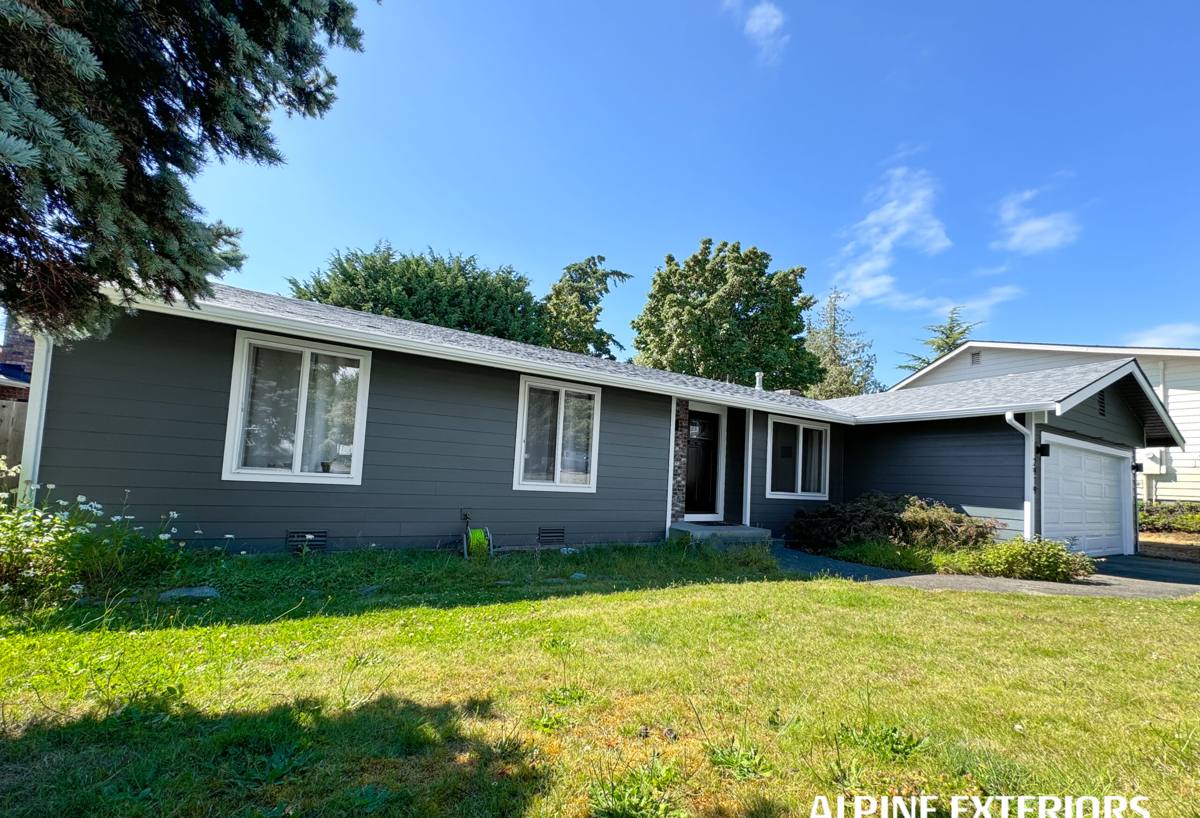
Why This Style Gets Tested Hard by Sudden Valley's Climate
Sudden Valley sits back in the trees along Lake Whatcom, which means two things work against any exterior wall covering here: shade and moisture. Dense evergreen canopy keeps siding damp longer after rain than it would stay on an open lot, and that extended dampness is exactly what feeds moss and algae growth on north- and east-facing walls. Add in the driving rain that rolls through on Pacific storm systems each fall and winter, plus the marine air moving inland off Bellingham Bay, and you've got a combination of moisture and salt-tinged air that will find every weakness in a siding system over time.
Vertical board and batten has more seams per square foot than a standard lap pattern, and more seams means more opportunities for water to get behind the cladding if flashing and fastening aren't handled correctly. That's not a reason to avoid the style — it's a reason to be picky about the material behind it and the crew installing it.
Why We Install James Hardie's Board & Batten System — and Nothing Else
We are a James Hardie-only contractor. We don't install vinyl board and batten, LP SmartSide panel products, cedar board and batten, or other fiber cement brands like Cemplank or Allura. That's a deliberate standard, not a sales pitch, and it matters more on this pattern than almost any other siding style because of how exposed the seams are.
Hardie's vertical panel and batten system is fiber cement — a mix of cement, sand, and cellulose fibers pressed and cured into a rigid, dimensionally stable board. It doesn't expand and contract with humidity the way wood does, which matters enormously on a pattern held together by narrow battens nailed over butt seams. Wood battens and boards move with the seasons; fiber cement battens hold their line, so the gaps and caulk joints that keep water out stay tight year after year instead of opening up.
It's also non-combustible, which is a meaningful advantage during wildfire smoke and ember season in a wooded, tree-lined community like Sudden Valley, and it won't rot or support insect damage the way cedar boards eventually can when they stay damp under a moss-covered canopy.
HZ10: Engineered for This Exact Climate
James Hardie manufactures its siding in climate-specific formulations called HZ (HardieZone) products. Homes in western Washington fall under the HZ10 engineering standard, which is formulated for high-moisture, freeze-thaw-adjacent Pacific Northwest conditions. It's a different mix than what ships to the Southwest or Southeast — the product is built for the rain load and humidity cycle we actually get here, not a generic national spec.
Color and Finish: ColorPlus vs. Field Painting
Board and batten lives or dies on how crisp its lines look, and paint quality is a big part of that. We install Hardie's ColorPlus finish, which is baked on in a factory-controlled process rather than sprayed or rolled on site. It resists fading and chipping far better than field-applied paint, and because it's cured before the panels ever reach the job site, you don't get the uneven coverage that can happen when battens and boards are painted on a ladder in variable weather. ColorPlus finishes carry their own dedicated finish warranty separate from the substrate warranty, covering both the coating and the fiber cement panel.
Hardie offers a range of factory colors that work well against the deep greens and cedar-brown tones common around Lake Whatcom, from warm neutrals to deeper charcoals that make the vertical battens pop as a real architectural detail rather than just a texture.
How Board & Batten Siding Options Actually Compare
| Material | Dimensional Stability | Moisture/Moss Resistance | Typical Maintenance |
|---|---|---|---|
| James Hardie fiber cement | High — minimal swelling or shrinking | Strong; won't rot, resists sustained dampness | Occasional wash; repaint cycle measured in decades with ColorPlus |
| Cedar board and batten | Moderate — moves with seasons, seams can gap | Prone to moss, rot, and cupping under tree cover | Regular staining/sealing, moss treatment |
| LP SmartSide (engineered wood) | Moderate — wood-strand core | Vulnerable at cut edges and seams if moisture intrudes | Careful caulk/paint maintenance at every seam |
| Vinyl board and batten | High shrink/expand with temperature swings | Doesn't rot, but seams can loosen and trap moisture behind panel | Low, but limited repair options if damaged |
Every one of these products has a place in the market. Our decision to install only Hardie comes down to what happens specifically at the batten seams over a 20-plus year timeline in a wet, shaded, moss-prone environment — and fiber cement's stability is what keeps those seams performing.
What Correct Installation Actually Requires
Board and batten fails almost never because of the material and almost always because of the install. This is the pattern where cutting corners shows up fastest — usually as staining, cupping battens, or soft spots within a few wet seasons.
- Rain screen or drainage gap behind the panel so any moisture that gets past the surface can drain and dry rather than sit against the wall sheathing
- Correct fastener type, spacing, and embedment depth per Hardie's published installation instructions — not shortcuts to save labor time
- Proper flashing at every horizontal transition, window and door head, and roofline intersection
- Battens installed with the specified reveal and fastened independently of the panel below, not nailed through both layers in a way that restricts natural movement
- Minimum clearance from grade, decks, and roof lines so splashback and standing water can't wick into the panel bottom edge
- Caulking only at the joints Hardie specifies — over-caulking seams that are designed to be sealed with flashing instead can trap moisture rather than shed it
Common Mistakes We See on Re-Sides
When we're called out to look at a failing board and batten job — regardless of who installed it — the same handful of issues show up repeatedly: battens face-nailed directly through the underlying panel with no allowance for movement, missing or undersized flashing at window heads, panels installed tight to grade or a deck surface with no drainage clearance, and butt joints left unflashed and only caulked. Every one of those is an installation error, not a product failure, which is exactly why we're as particular about who's on the crew as we are about the siding brand.
What's Involved in a Board & Batten Project
A full re-side starts with removing the existing siding down to the sheathing, inspecting for any hidden moisture damage (common on older homes around Sudden Valley given the shade and rainfall), repairing or replacing damaged sheathing, installing a weather-resistive barrier and drainage plane, then installing the Hardie panel and batten system per manufacturer spec with correct flashing at every penetration and transition. Trim, corners, and any transitions to stone or masonry veneer get detailed last.
Timeline and cost depend heavily on the condition of what's underneath — a home with sound sheathing and no hidden rot moves faster and costs less than one where we uncover moisture damage once the old siding comes off, which happens more often than homeowners expect on houses that have sat under tree cover for a couple of decades.
Warranty: What Actually Transfers
James Hardie backs its fiber cement products with a non-prorated limited product warranty, and ColorPlus finishes carry their own finish warranty covering the factory coating. These are manufacturer warranties tied to the product and proper installation — which is another reason installation quality isn't optional. A warranty on a product that was installed incorrectly won't cover the failure that resulted from the installation error, so the workmanship behind the siding matters as much as the brand on the panel.
Is Board & Batten the Right Call for Your Home?
Board and batten looks best on homes with clean, uninterrupted wall planes — it can get visually busy on facades with a lot of dormers, bump-outs, or trim detail. It also tends to show shading and moss patterns more visibly than a horizontal lap pattern simply because the vertical lines draw attention to the wall's surface. On a shaded, tree-lined lot, that's worth factoring into which elevations get the pattern and which might be better served by a traditional lap profile.
If you're weighing board and batten for a home in Sudden Valley, we're happy to walk the property, look at sun and moisture exposure on each elevation, and give you a straight answer about where the style will hold up well and where it might need extra attention. Reach out for a free, no-pressure estimate — we'll look at your home's specific conditions before recommending anything.