 Sudden Valley Siding
 The Real Question Isn't "Repair or Replace" — It's "How Much Longer"
Every siding call we get starts the same way: a homeowner noticed something wrong — a soft spot, a stain, a crack, a board that's pulling away — and wants to know if it's a quick fix or the start of a bigger project. The honest answer is that it depends less on what you can see and more on what's happening underneath, and on how much useful life is left in the rest of the siding.
A single damaged board on siding that's otherwise sound, well-installed, and under 15 years old is almost always a repair. The same damage on siding that's already 25 years old, has failed in multiple spots, or was installed without proper flashing and clearances is usually a signal that the whole system is nearing the end of its service life. Repairing that spot buys you a few months, not a few years.
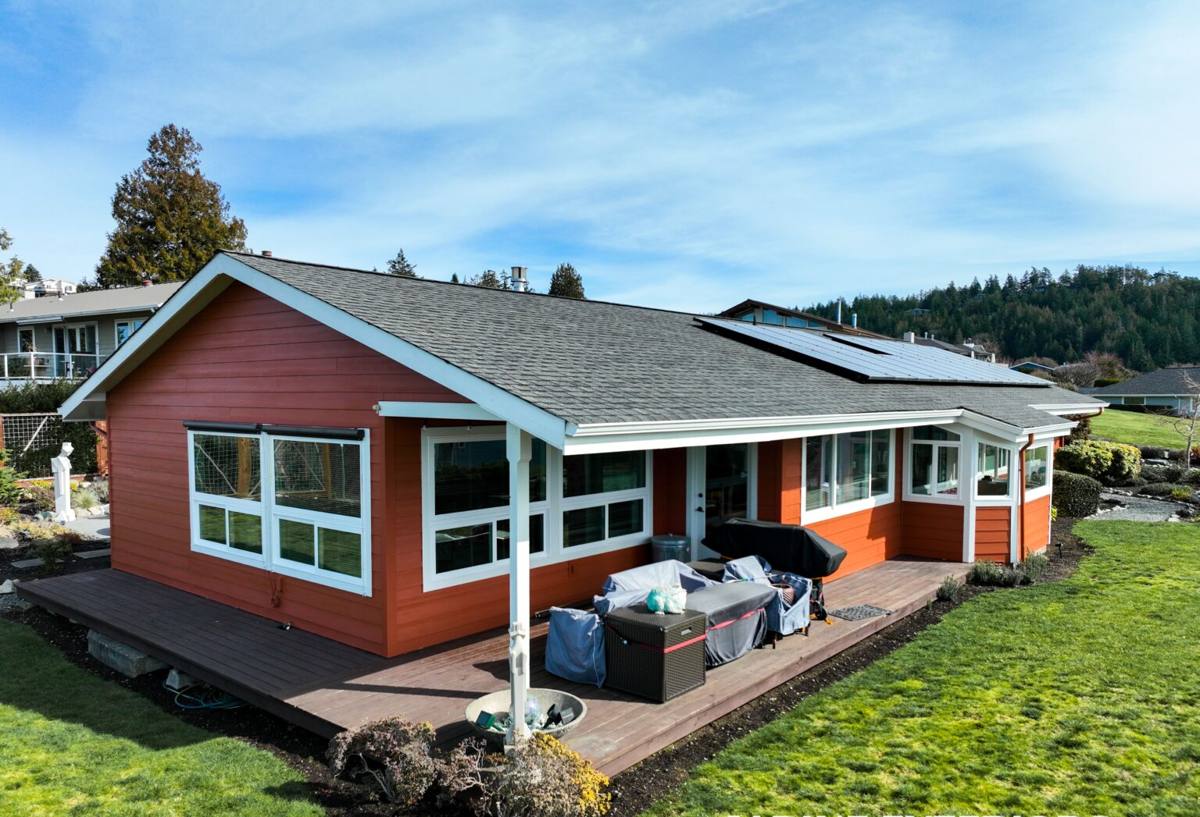
Signs You're Dealing With a Repair, Not a Replacement Job
Isolated, Localized Damage
If the problem is confined to one area — a lawnmower ding, a spot where a tree branch scraped during a windstorm, a single crack from an impact — and the siding around it is still solid, flat, and properly sealed, that's a straightforward repair. Good installers can replace individual boards or panels without disturbing the rest of the wall.
Recent Installation, Isolated Failure
Siding that's less than 10-15 years old and otherwise performing well, but has one section that failed due to a specific cause (a missed flashing detail, a caulk joint that opened up, storm damage), is a repair candidate. The underlying installation is sound; you're fixing a specific mistake or event, not a systemic problem.
Cosmetic Issues With No Moisture Involvement
Fading, chalking, or minor surface wear on siding that's still structurally intact doesn't require replacement. Depending on the material, this might mean a repaint, a cleaning, or in some cases living with the appearance until the siding reaches the end of its natural life.
Signs That Point to Full Replacement
Repeated Repairs in the Same Areas
If you've called out a contractor two or three times for the same wall — especially anywhere facing prevailing weather off Lake Whatcom or the water — that's not bad luck. That's a system that can't keep up with the conditions it's facing, whether because of the material, the installation, or both. Patching the same spot a fourth time rarely changes the outcome.
Soft or Spongy Areas Across Multiple Boards
Press a screwdriver handle gently against suspect siding. If it sinks in or the board flexes in a way solid siding shouldn't, especially in more than one location, moisture has likely gotten behind the cladding and is doing damage to the sheathing or framing underneath. This is not a cosmetic problem, and patching over it without addressing what's behind the siding is a mistake we won't make on a job we stand behind.
Age Consistent With the Material's Realistic Lifespan
Every siding material has a realistic service window under real-world conditions, not the best-case number on a brochure. Once a home is well into that window and starting to show wear in multiple spots, individual repairs stop being cost-effective — you're spending real money to extend the life of a system that's already depreciating fast.
Visible Warping, Buckling, or Delamination
Boards that are bowing, pulling away from the wall, or separating in layers (common with some engineered wood products that have taken on moisture) indicate a material-level failure, not a localized one. This spreads over time and isn't something a caulk gun and a few replacement boards will solve.
What Sudden Valley's Climate Does to Siding Over Time
Whatcom County siding takes a specific kind of beating, and Sudden Valley's setting on Lake Whatcom adds its own wrinkles. Homes here deal with salt-laden air moving in off the coast, long stretches of driving rain in fall and winter, and a moss season that can run most of the year on shaded, north-facing walls and anywhere tree cover keeps siding damp. That combination is hard on siding that isn't built for it.
Salt air accelerates corrosion on fasteners and trim metal and can degrade some paint and coating systems faster than manufacturers' published timelines assume. Driving rain — especially wind-driven rain that hits siding at an angle — finds any gap in flashing, caulking, or lap coverage and pushes water behind the cladding rather than letting it run off the surface. And moss doesn't just look bad; it holds moisture against the siding surface for weeks at a time, which is exactly the condition that causes rot in wood-based products and accelerates coating failure on painted surfaces.
None of this means siding here fails faster than everywhere else. It means the margin for installation mistakes and material weaknesses is smaller. A flashing detail that might be forgiving in a dry climate becomes a real liability here.
Repair vs. Replacement: What Actually Drives the Decision
| Factor | Leans Toward Repair | Leans Toward Replacement |
|---|---|---|
| Extent of damage | One board or section | Multiple walls or elevations |
| Moisture behind siding | None found | Soft sheathing, staining, mold |
| Age of siding | Under 15 years, well-installed | Approaching or past material's realistic lifespan |
| Repair history | First issue | Same area repaired before |
| Underlying installation | Correct flashing, clearances, fastening | Missing or incorrect flashing, gaps, poor fastening |
| Material match | Original product/color still available | Discontinued profile or faded, unmatched color |
That last row matters more than people expect. If your siding was installed 12 years ago and the manufacturer has since changed profiles or discontinued your color, a patch repair can leave a visibly different board on your wall permanently — sometimes worse for curb appeal than the damage it fixed.
The Hidden Cost of Patchwork Repairs
There's a version of "repair" that isn't really a repair — it's a delay. Sealing over a soft spot, caulking a gap without finding out why water got in, or replacing a visibly rotted board without checking the boards around it: these buy time, but they don't fix the underlying problem, and they can make the eventual replacement more expensive by letting moisture damage spread into sheathing and framing that would otherwise have been fine.
This is especially common with materials that are more moisture-sensitive by design — untreated or primed wood products, and some engineered wood siding, which can swell, delaminate, or develop soft edges once water gets past the factory coating or a compromised joint. In a climate with as much sustained rain and moss exposure as Whatcom County, that kind of repeat, creeping repair cycle is one of the most common patterns we see on older homes.
Why We Point Most Repeat-Repair Homes Toward James Hardie
When a homeowner is on their third or fourth repair call in the same area, or the siding is old enough that any repair is a stopgap, we tell them straight: it's time to talk replacement, and here's what we'll put on the house. We install James Hardie fiber cement exclusively — we don't offer LP SmartSide, vinyl, Cemplank, Allura, primed spruce, or cedar as alternatives, because our whole business is built around installing one system correctly rather than juggling several with different failure modes.
Hardie's fiber cement doesn't absorb and swell the way wood-based products can, and it's non-combustible, which matters on properties near tree cover and brush. The HZ5 product line is engineered for the freeze-thaw and moisture cycling common in the Pacific Northwest, and the ColorPlus factory finish is baked on under controlled conditions rather than field-painted, which gives it better long-term color and weather resistance than a job-site paint job — a real advantage against the salt air and driving rain this area sees. It also carries a strong transferable warranty backed by the manufacturer, not just our own labor warranty, which matters if you sell the home before the siding's service life is up.
We're not saying every siding material is a bad product. We're saying that after years of doing repair and replacement work across this region, this is the system we trust enough to put our name behind, and the one we'd choose for our own homes.
A Simple Decision Checklist
- Is the damage confined to one board or one small area, with no soft spots nearby?
- Has this specific wall or area been repaired before?
- Is the siding under 15 years old and otherwise performing well?
- When you press gently on suspect areas, does the material stay firm?
- Is the original color or profile still available if a patch is needed?
- Does the wall get heavy moss growth or stay shaded and damp most of the year?
- Would a contractor need to open up the wall to check for hidden moisture damage?
If you're answering "no" to most of the first four questions, or "yes" to the last three, it's worth getting a full inspection rather than a spot repair quote.
What a Good Inspection Actually Checks
A repair-vs-replace decision shouldn't be made from the ground with binoculars. A proper look includes checking behind a sample area of siding for moisture or soft sheathing, examining flashing at windows, doors, and roof lines, checking for consistent lap coverage and fastening, and looking at how the siding is performing on the walls that take the most weather — usually the sides facing the prevailing wind and rain off the lake. That's the information that actually tells you whether you're looking at a $400 repair or the start of a full replacement conversation.
If you're not sure which situation you're in, we're happy to take a look and give you a straight answer — including telling you it's just a repair, if that's what it is. Reach out for a free, no-pressure estimate and we'll walk the property with you.