 Sudden Valley Siding
 Exterior Work in Cordata: What the Climate Actually Does to a House
Cordata sits inland from Bellingham Bay but still lives inside the same weather system that shapes exterior durability all across Whatcom County: damp, salt-tinged air moving in off the Sound, long stretches of driving rain through fall and winter, and short, low-angle winter sun that leaves siding and roofing wet for days at a time. None of this is exotic — it's the normal condition of building here — but it means exterior materials in Cordata are working harder, more of the year, than the same materials in a dry inland climate.
The practical result is a long moss season. Anywhere shade lingers — under mature trees, on north-facing walls, in the gap behind gutters that don't quite pitch right — moss and algae get a multi-month head start and don't fully dry out between rains. On wood-based siding products, that moisture sits against the substrate. On the trim, fascia, and butt joints where water naturally collects, it's a slow, ongoing test of whatever product and installation detail is behind the paint.
Why Siding Choice Matters More Here Than in Drier Climates
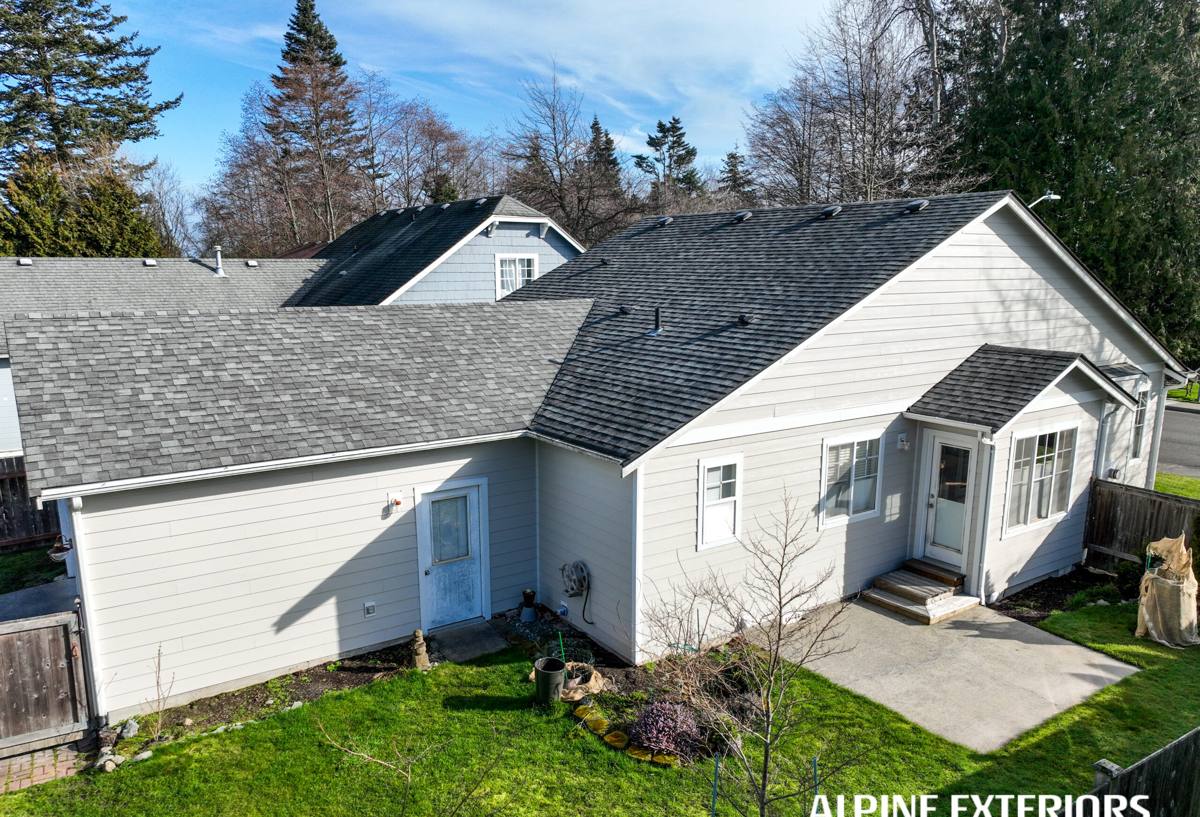
In a dry climate, a mediocre siding installation can go a decade before problems show. In Cordata's climate, shortcuts show up faster — swollen edges, peeling paint at seams, soft spots at the bottom courses, moss staining that won't scrub off. We install James Hardie fiber cement siding exclusively, and it's not a marketing preference — it's what holds up to this specific combination of moisture, salt air, and long wet seasons without the maintenance cycle that wood-based and vinyl products tend to demand here.
Fiber cement doesn't swell, rot, or delaminate the way wood-based sidings can when they stay damp for extended periods. It's also non-combustible, which matters given the region's periodic wildfire smoke and ember exposure in dry summer stretches, even though our primary climate story here is wet, not dry.
What We Won't Install, and Why
We get asked about vinyl, LP SmartSide, and primed wood siding often enough that it's worth being direct. Vinyl is inexpensive and low-maintenance in the sense that it doesn't need painting, but it moves with temperature swings, can crack in cold snaps, and fades unevenly over time in a way that's hard to spot-repair. Engineered wood products like LP SmartSide perform reasonably when installation and caulking are perfect and stay perfect — but any gap, unsealed cut edge, or missed maintenance window lets moisture into the wood fiber core, and once that starts it doesn't reverse. Given how much of the year Cordata spends wet, we don't think that's a fair bet to make on a homeowner's behalf. James Hardie's fiber cement doesn't have a wood fiber core to protect, which removes that entire failure mode.
How a Siding Project Works in Cordata
| Stage | What Happens | Local Consideration |
|---|---|---|
| Assessment | Walk the exterior, check for moisture damage behind existing siding, inspect trim and flashing | North-facing and shaded walls get extra attention for hidden rot or moss intrusion |
| Tear-off | Remove old siding down to the sheathing | Weather windows matter — we schedule around wet stretches where possible |
| Weather barrier | Install or repair house wrap and flashing at windows, doors, and penetrations | This layer is what actually keeps driving rain out; it's not optional |
| Hardie installation | Install fiber cement panels or lap siding per manufacturer spec | Correct fastening and clearances prevent the wicking that shortens siding life here |
| Finish detail | Caulk, trim, touch-up ColorPlus finish | Factory-applied finish reduces future repainting versus site-primed products |
Roofing, Windows, and Decks: The Same Climate Problem
Siding is rarely the only thing showing wear on a Cordata home. Roofing takes the same moss and moisture exposure, often worse, since roofs sit flatter to the sky and collect more standing wet debris in valleys and behind chimneys. We handle roofing alongside siding because the two systems share flashing points — a poorly integrated roof-to-wall transition is one of the most common sources of hidden water intrusion we find during tear-off.
Windows in older homes here are frequently single-pane or early-generation dual-pane units that have lost their seal, showing up as fogging between panes. Beyond comfort and energy cost, failed window seals let moisture track into the surrounding wall framing — exactly the kind of slow damage that's easy to miss until siding comes off. Decks face a more direct version of the same problem: constant rain exposure, minimal sun to dry them out, and moss buildup on any horizontal surface that doesn't get regular foot traffic or cleaning.
Handling all four trades under one crew means we're not guessing at how someone else's roofing detail interacts with our siding installation, or vice versa — we see the whole envelope.
What to Check Before Hiring for Exterior Work in Cordata
- Ask specifically what siding product they install and why — a contractor who installs "whatever the homeowner wants" isn't taking a position on what actually lasts in this climate
- Confirm they carry current Washington state contractor licensing and liability insurance, and ask to see it, not just hear about it
- Ask how they handle weather barrier and flashing detail, not just the visible siding — this is where most long-term failures start
- Get a written scope that specifies product line, fastening method, and finish — verbal estimates leave too much room for shortcuts
- Ask about crew experience specifically with fiber cement, since installation technique differs meaningfully from wood or vinyl
- Check whether warranty coverage is transferable if you sell the home within the coverage period
Why a Local Crew Matters in Whatcom County
Exterior contractors who don't work this region regularly tend to underestimate how much of the year is spent wet, and they price and schedule accordingly — which usually means rushed installs in short weather windows or generic details that don't account for our moss season. A crew based in and around Whatcom County knows which walls in a given neighborhood take the worst of the weather, how local permitting and inspection tends to run, and how to sequence a job around realistic weather rather than optimistic weather.
Cordata's mix of established and newer homes means we see a wide range of existing conditions — some houses with decades-old wood siding well past its service life, others with more recent vinyl or engineered wood installations already showing early stress at the joints. Whatever the starting point, the assessment and the reasoning behind our recommendation stay the same: what will hold up to this specific climate with the least ongoing maintenance.
James Hardie Product Fit for This Climate
James Hardie's HZ5 product line is engineered for cold, wet climate zones like ours, which covers most of what a Cordata home needs from its siding: resistance to moisture-driven damage, a factory finish (ColorPlus) that holds color without the repaint cycle wood siding requires, and a fiber cement composition that doesn't feed moss and mildew growth the way some wood-based products can. It's also backed by a strong transferable limited warranty, which matters given how long exterior siding is meant to last.
Cost Factors Homeowners Should Understand
| Factor | Why It Affects Price |
|---|---|
| Home size and wall complexity | More corners, gables, and trim detail mean more cutting and labor time |
| Existing damage found at tear-off | Rotten sheathing or hidden moisture damage adds repair scope before new siding goes on |
| Siding profile chosen | Lap siding, panel systems, and shingle-style Hardie products carry different material and labor costs |
| Access and site conditions | Steep lots, limited driveway access, or landscaping close to the house add labor time |
| Combined scope | Bundling siding with roofing, window, or deck work can reduce total mobilization and scheduling costs versus separate projects |
We don't quote broad numbers without seeing the house — too many of the variables above shift the total meaningfully — but we're upfront during the estimate about what's driving the cost on your specific home, not just a flat per-square-foot figure.
Signs It's Time to Replace, Not Patch
Homeowners often ask whether a repair is enough. A few signs point toward full replacement rather than a patch job: soft or spongy siding when pressed, paint that's bubbling or peeling across multiple areas rather than one spot, visible gaps or warping at seams, or moss and algae staining that returns within weeks of cleaning. Any one of these on its own might be a localized fix. Several together usually mean the underlying material or installation has reached the end of what it can handle in this climate.
If you're seeing any of that on a Cordata home, or you're just due for an honest look at your siding, roofing, windows, or deck, we're happy to come out for a free, no-pressure estimate and walk you through exactly what we see and why.