 Sudden Valley Siding
 Siding Built for Fairhaven's Coastal Conditions
Fairhaven sits close enough to Bellingham Bay that the weather off the water shapes how a house ages. Homes here don't just deal with rain — they deal with salt-laden air drifting off the bay, wind-driven moisture that gets pushed sideways into siding and trim, and long stretches of the year when surfaces simply don't get a chance to dry out fully. Sudden Valley Siding Contractors serves Fairhaven as part of our broader Whatcom County service area, and we've built our approach around exactly these conditions rather than treating every job the same way we would inland.
Salt air is corrosive to fasteners, hardware, and some trim materials over time, and it accelerates the breakdown of finishes that aren't engineered to resist it. Combine that with Western Washington's long wet season and you get a climate that's genuinely harder on exterior materials than many homeowners realize until they're dealing with soft trim, peeling paint, or siding that's holding moisture instead of shedding it.
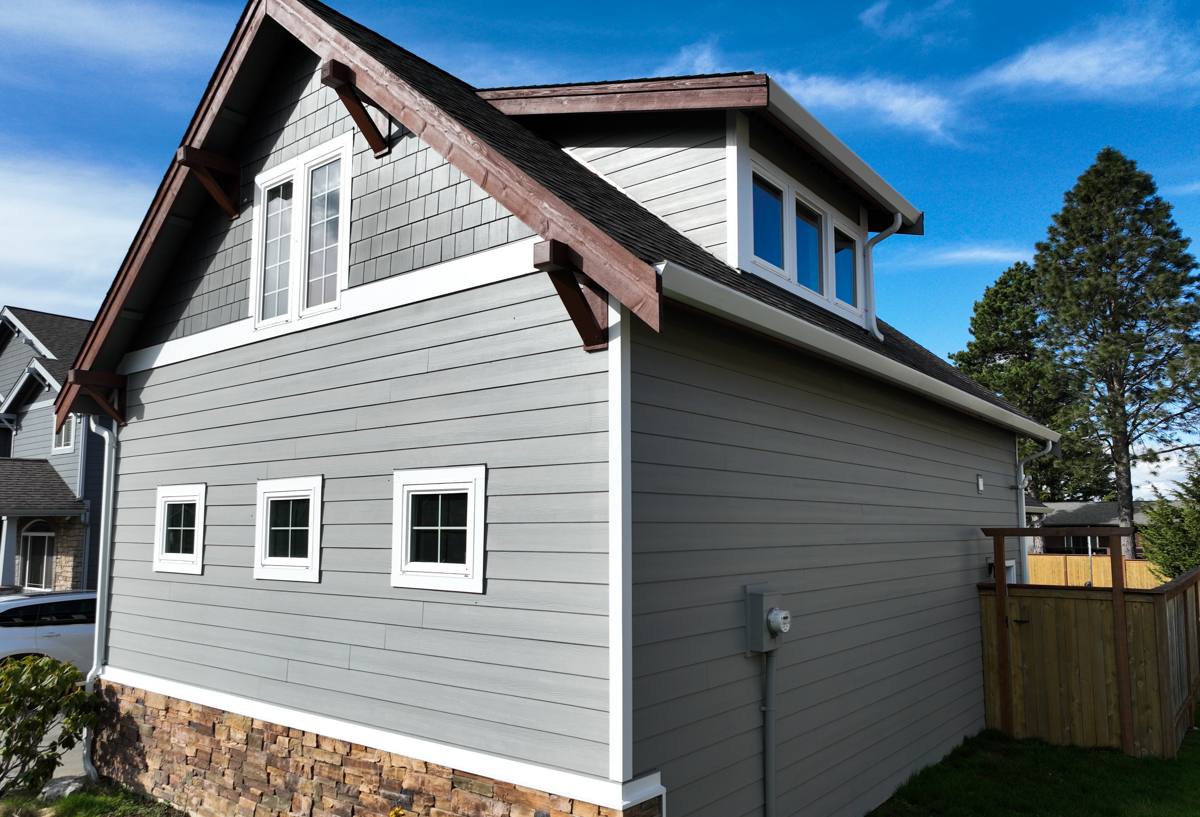
What Driving Rain and Moss Season Do to a House
Wind-Driven Rain
Rain that falls straight down is manageable — almost any siding product handles it. The problem in a place like Fairhaven is rain that comes in sideways during a storm off the water. That kind of weather finds every gap in flashing, every under-caulked seam, and every spot where siding wasn't lapped correctly. Water doesn't need much of an opening to get behind a wall assembly, and once it's in, it can sit there far longer than most people expect given how humid the shoulder seasons stay.
Moss, Algae, and Prolonged Dampness
Whatcom County's mild, wet climate is exactly the kind of environment moss and algae thrive in. On roofs, moss holds moisture against shingles and can work its way under tabs. On siding, algae staining and moss growth in shaded, north-facing areas are more than cosmetic — sustained dampness against a wall system is what eventually leads to rot in materials that aren't moisture-resistant by design. Homes with heavy tree cover or limited sun exposure see this the worst, and Fairhaven has plenty of both.
Salt Air and Material Fatigue
Coastal exposure doesn't announce itself with dramatic damage — it's a slow fatigue. Caulk dries out and cracks sooner. Some paints chalk and fade faster. Untreated or lower-grade wood trim softens at a pace that surprises homeowners who assumed a 20-year-old repaint job. None of this means a house near the water is doomed — it means the materials and installation details matter more here than they do 30 miles inland.
Why We Install Only James Hardie Fiber Cement
We get asked regularly why we don't offer vinyl, LP SmartSide, or other fiber cement brands like Cemplank or Allura, and the honest answer is that we made a standard for ourselves based on what holds up in this specific climate, not what's cheapest to install or easiest to sell.
- Vinyl expands and contracts with temperature swings, and in driving rain it relies heavily on correct lap and drainage — done poorly, moisture management is inconsistent, and it doesn't offer the fire resistance fiber cement does.
- LP SmartSide is an engineered wood product. It performs well when it's installed and maintained exactly to spec, but wood-based siding is inherently more vulnerable to sustained moisture exposure than fiber cement, and this is a sustained-moisture climate.
- Other fiber cement brands (Cemplank, Allura) are legitimate products, but James Hardie's ColorPlus factory finish, its climate-specific HZ formulations, and its long track record in the Pacific Northwest are why we standardized on it rather than splitting our crew's expertise across multiple systems.
James Hardie fiber cement is non-combustible, holds a factory-baked finish that resists the fading and chalking salt air accelerates, and is engineered in HZ5 formulations specifically for climates like ours — wet, moderate, and coastal-influenced. It doesn't rot, it doesn't attract the moisture-driven decay that wood-based products can suffer, and its warranty is transferable, which matters if you ever sell the house.
How Hardie Products Compare on the Factors That Matter Here
| Factor | James Hardie Fiber Cement | Vinyl | Engineered Wood (LP SmartSide) |
|---|---|---|---|
| Moisture/rot resistance | Does not rot; cement-based core | Won't rot itself, but poor drainage detailing traps moisture behind it | Vulnerable if moisture reaches the wood substrate |
| Fire resistance | Non-combustible | Combustible, can melt/warp near heat | Combustible |
| Finish durability in salt air | Factory ColorPlus finish, fade and chip resistant | Color molded through, but can chalk over decades | Field-applied or factory finish, depends on maintenance |
| Maintenance | Low; occasional wash and caulk check | Low, but repairs can be visible/hard to color-match | Moderate; seams and cut edges need diligent sealing |
| Warranty | Long-term, transferable | Varies by manufacturer | Varies; installation errors can void coverage |
What Correct Installation Actually Involves
Fiber cement siding's reputation depends almost entirely on installation quality. A well-built Hardie system and a poorly built one can look identical the day the crew leaves and behave completely differently five years later, especially in a wet coastal climate.
The Details We Don't Skip
- Proper rain-screen or drainage gap behind the siding so any moisture that gets past the cladding has a path to escape
- Correct flashing at windows, doors, and every horizontal trim transition — the places wind-driven rain actually gets in
- Manufacturer-specified fastener patterns and nailing to hold up under coastal wind loads
- Factory-primed cut edges sealed on site, since exposed cut edges are the one spot Hardie panels are vulnerable to moisture intake
- Correct caulking at seams and penetrations, using products rated for sustained wet exposure
This is also why we're cautious about DIY-adjacent siding jobs or contractors treating it as a quick trade. A Hardie installation that skips two or three of these steps can still look fine for a couple of years — the problems tend to show up as trapped moisture damage that's expensive to diagnose and fix.
Roofing, Windows, and Decks: The Rest of the Building Envelope
Siding doesn't work in isolation. A house that's watertight at the walls but has a moss-choked roof or failing window flashing is still going to take on moisture — it'll just come in from a different direction. We handle roofing, windows, and decks alongside siding for exactly this reason.
Roofing
In a moss-prone climate like ours, roof condition affects more than the roof itself. Moss holding water against shingles, clogged gutters overflowing onto fascia and siding below, and worn flashing at valleys and penetrations all eventually become siding and trim problems if left alone.
Windows
Window flashing is one of the most common failure points behind stucco, wood trim, and siding alike. When we replace siding around existing windows, we check flashing integrity rather than just butting new material up against old details and hoping they hold.
Decks
Decks take the same driving rain and prolonged dampness siding does, often with less protection. Ledger board attachment and flashing where a deck meets the house are a frequent source of hidden rot if not built and sealed correctly.
Why a Local Crew Matters
A crew that works Whatcom County regularly knows what this climate actually does to a house over years, not just what a spec sheet says a product should do. That means recognizing early moss and algae patterns that signal a moisture problem starting, knowing which details on a coastal-facing wall need extra attention, and being available for warranty follow-up without a homeowner having to track down a contractor who worked one job in the area and moved on. Local also means faster response when weather-related issues come up between scheduled visits, and a crew that's accountable to its reputation in the community it works in.
Signs Your Fairhaven Home May Need a Siding Evaluation
- Soft or spongy spots when you press on trim or siding, especially near the ground or under windows
- Persistent moss or algae staining that returns shortly after cleaning
- Paint that's peeling or bubbling rather than just fading evenly
- Visible gaps, cracked caulk, or warping at seams and corners
- Musty smell or discoloration on interior walls that share an exterior wall with a problem area
- Siding that's more than 20-25 years old, particularly wood-based products nearing the end of their practical service life
Getting Started
Every Fairhaven property faces the bay's climate a little differently depending on tree cover, sun exposure, and how exposed the walls are to prevailing wind and rain. If you're noticing early signs of wear, planning ahead of a larger project, or just want an honest read on where your siding, roofing, windows, or deck stand, we're happy to take a look. Reach out for a free, no-pressure estimate using the form below.