 Sudden Valley Siding
 Exterior Work in Geneva: What Makes This Corner of Whatcom County Different
Geneva sits close enough to Lake Whatcom and the broader Sudden Valley area that homes here deal with a specific mix of weather stress: damp air moving off the water, driving rain that comes in sideways during winter storms, and long stretches of shade from mature evergreens that never let siding fully dry out. None of that is unusual for this part of Washington, but it does mean exterior materials get tested here in ways they wouldn't be in a drier inland town. We've built our approach around that reality rather than around what looks good on a sunny installation day.
When we talk about "salt air" in this part of Whatcom County, we're not talking about oceanfront exposure the way you'd see on the outer coast. It's a milder, more persistent version — moist, mineral-carrying air off the lake and Puget Sound weather systems that settles into wood grain, seams, and fastener heads over years, not months. Combined with driving rain and a moss season that can run from October through April, the homes around Geneva need siding, roofing, and trim that were built to shed water and resist rot, not just look right on installation day.
How the Local Climate Actually Wears Down a House
Moisture Is the Real Enemy
Most siding failures we see in this region don't start with a dramatic storm. They start small: a hairline gap at a butt joint, a caulk line that's shrunk, a spot where paint has worn thin. Moisture gets in, doesn't fully dry because the air stays humid and the sun angle is low for months at a time, and the material underneath starts to soften or swell. By the time it's visible from the ground, the damage has usually been building for a couple of seasons.
Moss and Organic Growth
Shaded north and east-facing walls near tree lines — common throughout Sudden Valley and Geneva — hold moisture longer and are prime spots for moss, algae, and mildew staining. On some siding materials this is cosmetic. On others, especially wood-based products, sustained organic growth traps moisture against the surface and accelerates decay underneath the finish.
Freeze-Thaw and Temperature Swings
Whatcom County doesn't get brutal winters, but it does get repeated cycles of cold snaps followed by rain and mild days. Materials that absorb even small amounts of water can expand and contract enough, cycle after cycle, to stress seams, fasteners, and paint film.
Why We Only Install James Hardie Fiber Cement Siding
We made a decision a while back to stop installing several common siding products — not because they're bad in every application, but because we couldn't stand behind them for the climate our customers actually live in. That includes vinyl, LP SmartSide, and primed wood products like cedar or spruce. Here's the honest reasoning, not a sales pitch.
Vinyl Siding
Vinyl is affordable and low-maintenance in the sense that it doesn't need repainting. But it's a petroleum-based product that expands and contracts significantly with temperature swings, can crack in cold snaps, and its color is baked into a thin surface layer that fades over time with no way to refinish it short of replacement. In a region with our humidity and moss exposure, vinyl also tends to trap moisture behind it if installation isn't precise, since it relies heavily on a working drainage plane rather than the material itself resisting water.
LP SmartSide and Engineered Wood
LP SmartSide is a legitimate product with real fans, and it performs reasonably well when installed and maintained exactly to spec. The issue for us is the margin for error. It's an engineered wood product — strand board with a resin coating — and any breach in that coating from a nail pop, a poor cut edge, or delayed caulk maintenance gives moisture a path into wood fiber that will swell and can rot. In a market with this much sustained dampness and moss pressure, we don't think that risk profile is worth it for our customers.
Primed Cedar and Spruce
Real wood siding has genuine appeal, and cedar in particular has a long history in the Pacific Northwest. But solid wood siding demands a maintenance schedule most homeowners underestimate — repainting or restaining every few years, constant caulk upkeep, and vigilance against exactly the moss and mildew growth this area produces. Skip a cycle or two and you're looking at rot repair, not just a cosmetic touch-up.
What We Install Instead
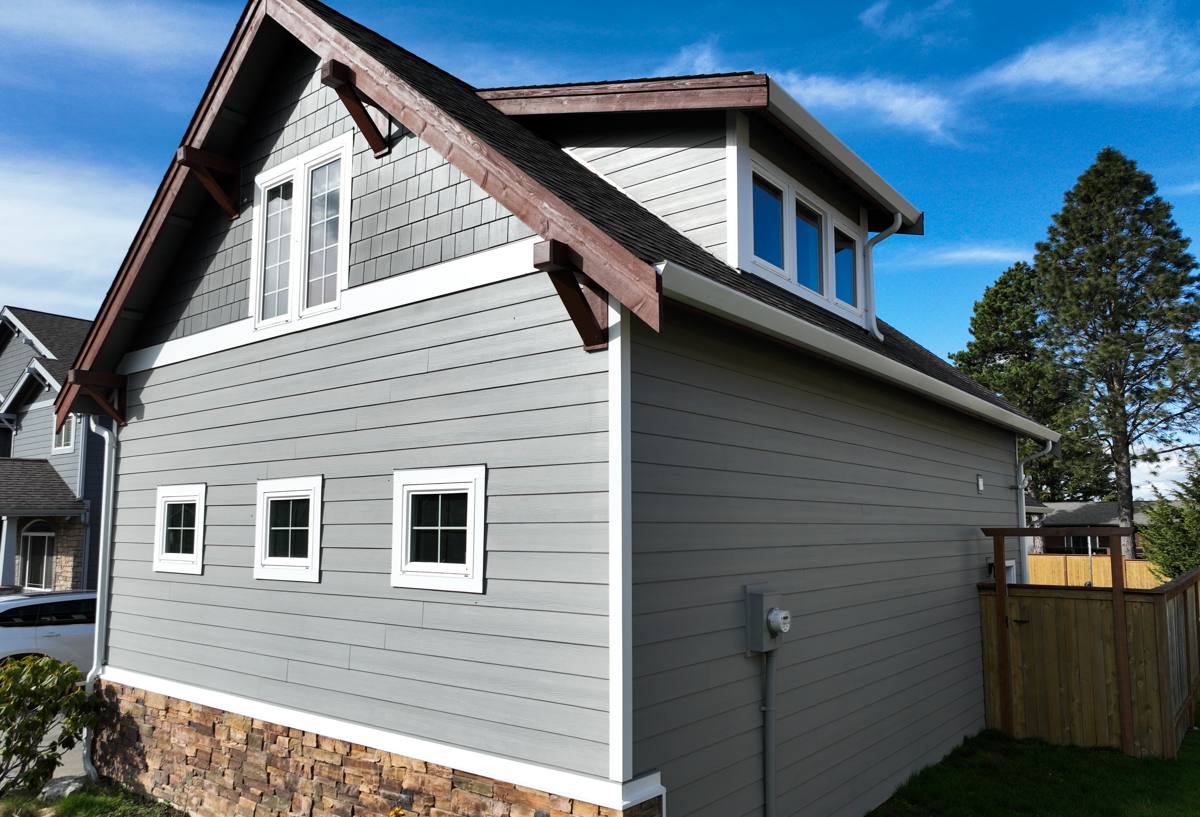
James Hardie fiber cement siding is made from cement, sand, and cellulose fiber. It doesn't rot, it's not a food source for moss or mildew the way wood is, it holds paint and factory finish far longer than wood-based alternatives, and it's non-combustible — a real advantage during wildfire smoke seasons that have become more common across Washington summers. Hardie's HZ5 product line is specifically engineered for wetter, harsher climates like ours, and its ColorPlus factory finish is baked on under controlled conditions rather than field-applied, which means better long-term color retention and fewer callbacks for peeling or fading.
What a Siding Project Looks Like in Geneva
Assessment
We start by walking the exterior and looking specifically for the failure patterns common to this area: soft spots near ground contact, staining or swelling around window and door trim, moss buildup on shaded walls, and gaps at seams and penetrations. We're checking siding, but also flashing, trim, and the condition of whatever's underneath, because siding problems are often really water-management problems.
Removal and Inspection of the Wall Behind It
Once old siding comes off, we get a look at the sheathing and house wrap underneath. This is often where we find the real story — hidden rot, missing or failed flashing, insulation that's been wet for years. Any of that gets addressed before new siding goes up; covering a wet wall with better siding just delays the same problem.
Proper Water Management Installation
Fiber cement siding only performs as well as the water-resistive barrier and flashing details behind it. We install house wrap, flashing at every window, door, and roof intersection, and correct fastening per Hardie's published specs — proper nail placement, correct gaps at joints, and factory-primed or factory-finished cut edges sealed as required. This is where a lot of subpar installs go wrong even with good materials.
Finish and Trim
We finish out trim, corners, and any transitions to roofing or window systems so the whole exterior envelope works together rather than as separate patched-together components.
Beyond Siding: Roofing, Windows, and Decks in the Same Conditions
Siding doesn't work in isolation. A roof that's shedding granules or has failing flashing will send water down behind even well-installed siding. Windows with worn seals let moisture into wall cavities right where siding meets the frame. Decks exposed to the same rain and shade patterns face their own rot and slip-hazard issues. We handle all four — siding, roofing, windows, and decks — because on most homes in this area, at least two of those systems are interacting with each other at the trouble spots we get called out for.
Roofing Considerations for This Area
Moss on roofs is as much a concern here as moss on siding, and a roof that's holding moisture will eventually push that moisture into fascia, soffits, and the top courses of siding below it. Roof and siding condition should generally be evaluated together, not separately.
Window Integration
Whenever we replace siding around existing windows, we check flashing and seals at the same time. It's a natural point to catch small window-related water intrusion issues before they become bigger repairs.
Cost Factors for a Geneva-Area Siding Project
| Factor | Why It Matters Locally |
|---|---|
| Home size and complexity | More corners, gables, and window openings mean more trim, flashing, and cut edges — all points where water can get in if not detailed correctly |
| Condition of sheathing underneath | Homes with long-term moisture exposure near tree lines or shaded walls more often need sheathing repair before new siding goes on |
| Siding profile and finish | Lap width, texture (smooth vs. cedar-shake style), and ColorPlus finish selection all affect material cost |
| Access and site conditions | Sloped lots and dense tree cover, common around Sudden Valley, can affect staging, scaffolding, and cleanup time |
| Scope beyond siding | Bundling roofing, window, or trim work into the same project can reduce total disruption and sometimes overall cost versus separate projects |
We don't publish blanket per-square-foot pricing because these factors genuinely move the number from house to house. A walkthrough estimate is the only honest way to give you a real figure.
What to Ask Before Hiring Anyone for Exterior Work
- Are you licensed and insured to do siding, roofing, and window work in Washington?
- Do you install to the manufacturer's published fastening and flashing specifications, and can you explain what that means for my house?
- What's your plan if you find rot or water damage once old siding comes off?
- Is the warranty from the manufacturer, from your company, or both — and what voids it?
- Can you walk me through why you recommend one siding material over another for a home in this specific area?
- Will the same crew handle the whole project, or is work subcontracted out in pieces?
A contractor who can answer these clearly and specifically to your home, rather than with generic reassurances, is usually one worth trusting with the job.
Why a Local Crew Matters for Geneva Homes
Contractors who work across Whatcom County regularly see how this region's rain patterns, moss growth, and tree cover actually play out on real houses year after year — not just what a spec sheet says in ideal conditions. That matters when deciding where extra flashing is worth the cost, which walls need more attention because of shade and moisture exposure, and how a product will actually hold up a decade in, not just on install day. It also means someone is nearby and accountable if a warranty issue or a question comes up later, rather than a crew that did one project in the area and moved on.
Maintenance Expectations After Installation
One advantage of switching to fiber cement is a lighter maintenance load, but "low-maintenance" doesn't mean "no-maintenance." A simple annual routine keeps any siding performing well:
- Rinse siding with a garden hose once or twice a year to clear pollen, dust, and early moss spores, especially on shaded walls
- Inspect caulk lines at trim, windows, and corners for cracking or gaps and have them touched up before winter rains
- Trim back vegetation and tree limbs that keep a wall shaded and damp longer than necessary
- Watch gutters and downspouts — overflow running down a wall is one of the most common causes of localized siding and trim damage we see
- Have a quick visual check done every couple of years, particularly after major storms, to catch small issues while they're still small
If you're noticing moss buildup, soft spots, or aging siding, roofing, windows, or a deck on a Geneva-area home, we're happy to take a look and walk you through honest options — no pressure, no obligation. A free estimate is the easiest way to find out exactly what your home needs and what it would cost to fix it right.