 Sudden Valley Siding
 Why Alger Roofs Wear Differently Than Roofs Inland
A roof over an Alger home is doing more work than a roof twenty miles inland, even though both might see the same rain totals on paper. The combination that matters here is salt-tinged marine air moving off the water, long stretches of driving rain that comes in sideways instead of straight down, and a moss season that can run eight or nine months out of the year in the shaded, moisture-heavy pockets common around Sudden Valley and the surrounding Whatcom County tree line. None of these factors alone would wreck a roof fast. Together, they shorten the useful life of a poorly installed or poorly ventilated roof by years.
Salt air accelerates corrosion on exposed metal — fasteners, flashing, vent stacks, and drip edge — faster than it does on the shingles themselves. Driving rain finds every shortcut in flashing detail and underlayment lap direction, because wind-driven water doesn't respect the "water runs downhill" assumption that a lot of roofing shortcuts rely on. And moss doesn't just look bad; its root structure lifts shingle tabs and holds water against the roof deck long after a storm has passed, which is where rot actually starts. A new roof installed for Alger has to be built to shrug off all three at once, not just one of them.
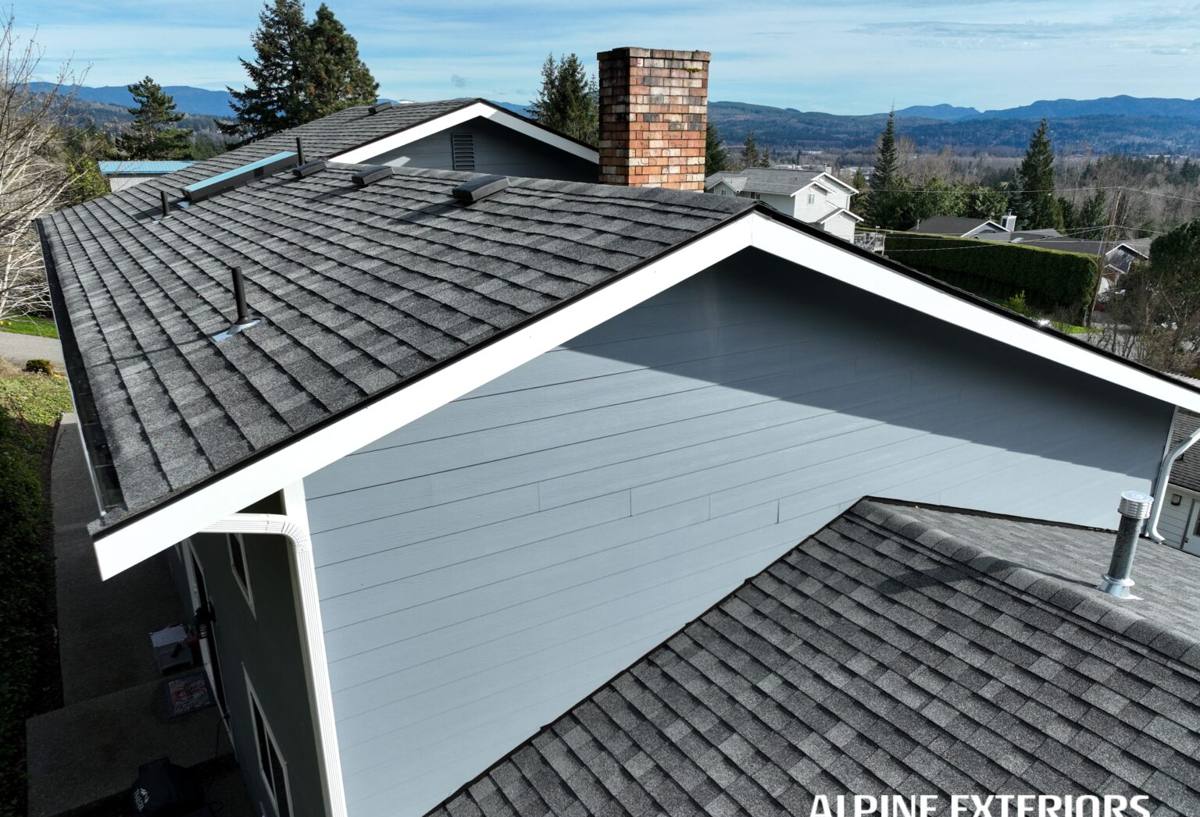
What a Correct New Roof Installation Actually Involves
"New roof" gets used loosely in this trade. A correct installation is a sequence of decisions, and skipping or rushing any one of them is where most premature roof failures around here start.
Full Tear-Off, Not a Layover
We remove the existing roofing down to the deck on every new roof install. Layering a new roof over an old one traps moisture, hides rot, and voids most manufacturer warranties outright — it's a shortcut that costs the homeowner later, not a savings.
Deck Inspection and Repair
Once the old roofing is off, the sheathing gets inspected board by board. Given this region's moisture load, it's common to find soft spots or delaminated plywood around old vent penetrations, valleys, and eaves — areas where water sat the longest. Any compromised decking gets replaced before anything new goes down. Installing new roofing over a soft deck just resets the clock on the same failure.
Ice-and-Water Barrier and Underlayment
Self-adhered ice-and-water membrane goes at eaves, valleys, and around every penetration — the spots where wind-driven rain is most likely to force its way under the shingle field. Synthetic underlayment covers the rest of the deck as a second line of defense, not a first line, which is a distinction that matters when a shingle gets damaged decades from now.
Flashing Detail
Step flashing at walls, counter-flashing at chimneys, and proper valley metal are where most leaks actually originate — far more often than field shingles wearing out. Flashing is corrosion-resistant material, sized and lapped correctly for a coastal-influenced climate, not just whatever fits.
Ventilation
Balanced intake and exhaust ventilation keeps the attic space close to outdoor temperature and humidity. This does two things that matter directly for Alger homes: it reduces the moisture buildup that feeds moss and rot from underneath, and it prevents the ice-dam-adjacent condensation issues that show up during cold snaps even in a climate that rarely sees deep freezes.
Choosing a Roofing Material for This Climate
There isn't one "best" roofing material — there's a best fit for a given roof pitch, budget, and how much upkeep a homeowner wants to sign up for. Here's how the common options actually compare for a marine, moss-prone climate like Alger and Sudden Valley.
| Material | Moss/Moisture Resistance | Wind & Salt-Air Durability | Typical Lifespan | Maintenance |
|---|---|---|---|---|
| Architectural asphalt shingle (algae-resistant) | Good, with copper/zinc strips | Good with proper nailing pattern | 25–30 years | Periodic moss treatment |
| Standard 3-tab asphalt shingle | Fair — more moss-prone over time | Fair | 15–20 years | More frequent moss treatment |
| Standing seam metal | Excellent — moss struggles to root | Excellent when properly coated fasteners used | 40–50+ years | Low |
| Synthetic/composite shake | Good | Good | 30–40 years | Low to moderate |
We steer most Alger homeowners toward algae-resistant architectural shingles or standing seam metal, in that order of frequency, mainly because both hold up well against the moss cycle without demanding constant upkeep. Standard 3-tab shingles are a lower upfront cost, but on a heavily shaded lot near the water we'll say so plainly — the maintenance burden and shorter lifespan often erase the savings within a decade. That's not a knock on the product; it's just a mismatch for this particular exposure.
A Note on Zinc and Copper Strips
Ridge-mounted zinc or copper strips release trace metal ions with every rain, which discourages moss and algae growth on the shingle field below them. They're inexpensive to add during a new install and worth including on any roof with significant shade — which describes a large share of the tree-covered lots around Sudden Valley.
Our Installation Process, Step by Step
- On-site inspection and measurement, including a look at attic ventilation and any existing moisture damage
- Written estimate covering material, tear-off, deck repair allowance, and labor — no vague line items
- Material delivery and site protection (landscaping, driveway, gutters covered before work starts)
- Full tear-off to the deck, with old material hauled off the same day where possible
- Deck inspection and any necessary sheathing replacement, documented before covering it up
- Ice-and-water membrane at eaves, valleys, and penetrations, then synthetic underlayment across the field
- Flashing installation at all walls, chimneys, and valleys
- Roofing material installed to manufacturer nailing and exposure specs
- Ridge and intake ventilation installed or upgraded
- Final walk-through and cleanup, including a magnetic sweep for stray fasteners
Signs an Alger Roof Needs Replacement, Not Another Repair
Repairs make sense when a roof has isolated damage and years of life left. Replacement makes sense once the underlying materials are failing broadly. Here's what tips that decision toward a new roof:
- Granule loss heavy enough that gutters fill with grit after every rain
- Shingles cupping, curling, or cracking across multiple slopes, not just one damaged spot
- Moss or moisture staining visible on the underside of the roof deck from inside the attic
- Daylight visible through the roof deck at any point
- Repeated leaks in different locations after previous patch repairs
- Roof is at or past 20–25 years old with no major upgrades since original install
- Flashing that's rusted, separated, or was never properly stepped at wall intersections
What Drives the Cost of a New Roof
Every roof is priced individually, but the variables that move the number the most are consistent from job to job:
| Cost Factor | Why It Matters |
|---|---|
| Roof size and number of planes | More material and more labor hours, straightforward |
| Pitch and accessibility | Steep or hard-to-access roofs need more safety setup and take longer |
| Deck condition | Rotted sheathing found during tear-off adds material and labor to replace it |
| Material choice | Standard asphalt, architectural asphalt, and metal span a wide cost range |
| Number of penetrations and valleys | Each chimney, vent, and valley adds flashing labor |
| Ventilation upgrades | Adding proper intake/exhaust venting where none existed adds scope but pays off in roof life |
We give a written estimate before any work starts, and we flag deck repair as an allowance rather than a guess — homeowners see the actual condition once tear-off happens, not a number pulled from a drive-by look.
Why a Crew That Already Works Alger and Sudden Valley Matters
Roofing crews that work all over Whatcom County and beyond aren't wrong for the job, but there's a real advantage to a crew that already knows this specific stretch of terrain. We know which roof orientations around Sudden Valley hold moss longest because of tree cover and shade patterns. We know which flashing details tend to fail first on homes exposed to wind coming off the water. And because we're not driving in from out of the area, scheduling around this region's weather windows — getting a tear-off done and dried in before the next system rolls through — is something we plan for rather than react to.
That local familiarity also shows up in smaller ways: knowing which permit requirements apply in unincorporated Whatcom County versus incorporated areas nearby, and setting homeowner expectations honestly about how many dry work days a project realistically needs during the wetter months.
Warranty and Permits
New roof installations should come with two layers of coverage: a manufacturer's material warranty and a workmanship warranty from the installing contractor. Ask any roofer for both in writing, and ask what voids each one — layering over old roofing, for example, is a common way material warranties get voided without the homeowner realizing it until it's too late. We handle permitting as part of the project scope rather than leaving it to the homeowner to track down, since requirements can vary by jurisdiction even within the same county.
Get a Straight Answer on Your Roof
If you're weighing a repair against a full replacement, or just want an honest read on how much life is left in an Alger roof, we're glad to take a look. There's no pressure and no sales script — just a clear inspection and a written estimate you can think over. Use the form below to request a free estimate.