 Sudden Valley Siding
 Deming Is a Different Kind of Exterior Environment
Deming sits along the Nooksack River corridor east of Bellingham, tucked into the tree line as the valley climbs toward Mount Baker. It's a beautiful place to own a home, but the same forest cover and river-valley humidity that make it beautiful also make it hard on exterior surfaces. Homes here spend a lot of the year under heavy tree canopy, in valley fog, and under long stretches of steady rain moving in off the water and up through Whatcom County. That combination of shade, moisture, and mild temperatures is exactly what moss, algae, and slow-drying wood need to take hold.
We've worked on enough homes in this corridor to see the pattern: siding that never fully dries between rain events, north-facing walls that stay damp for days, and trim that looks fine from the road but is soft underneath when you press on it. None of that is a sign of a bad home — it's just what happens when ordinary materials meet this climate over enough years.
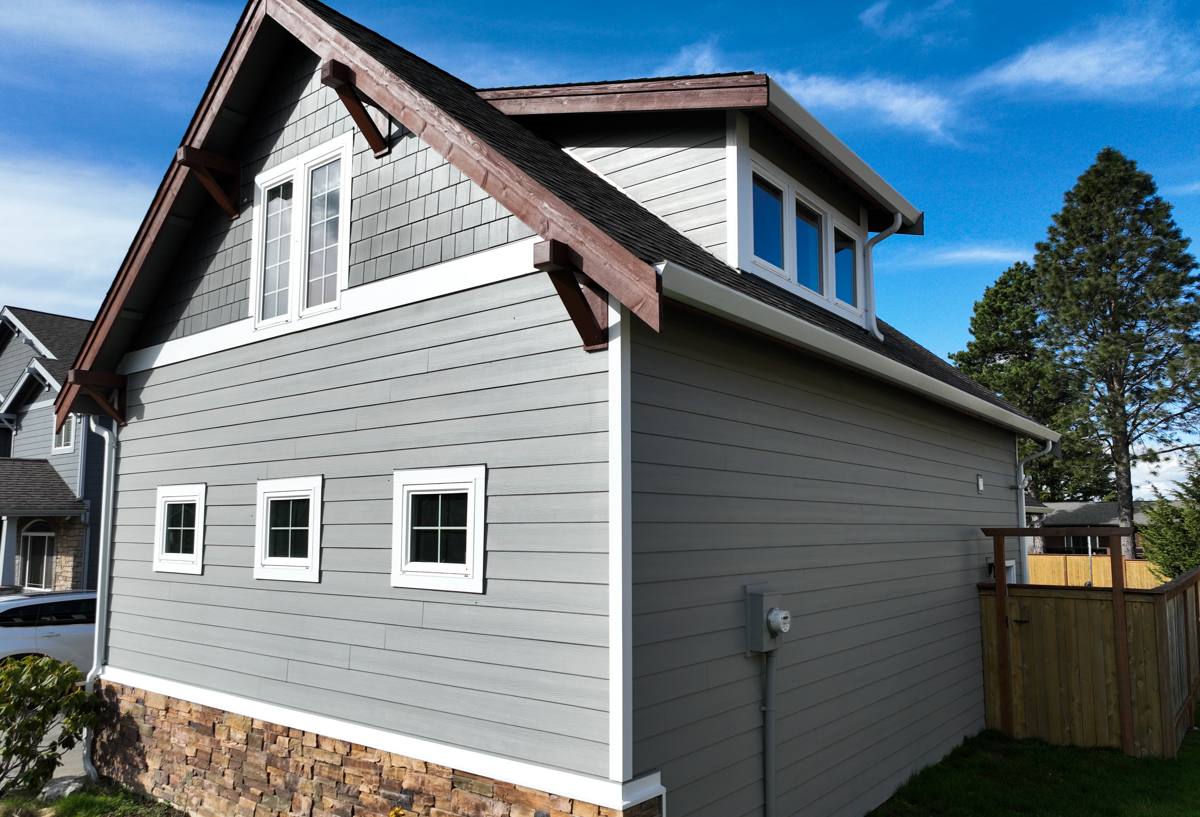
What the Climate Actually Does to a House
Moisture That Doesn't Leave
Driving rain in this part of Washington doesn't just fall — it gets pushed sideways into walls, under trim, and behind poorly lapped siding joints. In a shaded, tree-covered setting like Deming, that moisture has less sun and wind to help it evaporate. Anything absorbent or poorly sealed stays wet longer, and wet-longer is the root cause of almost every siding, trim, and deck failure we see.
Moss and Organic Growth
A long, cool, damp season is ideal growing conditions for moss and algae. On roofs it holds water against shingles and shortens their life. On siding it stains and, on porous materials, can hold enough moisture at the surface to start soft spots. Homes with heavy tree cover — which describes a lot of Deming — see this faster and more persistently than homes in open, sunny lots.
Wet-Dry Cycling
Wood-based and wood-composite products expand when they take on moisture and contract as they dry. Do that enough times over enough winters and you get cupping, checking, and failed paint film — even on products that were installed correctly. It's a slow, cumulative process, which is why problems from this cycle often show up years after installation, not right away.
Why We Install Only James Hardie Fiber Cement Siding
We get asked why we don't offer vinyl, LP SmartSide, Cemplank, Allura, or primed cedar. Each of those has a place in the market and each has genuine strengths — cost, familiarity, or a traditional look. Our decision isn't that they're bad products; it's that after years of exterior work in this specific climate, we standardized on one material because it holds up with the least maintenance and the fewest callbacks.
The Honest Trade-offs of the Alternatives
- Vinyl siding is inexpensive and low-maintenance in dry climates, but it can warp or distort with temperature swings, and seams and J-channels give moisture a path behind the panel where it can sit against sheathing for a long time before anyone notices.
- LP SmartSide is an engineered wood product — strong when installed and maintained exactly to spec, but it's still wood at its core, meaning cut edges, fastener penetrations, and joints need diligent sealing and repainting on a schedule to keep moisture out long-term.
- Primed spruce or cedar gives a traditional look many homeowners want, but real wood in a shaded, high-rainfall environment needs the most frequent repainting and caulking of any option, and any lapse in that maintenance shows up as rot.
- Other fiber cement brands like Cemplank or Allura are chemically similar to Hardie, but we've standardized on one manufacturer so our crews, our warranty process, and our finish knowledge stay consistent from job to job.
What Hardie Gets Right for This Area
James Hardie fiber cement is non-combustible, dimensionally stable in wet-dry cycling, and finished at the factory with ColorPlus baked-on coating rather than field-applied paint — which matters in a climate where field-applied finishes get less drying time. Hardie's HZ5 product line is engineered specifically for climates with sustained moisture exposure, which describes the Nooksack valley well. The transferable warranty and the fact that our crews install nothing else means we know this product's details cold, not as one option among six.
| Siding Option | Moisture Resistance | Maintenance Need | Typical Lifespan |
|---|---|---|---|
| Vinyl | Moderate (seam-dependent) | Low, but repairs are visible | 20-30 years |
| LP SmartSide | Good if sealed and repainted on schedule | Moderate to high | 20-30 years |
| Cedar/Primed Wood | Fair; depends heavily on upkeep | High | 15-25 years with upkeep |
| James Hardie Fiber Cement | Excellent, non-combustible | Low, factory-finish | 30-50 years installed to spec |
Roofing for the Deming Corridor
Roofs in this area deal with the same driving rain and moss pressure as siding, plus the added weight of tree debris — needles, cones, and branches that collect in valleys and behind chimneys. A roof that isn't ventilated and flashed correctly will trap moisture under shaded sections long after the rest of the roof has dried out. We look closely at valleys, penetrations, and any area under heavy tree cover when we evaluate a roof here, since that's where problems start first.
What We Check On Every Roof Estimate
- Moss and organic buildup, especially on north-facing and shaded slopes
- Flashing condition around chimneys, skylights, and roof-wall intersections
- Attic ventilation — poor airflow traps moisture from below, not just above
- Gutter and downspout capacity for sustained heavy rain, not just average rainfall
- Granule loss or soft decking that signals moisture has already gotten in
Windows: The Weak Point in Older Homes
Older single-pane and early dual-pane windows in this area are a common source of both energy loss and hidden moisture intrusion. Seals fail gradually, and once they do, condensation and slow leaks around the frame can damage the wall structure behind the window long before anyone notices the glass has fogged. When we replace siding around existing windows, that's often when we find out flashing was never installed correctly in the first place — and it's a good opportunity to fix both at once rather than patching siding around a window that will still leak.
Decks: Built to Handle Wet-Dry Cycling, Not Just Rain
A deck in Deming spends more of the year damp than dry. That means fastener corrosion, ledger board rot at the house connection, and slippery surfaces are bigger concerns here than in drier parts of the state. We pay particular attention to the ledger connection and flashing where the deck meets the house, since that's the single most common point of structural rot on decks in wet, shaded climates — and it's the hardest one to inspect without pulling boards.
What Local Experience Actually Buys You
A crew that only works in dry, open-lot suburbs will size up a shaded river-valley property differently than one that works this corridor regularly. Knowing which walls stay wet longest, which roof slopes hold moss fastest, and how deep moisture tends to travel before it shows on the surface changes how we sequence a job and where we spend extra attention. That's not something you can fully substitute with a general contractor working from a standard checklist.
Questions Worth Asking Any Contractor Before You Hire
- Are you licensed and insured in Washington, and can you provide proof directly?
- Do you have recent references from homes in this specific area, not just the general region?
- What's your plan for moisture and ventilation, not just the visible finish?
- Who handles warranty claims — you directly, or does it go through the manufacturer with no contractor involvement?
- Will you put the scope of work, materials, and timeline in writing before starting?
What Affects Cost on a Project Like This
| Factor | Why It Matters Here |
|---|---|
| Tree cover and access | Shaded, wooded lots often need more careful staging and cleanup around landscaping |
| Existing moisture damage | Hidden rot found during tear-off adds scope that isn't visible in an initial estimate |
| Home size and wall complexity | Dormers, multiple gables, and cut-up wall lines take more labor per square foot |
| Material selection | Hardie's factory finish and trim lines vary in cost depending on profile and color |
| Roof and window condition | Bundling siding with roofing or window work can reduce duplicate setup costs |
How We Approach a Job in This Area
We start with an honest look at the whole exterior — siding, roof, windows, and any deck — because problems in one system often trace back to another. A leaking window can be the reason siding is failing nearby; a mossy, poorly ventilated roof section can be why an interior wall stays damp. We'd rather flag all of it up front than come back a year later having fixed only the symptom you called about.
If you're weighing a siding, roofing, window, or deck project on your Deming property, we're happy to walk the exterior with you and give you a straightforward, no-pressure estimate — including where we see moisture risk you may not have noticed yet. Use the form below to get started.