 Sudden Valley Siding
 Windows Built for Columbia's Wet Side of Whatcom County
Homes in the Columbia area near Sudden Valley sit in a climate that is hard on windows in ways that don't show up right away. Long stretches of damp weather, driving rain off the lake and surrounding hills, salt-tinged marine air working its way inland from the Sound, and a moss season that can run half the year all put steady pressure on window frames, seals, and glazing. A window that's a poor fit for this environment doesn't fail overnight — it fails slowly, through fogged glass, soft frames, and utility bills that creep up year after year.
We install energy-efficient replacement windows for homeowners in this part of Whatcom County, and we build every job around what actually works here, not just what looks good on a spec sheet in a drier climate.
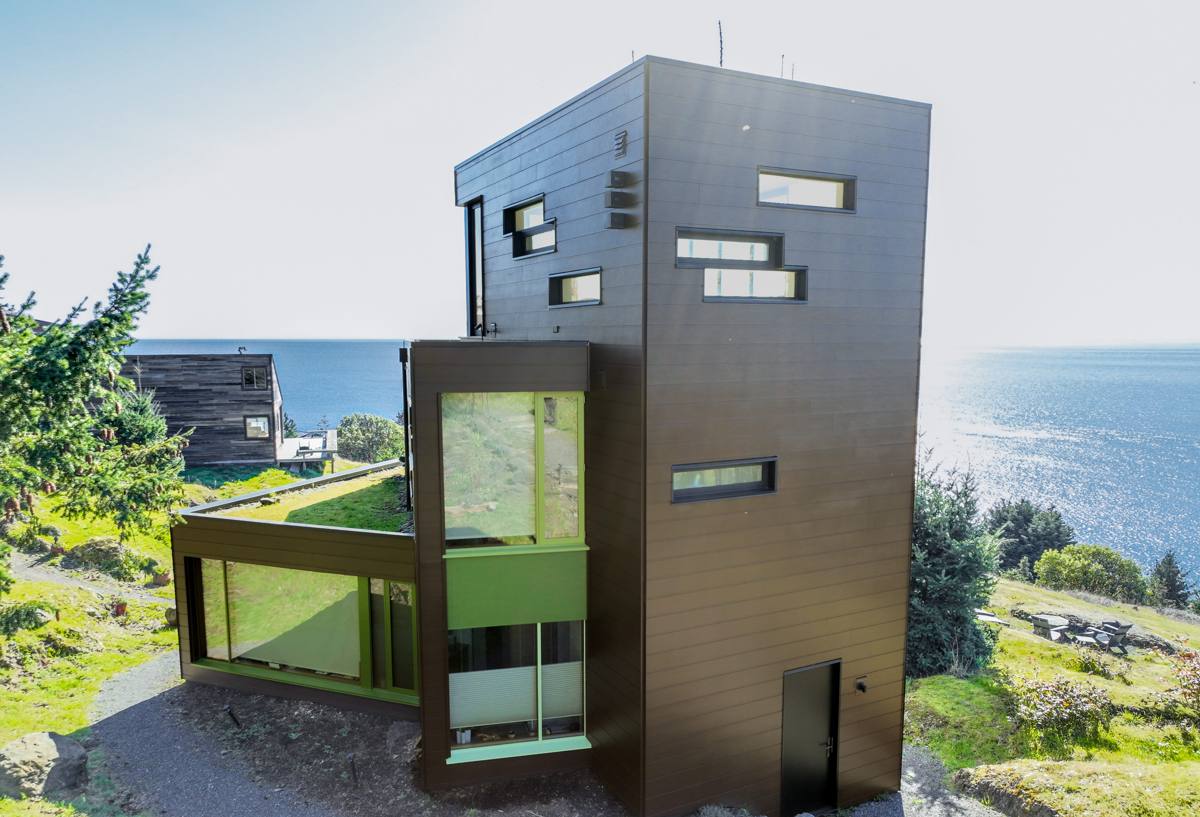
What the Local Climate Actually Does to Windows
Moss Season and Constant Moisture
Whatcom County's moss season isn't a two-week nuisance — it's a long-running condition. Anything that holds moisture against a building, whether it's a roofline, siding, or a window frame, gives moss and mildew a place to establish. On windows specifically, this shows up as dark streaking on sills, soft or discolored wood trim, and — over time — moisture finding its way behind poorly sealed frames into the wall cavity. Once that happens, you're no longer looking at a window problem; you're looking at a rot and insulation problem.
Driving Rain and Wind-Driven Water
Rain in this area rarely falls straight down. Wind off the lake and through the surrounding terrain pushes water sideways into window assemblies, which is exactly the condition that exposes a bad flashing job or an undersized weep system. A window can be well-insulated and still leak if the installation didn't account for wind-driven rain at the flashing and sill.
Salt Air and Metal Fatigue
Marine air carries salt further inland than most homeowners expect, and it's persistent — a slow, cumulative exposure rather than a one-time event. Salt-laden moisture accelerates corrosion on hardware, hinges, and lesser-grade metal components inside a window assembly. It's one of the reasons we're particular about hardware quality and finish on every install, not just the glass package.
What "Energy-Efficient" Actually Means Here
"Energy-efficient" gets used loosely in window marketing. For a Columbia-area home, the specs that actually matter are the ones that address heat loss through a mild, wet winter and glare/heat gain during summer, plus moisture control year-round. The main factors:
| Spec | What It Controls | Why It Matters Locally |
|---|---|---|
| U-Factor | Rate of heat loss through the window | Lower U-factor keeps heating costs down through our long, mild but persistently cool winters |
| Low-E Coating | Reflects radiant heat while letting visible light through | Cuts summer heat gain without darkening rooms during our overcast months |
| Gas Fill (Argon/Krypton) | Insulating layer between panes | Improves insulation value without adding bulk to the frame |
| Frame Material | Structural and moisture performance | Determines how the window holds up to repeated wetting, drying, and salt exposure |
| Weatherstripping/Seals | Air and water infiltration control | The first line of defense against wind-driven rain finding its way in |
Any one of these done well but the others ignored still leaves a weak point. We spec the full package, not just the glass, because the frame and installation determine whether that glass package actually performs.
Signs Your Current Windows Are Working Against You
Most homeowners don't replace windows because one factor fails — it's usually a combination that finally tips the decision. Watch for:
- Visible condensation or fogging between panes (a sign the seal has failed)
- Soft, discolored, or spongy wood trim or sill areas
- Dark streaking or moss growth on sills and lower frame edges
- Drafts you can feel near the frame, even with the window fully latched
- Windows that are noticeably harder to open, close, or lock than they used to be
- A noticeable difference in room temperature near the window versus the rest of the room
- Rising heating bills without a clear cause elsewhere in the home
Any one of these on its own might just need a repair. Several at once, especially on a home that's original to its build era, usually points to windows that have reached the end of their useful life for this climate.
How We Approach a Window Installation in This Area
- On-site assessment. We look at each window opening individually — framing condition, existing flashing, sill pitch, and any signs of moisture already present behind the trim.
- Product selection based on exposure. A window on the side of the house that takes direct wind-driven rain gets specified differently than one on a sheltered wall. We don't treat every opening the same.
- Flashing and moisture management first. Before the window ever goes in, we make sure the opening is properly flashed and integrated with the surrounding wall assembly so water is directed out, not in.
- Installation to manufacturer spec. Proper shimming, fastening, and sealant application — skipping steps here is where most window failures actually originate, regardless of how good the window itself is.
- Interior and exterior finish work. Trim, caulking, and sill details finished so the window sheds water correctly from day one.
- Final walkthrough. We check operation, seals, and finish work with you before calling the job done.
Frame Material: What We Recommend and Why
We don't push one material as the answer for every home. Each has trade-offs worth understanding before you decide:
| Material | Strengths | Trade-Offs |
|---|---|---|
| Vinyl | Cost-effective, low maintenance, good insulation value | Limited color/finish options; quality varies significantly by manufacturer |
| Fiberglass | Very stable in temperature swings, strong moisture resistance, long service life | Higher upfront cost than vinyl |
| Wood-Clad | Traditional appearance, good insulating core | Requires more upkeep long-term; cladding integrity at seams matters a lot in a wet climate |
| Aluminum | Strong, slim sightlines | Poor insulator on its own and prone to condensation unless thermally broken — we're selective about where we'll use it |
For most homes in this area, we lean toward vinyl or fiberglass because they handle repeated moisture cycling with the least maintenance burden. Wood-clad is still a good option for homeowners who want that look, as long as they understand the upkeep that comes with it. We'll walk through what fits your home's exposure and your budget rather than defaulting to whatever's easiest to install.
What Affects the Cost of a Window Project
| Factor | Impact on Cost |
|---|---|
| Number of windows and opening sizes | Larger and more numerous openings raise material and labor cost |
| Frame material chosen | Vinyl is typically the most budget-friendly; fiberglass and wood-clad run higher |
| Condition of existing framing | Rot or water damage found during removal adds repair scope |
| Installation type | Full-frame replacement costs more than insert replacement but corrects underlying flashing issues |
| Access and site conditions | Second-story or hard-to-reach openings can add labor time |
We give straightforward, itemized estimates rather than a single vague number, so you can see exactly what's driving the cost on your specific home.
Why Local Experience on Columbia Homes Matters
A crew that already works regularly in Columbia and the broader Sudden Valley area knows the general exposure patterns for this part of Whatcom County — which wall orientations tend to take the worst of the wind-driven rain, how moss and moisture typically show up on homes built in different eras, and what installation details actually hold up here versus what looks fine on paper. That's not something you get from a crew that installs windows the same way regardless of region. It shows up in the small decisions: flashing details, sealant choice, and where we push back on a product spec that won't hold up to what this climate actually does to a house.
Keeping Windows Performing Through Moss Season
Even a correctly installed, high-quality window benefits from basic upkeep in this climate. A few habits go a long way:
- Rinse sills and lower frame edges periodically to keep moss and organic buildup from establishing
- Check weatherstripping annually for compression loss or gaps
- Keep nearby gutters and downspouts clear so runoff isn't sheeting directly across window openings
- Address any soft or discolored trim promptly, before moisture spreads further into the wall
None of this requires special equipment — it's the same kind of routine attention that keeps siding and trim performing well in this climate, applied to your windows too.
If your windows are showing any of the wear signs above, or you're simply ready to stop losing heat and money through old glass, we're happy to take a look. Fill out the form below for a free, no-pressure estimate on energy-efficient window replacement for your Columbia-area home.