 Sudden Valley Siding
 Building Decks for Life on Lake Whatcom
Sudden Valley sits right on the water, and that changes what a deck has to do here compared to a deck in a dry inland subdivision. Lake Whatcom brings humidity that lingers in the air long after a storm has passed, tree cover that keeps large sections of yard in shade most of the day, and a damp, mossy undergrowth that's part of the charm of living here and part of the challenge of building here. A deck built without those conditions in mind will look fine the first summer and start showing problems by the third or fourth wet season — soft spots, green film on the boards, fasteners bleeding rust through the finish, railings that wobble because the posts were never properly isolated from ground moisture.
We build custom decks for homeowners around Lake Whatcom and throughout Sudden Valley with that reality built into every decision, from the footing depth to the fastener spec to how we handle the underside of the structure where most rot actually starts.
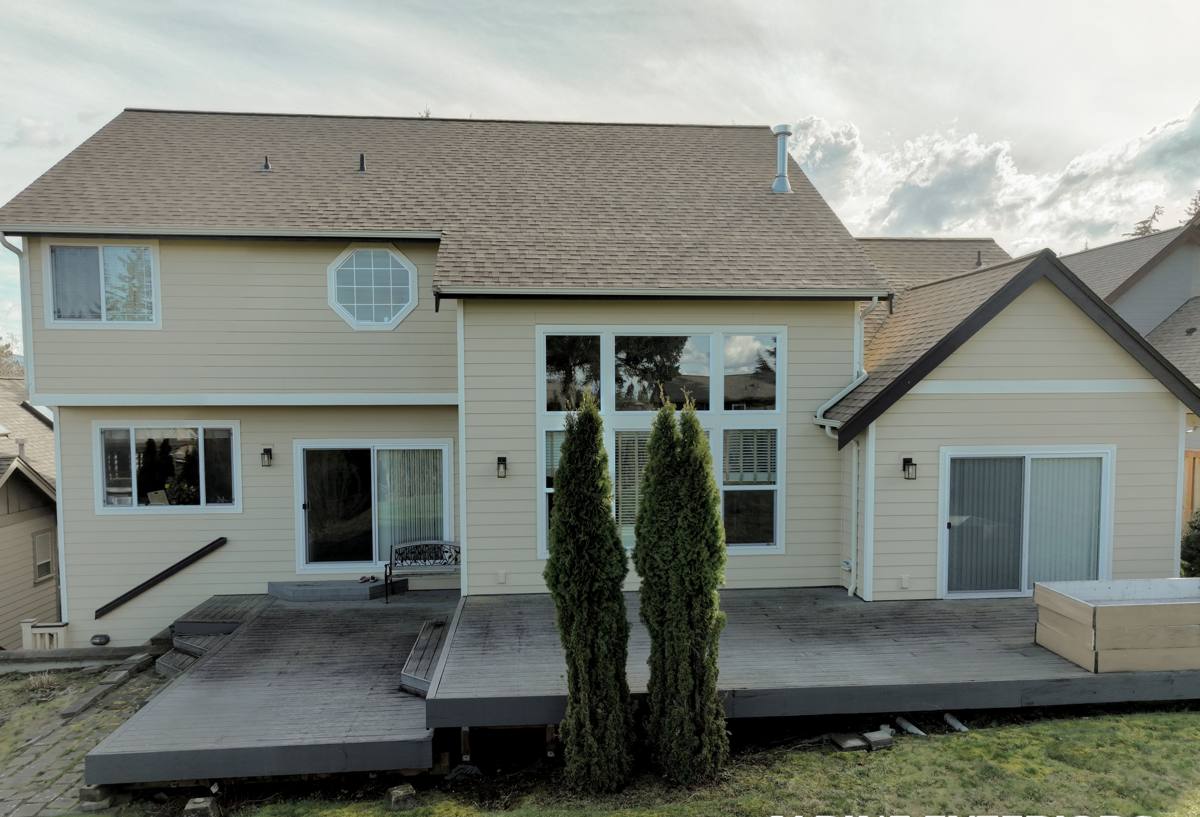
What Lake Whatcom's Climate Does to a Deck
Driving Rain and Standing Moisture
Whatcom County gets a long, wet fall-through-spring stretch, and lakeside lots see more of it than most — moisture off the water adds to normal rainfall, and low-lying yards near the shoreline don't always drain the way a hillside lot does. Decks built low to grade, or decks without a real plan for water to get out from underneath them, end up sitting in damp conditions for months at a time. That's when joists, ledger boards, and post bases start to fail — usually quietly, underneath the deck, long before anything looks wrong on top.
Moss and Shade
The tree canopy that makes Sudden Valley lots so pleasant to sit on also means a lot of decks never get a full afternoon of direct sun. Combine that with lake humidity and you get a long moss and algae season — sometimes close to year-round on the shadiest lots. Moss isn't just cosmetic. It holds moisture against the board surface, and on some decking materials that constant dampness accelerates decay or finish breakdown far faster than open, sunny sites see.
Salt and Airborne Moisture
Homes closer to open water pick up a steady dose of salt-laden, moisture-heavy air, and metal hardware is usually the first thing to show it — streaking, corrosion, and eventually fastener failure if the wrong grade of screw or bracket was used. It's a detail that's easy to skip on a standard deck build and expensive to fix once rust has already worked its way into the wood around a fastener.
What a Correctly Built Deck Looks Like Here
None of this means you can't have the deck you want on a Lake Whatcom lot — it means the build has to account for what the site actually does year-round, not just how it looks on a dry August afternoon.
- Footings set below frost depth and sized for the actual soil conditions on your lot, not a generic minimum
- Ledger boards flashed and sealed where they meet the house, with a gap or flashing detail that keeps water from tracking behind the siding
- Joist framing with real airflow underneath — enough clearance and, where the site allows it, open skirting rather than a sealed-in crawlspace that traps humidity
- Corrosion-resistant, code-rated fasteners and structural hardware throughout, sized for coastal/lake-adjacent conditions rather than standard interior-grade hardware
- Decking spaced correctly for drainage and airflow between boards, not tight-fit for looks at the cost of trapped moisture
- A surface material chosen with your lot's actual sun exposure in mind — a heavily shaded, moss-prone site calls for different decisions than an open, south-facing one
- Railings and stair stringers set on isolated, properly flashed posts so ground moisture doesn't wick up into the structure
Choosing a Decking Material for a Shaded, Damp Lot
There's no single "best" decking material — there's the right material for your specific lot, budget, and how much upkeep you want to take on. On Lake Whatcom lots, shade and moisture exposure usually matter more to that decision than they would on a typical inland lot.
| Material | How it handles shade/moisture | Maintenance |
|---|---|---|
| Pressure-treated wood | Affordable and structurally solid, but needs a sealed finish reapplied regularly or it will gray, cup, and hold moss faster than most other options on a shaded lot | Annual cleaning; refinish every 2–3 years |
| Cedar | Naturally rot-resistant and handles moisture reasonably well, but still needs periodic sealing to keep moss and mildew from taking hold in constant shade | Cleaning plus a sealer every 2–3 years |
| Composite decking | Doesn't absorb moisture the way wood does, so it resists rot and warping well; still needs regular cleaning since moss and algae will grow on any surface in enough shade | Periodic washing, no sealing or staining |
| PVC decking | Fully moisture-resistant surface, the strongest option for a lot that barely sees direct sun, though it comes at the highest material cost | Occasional washing only |
We'll walk through these trade-offs with you against your actual lot — where the sun hits, how close you are to the water, and what kind of upkeep schedule is realistic for your household — rather than defaulting to whatever's easiest to sell.
Cost Factors for a Custom Lake Whatcom Deck
Every deck is priced around the specifics of the site and the design, so we won't quote a number without seeing the lot, but the factors that move the price on a lakeside build are worth knowing up front.
| Factor | Why it matters here |
|---|---|
| Slope and access | Many Sudden Valley lots slope toward the water; steeper sites need taller footings, more framing, and sometimes a multi-level design, all of which add cost |
| Footing depth and soil conditions | Wet, lakeside soil can require deeper or differently engineered footings than a dry inland lot |
| Decking material | Material cost per square foot varies widely, and shaded/high-moisture lots often justify spending more on a lower-maintenance surface |
| Railing and stair complexity | Elevated lake-view decks often need more substantial railing and stair systems than a ground-level deck |
| Hardware grade | Corrosion-resistant fasteners and connectors cost more than standard-grade hardware but are not optional this close to the water |
Our Process for a Lake Whatcom Deck Build
1. On-Site Assessment
We walk your lot in person — checking sun exposure, drainage patterns, soil, and how close the build sits to the water — before we talk design or materials. A deck plan that ignores those details is just a guess.
2. Design and Material Selection
We talk through layout, decking material, and railing style based on how you actually want to use the space, balanced against what will hold up on your specific lot with the least maintenance headache.
3. Permitting
Deck permits and setback rules can apply depending on size, height, and proximity to the shoreline. We handle that process so you're not chasing paperwork.
4. Construction
Footings, framing, flashing, decking, and railings — built in that order, with each stage inspected before we move to the next, so nothing gets buried under decking that shouldn't have been covered yet.
5. Walkthrough
We go over the finished deck with you, including what upkeep it needs and how often, so you're not guessing at maintenance a year from now.
Why a Crew That Already Works Sudden Valley Matters
A contractor who mostly builds on dry, open, inland lots will still build you a structurally sound deck — but they may not think to ask about your lot's sun exposure before recommending a decking material, or spec standard hardware because that's what they use everywhere else. Working around Sudden Valley and Lake Whatcom regularly means we've already seen how the moss season, the shade patterns, and the lake-adjacent moisture affect decks built here, and we build around those conditions by default rather than after something's already gone wrong. That's the difference between a deck that needs real repair work in year four and one that's still solid a decade in.
Maintaining Your Deck Once It's Built
Whatever material you choose, a few habits go a long way on a Lake Whatcom lot:
- Sweep leaves and debris off the deck surface regularly, especially in fall — trapped organic matter is what feeds moss growth
- Clean the deck surface at least once or twice a year with a wood- or composite-safe cleaner, more often on heavily shaded sections
- Check railing posts and stair connections annually for movement or corrosion at the hardware
- Keep gutters and downspouts near the deck clear so runoff isn't draining directly onto or under the structure
- Reseal wood decking on the schedule recommended for your specific product — don't wait until it looks gray to reapply
If your current deck is already showing moss buildup, soft boards, or rusted hardware, those are worth addressing before they become a structural issue rather than a cosmetic one.
If you're planning a new deck or replacing an aging one on your Lake Whatcom or Sudden Valley property, we're happy to walk the site and talk through what will actually hold up on your lot. Use the form below to request a free, no-pressure estimate.