 Sudden Valley Siding
 Building Decks for Edgemoor's Specific Climate
Edgemoor sits close enough to the water that salt air is a daily fact of life for anything built outdoors, and that changes how a deck should be designed, fastened, and finished. Add in the driving rain that comes through Whatcom County most of the fall and winter, plus a moss season that can stretch for months on shaded lots, and you have a set of conditions that punishes decks built to a generic, one-size-fits-all spec. A deck that would hold up fine in a dry inland climate can start showing fastener corrosion, soft spots, and slick, moss-covered boards within a few seasons here if it wasn't built with this specific environment in mind.
We build and repair decks throughout Sudden Valley and the surrounding area, and Edgemoor's mix of tree cover, elevation, and proximity to the water gives it its own set of challenges. This page walks through what we actually pay attention to when we're building a deck for a home in this part of Whatcom County, and why the details matter more here than they would somewhere drier and more sheltered.
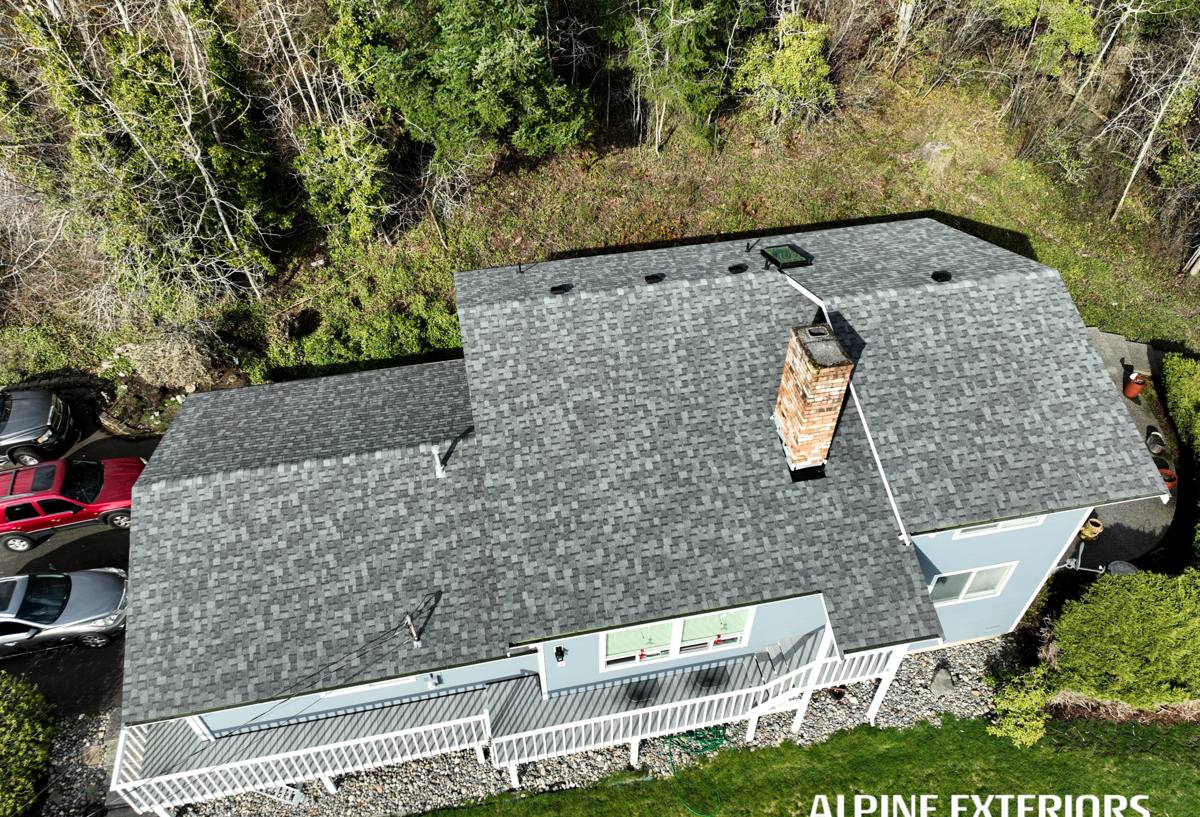
What Salt Air and Driving Rain Do to a Deck Over Time
Salt-laden air accelerates corrosion on anything metal — fasteners, joist hangers, railing brackets, and structural screws. On a lot of older or budget-built decks, the hardware was never rated for this kind of exposure, and it's usually the hardware that fails first, long before the wood itself is a problem. Once a fastener starts to corrode, it loses holding strength quietly, from the inside, which means the deck can look fine on the surface while the connections underneath are weakening.
Driving rain adds a second problem: water intrusion at the wrong angle. Rain that comes in sideways during a storm gets pushed into places a vertical rain would never reach — under ledger flashing, behind fascia boards, into end grain on stair stringers and rail posts. Over time this shows up as soft spots at the ledger board, staining and rot at board ends, and rail posts that loosen because the wood around the anchor bolts has started to break down.
Where We See the Most Damage on Existing Decks
- Ledger board connection where the deck meets the house — the single most common point of hidden rot
- Fastener heads and joist hangers showing rust bleed or visible corrosion
- Board ends and cut edges that were never sealed after installation
- Stair stringers, which take on water from multiple angles and dry slowly
- Rail post bases, especially where the post meets the decking surface
Moss, Shade, and the Slip Hazard It Creates
A lot of Edgemoor lots have real tree cover, which is part of the appeal of the neighborhood but also means decks here don't get the sun exposure needed to dry out quickly between rains. Moss and algae take hold fastest on north-facing decks, on boards under heavy tree canopy, and in low corners where water pools instead of draining. Beyond the cosmetic issue, a mossy deck surface is a genuine slip hazard, especially on stairs, and it's one of the most common service calls we get from homeowners in shaded parts of Whatcom County.
The fix isn't just periodic power washing — that treats the symptom and can actually damage some decking materials if done too aggressively or too often. The real fix starts at the design stage: board spacing that allows airflow and drainage, a substructure that doesn't trap moisture underneath, and decking material chosen with the site's actual sun exposure in mind rather than a catalog photo taken somewhere sunny.
Design Choices That Reduce Moss Buildup
- Slightly wider board gapping on shaded sections to improve airflow and drainage
- Grooved-edge composite boards oriented so water sheds rather than channels along the length
- Open or vented skirting instead of solid skirting that traps ground moisture under the deck
- Positive slope away from the house, even on small decks, so water doesn't sit against the ledger
- Avoiding low, boxed-in corners where leaf litter and standing water collect
What a Correctly Built Deck Involves Here
A deck built for this climate isn't a different product than a deck built anywhere else — it's the same core system, built with the right details in the right places. That starts underground and works its way up.
Footings and Substructure
Footings need to be sized and set to local frost depth and soil conditions, not guessed at. On sloped Edgemoor lots this often means individual footing depths vary across the same deck, which is normal but requires actually checking rather than assuming a uniform pour depth will work. Post bases should sit above grade on a standoff bracket so the post end grain never sits in standing water.
Ledger Attachment and Flashing
The ledger board — where the deck attaches to the house — is the single point of failure we see most often on decks we're asked to repair. Correct practice means proper flashing integrated with the house's existing weather barrier, not just caulk and a hope. This is the detail that separates a deck that lasts decades from one that develops hidden rot behind a wall you can't see until there's a real problem.
Fasteners and Hardware
Given the salt air here, we use fasteners and structural hardware rated for coastal and treated-lumber exposure — stainless steel or heavy hot-dip galvanized, not the lighter coatings that are fine inland but corrode faster this close to the water. Joist hangers, structural screws, and any exposed hardware all need to match that standard, not just the visible fasteners on the surface.
Decking Material Selection
We'll talk through the real trade-offs between wood and composite decking honestly, because both have a place depending on budget, maintenance appetite, and how much shade the site gets.
| Factor | Pressure-Treated / Cedar | Composite Decking |
|---|---|---|
| Upfront cost | Lower | Higher |
| Moss resistance | Needs regular cleaning and sealing to resist growth | Better resistance, though shaded areas still need occasional cleaning |
| Maintenance | Annual cleaning, periodic sealing or staining | Occasional washing, no sealing or staining required |
| Fastener sensitivity | Moderate — hidden fastener systems reduce splitting | Higher — manufacturer-specific clips and screws matter for warranty |
| Typical lifespan here | 15–25 years with consistent maintenance | 25+ years, varies by product line and sun/shade exposure |
| Appearance over time | Grays and weathers naturally unless maintained | Holds color longer, some fading still occurs with age |
Neither option is automatically the "right" answer. A homeowner who wants the lowest upfront cost and doesn't mind a yearly cleaning and re-sealing routine may be better off with treated lumber. A homeowner who wants to spend less time on maintenance over the life of the deck often comes out ahead with composite, even at the higher upfront cost. We'll walk through this decision with you specifically for your site's sun exposure and how the deck will actually be used.
Railings, Stairs, and Structural Connections
Railings and stairs take more weather exposure than the main deck surface because they're vertical and get hit by driving rain from the side, not just from above. Rail post attachment is a common weak point on older decks — through-bolted connections into properly blocked framing hold up far better over time than surface-mounted brackets alone, especially given how much lateral load a railing takes from people leaning on it. Stair stringers should be pressure-treated at minimum, with cut ends field-treated after cutting, since factory treatment doesn't penetrate a fresh cut.
Our Process for an Edgemoor Deck Project
Every deck project follows the same basic sequence, but the specifics get adjusted for the site once we're actually standing on it.
- On-site assessment. We look at slope, sun exposure, tree cover, existing structure (for replacements), and how the deck ties into the house.
- Design and material discussion. We talk through decking material, railing style, and layout, with honest trade-offs for your site and budget — no upselling toward the most expensive option by default.
- Permitting. Most new decks and significant rebuilds in Whatcom County require a permit; we handle that process rather than leaving it to the homeowner.
- Demolition (if applicable). Old decking, damaged framing, and any hidden rot at the ledger get fully assessed and removed, not built over.
- Framing and structural work. Footings, posts, beams, and joists go in to code, with coastal-rated hardware throughout.
- Decking, railing, and stairs. Final surface materials and railing system installed with attention to drainage and airflow.
- Final walkthrough. We go over the finished deck with you, including basic maintenance guidance specific to the material you chose.
Maintenance That Actually Matters in This Climate
A well-built deck still needs some seasonal attention here, and what matters most depends on the material.
- Clear debris from between boards and off the deck surface before fall rains set in — trapped leaves hold moisture against the wood
- Check and re-tighten railing connections annually; wood movement and weather cycling can loosen hardware over time
- For wood decking, plan on cleaning and re-sealing on a regular cycle rather than waiting until it visibly needs it
- For composite decking, a simple wash to remove pollen, moss spores, and organic buildup keeps shaded sections from developing moss film
- Keep an eye on the ledger board area each fall — it's the first place to check if you ever notice soft decking or staining near the house
- Don't let planters or furniture sit in one spot for months at a time on wood decking; it traps moisture underneath
Why Local Experience Matters for This Job
Deck building looks straightforward from the outside, but the failures we get called out to fix in Whatcom County are almost never about the basic carpentry — they're about details that only matter because of this specific climate: the wrong fastener grade for salt exposure, a ledger flashed like it was going in somewhere dry, decking laid out without any thought for how a shaded, sloped lot actually sheds water. A crew that builds decks in a dry climate and a crew that builds them in Edgemoor are solving different problems, even if the finished product looks similar at first glance.
We're not guessing at what this environment does to a deck over ten or twenty years — we see it firsthand on repair calls throughout Sudden Valley and the surrounding communities, and we build new decks to avoid becoming that call later. That's the difference between a deck that needs major repair work in year six and one that's still solid, safe, and mostly maintenance-free in year twenty.
Get a Straightforward Estimate
If you're planning a new deck, a rebuild, or aren't sure whether an existing deck is still structurally sound, we're happy to take a look and give you an honest assessment — no pressure, no inflated scope. Fill out the form below and we'll get in touch to schedule a time to walk the site with you.