 Sudden Valley Siding
 Roof Replacement in Ferndale: Built for the Weather You Actually Get
Ferndale homes sit close enough to the water and open enough to the wind that roofs here take a different kind of beating than roofs twenty miles inland. Salt-laden air off the Strait, long stretches of driving rain, and a moss season that can run most of the year all work against a roof in ways that shorten its real service life if the original installation wasn't built to handle it. When we replace a roof in this area, we're not just swapping old shingles for new ones — we're correcting for the specific conditions that wore the old roof out in the first place.
This page covers what a roof replacement in Ferndale should actually involve: the local stressors, what a correct job looks like from tear-off to final inspection, the material trade-offs worth understanding before you commit, and why a crew that already works this part of Whatcom County catches problems a roofer from further out might miss.
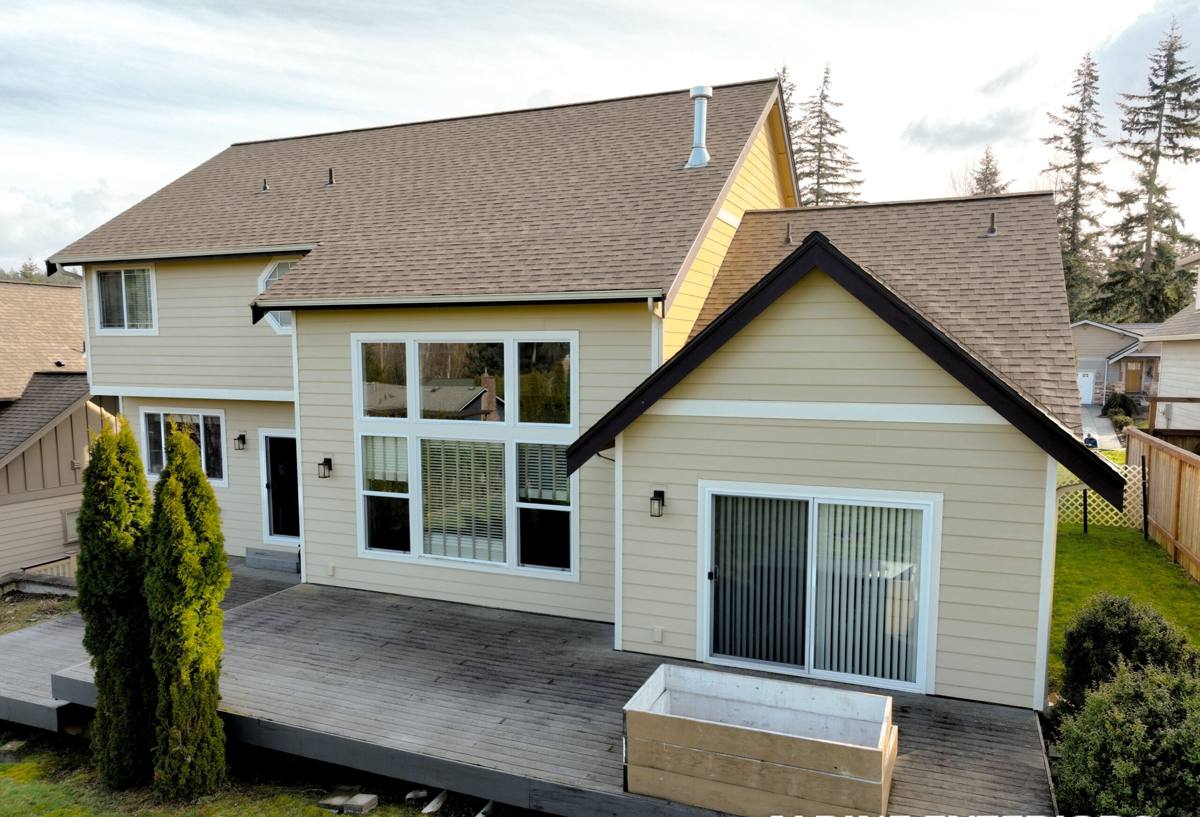
What Whatcom County Weather Does to a Ferndale Roof
Salt Air and Metal Fatigue
Homes closer to the water deal with airborne salt that accelerates corrosion on exposed metal — flashing, fasteners, vents, and gutters. Standard galvanized fasteners and thin-gauge flashing that might last decades inland can start showing rust streaks and pitting years earlier here. It's not dramatic, but it's steady, and it's usually the flashing and fastener failures — not the shingles themselves — that cause the first leaks.
Driving Rain and Wind-Driven Water
Rain in this region doesn't always fall straight down. Wind off the Strait pushes it sideways, which means water gets tested at every seam, lap, and penetration on a roof — not just the open field. A roof that would perform fine somewhere calmer can leak here if the underlayment, ice-and-water membrane at vulnerable spots, and flashing details weren't installed with wind-driven rain specifically in mind.
Moss and Sustained Dampness
Northwest Washington's moss season is long, and Ferndale's tree cover and marine humidity keep roof surfaces damp for extended stretches. Moss isn't just cosmetic — it holds moisture against the roofing material, works into shingle laps and butt joints, and can lift edges over time. Roofs with poor ventilation or shaded north-facing slopes are especially prone to heavy moss buildup, which shortens the life of almost any roofing material if it's left unmanaged.
Signs a Ferndale Roof Needs Replacement, Not Another Repair
- Granule loss heavy enough that you're finding grit in gutters and downspouts every season
- Shingles that are cupping, curling, or cracking, especially on south- and west-facing slopes
- Flashing around chimneys, skylights, or roof-to-wall transitions that's rusted, lifted, or was never properly step-flashed
- Moss buildup that keeps returning within a season or two of cleaning, especially on shaded slopes
- Daylight visible through the roof deck from the attic, or water stains on interior ceilings
- A roof past 20–25 years old (asphalt) or showing widespread wear rather than isolated damage
- Repeated patch repairs on different sections — a sign the underlying material is failing broadly, not just in one spot
If the damage is isolated — one bad flashing detail, a section of storm damage — repair is the right call and we'll say so. Replacement makes sense when the wear is spread across the whole roof or the underlying deck and underlayment are compromised.
What a Correct Roof Replacement Involves
Full Tear-Off, Not a Layover
We remove the existing roofing down to the deck rather than installing new material over old. A layover hides deck problems, traps moisture between layers, and voids most manufacturer warranties outright. Tear-off also lets us actually see the condition of the sheathing before we cover it back up.
Deck Inspection and Repair
Once the old material is off, we check the decking for soft spots, rot, and delamination — common where past leaks went unnoticed for a while. Any compromised sheathing gets replaced before anything new goes down. Skipping this step is one of the most common shortcuts in the trade, and it's the one most likely to cause an early failure.
Underlayment and Water-Resistive Barrier
Given how much wind-driven rain this area sees, underlayment choice matters more here than in drier climates. We use synthetic underlayment as a standard base layer and add self-adhering ice-and-water membrane at the vulnerable spots — eaves, valleys, around penetrations, and low-slope transitions — where wind-driven water is most likely to find a way in.
Flashing Done Properly
Step flashing at walls and chimneys, proper valley metal, and correctly lapped drip edge are what actually keep a roof watertight over time — more than the shingle brand does. Given the salt-air corrosion risk here, we use flashing and fasteners rated for coastal or high-moisture exposure rather than the minimum-spec hardware that's fine further inland.
Ventilation That Matches the Climate
Balanced intake and exhaust ventilation keeps the attic dry and temperature-stable, which slows moss growth on the roof surface and prevents moisture buildup that rots decking from underneath. A roof replacement is the right time to correct ventilation that was inadequate on the original build — it's far more disruptive to fix later.
Material Comparison for This Climate
| Material | Performance in Salt Air / Wet Climate | Moss Resistance | Typical Lifespan Here |
|---|---|---|---|
| Architectural asphalt shingle | Good, with quality flashing and fasteners | Moderate — benefits from algae-resistant granules | 20–30 years |
| Standing seam metal | Excellent when coated/fastened for coastal exposure | High — sheds moisture quickly, little for moss to hold onto | 40–60 years |
| Composite/synthetic shingle | Good, low water absorption | Good to high depending on product | 30–50 years |
| Wood shake | Higher maintenance burden — absorbs moisture, needs regular treatment | Low without diligent upkeep | Varies widely with maintenance |
We install a range of these depending on the home, the budget, and the roof's exposure. Wood shake can look great and plenty of Ferndale homes have it, but we're upfront that it demands more upkeep in a climate this damp — that's a maintenance conversation, not a knock on the product.
What Drives the Cost
| Factor | Why It Matters |
|---|---|
| Roof size and pitch | Steeper roofs take longer and require more safety setup, adding labor cost |
| Number of layers to remove | Tear-off of multiple old layers adds disposal and labor time |
| Deck condition | Rotted or soft sheathing found during tear-off adds material and labor not visible in an initial quote |
| Material selected | Asphalt, composite, and metal carry different material and installation costs |
| Roof complexity | Valleys, dormers, skylights, and multiple penetrations all add flashing work |
| Ventilation upgrades | Adding or correcting intake/exhaust venting is worth doing during replacement, not after |
Costs vary enough by roof size, pitch, and material that we don't quote broad numbers without seeing the roof. We give a firm, itemized estimate after inspection, before any work starts.
Our Process
- On-site inspection. We walk the roof and attic, note the deck condition, flashing details, ventilation, and any moss or moisture patterns specific to the home's exposure.
- Written estimate. A clear, itemized quote covering material, tear-off, deck repair allowance, flashing, and ventilation — no vague lump sums.
- Material selection. We walk through the trade-offs for this specific roof's exposure and the homeowner's budget, not a one-size-fits-all recommendation.
- Tear-off and deck repair. Full removal, deck inspection, and replacement of any compromised sheathing before anything new goes down.
- Underlayment, flashing, and installation. Ice-and-water membrane at vulnerable areas, synthetic underlayment field, proper step and valley flashing, then the roofing material itself.
- Ventilation check. Intake and exhaust balanced to the attic space, corrected if the original build fell short.
- Final walkthrough and cleanup. Magnetic sweep for stray fasteners, full site cleanup, and a final inspection with the homeowner before we call it done.
Why a Crew That Already Works Ferndale Matters
A roofer who works this stretch of Whatcom County regularly already knows which flashing grade holds up against the salt air, which slopes in this area tend toward heavy moss, and how much wind-driven rain to design for at eaves and valleys. That's not something you get from a general specification sheet — it's from doing the work in these conditions repeatedly and seeing what actually fails first. It also means a crew that's reachable if a question comes up after the job is done, not a name that showed up for one project and moved on.
What to Check Before You Hire
- Current Washington contractor license and liability insurance, verifiable on request
- A written estimate that itemizes tear-off, deck repair allowance, underlayment, flashing, and material — not a single vague total
- A clear answer on whether they do full tear-off or ever recommend layovers, and why
- Specifics on what underlayment and flashing they use, and whether it's rated for coastal/high-moisture exposure
- A ventilation assessment as part of the inspection, not an afterthought
- Manufacturer certification for the material being installed, if warranty coverage matters to you
- A workmanship warranty in writing, separate from the manufacturer's material warranty
If your roof in the Ferndale area is showing wear, holding onto moss, or just due for an honest look, we're glad to come out and give you a straight assessment — no pressure, no upsell. Use the form below to request a free estimate.