 Sudden Valley Siding
 Deck Repair for Geneva Homes in Sudden Valley
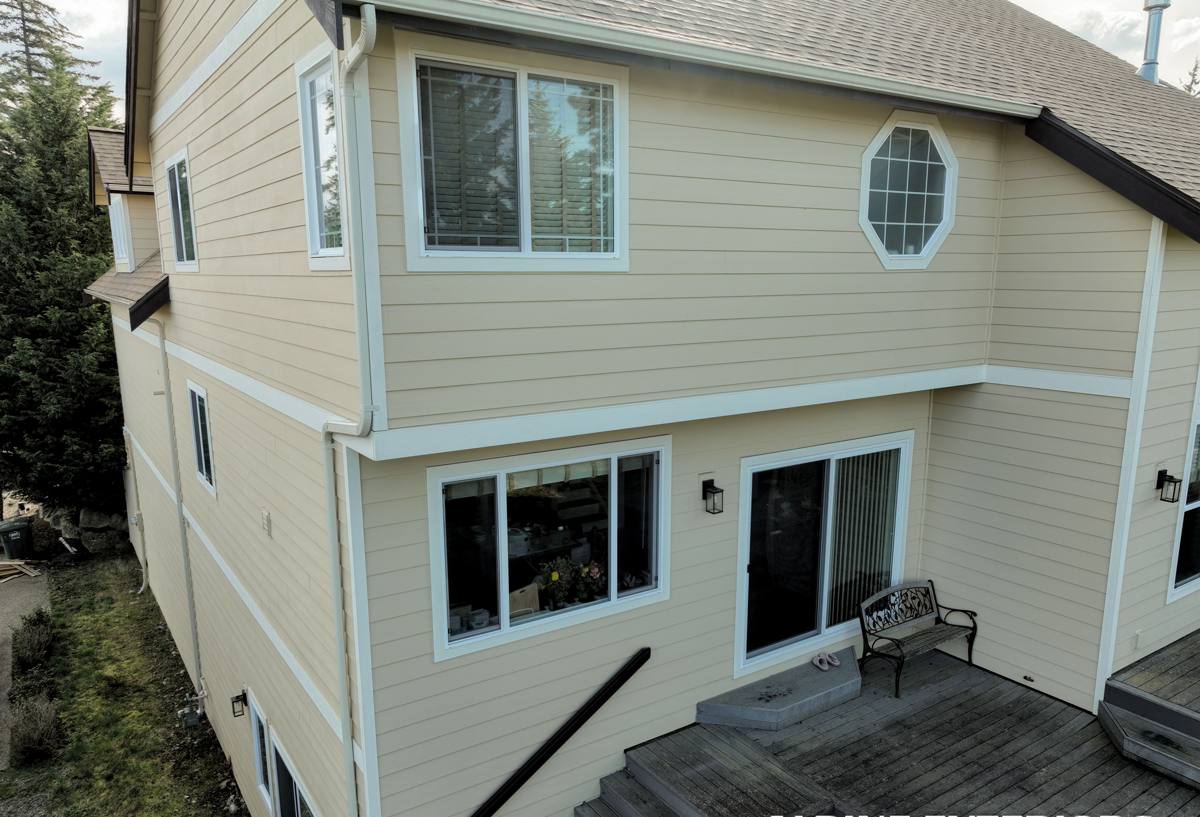
Geneva sits close enough to Lake Whatcom and the surrounding tree cover that decks here take a beating most inland properties never see. Between the driving rain off the water, the salt-tinged air that reaches this part of Whatcom County, and a moss season that can run five or six months a year, wood and composite decking both get pushed hard. We work on decks throughout Sudden Valley regularly, and Geneva's mix of older cabin-style homes and newer builds gives us a good read on what actually fails first and why.
This page covers deck repair specifically — not new deck construction, though we do that too. If your deck has soft spots, loose railings, staining, or boards that have started to cup or crack, this is what we look at and how we fix it.
Why Geneva Decks Wear Faster Than People Expect
Moisture That Never Fully Leaves
Whatcom County's long wet season means a deck can go weeks at a time without a real drying-out period. Water sits in joints, under railing posts, and around fastener heads, and that's where rot gets its start. On a lake-adjacent property like most of what you'll find around Geneva, humidity stays elevated even between rain events, which slows drying further.
Salt Air and Metal Fasteners
Homes in this part of the county get periodic salt-laden air off the Sound, carried inland on weather systems. It's not the same exposure as a beachfront property, but over years it's enough to corrode standard fasteners, hinges, and connector hardware faster than a dry-climate deck would see. Corroded fasteners lose grip strength long before they look obviously bad, which is why a visual check alone can miss the problem.
Moss, Algae, and Surface Breakdown
Moss doesn't just look bad — it holds moisture directly against the decking surface and blocks it from drying evenly. On wood decking that means accelerated graying, splintering, and eventually soft or spongy boards. On composite decking, trapped moss and algae can stain the surface and, in some products, contribute to slow degradation at butt joints and fastener points. Given how long moss season runs here, deck surfaces in Geneva need more frequent cleaning than the manufacturer's baseline recommendation assumes.
What Correct Deck Repair Actually Involves
A lot of deck "repair" in this region is really just cosmetic patching — replacing the board that looks worst and calling it done. That approach misses the structural issues underneath, which is where the real risk lives. Our process starts with the frame, not the surface.
Structural Inspection First
- Check ledger board attachment to the house — this is the single most common failure point on older decks and the most dangerous if it's loose or rotted
- Probe joists and beams for soft spots, especially near the ledger and at any point where standing water tends to collect
- Inspect posts and footings for movement, rot at the base, or undersized/deteriorated concrete
- Check all structural connector hardware for rust, corrosion, or missing fasteners
- Test railings and guard posts for lateral movement — a railing that flexes under hand pressure has a structural problem, not a cosmetic one
- Look for improper flashing at the ledger, which is one of the most common causes of hidden rot in this climate
Then the Visible Repairs
Once we know the frame is sound (or have fixed what wasn't), we move to decking boards, railing components, stair treads, and fascia. We replace what's actually failed rather than defaulting to a full resurface — sometimes that's a handful of boards, sometimes it's most of the deck. We'll tell you honestly which one you're looking at before any work starts.
Repair vs. Full Resurface vs. Rebuild
| Situation | Typical Fix | What Drives the Decision |
|---|---|---|
| Frame and ledger sound, a few boards failing | Spot repair — replace individual boards/rails | Localized rot or wear, no structural movement |
| Frame sound, surface worn/graying across the board | Full resurface, frame reused | Structural inspection passes; cost-effective way to extend deck life |
| Ledger rot, joist rot, or footing movement | Partial or full rebuild | Structural components can't be safely patched around |
| Railings loose or undersized for current code | Railing/guard system replacement | Safety issue independent of decking condition |
Cost for any of these depends heavily on deck size, height off grade, decking material, and how much of the frame needs to come out. We give a firm number after we've actually looked at the deck — not a phone estimate — because the frame condition is what really drives the price, and that's not visible from the surface.
Wood vs. Composite: What We See in Repairs
Both materials show up on Geneva decks, and both can be repaired well if the underlying structure is sound. Here's the honest tradeoff we walk homeowners through:
Wood Decking
Cedar and pressure-treated lumber are common on older Sudden Valley homes. Wood is straightforward to spot-repair — individual boards come out and go back in cleanly — but it needs more frequent maintenance in this climate: annual or biannual cleaning, periodic sealing, and closer attention during moss season. Skipping maintenance is the single biggest reason we get called out for wood deck repair here.
Composite Decking
Composite holds up better against moisture and doesn't need staining, which appeals to a lot of owners who don't want the upkeep. The tradeoff is that composite repairs are less forgiving — matching an older composite board's color and profile can be difficult since manufacturers change product lines, and some composite systems are more installation-sensitive around hidden fastener spacing and expansion gaps. When we repair composite decking, we're careful to follow the original manufacturer's fastening and gap specs so the warranty (where one still applies) isn't compromised.
We don't push one material over the other as a blanket rule — it depends on the existing deck, your maintenance appetite, and budget. What we won't do is patch a composite deck with mismatched hardware or ignore manufacturer spacing just to save a step, because that's exactly the kind of shortcut that causes a second repair call in a year or two.
Our Repair Process
- On-site inspection. We walk the full deck, probe suspect areas, and check the frame from underneath where accessible.
- Written scope and estimate. You get a clear breakdown of what's structural, what's cosmetic, and what it costs — no vague allowances.
- Repair or replace, in order. Structural work happens first; surface and railing work follows once the frame is confirmed sound.
- Hardware upgrade where it matters. Given the salt air and moisture exposure typical around Geneva, we use corrosion-resistant fasteners and connectors rated for the conditions, not just whatever's cheapest.
- Final walkthrough. We check railings for rigidity, boards for consistent fastening, and make sure drainage under the deck hasn't been blocked by the repair itself.
Signs You Shouldn't Wait On
- Railings that flex, wobble, or feel loose when you lean on them
- Boards that feel spongy or give slightly underfoot
- Visible gaps, rust streaks, or staining around fastener heads
- Any separation between the deck ledger and the house
- Persistent moss or dark staining that keeps returning after cleaning
- Stair stringers that feel less rigid than they used to
None of these mean the whole deck needs to come out. But every one of them is worth a look before winter's wet season adds more moisture to the equation.
Why a Crew That Already Works Geneva Matters
Deck repair done right depends on knowing what's normal wear for this specific environment versus what's an early warning sign. A crew that mostly works drier inland areas can underestimate how fast moisture and moss compromise a deck near Lake Whatcom, or over-spec hardware that isn't necessary. We work Sudden Valley and the surrounding Whatcom County communities regularly enough to know which failure points show up first here, which fastener and flashing choices actually hold up to the salt air and rain, and how to schedule around the wet season instead of fighting it. That local pattern recognition is what keeps a repair from turning into a repeat visit.
Get an Honest Look at Your Deck
If your deck in Geneva or elsewhere in Sudden Valley has soft boards, loose rails, or just doesn't feel as solid as it used to, we're happy to come take a direct look. There's no cost and no pressure to move forward — you'll get a clear read on what's actually going on and what it would take to fix it. Use the form below to request a free estimate.