 Sudden Valley Siding
 Roofing in Yew Street: A Different Set of Demands
Yew Street sits inside a part of Whatcom County where the roof over your head works harder than most people realize. Between the lake-effect humidity that settles into Sudden Valley overnight, the salt-tinged air that drifts in off the Sound, and rain that rarely lets up for long stretches from fall through spring, a roof here is under near-constant moisture pressure. Add in the tree cover that shades much of the neighborhood and you get long moss season that can run eight months or more out of the year. None of this means roofs fail faster here than anywhere else — it means they fail differently, and a replacement done without that in mind tends to show problems within a few short years instead of holding up for decades.
This page is about one job, done right, in one place: full roof replacement for homes on and around Yew Street. Not a general overview of roofing services — the specifics of what this climate demands, what a correct installation actually involves, and why local experience on this exact terrain matters.
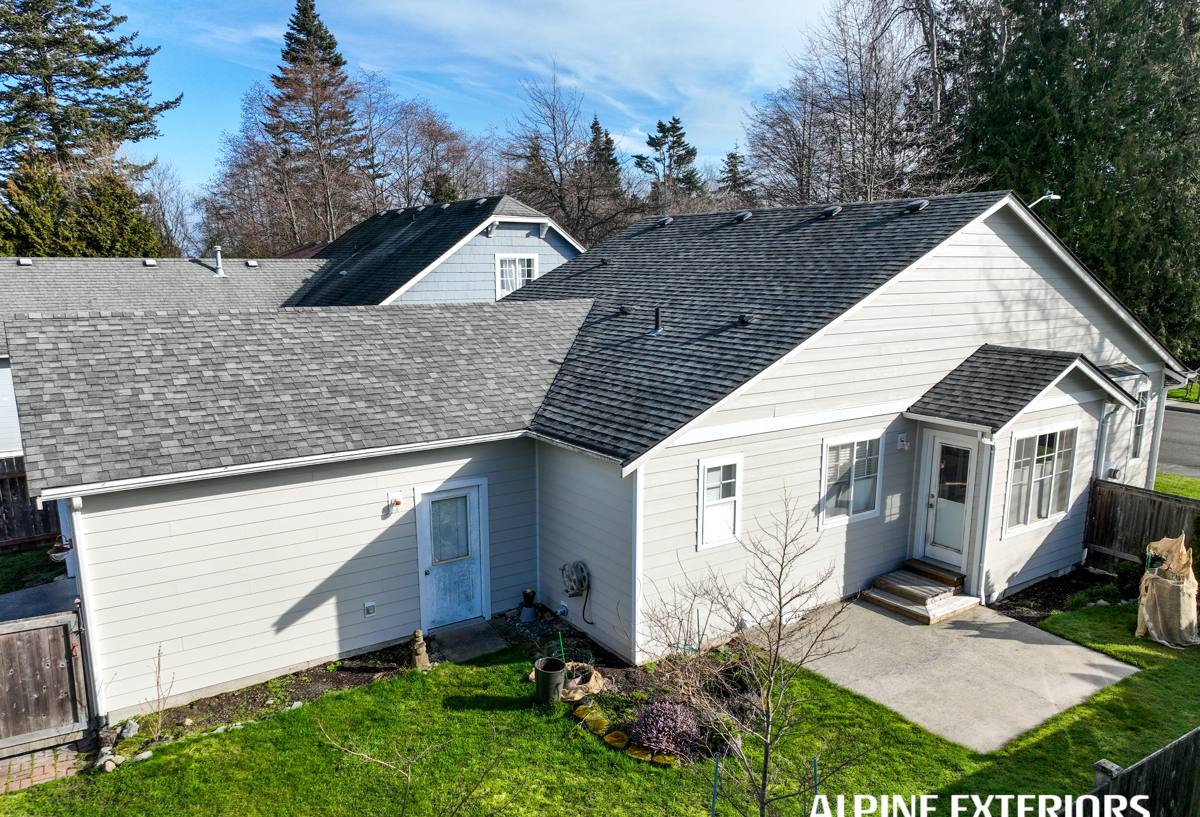
What the Local Climate Actually Does to a Roof
Moisture That Never Fully Dries Out
Sudden Valley's proximity to Lake Whatcom and the surrounding tree canopy means shaded roof sections can stay damp for days after a storm passes. Combined with the region's driving rain — wind-driven rather than straight-down — water gets pushed sideways under shingle tabs, around flashing laps, and into any gap that a lesser installation would leave loose. Roofs here don't just need to shed water; they need to resist water that's actively being pushed uphill and sideways by wind.
Moss, Not Just an Eyesore
Moss is the most visible sign of the local climate's effect on roofing, but it's also a real structural threat. Moss holds moisture against the roofing surface long after the rest of the roof has dried, which accelerates granule loss on asphalt shingles and can work its way under shingle edges and lift them over time. A roof replacement in this area has to account for moss from day one — not as an afterthought treatment applied after installation, but as a design consideration in material choice, ventilation, and edge detailing.
Salt Air and Metal Components
Even set back from open water, homes in this part of Whatcom County get enough salt-laden air to matter for anything metal on the roof — flashing, fasteners, vents, and drip edge. Standard-grade metal components corrode faster under these conditions, and corroded flashing is one of the most common causes of roof leaks that have nothing to do with the shingles themselves.
What a Correct Roof Replacement Involves Here
A roof replacement is more than swapping old shingles for new ones. For a Yew Street home, the job we consider "done right" includes several steps that matter more here than in a drier, more exposed part of the state.
- Full tear-off and deck inspection — moisture-damaged sheathing gets replaced, not covered over
- Ice-and-water shield or self-adhering membrane at eaves, valleys, and around every penetration, not just where code requires it
- Corrosion-resistant flashing and fasteners suited for salt-air exposure
- Ventilation checked and corrected — balanced intake and exhaust to keep the underside of the deck dry, which also slows moss regrowth from underneath
- Underlayment selection that accounts for extended damp exposure during a multi-day install, common with our rain patterns
- Edge and valley detailing built to resist wind-driven rain, not just vertical rainfall
- Clean, low-clearance workmanship around chimneys, skylights, and any tree-adjacent sections where moss pressure is highest
Skip any one of these and the roof may look fine for a season or two, then start showing the same moisture and moss problems the old roof had — just on a newer surface.
Choosing Materials for This Specific Environment
There's no single "best" roofing material for every home, but there are real trade-offs worth understanding before you decide, especially given Yew Street's shade cover and moisture load.
| Material | Moss Resistance | Salt-Air Durability | Typical Lifespan Here |
|---|---|---|---|
| Standard asphalt shingle | Moderate — benefits from algae-resistant granules | Good, if flashing and fasteners are corrosion-rated | 18–25 years |
| Architectural/dimensional shingle | Better airflow under tabs reduces trapped moisture | Good with proper metal components | 25–30 years |
| Metal roofing (standing seam) | High — sheds moisture fast, little surface for moss to grip | Requires marine-grade coatings near salt exposure | 40+ years |
| Wood shake | Low without aggressive maintenance — holds moisture, feeds moss | Poor without regular treatment | Highly maintenance-dependent |
Our standard recommendation for most Yew Street homes is a quality architectural shingle with algae-resistant granules and full ventilation correction, or a standing-seam metal roof for homeowners who want to minimize moss maintenance long-term and are comfortable with the higher upfront cost. We steer away from wood shake in heavily shaded sections of this neighborhood — not because it's a bad product everywhere, but because the maintenance burden it creates in a damp, shaded microclimate rarely matches what most homeowners want to keep up with.
Reading the Signs Your Roof Needs Replacing, Not Just Repairing
Not every roof problem on Yew Street calls for a full replacement. But there are signs that reliably point past the repair stage:
- Granule loss heavy enough that shingles look patchy or bald in sun-exposed areas
- Moss that returns within months of cleaning, especially on north-facing or tree-shaded slopes
- Soft or spongy decking felt underfoot during inspection — a sign moisture has reached the sheathing
- Daylight visible through the attic at roof boards, or consistent damp spots on attic insulation
- Flashing that's visibly rusted, lifted, or separated around chimneys and vents
- Multiple repair calls in the last few years for leaks in different spots rather than the same one
If you're only seeing one of these, a repair may be the honest answer. We'll tell you that during the estimate rather than push a full replacement you don't need yet.
Our Process for a Yew Street Roof Replacement
1. On-Site Assessment
We walk the roof and the attic, not just the yard. Deck condition, ventilation, existing flashing, and moss patterns all get checked before we recommend anything.
2. Straightforward Estimate
You get a written scope and price range before any work starts — what's included, what materials we're proposing and why, and a realistic timeline given the season and weather forecast.
3. Weather-Aware Scheduling
Given how much rain this area gets, we plan tear-off in sections and keep the deck covered and dry at every stage of a multi-day job rather than leaving open decking exposed overnight.
4. Tear-Off and Deck Repair
Old roofing comes off down to the deck. Any water-damaged sheathing is replaced before anything new goes down — this is the step that gets skipped by crews trying to move fast, and it's the one that matters most in a climate like this.
5. Installation to Local Conditions
Membrane, flashing, ventilation, and final roofing material go in per the details above, built for wind-driven rain and long moss exposure, not a generic install spec.
6. Final Walkthrough
We walk the finished roof and the site cleanup with you before calling the job done.
Why Local Experience on This Exact Terrain Matters
A crew that's worked roofs throughout Sudden Valley knows which slopes on Yew Street hold moss longest, which homes have ventilation issues common to the area's older construction, and how the tree cover changes moisture exposure block by block. That's not something you get from a roofing crew that mainly works drier, more open parts of Whatcom County or comes from outside the region entirely. It shows up in small decisions — where to add extra membrane, which flashing detail to reinforce, how to sequence a tear-off around the rain — that add years to a roof's real-world lifespan even though they rarely show up on a basic estimate sheet.
Maintaining a New Roof in This Climate
A correct installation buys you a lot, but a little ongoing attention keeps it performing as designed:
- Keep gutters clear of needles and debris so water isn't backing up under the eaves
- Have overhanging branches trimmed back where practical to reduce shade and moss pressure
- Get a moss check every year or two, especially on north-facing slopes — early treatment is far cheaper than letting it establish
- Have flashing and attic ventilation checked at the same interval, since these are the components salt air and moisture affect first
None of this is heavy maintenance — it's the kind of light upkeep that, paired with a roof built for this environment in the first place, keeps a Yew Street roof performing for its full expected lifespan instead of falling short of it.
If your roof is showing its age or you just want an honest read on where it stands, we're happy to come out, walk it with you, and give you a straightforward estimate — no pressure, no hard sell. Use the form below to get started.