 Sudden Valley Siding
 Why Yew Street Roofs Take a Different Kind of Beating
Homes around Yew Street in Sudden Valley deal with a roofing environment that's tougher than it looks from the street. Whatcom County sits close enough to the water that marine air carries a fine load of salt inland, and that salt settles on metal flashing, fasteners, and exposed edges year-round. Add in the driving rain that comes through in windier storm systems and the long, damp moss season that runs from fall through spring, and you've got three separate stressors working on the same roof at the same time. None of them is dramatic on its own. Together, over several seasons, they're what turns a small maintenance item into a repair, and a repair into a full roof replacement if it's ignored too long.
We've done repair work on enough roofs in this pocket of Sudden Valley to know the pattern: north-facing slopes and shaded valleys hold moisture longer, tree cover close to the house means more debris in the valleys and gutters, and the salt-tinged air accelerates corrosion on anything galvanized that isn't properly coated. A repair job here has to account for all of that, not just patch the spot where water is currently showing up inside the house.
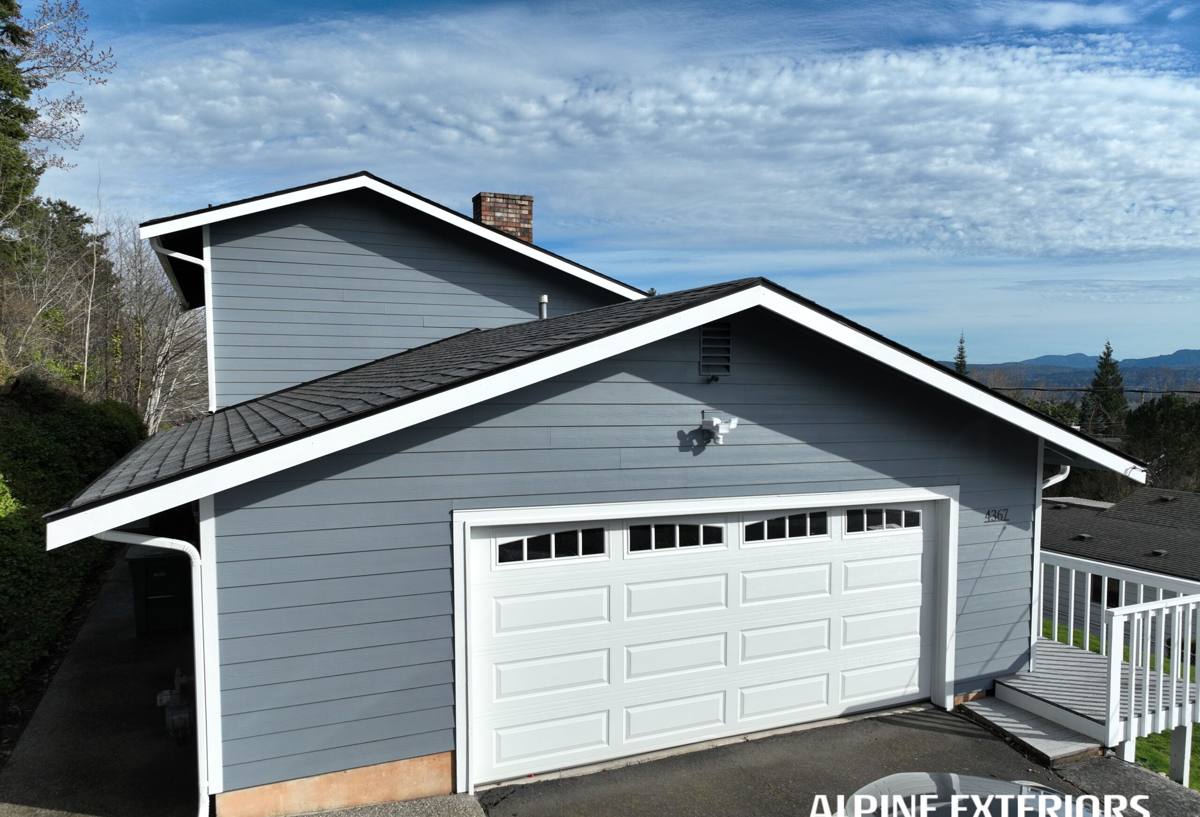
What a Correct Roof Repair Actually Involves
A lot of roof "repairs" are really just cosmetic patches — a bead of sealant over a crack, a shingle nailed back down without checking what's underneath it. That kind of work looks fine for a season and then fails again, often in the same spot, because the actual cause was never addressed.
Diagnosing the Real Problem
Water rarely enters a roof exactly where it shows up on your ceiling. It travels along rafters, sheathing, and underlayment before it finds a gap in the drywall or insulation. A correct repair starts with tracing the leak back to its source — usually a failed flashing detail, a cracked or lifted shingle, a compromised pipe boot, or nail pops that have backed out and let water track underneath the roofing material. We check the attic side when it's accessible, because staining patterns up there tell you more about the real path of the water than anything visible from the ground.
Matching Materials Correctly
Once we know the cause, the fix has to match what's already on the roof — same shingle profile and weight where possible, correct-gauge flashing metal, and fasteners rated for coastal exposure rather than standard interior-grade hardware. Mismatched materials are one of the most common reasons a repair fails early: a thinner shingle patched into a heavier existing roof telegraphs unevenly and lifts in wind, and the wrong flashing metal paired with dissimilar metal nearby can set up galvanic corrosion that eats through in a few seasons.
Moss, Algae, and the Slow Damage They Cause
Sudden Valley's tree cover and the long stretch of wet, mild weather Whatcom County gets each year make this one of the more moss-prone areas we work in. Moss isn't just a cosmetic problem. As it establishes on a shaded slope, it holds moisture directly against the roofing material far longer than open air would, and its root structure works into shingle granules and seams over time. That constant dampness is what accelerates granule loss, softens the mat underneath asphalt shingles, and eventually opens the door to rot in the decking below.
Signs You're Overdue for a Moss Treatment
- Green or dark streaking concentrated on north-facing or shaded slopes
- Raised or "puffy" patches where moss has lifted shingle edges
- Granules collecting in gutters, especially after rain
- Soft or spongy spots underfoot when walking the roof for inspection
- Interior staining that appears only during or after heavy rain, not constantly
Left alone, moss growth on a Yew Street roof isn't a one-time cleanup — it comes back every wet season unless the roof gets treated and the overhanging branches that keep it shaded are cut back. Part of a proper repair visit is telling you honestly whether what you're looking at is a maintenance issue (moss removal and treatment) or has already progressed into shingle or decking damage that needs an actual repair.
Common Roof Repair Needs We See on Yew Street
Every roof is different, but the repair calls we get in this area tend to fall into a handful of recurring categories. Here's how we typically see them show up, what's usually driving them, and the general approach we take:
| Issue | Common Cause | Typical Fix |
|---|---|---|
| Ceiling stain after storms | Failed flashing at a chimney, wall, or valley | Remove and re-flash the detail with new step or valley metal |
| Shingles missing or curling | Wind uplift, age, or moss undermining the seal | Replace affected shingles, check surrounding courses for hidden damage |
| Damp attic insulation | Slow leak through nail pops or cracked pipe boots | Reseat or replace fasteners, swap failed boots, verify underlayment |
| Green streaking on north slope | Prolonged moisture and shade from tree cover | Moss treatment and removal, gutter clearing, trim recommendation |
| Soft spot underfoot | Long-term moisture reaching the decking | Cut back to sound decking, replace plywood section, reroof over it |
| Rusting or streaking metal flashing | Salt-air corrosion on standard-grade metal | Replace with coastal-rated flashing, correct fastener type |
Our Repair Process, Step by Step
Homeowners on Yew Street want to know what's actually going to happen on their roof before a crew shows up, so here's the sequence we follow on a typical repair job:
- Inspection and diagnosis. We look at the problem area from both the roof surface and, where accessible, the attic, and identify the actual entry point rather than just the visible symptom.
- Written scope and estimate. You get a plain-English explanation of what's wrong, what we're going to do about it, and a cost range before any work starts.
- Material matching. We source shingles, flashing, and underlayment that match your existing roof's profile and are rated for this region's moisture and salt exposure.
- The repair itself. Removal of damaged material, inspection of the decking underneath, replacement of anything compromised, and correct re-installation with proper flashing and fastening.
- Cleanup and debris check. Old shingles, nails, and moss debris are cleared from the roof, gutters, and yard — a magnetic sweep for stray fasteners is standard.
- Walkthrough. We show you what was done and explain any maintenance steps, like moss treatment intervals or gutter clearing, that will help the repair hold.
Repair vs. Replacement: How We Help You Decide
Not every roof problem calls for a repair, and not every repair candidate is actually worth fixing versus planning for a replacement down the road. We'd rather tell you honestly which category your roof is in than sell you a repair that's just delaying an inevitable full reroof by a year.
- If damage is isolated to one section — a flashing detail, a handful of shingles, one soft spot — a targeted repair is usually the right, cost-effective call.
- If the roof is showing widespread granule loss, multiple soft spots, or repeated leaks in different locations, repairs become a pattern of chasing symptoms rather than solving the problem.
- Roof age matters: a well-maintained asphalt roof nearing the end of its expected service life may not be worth another round of patching.
- Underlying decking condition is the deciding factor more often than the shingles themselves — sound decking usually means repair is viable; widespread rot usually means it isn't.
- Your plans for the home matter too — a near-term sale versus a long-term stay can change which option makes more financial sense.
Why Hiring a Crew That Already Works Yew Street Matters
Roof repair isn't one-size-fits-all, and a crew that hasn't worked this specific stretch of Sudden Valley doesn't automatically know which slopes hold moss longest, how tree cover on a given lot shades the roof through the seasons, or how quickly standard-grade flashing corrodes in this air compared to a drier inland location. Local experience means fewer surprises: we know roughly what shingle profiles and colors are common on homes built in this area's typical era, we know which flashing and fastener grades actually hold up here versus which ones start showing rust within a couple of seasons, and we know that a repair scheduled without accounting for the wet season's timing can end up getting interrupted or compromised before it's fully cured.
It also means accountability. A contractor working a small radius around Sudden Valley has a reputation to protect with the neighbors on either side of your house, not just with you. That's a different incentive than a crew that's in and out of the county on a one-off job.
Maintenance That Extends a Repair's Life
A repair is only as good as the maintenance around it. A few habits make a real difference in how long a fix holds up under Whatcom County's wet, mossy conditions:
Seasonal Gutter and Debris Checks
Clogged gutters back water up under the roof edge, which is one of the most common causes of repeat leaks after an otherwise solid repair. Clearing gutters and roof valleys before the heavy fall rains start is worth doing every year, not just when there's already visible damage.
Trim Back Overhanging Branches
Shade is what lets moss establish and spread. Where it's practical, trimming back branches that overhang the roof reduces how long shaded sections stay damp and slows regrowth after a moss treatment.
Periodic Moss Treatment
In an area with this much tree cover and moisture, a one-time moss removal isn't usually a permanent fix. Treating shaded slopes on a regular schedule keeps moss from re-establishing and undoing the protective work a repair just did.
If you're seeing a stain on the ceiling, missing shingles after a storm, or moss creeping across a north-facing slope, we're glad to take a look and give you a straight answer about what it actually needs. Fill out the form below for a free, no-pressure estimate on your Yew Street roof repair.