 Sudden Valley Siding
 Roofing in Alger: A Different Set of Problems Than Roofing Elsewhere
Alger sits in the same weather corridor as the rest of Whatcom County — damp Pacific air pushing in off the water, funneled and cooled by the surrounding hills, dropping rain across most of the year. Roofs here don't fail the way roofs fail in drier parts of the state. They fail slowly, from the top down and the edges in, because the shingle field almost never gets a real chance to dry out between storms. Add salt-laden air working on fasteners and flashing, and a moss season that can run from fall through spring, and you've got a roofing environment that punishes shortcuts a lot faster than a catalog spec sheet would suggest.
A shingle roof installed correctly for this climate looks nearly identical to one installed for a dry inland town — same material, same general layout. The difference is in the details you can't see once the job is done: how the underlayment is lapped, how much ventilation is built into the field, what happens at every valley, pipe boot, and wall intersection. Those details are where roofs in this area either hold up for their full warranty life or start leaking inside of ten years.
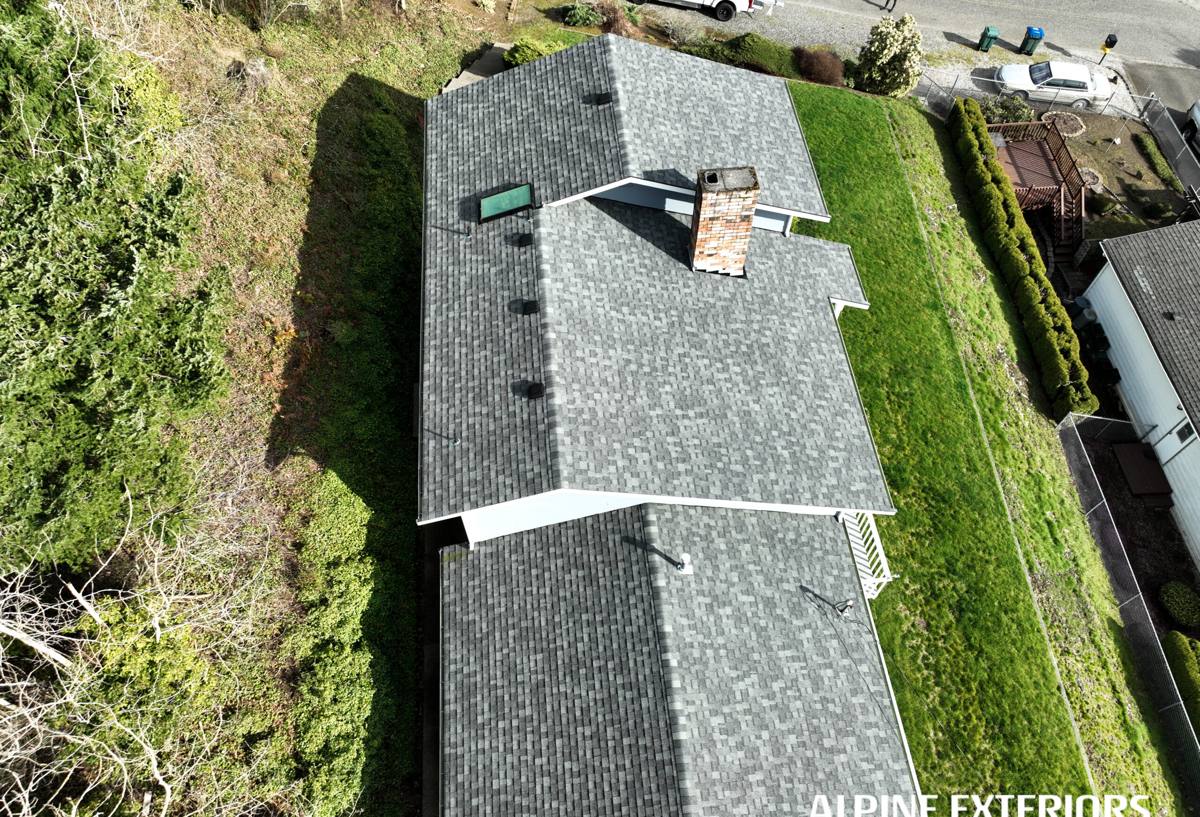
What Driving Rain and Salt Air Actually Do to a Shingle Roof
Driving rain
Wind-driven rain doesn't just fall on a roof — it gets pushed sideways and upward under shingle tabs, into nail lines, and along flashing edges. On a roof with proper underlayment and correctly lapped courses, that water sheds harmlessly. On a roof where shortcuts were taken, driving rain finds every gap and works it wider year after year, usually silently, until it shows up as a stain on a ceiling far from where the water actually got in.
Salt air
Coastal and near-coastal air carries fine salt that settles on metal — nail heads, flashing, drip edge, vent stacks — and accelerates corrosion. Standard fasteners and lower-grade flashing can start showing rust streaks and pinholing years before they would inland. It's a slow process, but it's constant, and it's one of the main reasons material selection matters more here than it would in a dry climate zone.
Moss season
Shade, moisture, and organic debris are moss's favorite combination, and a lot of Whatcom County roofs have all three. Moss holds water against the shingle surface, works its way under tabs as it grows, and can lift granules and shingle edges over time. A roof that never fully dries out is a roof where moss gets a permanent foothold instead of a seasonal one.
What a Correct Asphalt Shingle Job Involves Here
There's no exotic fix for this climate — asphalt shingles work fine in the Pacific Northwest when they're installed with the local conditions actually accounted for, not just the manufacturer's minimum spec. That means:
- Ice-and-water shield or a comparable self-adhering membrane at eaves, valleys, and any low-slope transitions, not just where code requires it
- Synthetic or felt underlayment installed with full, weather-tight laps — not just stapled down and covered
- Metal flashing at every wall, chimney, and roof-to-roof transition, sized and lapped so water can't back up under it in a driving rain
- Balanced intake and exhaust ventilation so the roof deck can actually dry between storms instead of staying damp under the shingles
- Corrosion-resistant fasteners and flashing appropriate for salt-influenced air, not the cheapest stock option
- Shingles rated for algae and moss resistance where the roof gets shade for a meaningful part of the day
Skip any one of these and the roof may still look fine for a few years. The failures that show up in this climate are almost always deferred, not immediate.
Choosing Shingles and Materials for This Climate
Not every asphalt shingle product performs the same way under constant moisture and shaded, moss-prone conditions. The table below is a general guide to how common tiers compare — actual product lines and pricing vary by manufacturer and should be confirmed for your specific roof.
| Shingle Tier | Typical Lifespan | Moss/Algae Resistance | Best Fit |
|---|---|---|---|
| Standard 3-tab | 15–20 years | None built in | Budget-driven jobs on sun-exposed, low-shade roofs |
| Architectural (laminate) | 25–30 years | Often available with algae-resistant granules | Most homes in this area — better wind and moisture performance |
| Premium/designer architectural | 30–50 years (some limited lifetime) | Algae-resistant standard on most lines | Shaded lots, steep or complex rooflines, longer-term ownership |
| Impact-rated architectural | 25–30+ years | Varies by line | Homes with exposed western walls or heavier storm exposure |
For a shaded, moisture-heavy area like this, we generally steer homeowners toward an architectural shingle with built-in algae resistance as the baseline, not the upgrade. The small difference in material cost up front is usually much smaller than the cost of re-roofing a decade early because moss and moisture got into a bargain-tier shingle.
Our Installation Process
1. On-site inspection and honest assessment
We walk the roof, check the deck condition, look at existing ventilation, and identify problem areas — valleys, wall intersections, shaded sections — before we ever talk about shingle color. If a full replacement isn't actually needed, we'll tell you that.
2. Tear-off and deck check
Old material comes off down to the deck so we can see what's actually underneath — soft spots, old water damage, or ventilation gaps that a re-cover would just hide for another owner to deal with later.
3. Underlayment and flashing first
This is the part of the job that determines whether the roof holds up in driving rain. Ice-and-water membrane, properly lapped underlayment, and new flashing at every penetration and transition go down before a single shingle is installed.
4. Shingle installation
Shingles go on to manufacturer spec with corrosion-resistant fasteners, correct nailing patterns for wind exposure, and attention to every valley, hip, and ridge line.
5. Ventilation check
We confirm intake and exhaust are balanced so the new roof can actually dry out between storms instead of trapping moisture against the deck.
6. Final walkthrough
We review the finished roof with you, point out anything you should keep an eye on, and explain the warranty coverage in plain terms.
Signs an Alger Roof Needs Attention
Because failures in this climate tend to be slow and hidden, it helps to know what to check for before a small issue becomes a ceiling stain:
- Moss or dark streaking building up on north-facing or shaded slopes
- Granules collecting in gutters or at downspout outlets
- Shingle tabs that look curled, lifted, or cupped
- Rust staining around vent stacks, chimney flashing, or nail heads
- Soft or spongy spots when walking the roof (should only be checked by a professional)
- Daylight visible through the roof deck from inside the attic
- Any interior ceiling stains, even faint ones, especially after a stretch of heavy rain
None of these mean the roof needs to be replaced immediately — but they're worth a professional look before the next wet season, not after.
Moss and Long-Term Maintenance
A well-installed shingle roof in this climate still benefits from basic upkeep. Keeping overhanging branches trimmed back reduces shade and debris buildup. Gutters clear of needles and leaves keep water moving off the roof instead of backing up under the shingle edge. Gentle, low-pressure moss removal — not power-washing, which strips granules and shortens shingle life — keeps moss from establishing a permanent hold. Zinc or copper strips near the ridge can help suppress regrowth on shaded slopes over time. None of this replaces a correct installation, but it extends the life of one significantly.
Why It Matters to Hire a Crew That Already Works This Area
Roofing crews unfamiliar with Whatcom County's rain patterns and shaded, tree-heavy lots sometimes install roofs to a generic spec that works fine somewhere drier and fails here in ways that don't show up right away. A crew that already works in and around Sudden Valley and Alger knows which details actually matter locally: where driving rain typically gets pushed, which rooflines hold shade and moss longest, and which fastener and flashing choices hold up against salt-influenced air over the long run. That local knowledge shows up in fewer callbacks and roofs that perform the way they're supposed to for their full rated life, not just the first few dry summers.
If you're weighing a repair, a re-cover, or a full replacement for a home in the Alger or Sudden Valley area, we're happy to take a look and give you a straight answer — no pressure, no upsell. Use the form below to request a free estimate.