 Sudden Valley Siding
 Metal Roofing for Acme Homes
Acme sits back in the foothills east of Lake Whatcom, tucked under heavy tree cover with the South Fork Nooksack running nearby. That setting is beautiful, but it's tough on a roof. Between the shade, the moisture that never fully dries out, and the long stretch of gray-sky months that Whatcom County is known for, a roof out here works harder than one on an open lot closer to town. Metal roofing holds up to that kind of pressure better than most other options, which is why we get asked about it constantly from homeowners in Acme and the wider Sudden Valley area.
This page is specifically about metal roofing for Acme properties — what the local conditions demand, what a correct installation actually looks like, and how we approach the job. If you're comparing materials or just want to understand what you're paying for, this should answer the real questions.
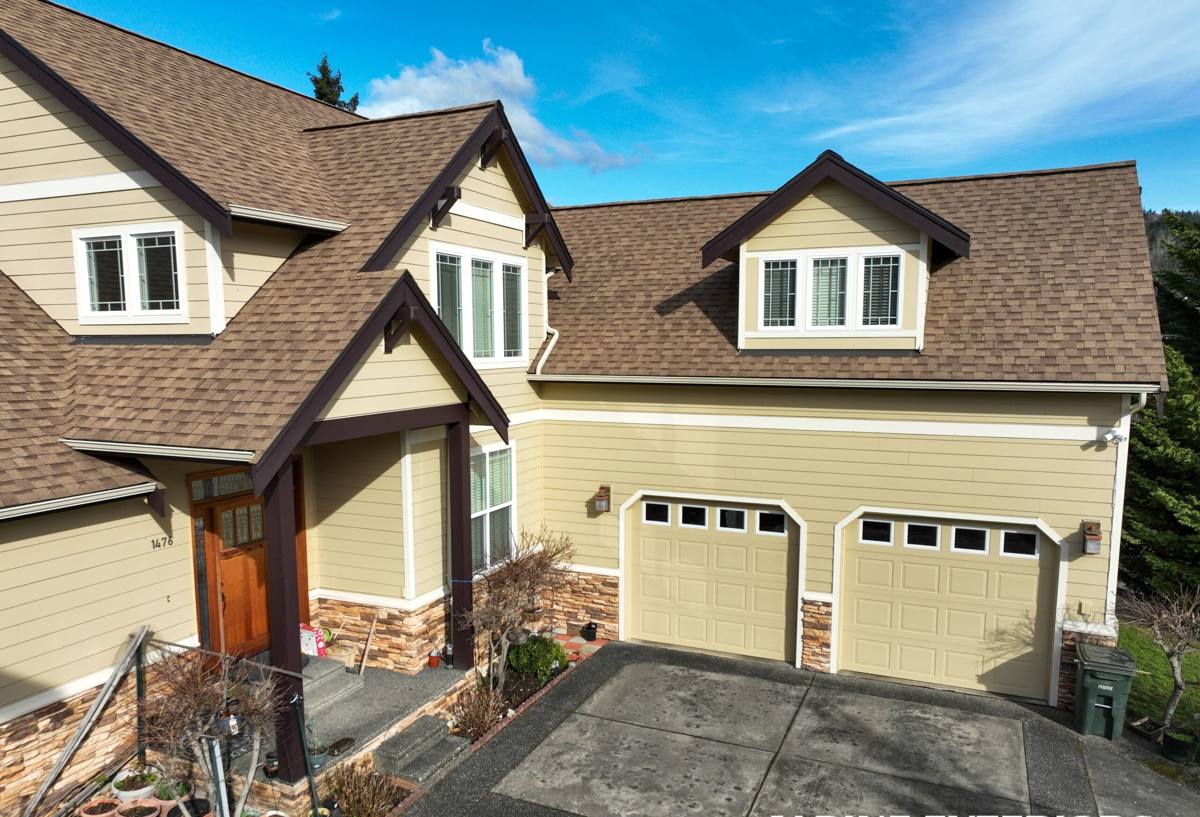
What Acme's Climate Does to a Roof
A few things define roofing conditions in this part of Whatcom County, and they compound on each other:
- Persistent moisture. Driving rain off the foothills, combined with tree canopy that blocks sun and airflow, means roof surfaces in Acme often stay damp longer than roofs in open areas. That's the single biggest driver of moss and algae growth.
- A long moss season. Shaded, tree-lined lots like the ones common around Acme give moss a real foothold — often for most of the year, not just the rainy months. Moss holds moisture against the roof surface and, on the wrong material, works into seams and under shingle tabs over time.
- Debris load. Needles, cones, and leaf litter collect fast under a full canopy. Debris that sits on a roof holds water against the surface and clogs valleys and gutters.
- Regional exposure. Whatcom County as a whole deals with salt-laden air near the water and constant wind-driven rain further inland — Acme is more sheltered than the shoreline, but the same wet, corrosive weather pattern moves through the whole county over the course of a year.
None of this is unusual for this part of Washington. It just means the roofing choice matters more here than it would in a drier climate.
Why Metal Holds Up Better in This Environment
Metal roofing has a few properties that line up well with what Acme homes deal with:
Moss resistance
Moss needs a surface it can grip and organic material to feed on. Metal doesn't give it either. Algae and moss can still land and sit on a metal roof, especially in shaded valleys or where debris accumulates, but they don't root into the surface the way they do into shingle granules. A rinse or light brushing keeps a metal roof clear far more easily than a comparable shingle roof under the same tree cover.
Water shedding
Correctly installed metal roofing sheds water fast, with far fewer seams and laps for water to work into than a shingle roof has. In driving rain, that matters — wind-driven water is exactly the condition that finds weak points in a roof, and a well-fastened metal panel system gives it fewer places to do that.
Longevity under damp conditions
Shingle roofs in constantly shaded, damp settings tend to show wear faster than the same product would in a drier climate — granule loss, curling, and moss intrusion all accelerate under tree cover. Steel and aluminum roofing systems with a quality coating don't degrade the same way from moisture exposure, which is a real advantage on a lot like the kind you find around Acme.
Debris shedding
The smooth, low-friction surface of standing seam and steel shingle panels sheds needles and leaves more readily than a shingle roof's rougher texture. Less debris retention means less trapped moisture, which means less moss.
Metal Roofing Options for Acme Properties
"Metal roofing" isn't one product — the systems differ in appearance, fastening method, and price, and the right choice depends on the home and the budget.
| System | How it's fastened | Best for | Trade-offs |
|---|---|---|---|
| Standing seam | Concealed clips, no exposed fasteners | Homes wanting the longest service life and cleanest look | Higher upfront cost |
| Exposed-fastener panel | Screws through the panel face, with washers | Budget-conscious projects, outbuildings, shops | Fasteners need periodic inspection and eventual replacement of washers |
| Steel shingle / stone-coated | Interlocking panels, concealed fasteners | Homeowners who want a traditional shingle look with metal's performance | More seams than standing seam, still far fewer than asphalt |
For a full-canopy lot like a lot of Acme properties, we lean toward recommending standing seam or a quality steel shingle system — the concealed fastening holds up better long-term under constant damp conditions than exposed screws, which can loosen or corrode over many wet seasons if not maintained.
What a Correct Installation Actually Involves
Metal roofing is unforgiving of shortcuts. A poorly installed metal roof can leak, oil-can (show wavy panel distortion), or corrode prematurely — problems that are expensive to fix after the fact. A correct job includes:
- Full tear-off and deck inspection. We don't install over a compromised deck. Any rot or soft sheathing, common where moisture has been sitting under old roofing, gets replaced before anything new goes on.
- The right underlayment. A high-temperature synthetic or ice-and-water shield underlayment goes down first, particularly at eaves and valleys, as a backup layer against wind-driven rain.
- Proper ventilation. Metal roofs need airflow behind them to prevent condensation buildup on the underside of the panels, especially over shaded, damp structures. We check ridge and soffit ventilation as part of the job, not as an afterthought.
- Correct fastening pattern and spacing. Manufacturer-specified spacing and torque on fasteners — over-driven or under-driven screws are one of the most common causes of early metal roof failure.
- Flashing detail at every penetration. Chimneys, vents, and valleys are where leaks actually start. Custom-formed flashing, not caulk, is what keeps water out long term.
- Panel expansion allowance. Metal expands and contracts with temperature swings. Fastening systems that don't account for that will eventually cause panel buckling or fastener stress.
Our Process
When we take on a metal roofing project in Acme, it runs in a consistent order:
- On-site inspection. We look at the existing roof, deck condition, ventilation, tree cover, and drainage before quoting anything.
- Written estimate. A clear scope and price — system type, underlayment, flashing details, and timeline — so there's no ambiguity about what's included.
- Tear-off and deck repair. Old roofing comes off, the deck gets inspected, and any damaged sheathing is replaced before we move forward.
- Underlayment and flashing. Moisture barrier and custom flashing go in at every valley, penetration, and edge.
- Panel installation. Panels or shingles go on to manufacturer spec, with attention to fastening pattern and expansion allowance.
- Final walkthrough and cleanup. We check the finished roof, clear debris and old materials from the site, and go over care basics before we leave.
Cost Factors
Metal roofing costs more upfront than asphalt shingles, but the gap narrows over the life of the roof given how much longer it typically lasts and how much less it needs replaced due to moss and moisture damage in a climate like this one. Rough cost drivers:
| Factor | Impact on price |
|---|---|
| Roof pitch and complexity | Steeper roofs and multiple valleys/dormers add labor time |
| System type | Standing seam costs more than exposed-fastener panel; steel shingle falls in between |
| Deck condition | Rot repair from long-term moisture exposure adds cost, often found once tear-off starts |
| Access | Tree-covered, sloped, or hard-to-reach lots — common around Acme — can add setup time |
| Ventilation upgrades | Adding or correcting ridge/soffit venting adds a modest cost but protects the whole system |
We give a firm, itemized number after the on-site inspection — not a ballpark over the phone. Too much depends on what we find once we're actually looking at the deck.
Maintenance: What Keeps a Metal Roof Performing Here
Metal roofing is low-maintenance compared to shingles, but "low" doesn't mean "none" — especially under the kind of tree cover common in Acme. A simple annual routine covers most of it:
- Clear needles, leaves, and debris from valleys and around penetrations, especially heading into fall.
- Check gutters and downspouts for clogs so water actually leaves the roof instead of backing up.
- Look for any moss or algae staining in shaded areas and rinse it off before it builds up.
- Have fastener condition checked periodically on exposed-fastener systems — washers wear out over years of exposure.
- Confirm flashing around chimneys and vents is still sealed tight after major storms.
Why It Matters to Hire a Crew That Works Acme
Acme isn't a dense subdivision — it's spread-out properties with tree cover, longer driveways, and lots that don't all follow the same drainage pattern. A crew that's worked this area knows what to expect before they even climb the ladder: how much moss buildup is typical for a shaded roof out here, where debris tends to collect, and how the local weather pattern — wind-driven rain funneling down from the foothills — actually hits a roof compared to a more open lot. That's not something you get from a crew that mostly works subdivisions closer to Bellingham.
We also know what inspectors and permitting look like for Whatcom County jobs, and we're used to the access challenges that come with wooded, sloped properties — narrow driveways, staging materials without damaging landscaping, and working around septic systems and wells that are more common outside town.
Get a Free Estimate
If you're weighing metal roofing for a home in Acme, we're glad to come take a look, walk the roof, and give you a straight answer on what it needs and what it'll cost — no pressure, no upsell. Use the form below to request a free estimate.