 Sudden Valley Siding
 Why Barkley Homes Are Hard on Siding
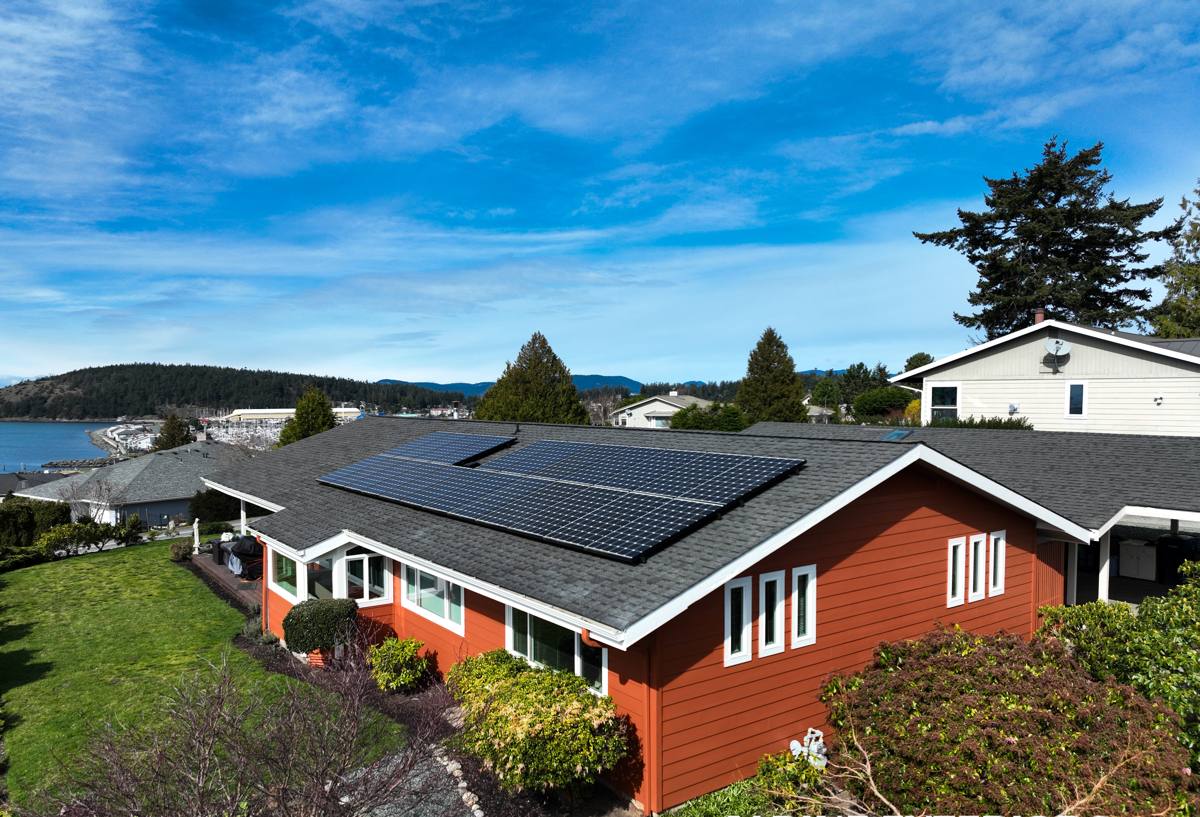
Homes in and around Barkley sit inside a stretch of Whatcom County where three things work against exterior siding at the same time: salt-laden air drifting inland off the Salish Sea, driving rain that comes in sideways during fall and winter storms, and a moss season that can run eight months or longer under the region's tree cover and cloud ceiling. None of these alone would be a dealbreaker. Together, over years, they're what turns a mediocre siding job into a rot problem, and a good siding job into a house that still looks tight and dry after two decades.
Salt air is corrosive to fasteners and hard on paint film — it doesn't just fade colors, it accelerates the breakdown of whatever coating is holding moisture out. Driving rain finds every gap in flashing, caulk, and butt joints that wasn't detailed correctly the first time. And moss doesn't just sit on a roof — spores land on siding too, especially on north- and west-facing walls that stay shaded and damp longer after a storm passes. Any siding material can be made to work here for a while. The question is what happens to it in year eight, year twelve, year twenty.
Why We Only Install James Hardie in This Climate
We don't install vinyl, LP SmartSide, primed spruce, cedar, or other fiber cement brands. That's a deliberate call, not a sales pitch — after years of servicing and replacing siding around Whatcom County, James Hardie is the one product we've seen consistently hold up to what Barkley's climate does to a wall assembly year after year.
Fiber Cement That Doesn't Feed on Moisture
James Hardie siding is cement, sand, and cellulose fiber — it has no wood content to swell, delaminate, or rot when it takes on water. Engineered wood products like LP SmartSide use wood strands bonded with resin, which perform fine in dry climates but are more sensitive to sustained moisture exposure at cut edges and butt joints, which is exactly what driving rain and a long wet season put to the test. Vinyl doesn't rot, but it flexes, gaps, and can crack in cold snaps, and it doesn't hold paint if a homeowner ever wants to change the color.
A Factory Finish That Doesn't Give Moss a Foothold
James Hardie's ColorPlus finish is baked on in a factory under controlled conditions, producing a harder, more uniform film than siding painted on-site after installation. That matters here for two reasons: it holds color longer under UV and salt exposure, and its smoother, less porous surface gives algae and moss less to grip onto compared to bare or field-primed wood. Siding still needs periodic rinsing in a shaded, damp climate like this one — no product is moss-proof — but a dense factory finish is a meaningfully better starting point than a porous or resin-coated wood substitute.
What a Correct Installation Involves
Hardie siding is only as good as the assembly behind it. Most of the failures we get called out to inspect on other companies' work aren't the siding material's fault — they're installation shortcuts that let water behind the panel where it can't easily get back out.
Drainage Plane and Flashing Come First
Before any siding goes up, the wall needs a continuous weather-resistant barrier with properly lapped and taped seams, correctly integrated window and door flashing, and a functioning drainage gap so any moisture that does get behind the cladding has somewhere to go. In a climate that gets driving rain from multiple directions, skipping or rushing this step is where most long-term leaks start.
Fastening and Clearances
James Hardie publishes specific fastener patterns, nail types, and minimum clearances from grade, roof lines, and decks for each of its product lines. Panels installed too tight to the ground or too close to a roofline trap moisture and defeat the product's own moisture management. We follow Hardie's published fastening and clearance specs exactly — not because it's required for a passable job, but because it's required for the warranty to actually mean something.
Joints, Caulking, and Sealing
Butt joints, corners, and penetrations (hose bibs, light fixtures, vents) are where wind-driven rain works hardest to get behind the siding. Correct installation means factory-primed cut edges get sealed before assembly, joints are backed properly rather than just caulked over a gap, and sealant is used at the points Hardie specifies — not as a substitute for good flashing, but as a second line of defense behind it.
The Right Hardie Product Line for This Region
James Hardie engineers its HZ product lines by climate zone, and Whatcom County falls into the wetter, cooler HZ5 zone that covers most of the Pacific Northwest. HZ5 products are formulated and tested for the freeze-thaw cycling, sustained moisture, and cooler temperatures typical of this region — as opposed to the HZ10 line built for hot, dry, high-UV climates in the Southwest. Installing the correctly zoned product isn't a marketing detail; it's the difference between siding engineered for the exact conditions Barkley homes actually see and siding that's simply available.
Our Process for a Barkley Siding Project
- On-site assessment — we walk the exterior, check for existing rot, moisture intrusion, and problem areas around windows, decks, and roof intersections before quoting anything.
- Written estimate — a clear scope covering tear-off, sheathing repair if needed, weather barrier, trim, and the specific Hardie products and colors selected.
- Tear-off and inspection — removing the old siding is when hidden rot or water damage shows up; we address sheathing issues before anything new goes on, not after.
- Weather barrier and flashing — installed and inspected before the first piece of siding goes up.
- Hardie installation — panels, lap siding, or trim installed to manufacturer fastening and clearance specs.
- Caulking, touch-up, and cleanup — seams sealed, any factory-cut edges finished, job site cleared of debris and old material.
- Warranty registration — your project is registered with James Hardie so the manufacturer's warranty is active and transferable if you sell the home.
James Hardie Compared to Other Siding Options
| Factor | James Hardie Fiber Cement | Vinyl | Engineered Wood (LP-type) | Cedar / Primed Wood |
|---|---|---|---|---|
| Moisture behavior | Non-organic, doesn't rot or swell | Doesn't rot but gaps/warps | Sensitive at cut edges and joints | Absorbs moisture, needs upkeep |
| Fire resistance | Non-combustible | Melts/deforms under heat | Combustible | Combustible |
| Finish longevity | Factory ColorPlus finish, long color retention | Color molded in, can fade/chalk | Field-applied paint over resin substrate | Field-applied paint or stain, frequent recoating |
| Typical maintenance | Periodic rinse, occasional caulk check | Low, but limited repair options | Edge sealing, paint upkeep | Regular painting/staining, rot watch |
| Repaint needed | Not for finish coat under normal conditions | Not paintable in the traditional sense | Yes, on a recurring cycle | Yes, on a recurring cycle |
What Affects the Cost of a Barkley James Hardie Project
| Cost Factor | Why It Matters |
|---|---|
| Home size and wall complexity | More linear footage, corners, and gables mean more material and labor time |
| Tear-off and disposal | Removing and hauling away old siding adds labor and dump fees |
| Sheathing or framing repair | Hidden rot found during tear-off has to be fixed before new siding goes on |
| Product line and profile | Lap siding, panel siding, and shingle-style profiles carry different material costs |
| Trim, soffit, and fascia scope | Full exterior packages cost more than siding alone but avoid mismatched materials later |
| Story height and access | Second-story and steep-lot homes require more scaffolding and time |
Homeowner Maintenance Checklist for James Hardie Siding in Barkley
- Rinse siding gently with a garden hose (not a pressure washer held close) once or twice a year, more often on shaded, moss-prone walls
- Keep gutters clear so overflow doesn't run down the siding face and feed algae growth
- Trim back shrubs and tree limbs that keep siding shaded and damp longer than the rest of the house
- Check caulking at trim, corners, and penetrations annually and have gaps resealed before winter rains
- Address moss with a soft wash approach rather than scraping, which can damage the factory finish
- Watch for any chipped or scraped touch-up spots after storms and have them addressed before bare edges take on water
- Have flashing at windows, doors, and roof intersections checked periodically, since these are the highest-risk leak points
Why Hiring a Crew That Already Works Barkley Matters
Siding installation isn't one-size-fits-all across Whatcom County. A wall that faces prevailing storm direction needs more attention to joint sealing and flashing than a sheltered one. Homes tucked under heavy tree cover need siding and a maintenance plan that accounts for extended shade and moss exposure. A crew that has already worked on homes in this area knows which walls take the worst of the weather, how local moisture and salt exposure actually play out over a few winters, and what it takes to get a Hardie installation to perform the way it's engineered to — not just look right on installation day.
If you're weighing a siding replacement or new build in Barkley, we're happy to walk the exterior with you, point out what your home's specific exposure means for the job, and put together a clear, no-pressure estimate. There's a form below to get that started.