 Sudden Valley Siding
 Why Edgemoor's Shoreline Setting Is Tough on Siding
Edgemoor sits close enough to open water that homes here deal with a combination of stresses that inland Whatcom County properties simply don't see as often. Salt-laden air moves off the water and settles on every exterior surface it touches, including siding, trim, and fasteners. Add in wind-driven rain that comes in sideways during winter storms, and a moss season that can stretch from fall through spring in our marine climate, and you have a recipe for siding that fails years before it should if it wasn't built or installed for these conditions.
None of this is unique to any one house. It's the baseline environment for anyone living near the water in this part of Washington, and it's exactly why we treat Edgemoor siding projects differently from a job a few miles inland.
What "Tough on Siding" Actually Means
Salt air accelerates corrosion in fasteners, flashing, and metal trim. Driving rain finds every gap in a wall assembly and pushes water where gravity alone wouldn't take it. Moss and algae thrive on the north and shaded sides of homes where surfaces stay damp for days at a time, and if moisture gets trapped behind siding rather than shedding off it, rot in the sheathing and framing follows. A siding product and installation method that can't stand up to all three of these at once is going to need attention sooner rather than later.
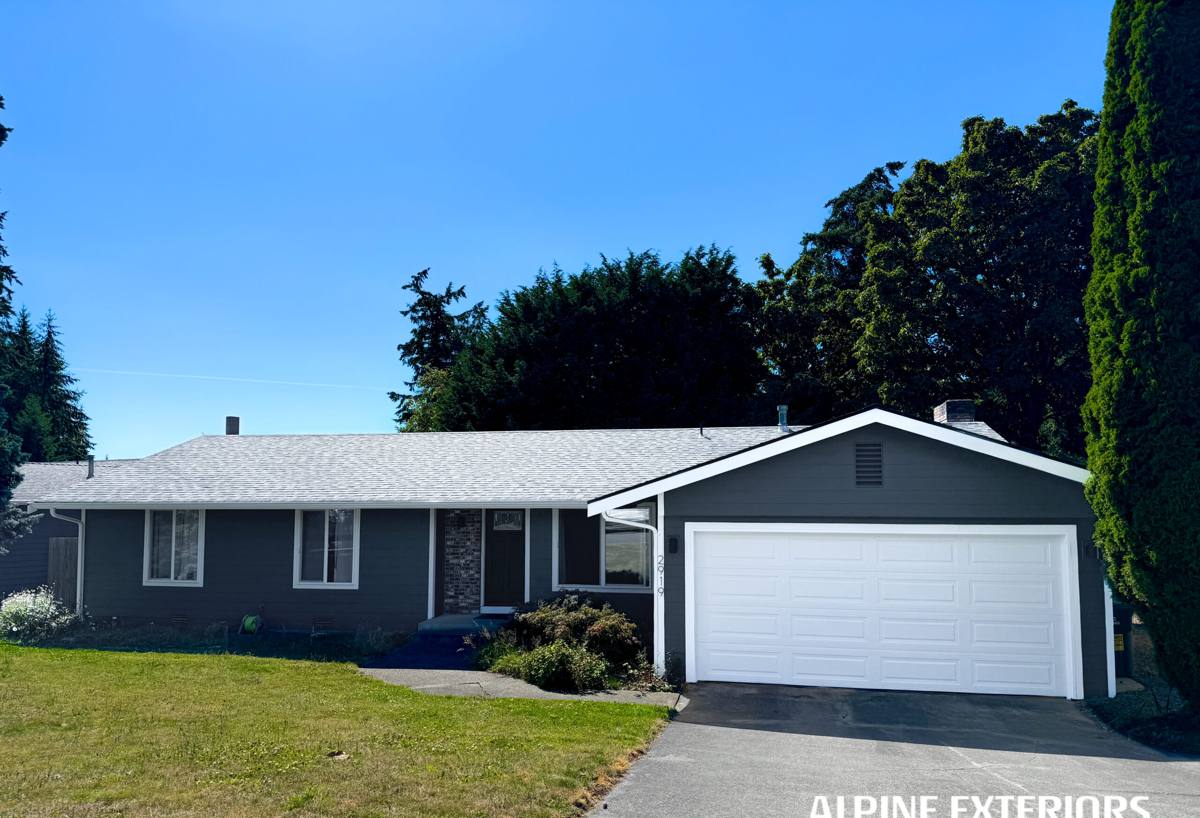
What James Hardie Siding Brings to a Home Like Yours
We install James Hardie fiber cement exclusively, and in a marine environment like Edgemoor's, the reasons come down to material science as much as looks.
Fiber Cement That Doesn't Feed Moisture Problems
Fiber cement is made from cement, sand, and cellulose fibers, pressed and cured into a dense, stable board. It doesn't swell, delaminate, or rot the way wood-based products can when they take on repeated moisture cycling. That matters in a climate where siding spends a good part of the year damp from rain and humidity, then dries out only to get wet again.
A Factory Finish Built for Exposure
Hardie's ColorPlus finish is baked on at the factory under controlled conditions, not brushed or sprayed on site. That gives it better adhesion and more consistent coverage than field-applied paint, which matters when the siding is going to be exposed to salt air and UV for years between repaints. Factory finishes also resist the chalking and fading that field-applied coatings tend to show first.
Climate-Engineered Product Lines
James Hardie manufactures different formulations for different climate zones. The HZ5 line is engineered for the freeze-thaw and moisture patterns of the Pacific Northwest, which is a meaningfully different product than what gets shipped to a dry, hot climate. Installing the version of the product that was actually engineered for our conditions is part of why the material performs the way it's supposed to here.
Choosing the Right Hardie Line for an Edgemoor Home
Not every Hardie profile is the right fit for every house, and part of our job is matching the product to the home's exposure, style, and existing architecture rather than defaulting to whatever is easiest to install.
| Hardie Product | Best Use | Notes for Edgemoor Exposure |
|---|---|---|
| HardiePlank lap siding | Whole-house siding, most common choice | Wide range of exposures and textures; pairs well with proper rain-screen detailing on wind-exposed walls |
| HardieShingle | Accent gables, dormers, or full shingle-style homes | Gives a traditional coastal look while keeping the moisture performance of fiber cement |
| HardiePanel | Modern or vertical-siding designs, accent walls | Works well combined with batten trim; needs careful joint detailing to shed driving rain |
| HardieTrim | Corner boards, fascia, window and door trim | Resists the swelling and cracking that wood trim shows first in damp, salt-exposed conditions |
On homes with heavy west or south water exposure, we often recommend a smaller lap exposure and more conservative fastening pattern, since those walls take the brunt of wind-driven rain. On more sheltered walls, standard specifications are usually fine.
What a Correct Installation Actually Involves
Fiber cement siding is only as good as the wall assembly behind it. In a wet, salt-exposed climate, the installation details matter at least as much as the product choice, and this is where a lot of siding jobs quietly go wrong.
Drainage Plane and Rain Screen
A weather-resistive barrier goes on first, and on exposure-heavy walls we install a rain screen gap behind the siding so that any moisture that does get past the cladding has somewhere to drain and dry instead of sitting against the sheathing.
Flashing at Every Transition
Windows, doors, decks, and roof-to-wall intersections all need properly lapped flashing, not just caulk. Caulk is a maintenance item; flashing is the actual water management system. Kick-out flashing at roof-wall intersections is a small detail that prevents a lot of hidden rot over time.
Fastening and Joint Treatment
James Hardie specifies fastener type, placement, and spacing for a reason, and those specs get more conservative in high-exposure zones. Butt joints get properly treated and, where visible, shimmed or backed so they don't trap water. Getting this wrong doesn't show up immediately, it shows up two or three winters later.
Clearances That Keep Water Moving
Siding needs proper clearance from grade, roofing, decks, and hardscaping so that water and debris don't wick up into the bottom courses. This is a common failure point on older installations we're asked to repair or replace.
Our Process for an Edgemoor Project
We approach every Edgemoor job the same structured way, adjusted for the specific exposure of that lot.
1. On-Site Assessment
We walk the exterior, check for existing moisture damage, note wind and water exposure by elevation, and look at trim, flashing, and window details before we ever talk product.
2. Scope and Product Plan
We put together a written scope covering which Hardie products go where, how the drainage plane and flashing will be handled, and what tear-off versus overlay looks like for your specific siding.
3. Tear-Off and Sheathing Check
Old siding comes off so we can inspect the sheathing underneath. If there's hidden rot or moisture damage from a prior installation, that gets addressed before anything new goes up, covering over a problem never makes it go away.
4. Installation to Spec
Weather barrier, rain screen where called for, flashing, then Hardie siding and trim installed to manufacturer fastening and clearance specifications.
5. Final Walkthrough
We walk the finished job with you, check caulking and touch-up points, and go over basic care so you know what normal maintenance looks like versus something worth calling us about.
Living With It: Maintenance in a Salt Air, Moss-Prone Climate
James Hardie siding is low-maintenance compared to wood or vinyl, but "low-maintenance" doesn't mean "no maintenance," especially this close to the water. A little attention once or twice a year keeps the siding looking and performing the way it should for decades.
- Rinse the exterior with a garden hose once or twice a year to clear off salt residue and airborne grime, especially on walls facing the water
- Keep gutters and downspouts clear so water isn't overflowing onto siding and trim below
- Check shaded, north-facing walls for moss or algae buildup and treat early rather than letting it establish
- Trim back vegetation and tree cover that keeps siding damp and shaded longer than it needs to be
- Inspect caulking at trim, windows, and joints annually and touch up before gaps let water in
- Watch for any staining, soft spots, or paint failure near ground level, decks, or roof-wall intersections and have it looked at promptly
Cost Factors for a James Hardie Project in Edgemoor
Every home is different, so we don't quote sight-unseen, but there are a handful of factors that consistently move the number up or down on projects in this area.
| Factor | Why It Matters Here |
|---|---|
| Tear-off vs. overlay | Removing old siding lets us inspect and repair sheathing, which is important given how much moisture this climate pushes into wall assemblies |
| Wall exposure | Walls facing prevailing wind and water often call for tighter fastening and more careful flashing, which adds labor |
| Trim and detail work | Homes with more corners, gables, or architectural trim take longer to flash and finish correctly |
| Existing moisture damage | Rot found during tear-off needs to be repaired before new siding goes on, which is common on older coastal homes |
| Access and site conditions | Steep lots, retaining walls, or tight side yards near the water can affect staging and scaffolding needs |
We walk through these factors with you during the on-site assessment so the estimate reflects your actual house, not a generic average.
Why It's Worth Hiring a Crew That Already Works This Area
Edgemoor and the surrounding Sudden Valley area have their own microclimate quirks within Whatcom County: exposure to the water, moss pressure, and wind-driven rain patterns that differ from what a crew coming from a drier inland market is used to planning for. A contractor who works this shoreline regularly already knows to size up flashing details, fastening schedules, and drainage planes for these conditions instead of installing to a generic specification and hoping it holds up.
That local familiarity also shows up in smaller ways: knowing which elevations on a typical Edgemoor lot take the worst of the weather, recognizing early signs of moisture damage from a prior installation, and understanding how the moss season here actually behaves over a full year rather than a single site visit.
Warranty and Long-Term Value
James Hardie backs its siding with a strong, transferable product warranty, and ColorPlus finishes carry their own finish warranty separate from the substrate. That's a meaningful benefit if you ever sell the home, since the warranty can pass to the next owner rather than resetting. The real-world value of that warranty still depends on correct installation: manufacturer warranties are written around installation to spec, which is one more reason the details covered above aren't optional extras.
Between the non-combustible fiber cement core, the factory-applied finish, and a climate-appropriate product line, a correctly installed James Hardie system is built to handle Edgemoor's salt air and rain for the long haul, not just look good for the first few years.
If you're weighing siding options for a home in Edgemoor or elsewhere around Sudden Valley, we're happy to take a look and walk you through what your specific house needs. Reach out for a free, no-pressure estimate using the form below.