 Sudden Valley Siding
 Why Board & Batten Works So Well on Bellingham Homes
Board and batten has become one of the most requested siding styles in the Bellingham area, and it's easy to see why. The vertical lines read as clean and modern on newer builds, but the profile has deep roots in Pacific Northwest farmhouse and craftsman architecture, so it also sits comfortably on older homes near Lake Whatcom and throughout Sudden Valley. Against a backdrop of evergreens and water, the strong vertical shadow lines give a house presence without looking flashy.
But style is only half the reason it fits here. Board and batten, done correctly, sheds water differently than lap siding — the vertical boards and covering battens create a system that, when flashed and fastened properly, handles wind-driven rain well. That matters in a place where "well-fastened and well-flashed" isn't optional, it's the difference between siding that lasts decades and siding that fails at the seams in under ten years.
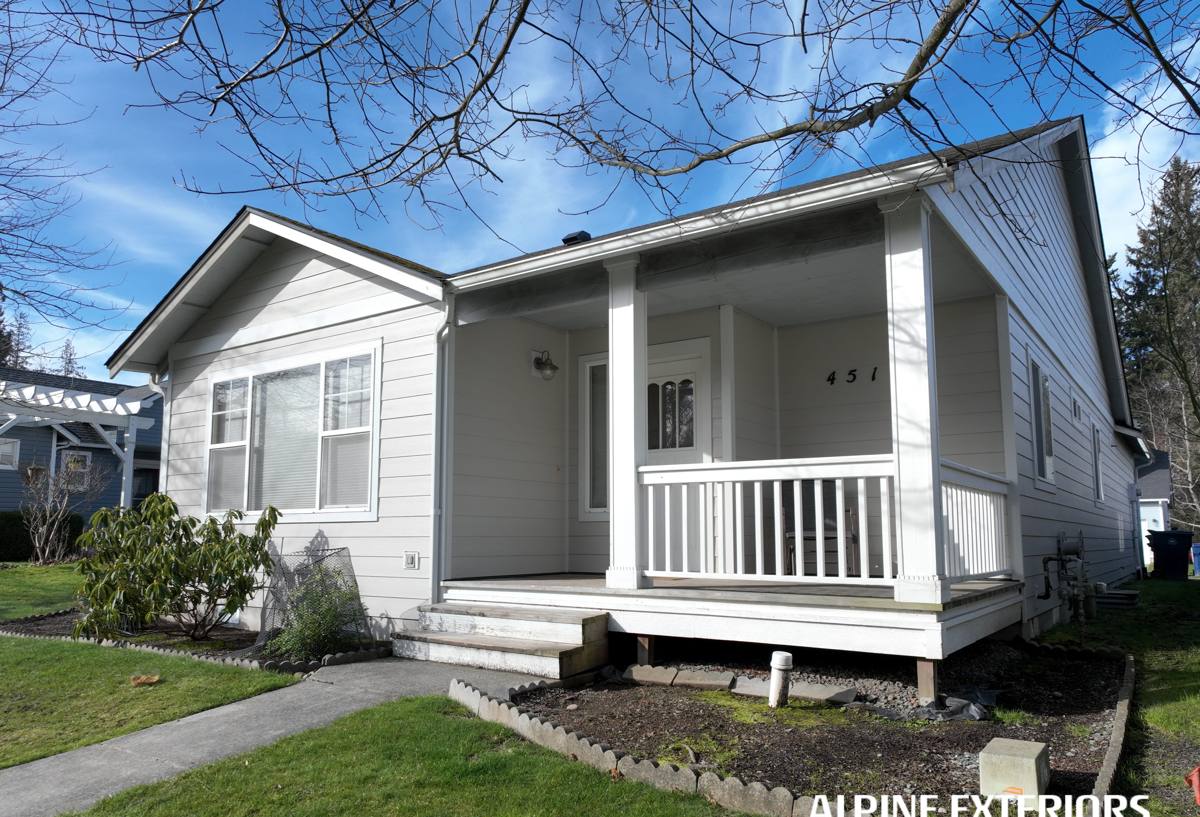
What Whatcom County's Climate Actually Does to Vertical Siding
Bellingham and the Sudden Valley area sit close enough to salt water and open exposure that homes take a slow, steady beating most homeowners underestimate. Three things stand out:
Salt Air
Proximity to Bellingham Bay and the Salish Sea means airborne salt settles on exterior surfaces even miles inland. Salt accelerates corrosion on fasteners and metal flashing, and it degrades cheap paint finishes faster than inland climates would. Any board and batten system here lives or dies by the quality of its fasteners and factory finish.
Driving Rain
Storms coming off the water don't fall straight down — they hit siding at an angle, driven by wind. On a lap-siding wall that's a manageable nuisance. On a board and batten wall, driving rain finds every seam between board and batten, every butt joint, and every place where a fastener wasn't set correctly. Vertical siding needs a real drainage plane behind it, not just a house wrap and a prayer.
Moss Season
Whatcom County's wet season runs long, and shaded, north-facing walls near tree cover — common throughout Sudden Valley's wooded lots — stay damp for weeks at a time. Moss and algae don't just look bad; they hold moisture against the siding surface and, on porous or poorly sealed products, accelerate rot and paint failure. Board and batten's flat board faces are exactly the kind of surface moss likes to colonize if the material and finish aren't up to it.
What a Correct Board & Batten Installation Actually Involves
Board and batten looks simple from the curb, but it is one of the less forgiving siding profiles to install correctly. Cutting corners here doesn't show up as a problem on day one — it shows up as staining, cupping, or rot two or three winters later.
- A proper rain screen gap behind the siding so any moisture that gets past the surface can drain and dry instead of sitting against the wall sheathing
- Correct flashing at every horizontal transition — window heads, water tables, and roof-to-wall intersections — since these are the spots driving rain finds first
- Stainless or coated fasteners sized and spaced to manufacturer specification, not just "close enough," given how fast standard fasteners corrode in salt-influenced air
- Battens set to cover board seams fully with consistent reveal, both for appearance and to keep water from wicking behind the joint
- Factory-finished boards rather than field-primed material, so the entire board — including cut edges once properly sealed — carries a uniform, durable finish
- Attention to bottom-of-wall and grade clearance, since board and batten run vertically and any board sitting too close to soil or a deck surface will wick moisture upward
Any one of these done wrong is invisible at installation and expensive to fix later, because board and batten repairs often mean removing full-length boards rather than patching a single course.
Why We Only Install This in James Hardie Fiber Cement
Board and batten is available in several materials, and we get asked regularly why we don't offer it in vinyl, engineered wood, or real cedar. Each has a legitimate use case — we just don't think any of them hold up to Bellingham's specific combination of salt air, driving rain, and extended damp shade the way fiber cement does.
Vinyl board and batten is affordable and low-maintenance in the sense that it never needs paint, but the panels are thin and flexible, and long vertical runs telegraph waviness once temperatures swing, which is more noticeable on a bold profile like this one than on lap siding. Real cedar board and batten looks beautiful when new and is a genuine, honest material, but it demands ongoing refinishing to survive our moss season, and untreated cut edges and butt joints are exactly where rot starts on a wet, shaded lot. Engineered wood products have improved over the years, but they remain wood-based at the core, meaning cut edges and any point where the factory seal is compromised are vulnerable to swelling if water gets in and isn't caught quickly.
James Hardie fiber cement doesn't have those failure points. It's non-combustible, it doesn't swell or rot when water reaches a cut edge, and its ColorPlus factory finish is baked on for a resistance to fading and chipping that field-applied paint can't match — which matters when salt air is working against the finish year-round. Hardie's HZ5 product line is engineered specifically for climates with sustained moisture exposure, which describes Sudden Valley and the greater Bellingham area accurately. It's also backed by a strong transferable warranty, so if you sell the home, that protection carries to the next owner.
Our Process for a Bellingham Board & Batten Project
We run the same disciplined process on every board and batten job in this area, because the climate doesn't give us room to improvise:
- On-site assessment. We look at wall orientation, tree cover, drainage, and existing moisture damage before quoting anything — a shaded, north-facing wall near mature trees gets treated differently than a sun-exposed wall.
- Moisture and sheathing check. Before any new siding goes up, we confirm the wall assembly underneath is sound. Installing new board and batten over hidden rot just buries the problem.
- Removal and prep. Old siding comes off, house wrap and flashing details get corrected or replaced, and the rain screen gap gets built in — not skipped to save a step.
- Installation to Hardie spec. Fastener type, spacing, batten layout, and flashing all follow manufacturer requirements, which is also what keeps the warranty valid.
- Final walkthrough. We check reveals, seams, and trim details before calling the job done, not just from the ground but up close.
What Board & Batten Costs to Do Right
Board and batten typically costs somewhat more than standard lap siding for the same square footage, mostly due to the extra material (battens) and the additional labor time for precise, consistent reveals. The table below covers the main factors that move the price on a Bellingham-area project.
| Cost Factor | Why It Matters |
|---|---|
| Wall condition underneath | Rot or moisture damage found during tear-off adds sheathing repair before new siding can go up |
| Batten spacing and layout | Tighter, more uniform reveals take more layout time and material than wide spacing |
| Trim and transition detail | Homes with more windows, dormers, or roof-to-wall transitions need more flashing work |
| Wall height and access | Multi-story walls or difficult access (steep lots common around Lake Whatcom) add labor time |
| Tear-off vs. new construction | Removing and disposing of old siding adds cost that new-build projects don't have |
| Color and finish selection | Standard ColorPlus color range is included in typical pricing; custom finishes may add cost |
We always provide a written, itemized quote before starting, so you know exactly what's driving the number rather than a single lump sum.
Maintaining Board & Batten in a Wet, Salty, Mossy Climate
James Hardie fiber cement is genuinely low-maintenance compared to wood or engineered wood alternatives, but "low-maintenance" doesn't mean "no maintenance" — especially on shaded walls in Sudden Valley. A simple annual routine keeps a Hardie board and batten exterior looking and performing like new for decades:
- Rinse siding once or twice a year with a garden hose to clear settled salt and airborne grime, focusing on walls exposed to open wind
- Check shaded, north-facing walls for early moss or algae growth and clean it off before it spreads, using a soft wash rather than high-pressure blasting
- Inspect caulking around windows, doors, and trim annually and recaulk any cracked or separated joints before wet season
- Keep gutters clear so overflow doesn't run down the wall face and concentrate moisture on specific boards
- Trim back vegetation that keeps a wall section shaded and damp longer than the rest of the house
- Watch bottom-of-wall clearance near decks, soil, or mulch beds and correct any spot where grade has crept up over the years
Why It Matters That We Already Work in Bellingham and Sudden Valley
Board and batten installation quality depends heavily on decisions made for the specific wall, lot, and exposure in front of the crew — not on a generic install manual. A crew that already works Sudden Valley and the wider Bellingham area has seen how the same siding profile performs differently on a shaded lakeside lot versus an open, wind-exposed one, and adjusts flashing, fastening, and drainage detail accordingly instead of applying one approach everywhere. That local pattern recognition — knowing which walls in this region need extra attention to moss and moisture, and which fastener and finish combinations actually hold up to salt air over time — is the difference between a board and batten job that looks right at installation and one that still looks right in fifteen years.
If you're considering board and batten siding for a home in Bellingham or Sudden Valley, we'd be glad to take a look at your walls, talk through what your specific exposure needs, and give you a straightforward, no-pressure estimate using the form below.