 Sudden Valley Siding
 Deck Building in Columbia: Built for How This Area Actually Weathers
Columbia homes in and around Sudden Valley get more moisture exposure than most people realize until they own a deck here for a few years. Driving rain off Lake Whatcom, salt-tinged marine air moving through the county, and a moss season that can stretch from fall clear into spring all work on a deck's structure and surface at the same time. A deck built with generic, one-size-fits-all specs from a warmer or drier region will show it early — soft spots at the ledger, green film on the walking surface, fasteners weeping rust streaks by year two or three. A deck built for this climate specifically holds up the way it should for decades.
This page covers what a correctly built deck in Columbia actually requires, how we approach the job from first visit to final walkthrough, and why local build experience matters more here than in most parts of the country.
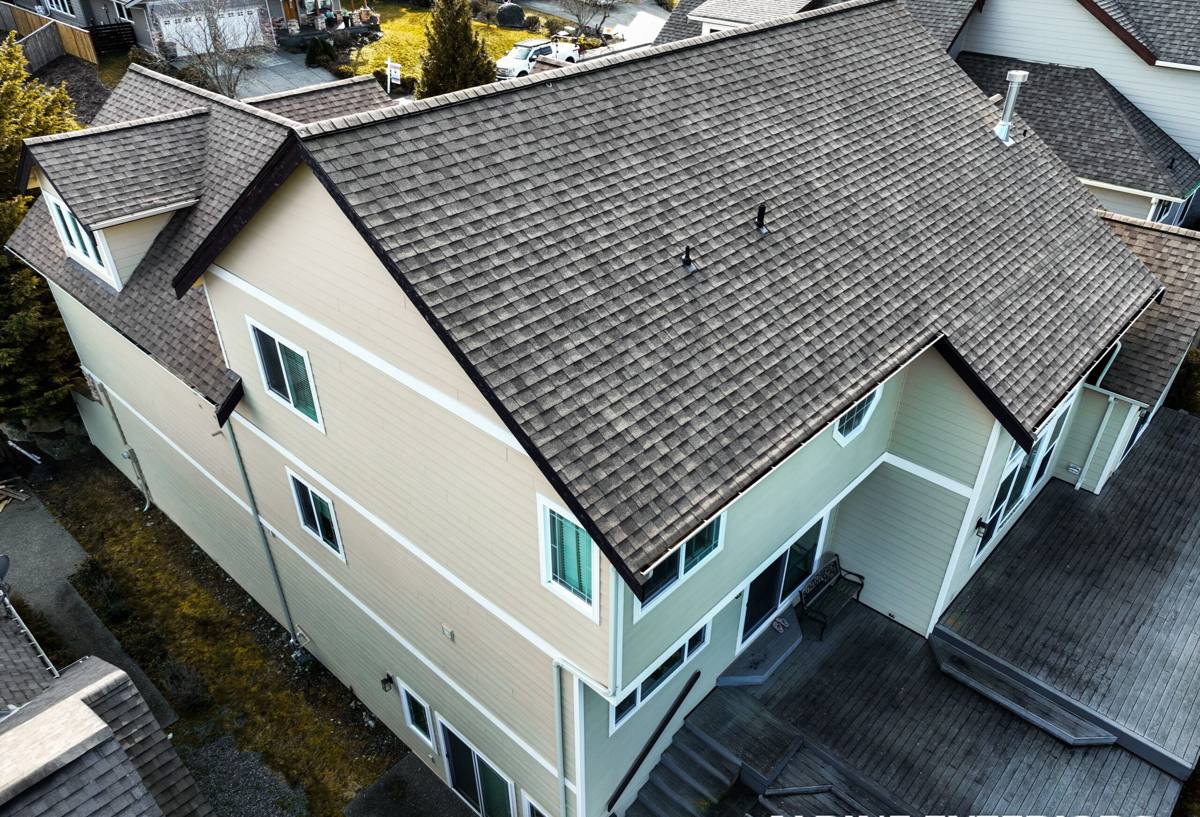
What Whatcom County Weather Does to a Deck Over Time
Three things drive almost every deck problem we get called out to fix in this area, and all three are climate-related rather than workmanship failures alone — though poor workmanship makes each one worse.
Constant Moisture Cycling
Driving rain doesn't just wet the surface — it drives water sideways under railings, into end grain, and behind ledger boards where the deck attaches to the house. Wood that stays damp for long stretches, then dries, then gets wet again, moves. That cycling is what pulls fasteners loose and opens gaps at joints faster than steady moisture alone would.
Moss and Organic Growth
A long moss season means anything that holds moisture and shade — tight board gaps, north-facing sections under tree cover, the underside of a low deck — becomes a growth surface. Moss holds water against wood and decking longer than the surrounding air would on its own, which accelerates rot in real wood and can leave slick, discolored surfaces on composite if drainage and gapping weren't handled correctly at install.
Salt and Metal Fatigue
Marine-influenced air corrodes lower-grade fasteners, hangers, and hidden hardware faster than inland climates do. This is one of the most common corner-cutting spots on cheap deck jobs — the visible parts look fine for years while the structural hardware underneath is already compromised.
What a Correctly Built Deck Involves
Ledger Attachment and Flashing
The ledger board — where the deck bolts to the house — is the single most common failure point in wet climates, and it's invisible once the job is finished. Correct flashing detail keeps water from tracking behind the ledger and into the house's rim joist. This is not a place to save time or skip a step; it's the difference between a deck that lasts and one with hidden rot nobody notices until the deck starts to separate from the house.
Framing and Fasteners
All structural hardware — joist hangers, structural screws, post bases — should be rated for the corrosion exposure of this region, not just "exterior grade" in a generic sense. We spec hot-dip galvanized or stainless hardware depending on the application, sized to the load, not the cheapest option that will pass a casual inspection.
Decking Surface and Drainage
Board spacing, direction, and any under-deck drainage system all affect how fast water clears the surface and how much moss and debris build up between boards. A deck that drains well fights moss on its own; one that doesn't will need pressure washing every year regardless of what material it's built from.
Railings and Guards
Railings take direct weather exposure and also get more hand contact and lateral load than any other part of the structure. Post attachment strength matters as much here as it does on the main frame — a railing that wiggles is a railing that's already failing at the connection point.
Decking Material Options for Columbia Homes
There's no universally "best" decking material — there's the right material for your budget, your maintenance appetite, and how much sun or shade your particular lot gets. Here's how the common options actually compare in this climate.
| Material | Moisture & Moss Behavior | Maintenance | Typical Lifespan Here |
|---|---|---|---|
| Pressure-treated wood | Absorbs and releases moisture; needs sealing to resist moss staining | Annual cleaning and re-sealing recommended | 15–20 years with upkeep |
| Cedar | Naturally moisture- and insect-resistant, but still needs finish maintenance to fight graying and moss | Periodic cleaning and finish renewal | 15–25 years with upkeep |
| Composite decking | Doesn't absorb water like wood; still needs airflow and gapping to avoid surface moss/mildew | Occasional washing, no sealing or staining | 25–30+ years, backed by manufacturer warranty |
| PVC decking | Fully moisture-resistant surface; best resistance to staining and mold in constant-damp spots | Lowest maintenance of the group | 25–30+ years, backed by manufacturer warranty |
We install composite and PVC lines from established manufacturers as well as traditional wood, and we'll walk you through the honest trade-offs for your specific lot rather than pushing whichever product has the best markup. Shaded, low-airflow sections of a yard change this calculus — a material that performs well in full sun can behave differently under tree cover where moss pressure is higher.
Our Deck Building Process
Every deck we build in Columbia goes through the same sequence, adjusted for the specific site conditions of the lot.
- Site visit and assessment — we look at grade, drainage, sun/shade exposure, existing structure (if replacing a deck), and how the new deck will tie into the house.
- Design and material selection — size, layout, railing style, and decking material, matched to your budget and how the space will actually be used.
- Permitting — most deck projects above a certain height or attached to the home require a permit through the local jurisdiction; we handle that process rather than leaving it to you.
- Footings and framing — footings set to the required frost depth, ledger flashed and attached correctly, joists and beams sized to the actual load and span.
- Decking and railing installation — surface material installed with correct spacing for drainage and expansion, railings attached to structural blocking, not just surface screws.
- Final walkthrough — we go over the finished deck with you, including what maintenance (if any) the material requires going forward.
Permits, Code, and Local Considerations
Deck projects in Whatcom County generally fall under standard residential building code requirements — footing depth tied to frost line, guardrail height and baluster spacing for any deck above a certain elevation, and structural attachment requirements at the ledger. We handle the permit application and inspection scheduling as part of the build rather than treating it as the homeowner's problem to sort out separately.
If your property is part of the Sudden Valley Community Association, exterior construction projects may also need to meet the association's design review process in addition to county permitting. We can talk through what that looks like for your specific property during the estimate visit rather than guessing at rules that vary property to property.
Cost Factors That Affect a Deck Quote
| Factor | Why It Affects Cost |
|---|---|
| Size and footprint | More square footage means more material, footings, and labor hours |
| Decking material | Composite and PVC cost more upfront than wood but less over the deck's lifespan |
| Height and stairs | Elevated decks need more substantial framing, footings, and code-required guardrails |
| Railing style | Cable, glass, and metal railing systems cost more than standard wood or composite balusters |
| Site access | Steep lots or limited equipment access around the home add labor time |
| Ledger/attachment complexity | Some home exteriors need extra flashing or structural work to attach a ledger safely |
We give straight, itemized numbers based on your actual site rather than a generic per-square-foot figure that doesn't hold up once we're standing on your lot.
Keeping a Columbia Deck in Good Shape
Whatever material you choose, a little seasonal attention goes a long way in this climate. Here's what we recommend to homeowners after a build:
- Sweep debris off the deck surface regularly, especially in fall when leaves and needles trap moisture against the boards
- Clean visible moss or algae buildup before it spreads — a stiff brush and mild cleaner is usually enough if caught early
- Check railing posts and stair connections once a year for any looseness at the attachment points
- Keep gutters and downspouts near the deck clear so runoff isn't dumping directly onto or under the structure
- For wood decks, plan on re-sealing or re-staining on the schedule the product calls for — skipping a cycle in this climate shows up fast
- Trim back vegetation that's shading the deck and keeping it from drying out between rains
Why a Local Crew Matters for This Job
Deck building isn't exotic work, but building one that's actually set up to handle Whatcom County's rain, moss, and marine air is a different standard than building to a generic national spec. A crew that already works in Columbia and the rest of Sudden Valley knows which lots drain poorly, which exposures collect the most moss, and which hardware actually holds up here rather than looking fine on a spec sheet. That local pattern recognition shows up in decisions you'd never think to ask about — footing placement on a sloped lot, which side of the house needs extra ledger flashing, whether a shaded corner of your yard changes the material recommendation.
It also means someone who can respond quickly if a warranty question or maintenance issue comes up later, rather than a crew that built the deck once and is now three counties away.
If you're planning a new deck or replacing an aging one in Columbia, we're glad to come take a look and give you a straightforward, no-pressure estimate — just fill out the form below to get started.