 Sudden Valley Siding
 Metal Roofing in Bellingham: Built for a Marine Climate
Bellingham sits on Bellingham Bay in Whatcom County, and homes here — whether close to the water or tucked into wooded communities like Sudden Valley a few miles inland — deal with a climate that's genuinely hard on a roof. Salt-laden air off the bay, rain that rarely falls straight down, and a mild, wet stretch of the year long enough to grow moss on almost any north-facing surface all combine to shorten the life of a roof that wasn't built with this specific combination in mind. We install and repair metal roofing for homes throughout Bellingham and the surrounding area, and the standards we build to come from what we've seen hold up here over years, not from a manufacturer's brochure.
Metal roofing isn't the right fit for every home or every budget, and we'll say so plainly if that's the case. But for homeowners weighing a long-term roof against this climate, it's worth understanding what metal actually does well here, what it costs to do correctly, and where a rushed or mismatched installation can undercut the material's real advantages.
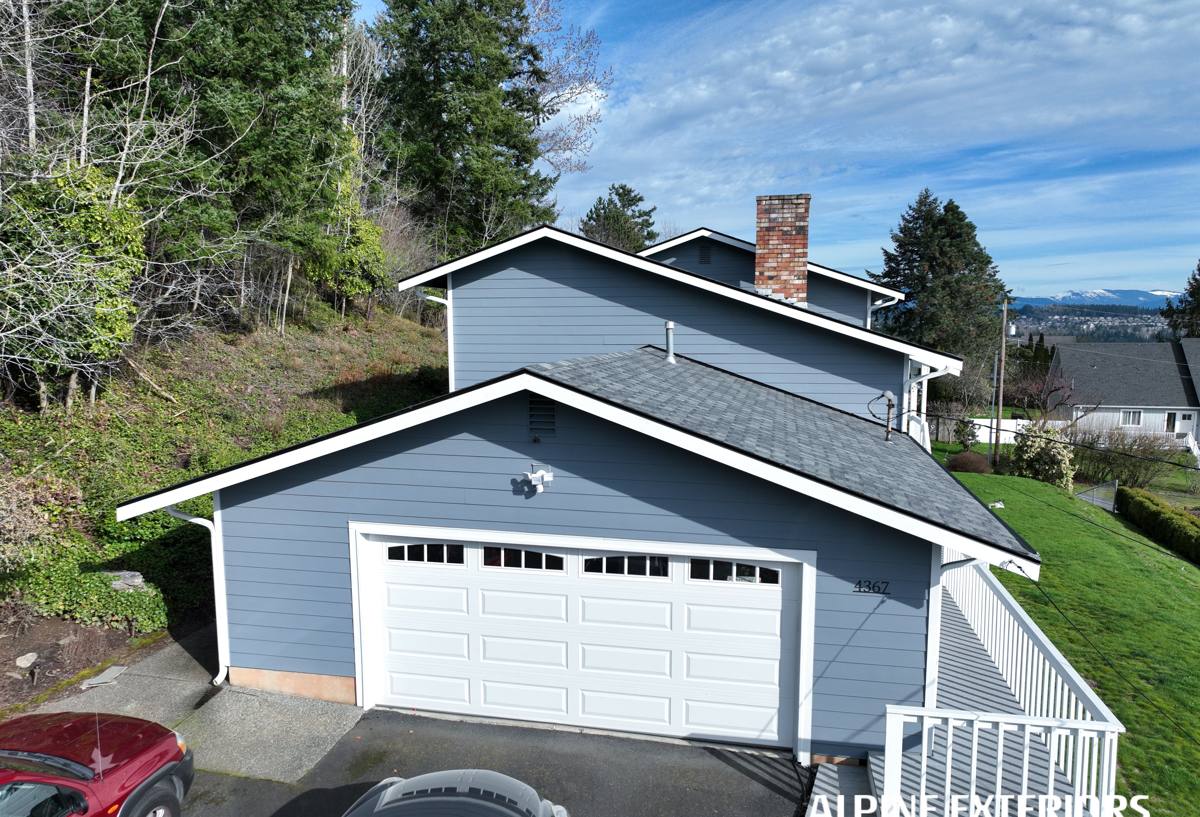
What Bellingham's Climate Does to a Roof
Salt Air Off the Bay
Homes near Bellingham Bay live with a steady low-level exposure to salt-laden air, and that exposure doesn't stop at the waterfront — wind carries it inland to varying degrees depending on elevation, tree cover, and distance from the water. Salt air accelerates corrosion in exposed fasteners, flashing, and any metal component that isn't specified for coastal exposure. A fastener or flashing detail that would hold up fine forty miles inland can start showing rust streaks or early failure here within a few years if it wasn't chosen with salt exposure in mind.
Driving Rain
Rain in this part of Whatcom County is frequent, and a good share of it arrives wind-driven rather than falling straight down. That matters more for a roof than the raw rainfall total does, because wind-driven rain gets pushed under panel edges, around penetrations, and into any flashing lap that wasn't properly sealed and directed. A roof that only has to shed water falling straight down is a much easier engineering problem than one that has to shed water being pushed sideways and upward into every seam.
A Long Moss Season
Mild temperatures, persistent moisture, and shade from the tree cover common throughout Bellingham and communities like Sudden Valley add up to a moss and algae season that runs most of the year on shaded or low-slope surfaces. Moss holds moisture against a roofing material longer than it would otherwise sit, and on porous or textured surfaces it can work into seams and fastener penetrations over time. It's one of the clearest advantages metal roofing has over other materials in this specific climate, which we'll get into below.
Why Metal Roofing Fits This Climate — and Where It Doesn't
Metal roofing's biggest advantage here is its surface: smooth, non-porous, and steep enough on most panel profiles that moss and standing water have a hard time getting a foothold. Combined with a long service life and strong wind resistance, it's a genuinely good match for Bellingham's rain-and-moss combination. That said, it's not automatically the right choice for every roof:
- Upfront cost is meaningfully higher than asphalt shingles, sometimes by two to three times depending on panel type and roof complexity
- A steep, simple roofline gets more of metal's advantages for less labor cost than a roof with many valleys, dormers, and penetrations
- Panel type matters as much as the material — a poorly chosen or poorly installed metal system can underperform a well-installed asphalt roof
- Homeowners planning to sell within a few years may not recoup the full cost premium, even though the roof itself will outlast the sale
We'll walk through those trade-offs honestly rather than defaulting to whichever roof is more profitable to install. For homeowners planning to stay long-term, or dealing with a shaded, moss-prone roof that keeps needing attention, metal is usually the more honest long-term answer.
What a Correct Metal Roof Installation Requires Here
Metal roofing performs the way it's supposed to only when the details underneath and around the panels are handled correctly — and in a salt-air, high-rain climate, those details carry more weight than they would somewhere drier and calmer.
Fastener and Flashing Material
Standard galvanized fasteners and flashing degrade faster than they should this close to the bay. We specify corrosion-resistant fasteners and flashing rated for coastal exposure, and we pay attention to keeping dissimilar metals from touching directly where moisture can sit between them — mixing metals that react with each other is a common source of premature corrosion that has nothing to do with the roofing panel itself.
Underlayment and Ice-and-Water Protection
A metal panel is only the outer layer. Underneath it, we use underlayment rated for sustained moisture exposure, with additional ice-and-water shield at eaves, valleys, and any low-slope transition where wind-driven rain is most likely to get pushed backward under a panel edge.
Ventilation
Metal roofs need a roof deck that can actually dry out. Without adequate attic or roof-deck ventilation, condensation can form on the underside of the panels, which defeats a lot of the moisture advantage metal is supposed to provide in the first place.
Proper Panel Fastening and Thermal Movement
Metal panels expand and contract with temperature swings more than most homeowners expect, and fastening methods need to allow for that movement rather than fighting it. Panels fastened rigidly in a way that doesn't accommodate thermal movement tend to develop stress cracks, loosened fasteners, or oil-canning distortion over time.
Choosing a Metal Roofing System: Standing Seam vs. Exposed-Fastener Panels
Not all metal roofing is built the same way, and the difference matters more in a salt-air, high-rain climate than it does elsewhere.
Standing seam panels use a concealed clip fastening system — the panels interlock along raised seams, and the fasteners themselves are hidden underneath, protected from direct weather and salt exposure. Exposed-fastener panels are held down with screws driven straight through the panel face, each one sealed with a rubber washer. Those washers do the real work of keeping the roof watertight, and they degrade with UV exposure and salt air faster than the metal panel around them — which means an exposed-fastener roof typically needs its fasteners checked and re-torqued or replaced periodically to stay watertight, something a standing seam roof doesn't require.
Exposed-fastener panels cost less upfront and are a reasonable choice for a garage, shop, or secondary structure. For a primary residence in a coastal-influenced climate like Bellingham's, we generally recommend standing seam for anyone planning to treat the roof as a decades-long investment rather than a lower-cost fix.
Comparing Roofing Options in Bellingham's Climate
| Material | Salt & Moisture Behavior | Maintenance | Typical Lifespan Here |
|---|---|---|---|
| Standing seam metal | Concealed fasteners resist salt-air corrosion; smooth surface sheds moss | Low; occasional inspection of flashing and seams | 40-60 years |
| Exposed-fastener metal panel | Exposed screw washers degrade faster in salt air and UV | Moderate; periodic fastener check and re-torque | 25-40 years |
| Architectural asphalt shingle | Granules and mat can hold moisture; moss establishes on shaded slopes | Periodic moss removal and gutter checks | 20-30 years |
| Cedar shake | Absorbs moisture readily; needs airflow underneath to dry | High; regular treatment and moss control | 20-30 years with consistent upkeep |
Signs a Bellingham Roof Should Be Evaluated for Metal Roofing or Repair
- Moss returning quickly in valleys or on shaded slopes despite regular cleaning
- Rust streaking near fasteners, flashing, or vent pipe collars
- Granule loss or bald patches on an aging asphalt roof
- Water staining on interior ceilings near exterior walls after wind-driven rain
- Panels or shingles that look lifted, loose, or visibly worn after a storm
- A roof approaching or past its expected service life with recurring repair calls
Any one of these is worth a professional look before it turns into interior damage. On an aging roof already needing repeated repairs, it's often the point where a homeowner starts weighing a metal roof as the longer-term answer rather than continuing to patch a shorter-lived material.
Our Process
We start with an on-site look at the existing roof — pitch, current material, penetrations, ventilation, and how exposed the home is to salt air and wind-driven rain given its location and surroundings. From there we put together a clear written scope covering panel type, fastener and flashing specification, underlayment, and ventilation before any work begins, so there's no ambiguity about what's included. During installation, we treat corrosion-resistant fasteners, proper flashing laps, and adequate ventilation as standard practice for this climate, not upgrades to be added if the budget allows. When the job is done, we walk the roof with you and explain what was installed and why.
Why a Crew That Already Works Bellingham Matters
Salt exposure, rain direction, and moss pressure all vary block by block and lot by lot around Bellingham — a home a few blocks from the bay faces a different corrosion timeline than one further inland or tucked into a wooded community like Sudden Valley. A crew that already works this area regularly has a feel for those differences: which fastener grade actually holds up on a waterfront-facing elevation, how much ice-and-water protection a given valley needs based on how the wind typically hits it, and where a rushed installation is most likely to fail first in this specific climate. That local pattern recognition is difficult to substitute with a generic install, even a good one.
Before You Hire for Metal Roofing in Bellingham
- Ask which panel system they recommend for your roof and why — and whether they'll explain the trade-offs, not just the sales pitch
- Confirm current Washington contractor licensing and active liability insurance
- Ask what fastener and flashing materials they specify for salt-air exposure, specifically
- Get a written scope covering panel type, underlayment, flashing, and ventilation before signing anything
- Ask how they handle roofs with significant shade, moss history, or prior leak points
If you're weighing a metal roof for a home in Bellingham or Sudden Valley, or dealing with an aging roof that keeps needing attention, we're happy to take a look and give you an honest read on what it actually needs. Reach out below for a free, no-pressure estimate.