 Sudden Valley Siding
 Bellingham's Climate Is Rough on Roofs — Here's Why
Bellingham sits where salt air off the bay meets some of the wettest, moss-friendliest weather in Washington. That combination is hard on a roof in ways that don't show up on a spec sheet. Salt-laden air accelerates corrosion on exposed metal — flashing, fasteners, vent caps, and gutter hardware take the brunt of it. Driving rain, pushed sideways by wind off the water, finds every weak seam, nail pop, and undersized flashing detail a standard install might get away with in a drier climate. And the long, mild, shaded wet season that Whatcom County is known for is exactly what moss and algae need to take hold on north-facing and tree-shaded slopes.
None of this means a roof here is doomed — it means the install has to account for conditions that a lot of national roofing guidance simply wasn't written for. A roof put on the same way you'd do it in Spokane or Sacramento will not perform the same way in Sudden Valley or Bellingham.
What That Means for Homeowners
In practice, the climate shows up as a handful of recurring problems on older or poorly-installed roofs in this area:
- Moss mats building up along ridges, valleys, and shaded north slopes, holding moisture against the shingle surface
- Streaking and staining from algae on shingles that weren't rated to resist it
- Corroded or failing flashing around chimneys, skylights, and roof-to-wall transitions
- Soft or rotted decking discovered only once shingles are pulled, from years of slow moisture intrusion
- Granule loss and premature aging on roofs that were never given adequate attic or ridge ventilation
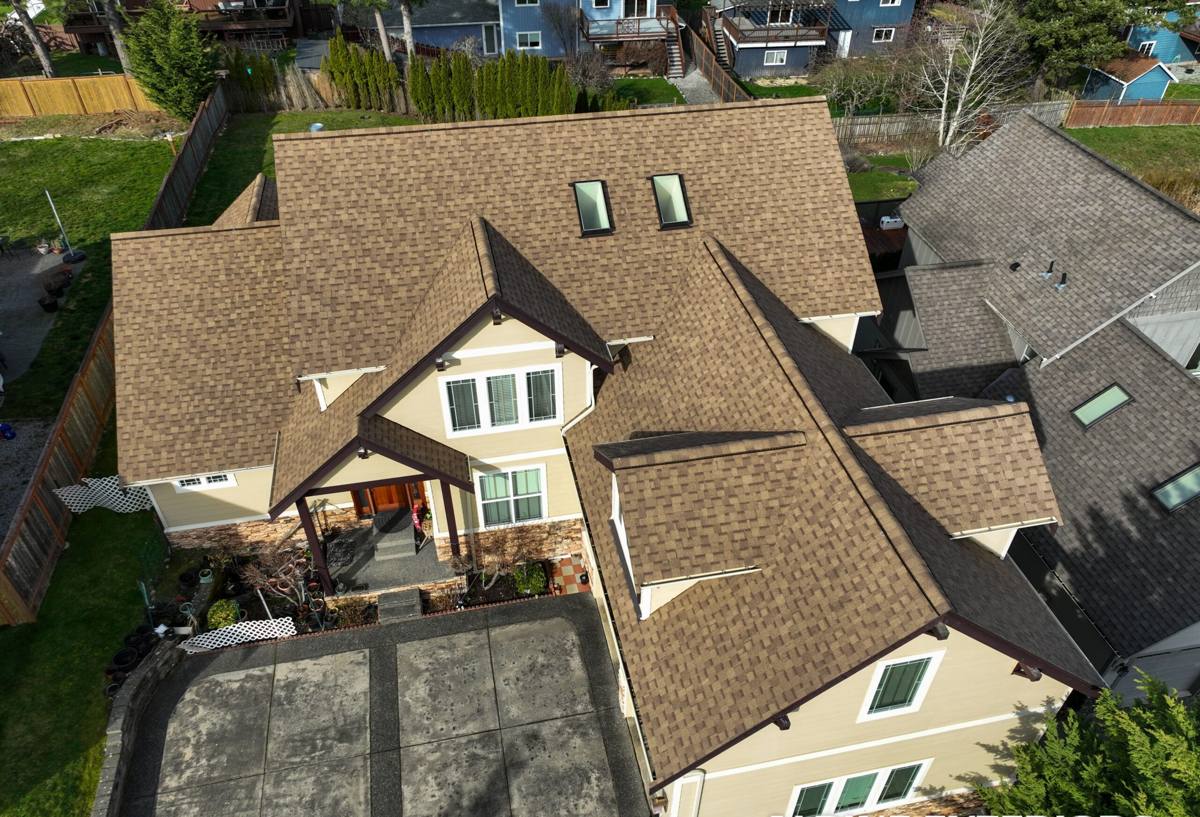
Signs a Bellingham Roof Needs Replacement, Not Just Repair
Not every roof problem calls for a full tear-off. But there's a point where patching stops making financial sense and starts throwing good money after bad. Here's what we actually look for during an inspection to make that call honestly.
- Shingles that are cupping, curling, or missing granules across large sections rather than one isolated spot
- Moss growth thick enough that it's lifting shingle edges, not just discoloring the surface
- Daylight visible through the roof deck from inside the attic, or damp insulation after a rain
- Repeated leaks in different spots each season rather than one recurring, fixable point
- A roof older than its material's realistic service life for this climate, especially if the original install skipped proper underlayment
- Sagging rooflines, which usually points to deck or structural issues that repair alone won't fix
If your roof shows one or two of these, a targeted repair may still be the right call. If it's showing several at once, replacement is usually the more honest recommendation — and we'll tell you that directly rather than stretch out a series of repairs on a roof that's past the point of it being worth it.
What a Correct Roof Replacement Involves Here
A roof replacement that's actually built for Bellingham's weather involves more than swapping old shingles for new ones. The parts that don't show once the job is done are the parts that determine whether it holds up through the next decade of wet winters.
Tear-Off and Deck Inspection
We remove the existing roofing down to the deck rather than layering over it. That's the only way to actually see what's underneath — soft spots, rot, or old damage that's been hidden under shingles for years. Any compromised decking gets replaced before anything new goes down; installing new roofing over a soft deck just guarantees a shorter lifespan and voided warranty coverage.
Underlayment and Water Protection
Given how much driving rain this area sees, we treat underlayment as a real waterproofing layer, not an afterthought. That means ice-and-water shield membrane at eaves, valleys, and around penetrations — the spots where wind-driven rain and ice damming are most likely to force water backward under the shingle line — with synthetic underlayment across the rest of the field.
Flashing Details
Chimneys, skylights, wall intersections, and vent penetrations are where most roof leaks actually start, not in the open field of shingles. Correct flashing — step flashing, counter-flashing, and properly lapped valley metal — matters more in a climate with constant rain and salt-air corrosion than almost anywhere else in the state. We use corrosion-resistant flashing materials specifically because standard galvanized components don't hold up as long this close to the water.
Ventilation
Balanced intake and exhaust ventilation keeps the attic dry and temperature-regulated, which does two things: it protects the deck from the underside, and it slows moss and algae growth by reducing the trapped moisture that feeds it. A lot of older Whatcom County homes were built with minimal or mismatched ventilation, and we address that as part of the replacement rather than leaving it as-is.
Choosing a Roofing Material for Sudden Valley and Bellingham
There's no single "best" roofing material — the right choice depends on your home's exposure, budget, and how much long-term maintenance you want to take on. Here's how the common options actually compare in this specific climate.
| Material | Moss/Algae Resistance | Realistic Lifespan Here | Maintenance |
|---|---|---|---|
| Standard architectural asphalt shingle | Moderate — depends on slope and shade | 18-25 years | Periodic moss/debris removal recommended |
| Algae-resistant (copper/zinc granule) shingle | Higher — granules actively resist algae growth | 20-28 years | Lower, but not maintenance-free |
| Standing-seam metal roofing | High — moss struggles to hold on smooth metal | 40-50+ years | Low; watch fastener and coating condition near salt air |
| Cedar shake | Low without regular treatment | Varies widely with upkeep | High — needs regular cleaning and treatment in this climate |
For most homes in Sudden Valley and Bellingham proper, we recommend algae-resistant architectural shingle as the practical middle ground, with metal roofing as a strong option for homeowners who want to minimize long-term moss and algae maintenance and are comfortable with the higher upfront cost. Cedar shake can look great, but it demands a level of ongoing treatment that most homeowners underestimate in a climate this wet.
How Our Roof Replacement Process Works
- Inspection and honest assessment — we get on the roof, check the deck condition where accessible, and tell you plainly whether you're looking at repair or replacement.
- Written estimate — material options, scope, and a clear price range before any work starts, with no vague allowances hiding behind fine print.
- Material selection — we walk through the tradeoffs above based on your roof's exposure, shade, and budget, not a one-size-fits-all default.
- Tear-off and disposal — full removal of old roofing and responsible disposal, with the property protected throughout.
- Deck repair and dry-in — any damaged decking replaced, then underlayment and flashing installed correctly the first time.
- Installation — shingles or panels installed to manufacturer specification and proper nailing pattern, with attention to ventilation balance.
- Final walkthrough and cleanup — magnetic sweep for debris, gutters checked, and a final walk-through so you know exactly what was done.
Cost Factors for a Bellingham Roof Replacement
Every roof is different, so we won't quote a number without seeing yours — but these are the factors that actually move the price, in rough order of impact.
| Factor | Why It Matters |
|---|---|
| Roof size and number of stories | More square footage and steeper access both add labor time |
| Pitch and complexity | Steep slopes, multiple valleys, and dormers all take longer to flash correctly |
| Existing layers and deck condition | Tear-off of multiple old layers and any deck replacement adds material and labor |
| Material choice | Standard shingle, algae-resistant shingle, and metal roofing carry different material costs |
| Ventilation and flashing upgrades | Bringing older ventilation or flashing up to a correct standard adds some cost but protects the investment |
| Access and site conditions | Tree cover, tight lot access, or steep driveways can affect setup and disposal logistics |
Be cautious of any bid that's dramatically lower than the others you collect — it usually means something is being skipped, most often the underlayment, flashing detail, or deck inspection that doesn't show up until the roof starts leaking a few years in.
Moss and Algae: Building Prevention Into the Job, Not Just Cleaning It Off
A lot of moss treatment in this region is reactive — pressure washing or chemical treatment after growth is already established, which can shorten shingle life if done aggressively. We'd rather address the conditions that let moss take hold in the first place: material selection with built-in algae resistance, proper ventilation to reduce trapped moisture, and attention to shaded, north-facing slopes where moss problems concentrate. Zinc or copper strips at the ridge can also help suppress regrowth on shaded sections without relying on repeated pressure washing, which wears down granules over time.
Why Hiring a Crew That Already Works Bellingham Matters
Roofing code and permitting requirements aren't identical everywhere, and a crew that regularly pulls permits and works within Whatcom County and the City of Bellingham already knows what inspectors expect on flashing, ventilation, and ice-and-water shield placement — there's no learning curve at your home's expense. Local experience also means knowing which shingle lines and metal roofing products have an actual track record against moss and salt-air exposure in this specific area, rather than going by a manufacturer's general marketing.
Being based in Sudden Valley also means we're genuinely close by — for the initial inspection, for questions during the job, and if something needs a follow-up look after a hard storm. That local accountability is worth more than it sounds like on paper: a contractor who works this area repeatedly has a reputation here to protect, not just a job to finish and leave.
Get a Free, No-Pressure Estimate
If your roof is showing moss buildup, aging shingles, or you just want an honest read on how much life it has left, we're happy to take a look. Fill out the form below for a free estimate on your Bellingham roof replacement — no pressure, no sales script, just a straight assessment of what your roof actually needs.