 Sudden Valley Siding
 Decking in Columbia: A Different Climate Problem Than Most Composite Ads Show
Most composite decking marketing is written for a dry climate. It shows a deck in full sun, dry as a bone, with none of the conditions that actually shape how a deck ages in Columbia and the rest of the Sudden Valley area. Here the deck has to survive months of low-angle rain, deep shade from mature trees, humidity that never fully clears, and the fine, persistent moisture that comes off the marine air moving through Whatcom County. A deck built with the wrong assumptions about drainage, fastening, or board choice will show problems in year two or three — not year fifteen. This page is about building it right for the conditions this neighborhood actually has, not the conditions a national brand assumes.
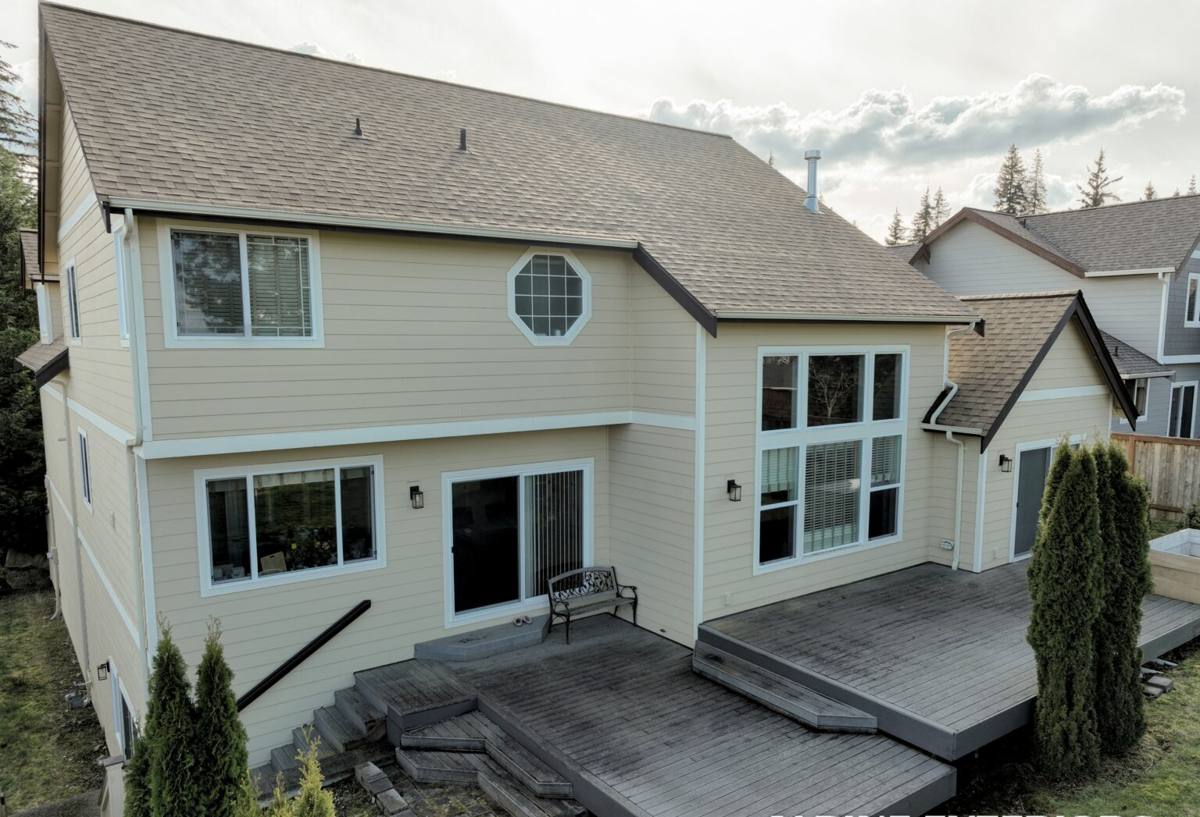
What Whatcom County Weather Does to a Deck Over Time
The Pacific Northwest gets credit for its rain totals, but it's the pattern of that rain — long, low-intensity, and near-constant for months at a time — that's harder on a deck than any single storm. Add the driving component when wind pushes rain sideways, and water gets into places a dry-climate deck was never built to shed.
Moss and Algae Aren't Just Cosmetic
Anywhere a deck sits under tree cover or on the shaded side of a house — common throughout Columbia — moss and algae will colonize any surface that stays damp for more than a day or two. On wood, that growth holds moisture against the fiber and accelerates rot underneath the green film. On decking, moss and algae are a genuine slip hazard, especially on stair treads and any board that pools water instead of shedding it. Managing this isn't optional maintenance; it's a design consideration that starts with board selection and gap spacing, not something you fix after the fact with a pressure washer.
Driving Rain Finds Every Gap
When rain comes in at an angle instead of straight down, it gets pushed into ledger connections, under rail post bases, and into any fastener hole that wasn't properly sealed. Over a normal Whatcom County winter, a deck sees dozens of these wind-driven rain events. The joints and transitions that would be a non-issue in a drier state are where a poorly built deck here starts to fail — usually at the ledger board, the framing under stair landings, and around post bases that weren't flashed or capped.
Why Composite Holds Up Better Here — and Where It Still Needs Respect
Composite decking earns its place in this climate because the board itself doesn't absorb water and swell the way solid wood does, and a properly capped board resists surface staining, splintering, and rot at the core. That's a real advantage in a place where a deck can stay damp for days at a stretch. But composite is not maintenance-free, and it's not immune to the climate — it's just resistant to different failure modes than wood.
Composite still needs airflow underneath to dry out between rain events. It still needs correct gapping so water and debris don't sit on the surface. Cheaper, uncapped composite boards can absorb moisture at cut ends and fastener holes if those edges aren't sealed, which eventually leads to swelling and mold growth inside the board itself — a problem that's harder to fix than surface mildew because it's inside the material. The climate doesn't care what the product is called; it exploits whatever weakness the installation left behind.
Composite Decking Tiers: What's Actually Different
Not all composite is built the same way, and the differences matter more in a wet, shaded climate than they would somewhere dry. Here's how the common tiers stack up for a property like the ones we see around Columbia and Sudden Valley:
| Material | Moisture / Rot Behavior | Moss & Algae Resistance | Maintenance Needed | Relative Cost |
|---|---|---|---|---|
| Pressure-treated wood | Absorbs water, will rot at fastener points and end grain without diligent upkeep | Low — moss takes hold quickly in shade | Annual sealing/staining, regular cleaning | Lowest upfront |
| Uncapped composite | Better than wood but can absorb moisture at cut edges and fastener holes over time | Moderate — surface can still stain and support growth | Periodic cleaning; edges need sealing | Mid-range |
| Fully capped composite | Resistant to moisture absorption on all sides, including cut ends when properly finished | Higher — cap layer sheds moisture and resists staining | Occasional washing, no sealing or staining | Higher upfront |
For a shaded, damp lot, the extra cost of a fully capped board is usually the difference between a deck that still looks new after several wet winters and one that needs aggressive cleaning or early board replacement.
What a Correct Composite Deck Installation Involves
The board is only part of the system. Most of the problems we get called to fix on other people's decks trace back to the framing and drainage decisions made before a single composite board was ever laid.
Substructure and Drainage
Joists should be protected with a moisture-barrier tape, not left as bare, exposed wood under the decking. Framing needs enough slope and clearance to let water run off and air move underneath — a deck built tight to the ground or against a slope with no drainage path will stay damp long after the rain stops, which is exactly the condition moss and mold need.
Fastening and Board Spacing
Hidden fastener systems avoid the surface penetrations that let water into the board core, and correct gap spacing between boards keeps water and debris moving off the deck instead of pooling. Gaps that are too tight trap moisture and organic debris — the starting point for algae growth; gaps that are too wide are a trip hazard and let debris fall through onto the framing below.
Flashing Where the Deck Meets the House
The ledger connection is the single most common failure point on any deck in this climate, composite or wood. Proper flashing directs water away from the house band board instead of trapping it against the structure. This is also where a deck project touches the building's siding and weather barrier — which is exactly the kind of detail we catch because decking isn't the only exterior work we do.
- Moisture-barrier tape over all joists, not just the ledger
- Ledger board properly flashed and sealed against the house
- Hidden fastener system rather than face-screwed boards
- Correct board gap spacing for drainage and expansion
- Post bases and stair stringers kept clear of standing water
- Adequate under-deck airflow and ground clearance
Our Process for Columbia Deck Projects
We start with a walk of the actual site — the slope of the yard, how much shade the deck footprint gets through the day, and where water currently runs when it rains, because that tells us more than any brochure spec sheet. From there we talk through board tier, color, and layout against your budget honestly, including where spending more up front saves money in five years and where it doesn't matter as much for your specific site. We handle permitting where the project requires it, build the substructure to the drainage and ventilation standards above, and walk the finished deck with you before we call the job done. If your property sits within a community association's design review process, we account for that in scheduling and, where needed, in the paperwork — it's a normal part of building in a planned community like this one.
Living With a Composite Deck in a Mossy, Wet Yard
A well-built composite deck in this climate still needs some seasonal attention — just far less than wood, and none of it involves sealants or stains.
- Sweep leaves and needles off the deck regularly through fall — trapped organic debris is what feeds moss and mold
- Rinse the surface periodically, especially shaded areas, rather than letting green film build up over a season
- Check that gaps between boards stay clear of compacted debris so water keeps draining properly
- Look under the deck once or twice a year to confirm airflow isn't blocked by stored items or overgrown landscaping
- Address any standing water near post bases or stairs before it becomes a long-term moss patch
- Avoid pressure-washing at close range or high pressure, which can damage the cap layer on composite boards
None of this is heavy work, but skipping it entirely for a few years in a climate this wet is how a low-maintenance deck starts to look neglected well before the material itself has actually failed.
Permits and Community Guidelines
Deck projects in Whatcom County typically require a permit once the structure passes certain height or size thresholds, and inspections check the same structural and drainage points outlined above. If you're in a planned community with an architectural or design review process, exterior projects like a new deck usually need to go through that approval before or alongside the county permit. We're used to working within both processes and can tell you early in the conversation what your specific project will need, rather than leaving you to figure it out mid-build.
Why It Matters That We Already Work in Columbia and Sudden Valley
A crew that's built and repaired decks in this specific area already knows which framing details fail first in this climate, what a realistic drainage slope looks like on the kind of sloped, wooded lots common here, and what the local permitting and community review steps actually involve — instead of learning it on your project. That familiarity shows up in fewer surprises during the build and a deck that's engineered for the rain and shade patterns your lot actually gets, not a generic spec sheet from a manufacturer based somewhere dry.
If you're weighing composite decking for a home in Columbia or elsewhere around Sudden Valley, we're glad to walk the site with you and give you a straight answer on what your yard needs — no pressure, no upsell, just an honest look and a free estimate using the form below.