 Sudden Valley Siding
 Building Decks for Columbia the Way This Climate Demands
Columbia sits within the greater Sudden Valley community on Lake Whatcom, and homes here deal with a specific combination of weather that a generic deck build simply isn't designed to handle. Long wet seasons, shaded tree-lined lots, and air that carries moisture year-round mean a deck built to a national average spec will start showing problems years before it should. We build decks for this area specifically — not decks that happen to be installed here.
A deck is one of the most exposed structures on a property. Unlike siding or a roof, it takes on water from above, below, and the sides, and it takes direct foot traffic while doing it. In Whatcom County, that exposure is compounded by driving rain that doesn't let up for days at a time and a moss season that can stretch from fall through spring. Getting the details right at the framing and material stage isn't optional here — it's the difference between a deck that lasts fifteen years and one that lasts thirty or more.
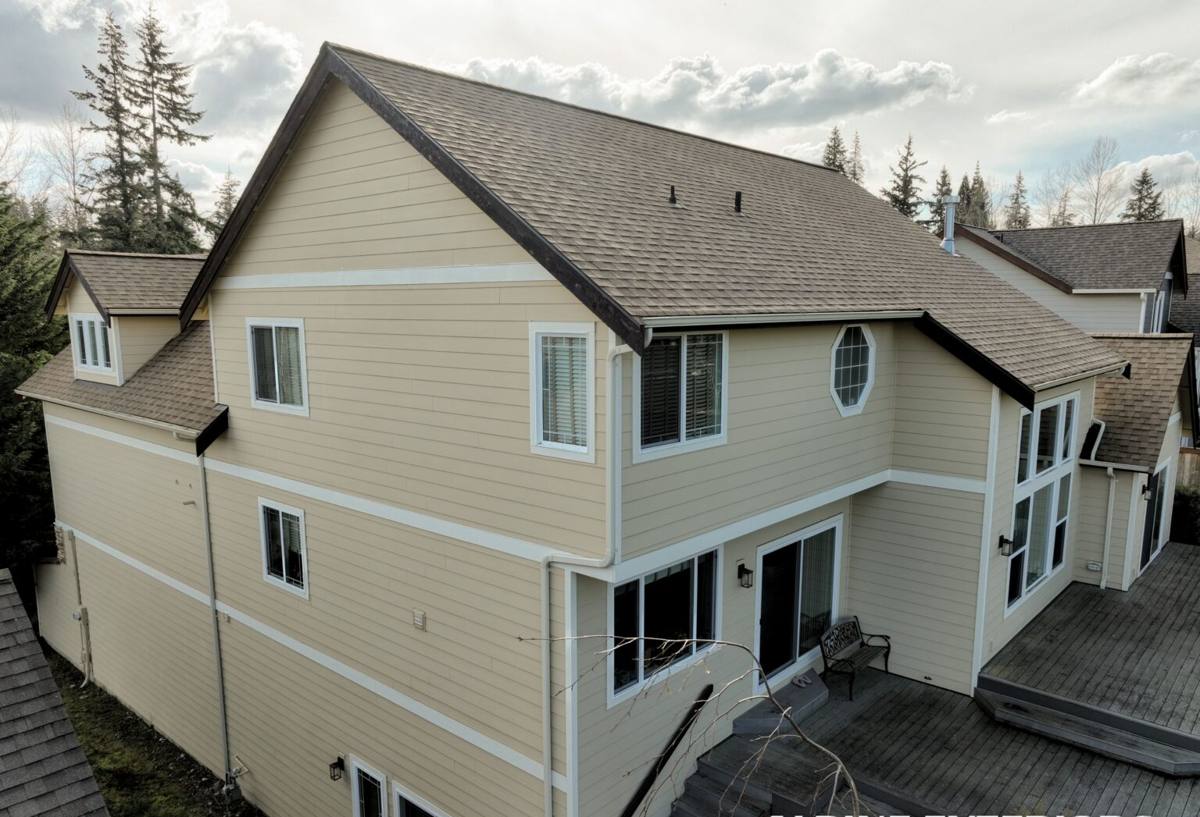
The Climate Factors That Shape Every Deck We Build Here
Driving Rain and Standing Moisture
Sudden Valley's weather pattern includes sustained, wind-driven rain rather than brief showers. That matters for deck construction because water doesn't just fall on a deck surface — it gets pushed sideways, up under rail caps, and into any gap in flashing or fastener holes. Decks built without proper drainage gaps between boards, or without flashing at the ledger board where the deck meets the house, trap that moisture instead of shedding it.
Moss and Organic Growth
The long moss season here isn't just a cosmetic issue. Moss and algae hold moisture against decking material far longer than open air ever would, which accelerates rot in wood and can dull or stain composite surfaces if it's left to build up. Decks in shaded, tree-covered lots — common throughout the Sudden Valley area — need material choices and spacing that account for reduced sun exposure and slower drying times.
Salt Air and Metal Fatigue
The salt-tinged air common to this region is hard on anything metal. Standard fasteners, brackets, and hardware corrode faster here than they would inland, which is why fastener selection is a real design decision on every deck we build, not an afterthought handled with whatever is in the truck.
Choosing the Right Decking Material for a Columbia Lot
There's no single "best" decking material — there's a best material for a given budget, sun exposure, and maintenance appetite. Here's how the common options actually perform under Whatcom County conditions:
| Material | Moisture & Moss Resistance | Maintenance | Relative Cost |
|---|---|---|---|
| Pressure-treated wood | Good if sealed regularly; absorbs water at cut ends and fastener holes | Annual cleaning and re-sealing recommended | Lowest upfront |
| Cedar | Naturally rot-resistant but still needs sealing in shaded, damp areas | Sealing every 1-2 years, moss removal | Moderate |
| Capped composite | Strong resistance to moisture and moss staining; won't rot | Occasional wash; no sealing | Higher upfront, lower long-term |
| PVC decking | Best moisture performance; fully synthetic, doesn't absorb water | Lowest maintenance of all options | Highest upfront |
For lots with heavy tree cover and limited direct sun — which describes a lot of Columbia's terrain — we lean homeowners toward capped composite or PVC unless there's a strong reason to stay with wood, simply because those materials don't give moss and mildew the organic surface they need to take hold. Wood can still be the right call on a budget, sunnier lot, or when matching an existing structure, but it needs a realistic maintenance commitment behind it.
What a Correctly Built Deck Requires Below the Surface
Footings and Frost Considerations
Every deck starts with footings sized and set to local frost depth requirements, not guessed at. Undersized or shallow footings are one of the most common causes of a deck that develops a lean or bounce within a few years — the problem is invisible until it isn't.
Ledger Board Flashing
The ledger board — where the deck attaches to the house — is the single most common point of hidden water damage on any deck. It needs proper flashing that directs water away from the house's wall assembly, not just caulk and a prayer. We treat this connection as seriously as we treat any siding-to-trim transition, because water intrusion here can damage the house structure behind the siding, not just the deck.
Joist Protection
Joist tape or an equivalent moisture barrier over the top of every joist keeps water from soaking into end grain through fastener penetrations — one of the most overlooked upgrades on a budget deck build, and one of the cheapest ways to add years of life to the frame.
Railings, Fasteners, and Hardware That Actually Hold Up
Hardware failures are rarely dramatic — they show up as rust streaks bleeding through decking, a wobbly rail post, or a fastener head that's corroded flush. Given the salt-tinged, damp air common to this area, we spec stainless steel or heavy hot-dip galvanized fasteners and structural connectors rather than standard coated hardware, particularly at ledger bolts, post bases, and any connection carrying structural load. It costs more at the material stage and saves a homeowner from hidden corrosion damage down the line.
Railings themselves need the same scrutiny. A rail system that looks fine from a distance can have loose baluster connections or a top rail that isn't properly fastened to posts — both safety issues, not just cosmetic ones. Code-compliant spacing and load requirements aren't a suggestion; we build to them on every project.
Our Process for a Columbia Deck Project
- On-site assessment — we walk the lot, check grade, sun exposure, existing structure condition, and how water currently moves across the site.
- Material and layout consultation — we talk through decking material, footprint, railing style, and any structural changes needed, with honest cost trade-offs for each option.
- Permitting — we handle the permit application and coordinate any required inspections so the homeowner isn't chasing paperwork.
- Demolition and site prep (if replacing an existing deck) — including a check of the ledger area and house framing behind it for hidden damage before anything new goes up.
- Framing and footings — built to local frost depth and load requirements, with flashing and joist protection installed before decking goes down.
- Decking, railing, and finish work — installed with fastener spacing and gapping set for drainage and material expansion.
- Final walkthrough — we go over the finished deck with the homeowner, including basic care guidance specific to the material chosen.
Permits and Whatcom County Code Considerations
Most deck projects of meaningful size require a permit in Whatcom County, and requirements can shift based on deck height, attachment to the house, and proximity to property lines. Skipping this step is a common shortcut on lower-end deck jobs, and it can create real problems later — unpermitted structures can complicate a home sale, and uninspected framing means nobody has verified the footings and structural connections meet code. We pull permits as a standard part of the process rather than treating it as optional.
Deck Maintenance Checklist for Sudden Valley Conditions
Whatever material a deck is built from, a little seasonal attention goes a long way in this climate. A basic maintenance routine we recommend to homeowners:
- Sweep debris and standing leaves off the deck surface regularly, especially in fall — trapped organic matter is what feeds moss growth
- Rinse or gently wash the surface at least once a year to remove moss spores and mildew film before they take hold
- Check fastener heads and rail connections annually for rust bleed or looseness
- Inspect the ledger board area where the deck meets the house for any sign of staining or soft wood
- For wood decking, re-seal on the manufacturer's recommended schedule — don't wait until it visibly needs it
- Keep gutters and downspouts near the deck clear so roof runoff isn't dumping extra water onto or under the structure
- Trim back overhanging branches where possible to improve sun exposure and airflow across the deck surface
Why Hiring a Crew That Already Works in Columbia Matters
A deck built by a crew unfamiliar with this specific stretch of Whatcom County is making guesses about frost depth, drainage, and material behavior that a locally established crew doesn't have to make. We've seen how quickly moss takes hold on a shaded Columbia lot, how driving rain finds gaps in flashing that would never be a problem in a drier climate, and how fast the wrong fastener corrodes in this air. That local pattern recognition shows up in the small decisions — where to add an extra drainage gap, which material to steer a shaded lot toward, how much slope to build into a ledger connection — that separate a deck that ages well from one that doesn't.
We're not asking a homeowner to take our word for it sight unseen. We'll walk the property, explain the reasoning behind every recommendation, and give a straightforward assessment of what a given lot actually needs — not an upsell script.
If you're planning a new deck or replacing one that's past its prime, we'll come take a look and put together a free, no-pressure estimate built around your lot, your budget, and this area's weather. Use the form below to get started.