 Sudden Valley Siding
 Deck Repair Built for Columbia's Weather
Decks in the Columbia area take on a different kind of wear than decks in drier parts of the country. Between long stretches of driving rain, moisture-laden marine air moving through Whatcom County, and a moss season that can run half the year, wood and composite decking here age faster than the manufacturer's brochure suggests. A deck that would need attention every ten years in a dry climate often needs it every five or six in Columbia — not because the materials are bad, but because the conditions are tougher.
This page covers what we actually do when a homeowner in Columbia calls about a soft board, a wobbly railing, or a deck that just doesn't feel right underfoot anymore. It's meant to help you understand what a proper repair involves before you hire anyone — us included.
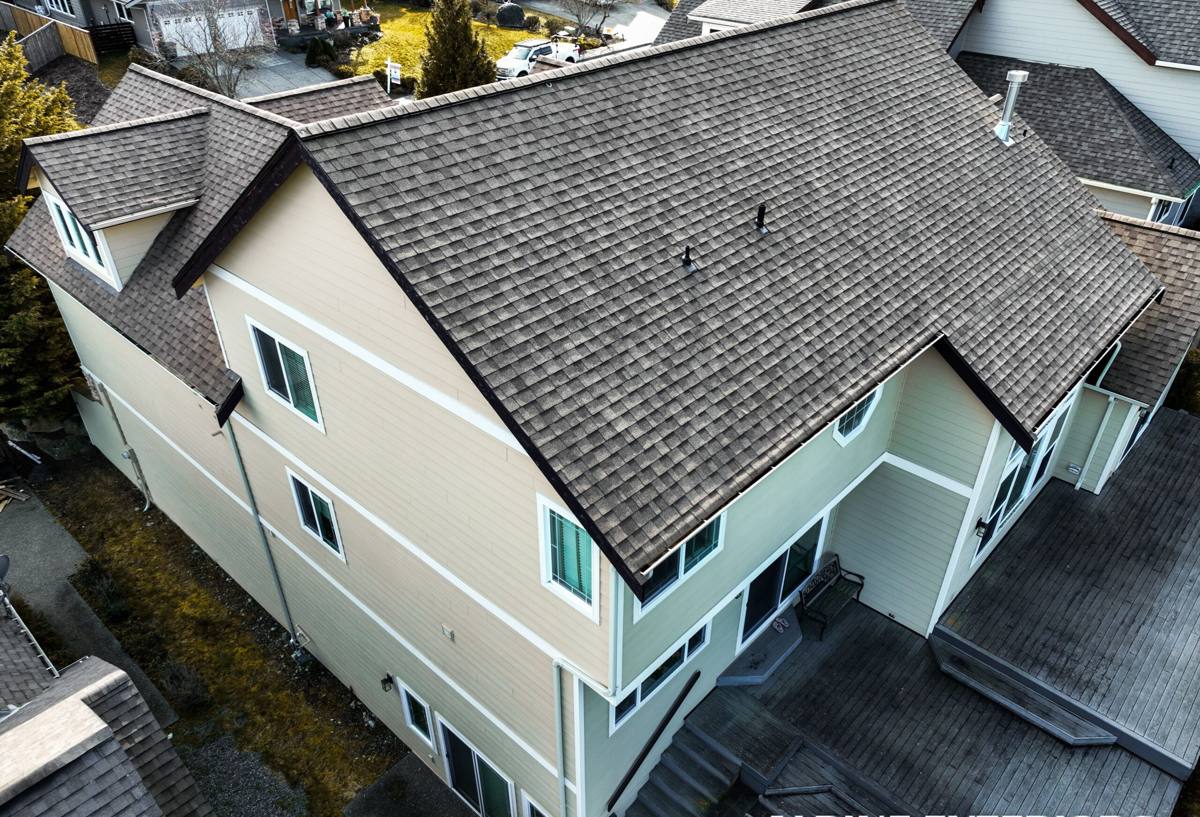
How Local Conditions Wear Down a Deck
Moisture That Doesn't Let Up
Repeated soaking and drying cycles are harder on wood than constant dampness alone. In Columbia, decks go through this cycle over and over across a wet fall and winter, then a milder dry stretch in summer. That expansion and contraction loosens fasteners, opens up seams at the ledger board, and eventually lets water into places it shouldn't be — end grain, joist tops, and the underside of decking boards.
Moss and Organic Growth
A long moss season isn't just a cosmetic issue. Moss holds moisture against the decking surface long after the rain has stopped, which accelerates rot underneath it and makes boards dangerously slick. Moss also grows in the gaps between boards and around fastener heads, trapping debris and water exactly where drainage needs to happen.
Marine Air and Metal Fatigue
The salt-tinged marine air that moves through this part of Whatcom County is harder on metal than most homeowners expect. Fasteners, brackets, and hardware that aren't rated for coastal or marine exposure can corrode from the inside out — often with very little visible warning until a board pulls loose or a post connection fails.
What a Real Deck Inspection Covers
A lot of "deck repairs" amount to swapping a bad board and calling it done. That fixes what you can see but rarely fixes what caused it. Our inspections in Columbia go through the whole structure, not just the surface.
- Ledger board attachment — where the deck meets the house, checked for flashing failure, rot, and proper fastening. This is the single most common source of a serious structural problem.
- Support posts and footings — checked for rot at the base, movement, and whether footings are still doing their job or have shifted with saturated soil.
- Joists and framing — probed for soft spots, especially where joists meet beams or where old flashing tape has failed.
- Decking boards — checked for cupping, soft spots, and moss buildup between boards that's trapping moisture.
- Fasteners and hardware — inspected for corrosion, especially on older decks built before marine-grade hardware was standard practice.
- Railings and guards — tested for lateral movement, since a railing can look fine and still fail a push test.
Signs a Columbia Deck Needs Attention
Most deck failures don't happen suddenly — there are warning signs for months or years beforehand. Homeowners in this area should watch for:
- Soft or spongy spots when you walk across the deck, especially near the house
- Visible moss or dark staining collecting between boards
- Railings or posts that flex or move when you lean on them
- Gaps opening up where the deck meets the house siding or the ledger board
- Rust streaking below fastener heads or metal brackets
- A musty smell coming from underneath the deck
- Boards that have cupped, split, or pulled away from their fasteners
Any one of these on its own might be minor. Two or three together, especially near the ledger board or support posts, usually means it's time for a professional look rather than a DIY patch.
Repair or Replace? What Actually Drives That Decision
Not every deck problem calls for a full rebuild, and not every deck problem should be patched. The honest answer depends on where the damage is and how far it's spread.
| Situation | Repair Usually Makes Sense | Replacement Usually Makes Sense |
|---|---|---|
| Ledger board condition | Isolated rot caught early, sound framing behind it | Widespread rot or missing/failed flashing throughout |
| Decking boards | A handful of boards affected, rest are sound | Cupping, softness, or moss damage spread across most boards |
| Support structure | Posts and footings solid, isolated joist issues | Multiple posts or footings compromised |
| Age of the deck | Under 12-15 years, built to a reasonable standard | Original construction is older or was undersized to begin with |
| Fastener condition | Localized corrosion, easy access to replace | Corrosion throughout, or hardware that's no longer available |
We'll tell you honestly which category your deck falls into. A repair that only delays an inevitable rebuild by a year or two isn't a good use of your money, and we won't sell it to you that way.
Our Deck Repair Process
- On-site inspection. We walk the full structure — top, underside, and connections — not just the parts you can see from the yard.
- Written scope and estimate. You get a clear breakdown of what's being replaced, what's being repaired, and why, before any work starts.
- Demolition of affected areas only. We remove what needs to go without tearing into sound structure unnecessarily.
- Structural correction. Ledger flashing, joist sistering, post and footing repair — whatever the inspection found gets addressed at this stage, not skipped.
- Decking and hardware installation. New boards and fasteners go in matched to the rest of the deck where possible, using hardware rated for this climate.
- Final walkthrough. We check railings, fastener seating, and drainage before we call the job done.
Materials That Hold Up in This Climate
Material choice matters more here than in drier regions, and there are real trade-offs to weigh honestly rather than a single "best" answer.
Pressure-Treated Lumber
Still a solid, cost-effective choice for framing and structural members when properly flashed and fastened. It requires periodic sealing and inspection, and end cuts need field treatment — a step that's easy to skip and shouldn't be.
Composite and PVC Decking
Composite boards resist moisture absorption better than wood for the visible decking surface, which helps in a long wet season, though they still need proper airflow underneath to avoid trapping moisture and encouraging moss growth on the surface. They also come with a higher upfront cost and specific installation tolerances — gapping and fastening have to be done to the manufacturer's spec or the warranty is at risk.
Fasteners and Hardware
We use fasteners and structural connectors rated for exterior and marine-influenced exposure rather than standard interior-grade hardware. It costs a little more upfront, but replacing corroded hardware in five years costs a lot more than that difference.
Maintenance That Extends the Life of a Repair
A repair is only as good as the upkeep that follows it. In Columbia's climate, a few habits make a real difference in how long new work lasts:
- Sweep debris and standing moss off the deck surface regularly through fall and winter
- Keep gutters and downspouts clear so runoff isn't draining directly onto the deck or ledger area
- Reseal or stain wood decking on the schedule the product calls for, not just when it looks faded
- Check underneath the deck once or twice a year for early moss growth or soft spots
- Trim back vegetation that's shading the deck and keeping it from drying out between rains
Why Hiring a Crew That Already Works in This Area Matters
Deck repair done right depends on understanding how a specific climate behaves, not just following a generic checklist. A crew that regularly works in Columbia and the broader Sudden Valley area already knows which failure points show up first in this kind of weather, what local permitting requirements typically apply to deck work, and which materials genuinely hold up against a Whatcom County winter versus which ones just look good on a spec sheet. That familiarity shows up in fewer surprises during the job and repairs that are built for the conditions they'll actually face, not just the conditions on a national average.
If you're not sure whether your deck needs a small repair, a larger structural fix, or a full replacement, we're happy to take a look and give you a straight answer. Reach out for a free, no-pressure estimate using the form below.