 Sudden Valley Siding
 Siding Installation Built for Barkley's Climate
Homes in the Barkley area sit in one of the more demanding climates in Whatcom County for exterior materials. Moist air moves in off Bellingham Bay and settles into the low-lying terrain around Lake Whatcom, driving rain comes at the siding sideways for weeks at a stretch in fall and winter, and the deep shade from mature evergreens means moss and algae get a long head start every year and rarely fully dry out. None of that is unusual for this part of Washington — but it does mean siding installed here has to be chosen and installed differently than siding going up in a dry inland climate. A product that looks fine going on the wall can fail quietly over five or ten years if it wasn't built, or installed, for this kind of moisture load.
We're a Sudden Valley-based crew, and Barkley is inside our regular service area — not a stretch job we drive an hour for a few times a year. That matters more than it sounds like it should, and we'll explain why later in this page. First, let's talk about what actually needs to happen for a siding installation to hold up here.
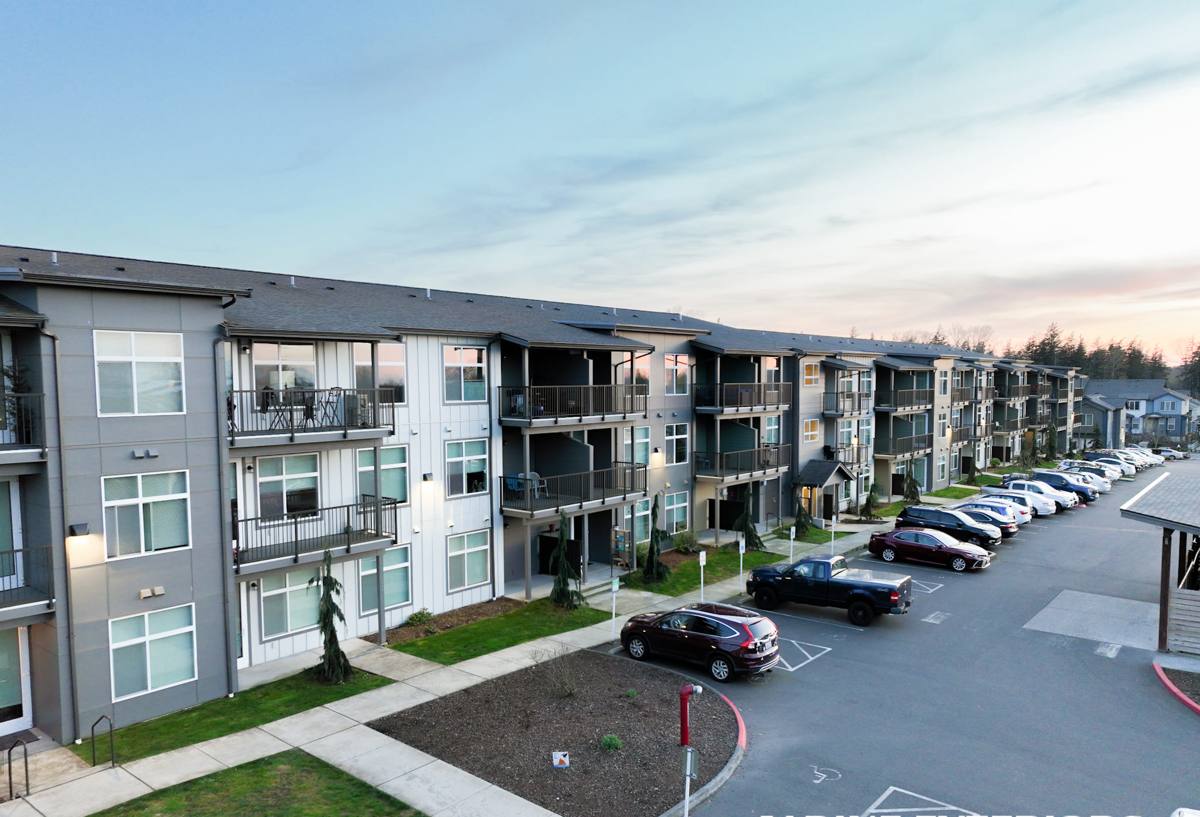
What Local Homes Are Up Against
Salt-Laden Marine Air
Whatcom County's proximity to the Salish Sea means the air carries fine salt and moisture even well inland. Over time this accelerates corrosion on exposed fasteners, staples, and lower-grade trim, and it speeds up the breakdown of paint films that weren't formulated to handle it. Siding and fasteners that aren't rated for coastal-adjacent exposure age faster here than the same products would in a dry continental climate.
Driving Rain
Wind-driven rain doesn't just wet the face of the siding — it pushes water sideways and upward into laps, seams, and penetrations that a calm-weather installation might get away with cutting corners on. Flashing details, lap spacing, and caulking choices that are "close enough" in a mild climate become the actual difference between a dry wall assembly and a slow leak here.
A Long Moss Season
Shaded, north-facing walls and anything near overhanging trees stay damp far longer than sun-exposed walls. That extended dampness is exactly what moss, algae, and mildew need to take hold. Some siding materials tolerate this fine; others absorb moisture into the substrate itself and start to soften, swell, or delaminate from the inside out long before the surface staining looks bad enough to worry about.
What a Correct Installation Actually Involves
A siding job that looks right from the curb and a siding job that's actually built to last in this climate are not always the same thing. The differences are mostly hidden once the wall is closed up, which is exactly why they matter.
- Sheathing inspection first. Old siding comes off and the sheathing gets checked for rot, soft spots, or prior water damage before anything new goes up. Covering a compromised wall with new siding just hides the problem.
- A continuous weather-resistive barrier. The house wrap or building paper behind the siding is what actually stops bulk water — the siding itself is the first line of defense, not the only one. Gaps, tears, or poor lapping here undo a lot of the benefit of good siding on top.
- Correct flashing at every penetration. Windows, doors, hose bibs, light fixtures, and roof-to-wall transitions are where driving rain finds its way in. Each needs flashing detailed to shed water down and out, not just caulked and hoped for.
- Fastening to the manufacturer's spec. Nail type, placement, and depth affect how the siding handles wind load and how well it resists the freeze-thaw and wet-dry cycling common here. Over-driven or under-driven fasteners are one of the most common causes of early siding failure.
- Proper clearance and gaps. Siding needs clearance from grade, roofing, decks, and other siding pieces to let water drain and air circulate. Tight, caulked-shut gaps trap moisture instead of letting it escape.
Why We Install Only James Hardie Fiber Cement
We don't install vinyl, LP SmartSide, Cemplank, Allura, primed spruce, or cedar. That's a deliberate standard, not a lack of options, and it's worth explaining honestly rather than just stating it.
Vinyl is inexpensive and low-maintenance, but it's a plastic product that expands and contracts significantly with temperature swings, can warp or crack in impacts, and its color is baked into a thin surface layer that fades over time with no way to repaint it back to original. Wood products — cedar, primed spruce — look good and have real appeal, but they demand ongoing maintenance (recoating, caulking, moisture monitoring) that most homeowners underestimate, and in a climate with this much sustained dampness, wood-based products are the ones most likely to show rot or delamination first. Other fiber cement brands like Cemplank and Allura are legitimate materials on paper, but we've standardized on one manufacturer so our crew has deep, repeated experience with one system's installation requirements, warranty process, and product lines rather than spreading that expertise thin across several.
James Hardie fiber cement is non-combustible, holds paint and factory-applied color far better than wood or vinyl over time, and Hardie engineers specific product lines (their HZ5 line, for example) for climate zones that see the kind of moisture and temperature cycling common in the Pacific Northwest. Combined with a strong transferable warranty and a factory finish (ColorPlus) that's baked on rather than field-painted, it's the product we're willing to put our name behind on every job — including in a wet, shaded, salt-exposed area like Barkley.
Our Process for a Barkley Installation
| Step | What Happens |
|---|---|
| 1. On-site assessment | We inspect existing siding, sheathing, trim, and problem areas — including shaded walls and anywhere moisture has clearly been an issue. |
| 2. Plan and product selection | We walk through Hardie board profiles, textures, and ColorPlus color options suited to the home and its sun/shade exposure. |
| 3. Tear-off and substrate repair | Old siding comes off; any damaged sheathing or framing is repaired before anything new goes on. |
| 4. Weather barrier and flashing | A continuous weather-resistive barrier goes up first, with flashing detailed at every window, door, and penetration. |
| 5. Installation to spec | Hardie board is installed with correct fastening, clearances, and lap detail — not shortcuts that only show up years later. |
| 6. Final walkthrough | We inspect the finished work with the homeowner and go over care and warranty registration. |
Maintenance and Longevity in This Climate
One reason we point homeowners toward fiber cement over wood or vinyl is how little ongoing attention it needs in a climate like this. It doesn't need to be re-caulked and repainted on a wood-siding schedule, and it doesn't warp or become brittle the way vinyl can after years of temperature cycling. That said, no siding is fully maintenance-free here:
- Rinse siding periodically (a garden hose is usually enough) to keep moss and algae from building up on shaded walls.
- Keep gutters clear so overflow doesn't run down the siding face repeatedly in the same spot.
- Trim back vegetation and branches that keep a wall shaded and damp longer than the rest of the house.
- Have caulking at trim and penetrations checked every few years — caulk fails well before the siding does.
Done right, a Hardie installation in this area should mean decades before you're thinking about full replacement again, with only light seasonal upkeep in between.
What to Ask Any Siding Contractor in This Area
Whether you call us or someone else, these are the questions worth asking before you sign anything for a Barkley or greater Sudden Valley siding project:
- Do you check and repair sheathing before installing new siding, or just cover what's there?
- What weather-resistive barrier do you use, and how do you handle laps and penetrations?
- What fastening schedule do you follow, and is it to the manufacturer's written spec?
- How many siding jobs have you done specifically in this climate — not just siding in general?
- What does the warranty actually cover, and is it transferable if the home sells?
Why a Crew That Already Works Barkley Matters
Siding installation isn't just a product question — it's a judgment question. Which walls need extra flashing attention because of shade and wind exposure, how much clearance to leave given how wet the ground stays here, which details matter most on a home exposed to driving rain off the water — that judgment comes from having done the work in this specific area repeatedly, not from a general siding background. Because we're based in Sudden Valley and already work in and around Barkley regularly, we're not learning the local conditions on your project. We've already seen how homes here age, where moisture problems tend to start, and what actually holds up through a full Whatcom County winter.
If you're weighing a siding replacement or new installation on a Barkley home, we're happy to take a look and give you a straightforward, no-pressure estimate — no hard sell, just an honest read on what your home needs and what it would take to do it right.