 Sudden Valley Siding
 Cordata's Siding Challenge: Salt Air, Rain, and a Long Moss Season
Homes in and around Cordata sit inside the same Whatcom County weather pattern that wears down siding faster than most homeowners expect. It's not one dramatic storm that does the damage — it's the accumulation. Marine air carries salt inland on prevailing winds, driving rain comes in sideways during fall and winter systems, and the region's mild, damp shoulder seasons give moss and algae months at a time to establish themselves on anything that stays shaded and wet. Add tree cover, which is common on lots throughout this part of the county, and you get siding that rarely gets a real chance to dry out between rain events.
Wood-based and wood-adjacent siding products struggle in this cycle. Paint film breaks down where moisture sits longest — under eaves, behind shrubs, on the north and west exposures. Once water gets past the paint, the substrate underneath starts absorbing it, and from there the clock is running on rot, delamination, or swelling, whether that substrate is solid wood, engineered wood, or a composite panel with a wood-fiber core. This is the backdrop for every siding replacement we do in this neighborhood, and it's why the product choice and the installation details matter as much as the labor itself.
What a Correct Siding Replacement Actually Involves
Siding replacement is not just pulling off old panels and nailing up new ones. Done right, it's a full assessment and rebuild of the water management system on the outside of the house. Skipping steps here is exactly how a brand-new siding job ends up with the same rot problem five years later.
Removing the Old Siding the Right Way
Tear-off is when the sheathing gets its first real inspection in years, sometimes decades. We look for soft spots, delamination, and staining that points to a leak path — around windows, at corners, behind old trim, and anywhere caulk was doing the job flashing should have been doing. Any compromised sheathing gets cut out and replaced before anything new goes up. Covering rotten sheathing with new siding just hides the problem for another owner to find.
The Water-Resistive Barrier and Flashing Details
A water-resistive barrier (WRB) goes over the sheathing, lapped correctly from the bottom up so water sheds outward instead of behind the barrier. Every penetration — windows, doors, hose bibs, light fixtures, vents — gets flashed and integrated into that barrier in the correct shingle-style sequence. In a climate that gets driving, wind-blown rain, these details are what actually keep a house dry. The siding itself is the visible layer; the WRB and flashing are the layer doing the real work.
Fastening and Clearances That Match the Manufacturer's Spec
Fiber cement siding has specific fastening patterns, nail types, and clearance requirements — ground clearance, roof-line clearance, gaps at butt joints — that are spelled out by the manufacturer for a reason. Fastening too tight, using the wrong nail, or closing up clearances that are supposed to allow drainage and drying are common shortcuts that shorten a siding job's life regardless of how good the product itself is.
Why We Install Only James Hardie Fiber Cement
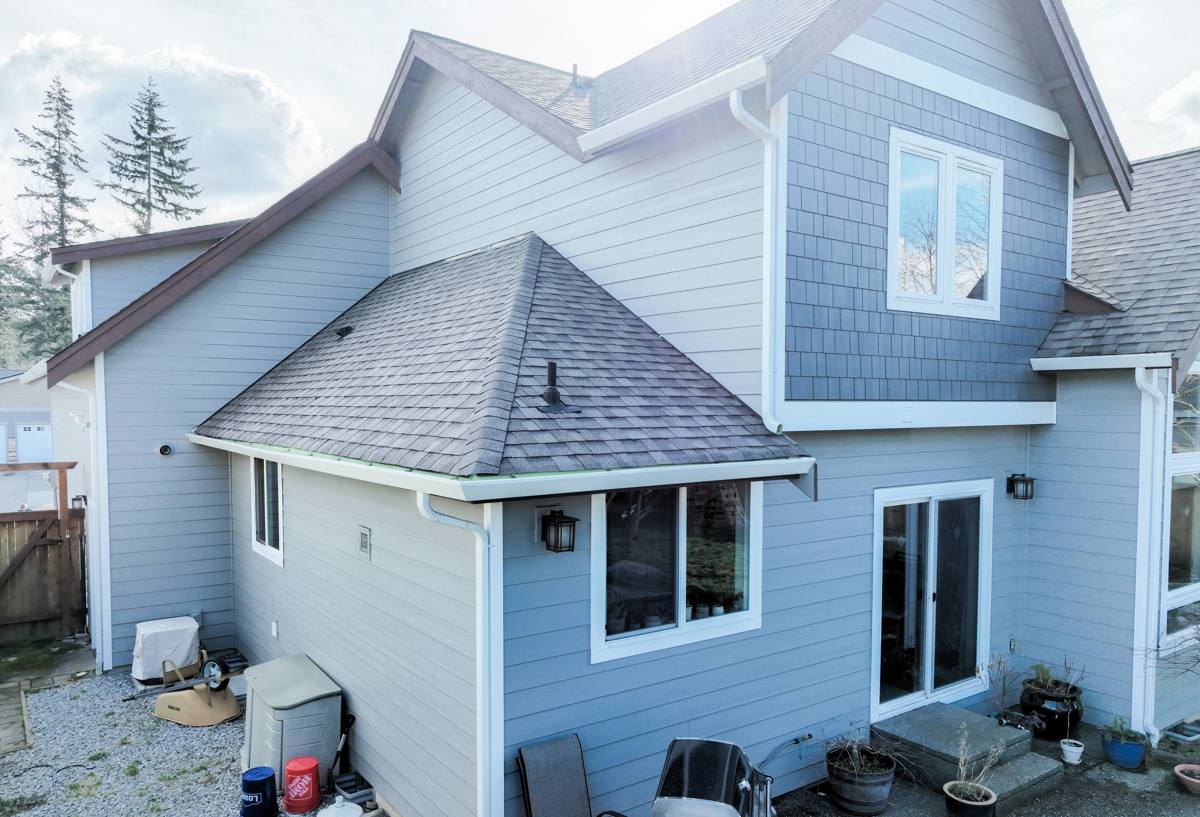
We standardized on James Hardie fiber cement siding and don't install vinyl, LP SmartSide, cedar, primed spruce, or other fiber cement brands. That's a deliberate call, not a marketing line. Fiber cement is non-combustible, holds paint and factory finish far longer than wood-based products, and doesn't swell, delaminate, or attract insects the way engineered-wood or solid-wood siding can. In a climate that keeps siding damp for long stretches of the year, that moisture stability is the difference between a 30-year exterior and one that needs attention by year ten.
HZ5 Engineering for the Pacific Northwest
Hardie engineers its HZ product lines for specific climate zones, and the HZ5 line is built for regions with more moisture exposure — which describes Whatcom County well. ColorPlus factory-applied finish is baked on under controlled conditions, which gives more consistent, longer-lasting color than field-applied paint, and it reduces the recoat cycle that eats into the lifetime cost of most other siding materials. Combined with a strong transferable warranty when installed to spec, it's the product we're willing to put our name behind on a Cordata-area home.
Signs Your Siding Is Already Losing the Fight
Most siding failure is gradual, and homeowners often don't notice until the damage has reached the sheathing. Watch for:
- Green or black staining that keeps returning within weeks of cleaning, especially on shaded or north-facing walls
- Soft or spongy spots when you press on the siding, particularly near the bottom courses and around window trim
- Paint that's peeling, bubbling, or chalking heavily rather than just fading
- Visible cupping, warping, or separated seams on wood or composite panels
- Caulk lines that have cracked or pulled away from trim and corner boards
- A musty smell near exterior walls inside the house, which often points to moisture already past the siding
Any one of these on its own might just need attention. Several together, especially on an older wood or composite exterior, usually means it's time to talk about replacement rather than another round of patching and painting.
Our Process, Start to Finish
We keep the process straightforward and communicate at each stage rather than disappearing until the crew shows up:
- On-site assessment — we walk the exterior, check problem areas, and give an honest read on what's driving the need for replacement.
- Written estimate — scope, product line, color, and a clear price, with no pressure to sign on the spot.
- Tear-off and sheathing inspection — old siding comes off, sheathing gets checked and repaired where needed.
- WRB and flashing installation — the water management layer goes in before a single piece of new siding is hung.
- Hardie installation to manufacturer spec — correct fasteners, clearances, and joint treatment throughout.
- Trim, caulk, and touch-up — finish details that protect edges and joints long-term.
- Walkthrough and cleanup — we review the finished job with you and clear the site of debris and old material.
Cost Factors for a Cordata-Area Siding Replacement
Every home is different, but the same handful of factors drive most of the cost variation we see on jobs in this area:
| Factor | Why It Matters Here |
|---|---|
| Sheathing condition | Rot from long-term moisture exposure is common on older homes and adds repair time before new siding can go up |
| Home size and wall complexity | More corners, dormers, and trim details mean more labor and more flashing work |
| Siding profile and finish | Lap width, shingle-style panels, and specific ColorPlus color choices affect material cost |
| Access and site conditions | Tree cover, tight side yards, and slope can slow tear-off and staging |
| Trim and accessory scope | Fascia, corner boards, and window trim replaced at the same time adds to the project but saves a second mobilization later |
We'd rather walk your specific house and give you real numbers than quote a range that doesn't mean much until we've seen the exterior.
Why a Crew That Already Works Cordata Matters
Siding installation isn't just about following a spec sheet — it's about knowing how a specific area's weather actually behaves against a wall over a full year. A crew that regularly works homes around Cordata and the broader Sudden Valley area already knows which exposures take the worst of the driving rain, where moss tends to establish first, and how tree cover and lot layout affect drying time on a given elevation. That local pattern recognition shows up in small decisions — where to add extra flashing attention, which details to double-check on a shaded wall — that a crew unfamiliar with the area's microclimate might not think to flag.
It also matters for the practical side of the job: knowing local permitting expectations, being reachable for a warranty question years down the road, and having a track record in the same county rather than a one-time crew passing through.
Keeping New Siding Performing Long-Term
Even the right product installed correctly benefits from a small amount of homeowner attention over the years:
- Rinse siding annually, especially shaded or north-facing walls where moss and algae take hold first
- Keep gutters clear so overflow doesn't run down the wall behind trim
- Trim back vegetation that's shading siding or holding moisture against it
- Check and refresh caulk at trim joints and penetrations every few years
- Address any impact damage promptly rather than letting a small chip become a moisture entry point
None of this is heavy maintenance — it's the kind of basic upkeep that lets a well-installed fiber cement exterior go the distance it's engineered for in this climate.
If your siding is showing wear, or you just want an honest read on whether it's time to replace rather than repair, we'll come out, take a real look, and give you a straightforward estimate — no pressure, no obligation.