 Sudden Valley Siding
 Why Happy Valley Homes Need Windows Built for This Climate
Happy Valley sits inside the same weather pattern that shapes every home in Sudden Valley and greater Whatcom County: long stretches of driving rain, heavy marine air, and a moss season that seems to start earlier and last longer every year. Windows take more abuse from this environment than most homeowners realize. Wind-driven rain doesn't just fall straight down — it gets pushed sideways into window frames, sills, and the gaps around trim. Over years, that moisture works into wood that isn't properly protected, softens caulk lines, and finds its way behind siding if the flashing wasn't done right the first time.
Salt-laden air moving through the region accelerates corrosion on hardware, latches, and metal window components faster than it would in a drier inland climate. Combine that with the shade and humidity common in wooded Happy Valley lots, and you get ideal conditions for moss, algae, and mildew to take hold on sills and frames that don't drain or dry out quickly. A window that was fine for a starter home in a dry climate is often the wrong choice here — not because it's a bad product, but because it wasn't built or installed with this kind of weather in mind.
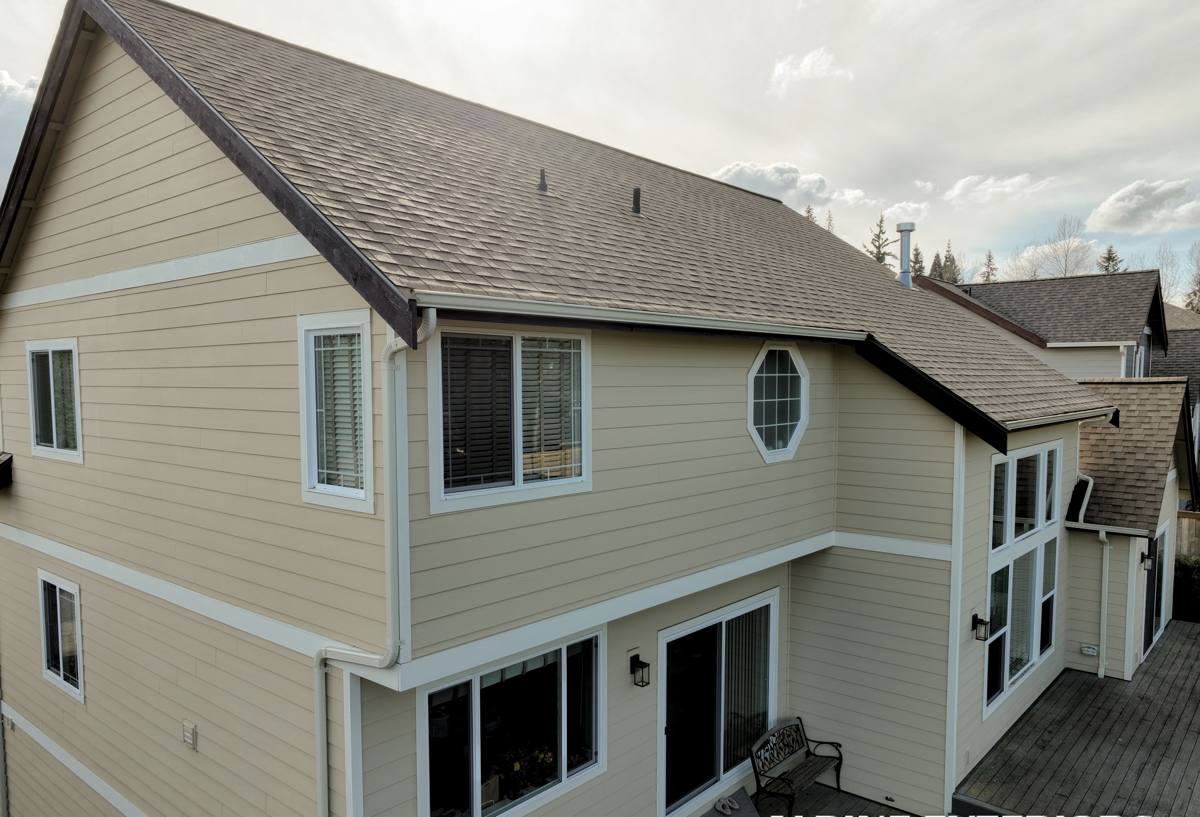
What "Custom" Actually Means for a Happy Valley Window Job
"Custom" doesn't mean expensive or unusual — it means the window is made and installed to fit your actual opening, your home's actual structure, and your actual exposure, instead of forcing a stock size into a space it wasn't designed for. Most homes in this area weren't built with today's standard window sizes in mind, so a true custom approach starts with the opening itself, not a catalog.
Sizing and Openings in Older vs Newer Homes
Older homes around Sudden Valley and Happy Valley often have settled framing, slightly out-of-square openings, or rough openings sized for windows that haven't been manufactured in decades. Newer construction is usually more standardized but still needs exact measurement, since even a quarter-inch of slop around a window is where water, air, and eventually rot get in. We measure each opening individually rather than assuming a match to a neighboring home, even one that looks identical from the road.
Matching Your Home's Style and Siding
Custom also means the window has to work visually and physically with your existing siding and trim. Grid patterns, frame color, and sightlines should match the rest of the house, and the trim detail around the window needs to tie into whatever siding material you have — lap siding, panel siding, or shingle — without creating a gap or a shortcut for water. When we're also doing siding work on a home, we treat the window and the siding as one system, not two separate jobs happening to overlap.
Choosing the Right Window Materials for This Environment
There's no single "best" window material for every home — the right choice depends on your budget, your exposure to wind and rain, and how much maintenance you're willing to keep up with. Here's how the common options actually compare for a home in this climate:
| Material | Moisture Resistance | Maintenance | Typical Cost Position |
|---|---|---|---|
| Vinyl | Good; won't rot, but seals and hardware need checking over time | Low | Lower to mid |
| Fiberglass | Very good; stable in wet and swing climates, holds paint well | Low to moderate | Mid to higher |
| Wood (unclad) | Poor in this climate without diligent upkeep | High | Mid to higher |
| Wood-clad (vinyl or aluminum exterior) | Good on the exterior face; interior wood still needs normal care | Moderate | Higher |
Our general standard is that we don't install unclad wood exteriors in direct weather exposure on this side of the county unless a homeowner specifically wants that look and understands the upkeep commitment. It's not that wood is a bad material — it's that bare wood facing driving rain and moss-friendly shade needs a paint and maintenance schedule most people don't want to keep up with. Clad or fiberglass options give you a similar look with far less long-term burden.
The Parts of a Window Job Homeowners Don't See (But Should Ask About)
The window unit itself gets all the attention, but the parts that actually determine whether it fails in five years or lasts thirty are hidden once the trim goes back on.
- Sill pan flashing: a sloped, sealed pan under the window that gives any water that gets past the frame a way to drain back out instead of soaking into the framing.
- Weather-resistive barrier integration: the house wrap or building paper has to be lapped correctly around the window's nailing flange, shingle-style, so water sheds down and over, never into the wall.
- Head flashing: a small strip above the window that directs water running down the wall away from the top of the frame instead of behind it.
- Sealant, not just caulk: the right sealant at the right joints, applied so it can still move with the building without cracking.
Any contractor can install a window so it looks finished from the curb. Whether it actually keeps water out during a real Whatcom County storm comes down to these details, and they're worth asking about before work starts.
Common Problems We Find When Replacing Windows in This Area
Moss and Mildew Staining
Shaded lots and persistent damp air let moss and mildew take hold on sills, frame corners, and anywhere water sits instead of draining. Staining is often the first visible sign, but it usually means moisture is lingering longer than it should.
Rot Around Original Wood Frames
In homes still on original wood windows, we regularly find soft or rotted wood at the bottom corners of the frame and sill — the lowest point, where water collects and dries slowest.
Failed Seals and Fogging
Double-pane units with a broken seal will fog or cloud between the panes. It's a sign the insulating gas has escaped and the glass unit itself needs replacing, not just a cleaning.
Condensation and Drafts
Interior condensation and cold drafts around the frame usually point to worn weatherstripping, a settled frame, or a window that was never air-sealed correctly during its original install.
Our Process for a Custom Window Installation
- On-site assessment: we look at every opening, the surrounding siding and trim, and any signs of existing moisture damage before recommending anything.
- Exact measurement: each window is measured individually — no assuming uniformity across a home.
- Product selection: we walk through material, glass, and style options based on your exposure, budget, and how the window needs to match your home.
- Careful removal: old units come out without unnecessary damage to surrounding siding or framing, and we check the opening for hidden rot or water damage before anything new goes in.
- Correct flashing and sealing: sill pan, barrier integration, and head flashing are done in the sequence that actually sheds water, not shortcuts.
- Installation and insulation: the window is set square and plumb, shimmed correctly, and insulated around the frame without overpacking, which can bow the frame.
- Trim and siding tie-in: exterior trim is finished to match your home, with siding integrated cleanly rather than caulked over gaps.
- Final walkthrough: we check operation, sealing, and appearance with you before calling the job done.
Cost Factors for Custom Windows in Happy Valley
Every home is different, so we don't quote window jobs off a flat per-unit price without seeing the openings. That said, a few factors consistently move the number up or down:
- Window size and whether it's a standard or unusual opening
- Material choice (vinyl, fiberglass, or clad wood)
- Number of windows being replaced in the same project
- Condition of the existing opening — rot repair adds time and material
- Access, including second-story or hard-to-reach windows
- Whether siding or trim work is needed alongside the window itself
Broadly, homeowners in this area should expect a wide range depending on these factors — a single straightforward replacement costs far less than a whole-house project with rot repair and siding tie-in included. We give a firm number after seeing the actual openings, not a phone estimate.
Why Local Experience with Happy Valley Homes Matters
A crew that already works in Sudden Valley and the surrounding Whatcom County communities has already seen how homes here age under this specific weather — where moss tends to collect, how driving rain hits certain exposures harder than others, and which original window installations from decades past tend to be hiding rot behind the trim. That experience shortens the assessment, avoids surprises mid-project, and means the flashing and sealing details are done to handle this climate specifically, not a generic install method that works fine somewhere drier.
It also means we're not guessing at permitting or code requirements for the area, and we're not learning on your home how local siding types and window systems need to integrate. That local track record is worth asking about directly when you're comparing contractors.
What to Ask Before You Hire Anyone for Window Work
- Do you measure every opening individually, or work off standard sizes?
- What's your process for sill pan flashing and weather barrier integration?
- Will you check for hidden rot before installing, and what happens if you find it?
- Do you carry current licensing and insurance for work in Washington State?
- Can you show me how the new window will tie into my existing siding and trim?
- What's covered under warranty, and is that the manufacturer's warranty, your workmanship warranty, or both?
If a contractor can't answer these clearly, that's worth noticing before you sign anything.
If you're weighing window options for a home in Happy Valley or elsewhere around Sudden Valley, we're happy to take a look and give you a straightforward, no-pressure estimate — just fill out the form below and we'll get in touch.