 Sudden Valley Siding
 Why Deck Replacement Looks Different in Columbia
A deck in Columbia doesn't fail the way a deck fails in a dry climate. Out here, the problem is almost never sun damage or UV fading first — it's water that never fully leaves. Whatcom County sits under a long wet season, and homes around the Lake Whatcom corridor near Sudden Valley pick up driving rain that gets pushed sideways by wind into ledger boards, stair stringers, and railing posts. That moisture doesn't dry out fast, because the same weather pattern that brings the rain also keeps humidity high for months at a stretch.
Add in a moss season that can realistically run from early fall through late spring, and you get a specific failure pattern: boards that look fine on top but are soft, dark, and rotting underneath; fasteners that rust and bleed orange streaks into the wood; and framing members that were never protected from water in the first place, because whoever built the deck originally was working from a lumberyard plan, not a plan built for this climate. For homes closer to the water where salt-tinged air reaches inland, that moisture problem is compounded by faster corrosion on any hardware that isn't rated for it.
Replacing a deck here isn't just about swapping old boards for new ones. It's about correcting the parts of the structure that were never built to handle this much sustained moisture, so the replacement actually outlasts the original.
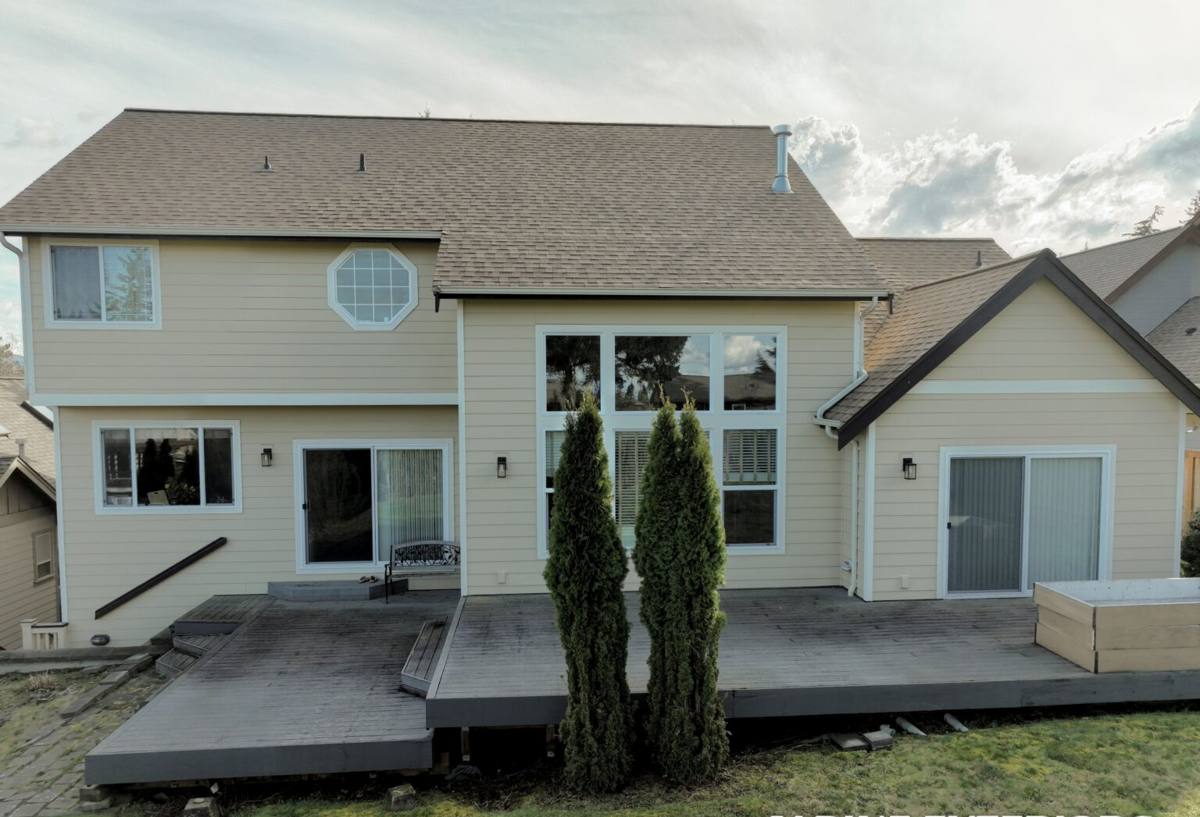
Signs It's Time to Replace, Not Repair
Not every tired-looking deck needs a full replacement. But once the framing itself is compromised, patching individual boards is a short-term fix that costs money without solving the underlying problem. These are the signs we look for when we walk a Columbia property:
- Soft or spongy spots when you walk across the deck, especially near the house or along the perimeter
- Visible rot, dark staining, or a mushroom smell at the ledger board where the deck meets the house
- Rust streaks running down from screw heads or bolts, which usually means the hardware was never rated for treated lumber
- Green or black film that keeps coming back within weeks of cleaning, a sign moisture is trapped rather than just sitting on the surface
- Boards that have cupped, split, or pulled away from fasteners
- Noticeable bounce or flex underfoot, which points to joist damage, not just surface wear
- Footings that have shifted, cracked, or settled unevenly
- A railing that wobbles when pushed, which is a safety issue, not a cosmetic one
If you're only seeing the first item or two, a repair may still make sense. Once rot has reached the framing or the ledger connection, replacement is the honest recommendation — repairs on a compromised frame don't hold up through another wet season.
What a Correct Deck Replacement Includes
Footings and Framing
Frost depth around Whatcom County is shallow compared to inland climates, but that's not the risk here — standing moisture in the soil is. Lots around Sudden Valley and the Columbia area often hold water longer than they look like they should, especially on shaded or gently sloped ground. Footings need to be sized and set correctly for the load, and every joist and beam should get a protective flashing tape on top before decking goes down. That single detail — a strip of self-adhering tape over exposed framing — is one of the cheapest things we do and one of the most effective at stopping the next round of rot before it starts.
Ledger Board and Flashing
The ledger — the board that bolts the deck to the house — is the single most common failure point on decks in this climate, and it's usually the least visible one until it's already rotted. A correct replacement means proper step flashing integrated behind the house's siding or house wrap, not just a bead of caulk smeared over the top. Caulk alone will not survive years of driving rain finding its way behind the board. This is also where we double-check that water is being directed away from the house rather than pooling against it.
Fasteners and Hardware
Modern pressure-treated lumber uses a more corrosive preservative than older treated wood did, which means standard galvanized fasteners can fail early. We use stainless steel or heavy-duty, properly rated hot-dip galvanized fasteners and structural connectors throughout — not because it's flashy, but because in a climate with this much sustained dampness and, in areas closer to the water, salt-influenced air, cheaper hardware is the first thing to fail and the hardest thing to inspect once it's buried under decking.
Choosing the Right Decking Material for This Climate
There's no single "best" decking material — there's the right material for your budget, your maintenance appetite, and how much shade and moisture your specific lot deals with. Here's how the common options actually perform in Whatcom County conditions:
| Material | Moisture & Moss Behavior | Maintenance | Typical Lifespan | Cost Tier |
|---|---|---|---|---|
| Pressure-treated wood | Absorbs water readily; needs sealing to resist moss and rot | Annual cleaning and resealing recommended | 10–15 years with upkeep | Lowest |
| Cedar | Naturally rot-resistant but still absorbs moisture over time; can gray and grow moss if not maintained | Periodic cleaning and oiling | 15–20 years with upkeep | Mid |
| Composite/PVC (e.g. Trex, TimberTech, Fiberon) | Doesn't rot, but surface can still grow algae or moss film if shaded and damp | Occasional washing, no sealing needed | 25–30+ years | Higher |
Composite decking is popular in this climate specifically because it removes the rot risk that wood carries, but it isn't maintenance-free — moss and algae can still grow on the surface of any decking material in a shaded, damp yard, composite included. The difference is that composite won't structurally rot from it, where wood eventually will. We'll walk your specific lot with you — sun exposure, tree cover, and how much upkeep you actually want to do — before recommending one over the other. It's your call to make, not ours to push a product on you.
Permits and Site Considerations
Most deck replacements that are attached to the house or built above a certain height require a permit, and inspections typically check footings, ledger attachment, and railing height and spacing. Because Sudden Valley and the surrounding Lake Whatcom area include properties near shoreline and critical-area buffers, some lots carry additional review requirements beyond a standard building permit. We check this before we quote the job, not after, so there are no surprises mid-project. If your property sits within a homeowners' association, as much of Sudden Valley does, we also account for any exterior design guidelines the association has on file before we finalize materials and color.
Our Deck Replacement Process
- On-site assessment — we inspect the existing deck's framing, ledger connection, and footings, not just the surface boards, and identify what's driving the failure.
- Written scope and estimate — you get a clear breakdown of what's being replaced, what materials are being used, and why, before any work starts.
- Tear-out — full removal of the old structure, which also lets us confirm the condition of framing and connections that were hidden before.
- Framing correction — footings, joists, and the ledger connection are rebuilt or reinforced to current standards, with flashing tape and corrosion-resistant hardware throughout.
- Decking and railing installation — installed per manufacturer spacing and fastening specs, which matters for both appearance and warranty coverage.
- Final walkthrough — we check the deck with you before we consider the job done, and clean up the site fully.
Why Local Experience in Columbia and the Sudden Valley Area Matters
A crew that only shows up in this area occasionally is guessing at things a local crew already knows: which lots hold moisture longest because of shade and slope, how fast moss reestablishes on a north-facing deck near the lake, and what an HOA review typically expects for exterior changes in this community. We work in Columbia and the broader Sudden Valley area regularly enough to know these patterns before we start, which means fewer surprises during the project and a deck that's built for the conditions it's actually going to sit in — not a generic spec sheet.
Maintenance That Extends the Life of a New Deck
A well-built deck replacement will still need some upkeep — the difference is how much and how forgiving the material is if you fall behind. A few habits go a long way in this climate:
- Clean moss and algae buildup at least once a year, more often on shaded or north-facing decks
- Reseal wood decking on a regular schedule rather than waiting until it looks gray and dry
- Keep gutters and downspouts directing water away from the deck structure, not onto it
- Check the ledger flashing and any visible fasteners once a year for early rust or gaps
- Trim back overhanging branches that keep the deck surface shaded and damp longer than it needs to be
None of this is complicated, but skipping it is how a well-built deck ends up needing early repairs anyway. A few minutes a couple of times a year is cheaper than redoing work that didn't need to be redone.
If your deck in Columbia is showing any of the signs above, or you just want an honest read on whether repair or replacement makes more sense, we're happy to take a look. Estimates are free, there's no pressure attached, and you'll get a straight answer about what your deck actually needs — use the form below to get started.