 Sudden Valley Siding
 Energy-Efficient Windows in Deming: Built for Whatcom County's Wet Climate
Deming sits in one of the wetter, greener corners of Whatcom County, and homes out here spend most of the year working against moisture rather than heat. That combination — a long, damp season, salt-tinged marine air drifting in off the Sound and Strait, and driving rain that doesn't always fall straight down — puts real, ongoing stress on windows specifically. Windows are where a home's exterior has the most seams, the most moving hardware, and the most places for water and cold air to find a gap if something wasn't installed correctly the first time. Original or first-generation replacement windows on older Deming homes are often still functioning, technically, but functioning and performing well are two different things.
We work on siding, roofing, windows, and decks throughout the Sudden Valley area and the surrounding Whatcom County communities, and on window projects specifically we treat energy efficiency as a whole-assembly question — not just a rating printed on a sticker. A high-efficiency window installed with sloppy flashing will leak and lose performance within a few wet seasons. A solid, well-specified window installed correctly, with flashing and air sealing that actually tie into the surrounding wall, will keep performing for decades. That distinction matters more here than in a drier climate, because Whatcom County gives poor installation work more opportunities to fail.
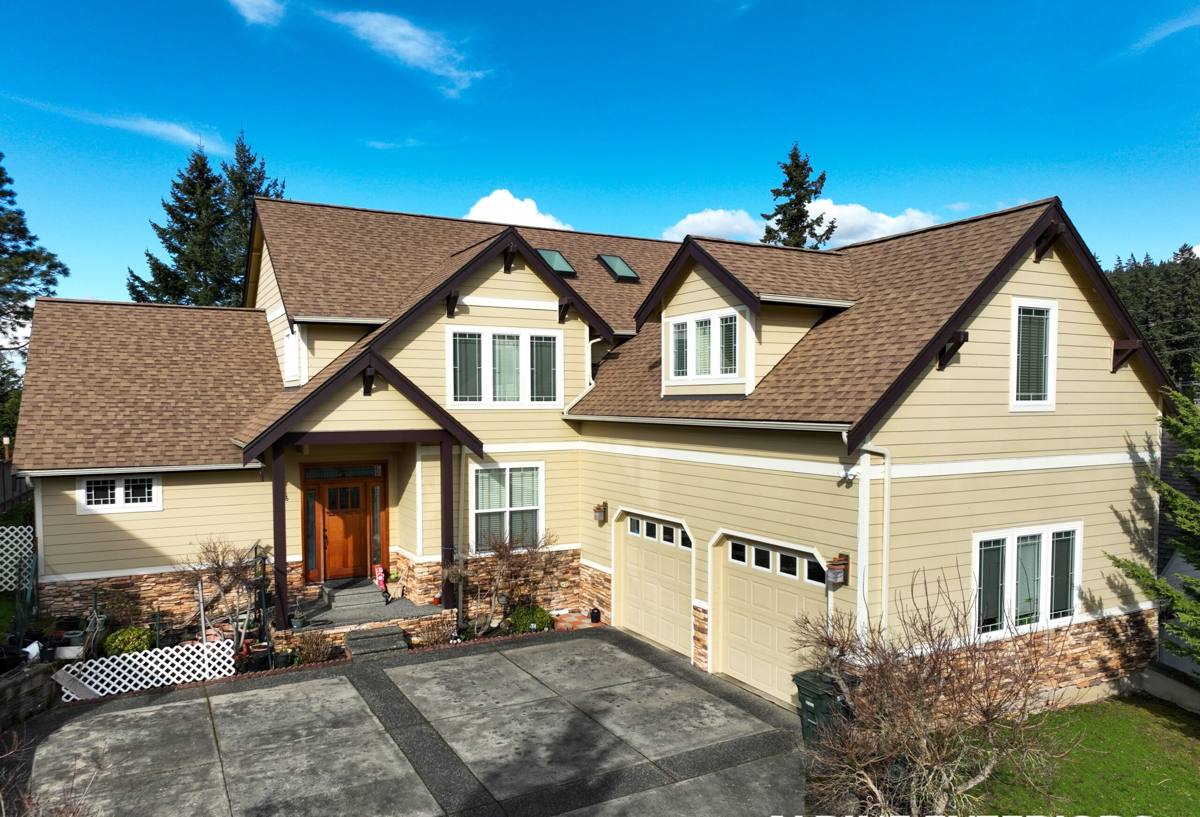
What This Climate Does to Windows Over Time
Wind-Driven Rain
Storms in this part of Washington rarely arrive as simple vertical rainfall. Wind pushes rain sideways into wall assemblies, and that matters for windows because wind-driven rain reaches gaps and seams that a calmer climate would never test. The window unit itself is only half the equation — flashing that properly laps with the weather-resistive barrier and siding is what actually stops that water from working behind the trim and into the framing.
Salt Air and Hardware Corrosion
Whatcom County's proximity to Puget Sound and the Strait of Georgia means a meaningful amount of salt-influenced air moves through the region, even well inland. That air accelerates corrosion on lower-grade window hardware, fasteners, and frame components. Budget hardware that would hold up fine in a dry inland climate tends to show pitting, stiffness, or seal failure noticeably sooner out here.
Moss, Mildew, and a Long Growing Season
Mild temperatures combined with near-constant moisture from fall through spring give moss and mildew a growing season that can run most of the year across Whatcom County. Window sills, trim, and the wood framing around older units are prime real estate for it. Anywhere water sits instead of draining, or anywhere porous material stays damp, becomes a growth surface eventually — shaded elevations and windows tucked under eaves with poor drainage tend to show it first and worst.
Energy Loss From Constant Temperature and Moisture Swings
The gap between a heated interior and a cold, wet Deming exterior for much of the year puts steady stress on both energy performance and window materials. Older single-pane windows and early double-pane units lose heat constantly through the glass and around poorly sealed frames, and that loss shows up directly on winter heating bills. It's not a one-time problem — it's a slow, ongoing drain that inefficient windows create every day the temperature difference exists.
What "Energy-Efficient" Actually Means
Homeowners hear "energy-efficient windows" used as a catch-all marketing phrase, but the actual performance comes down to a handful of specific, measurable factors. Understanding them helps you evaluate a quote instead of just trusting a label.
U-Factor
U-factor measures how much heat a window lets escape — lower is better. It's the single most useful number for a climate like Whatcom County's, where the priority most of the year is keeping heat inside rather than keeping it out. A window with a poor U-factor loses heat through the glass and frame regardless of how tight the installation is.
Low-E Coatings and Gas Fills
Low-emissivity (low-E) coatings are microscopically thin layers on the glass that reflect heat back into the room in winter while still letting visible light through. Combined with argon or krypton gas fill between panes, they meaningfully improve a window's insulating performance over plain double-pane glass. The specific coating and gas fill vary by manufacturer and product line, so it's worth asking exactly what's included in any quote rather than assuming all "double-pane" windows perform the same.
Frame Material
Frame material affects both energy performance and how well a window holds up in this climate. Vinyl and fiberglass frames resist rot and don't require the maintenance that uncladded wood frames do, which matters given how much moisture Whatcom County sees through the year. Fiberglass tends to be more dimensionally stable through temperature swings; vinyl is generally the more affordable option and performs well in mild, wet conditions.
Whole-Window Performance, Not Just Glass
A window's real-world efficiency depends on the frame, the glazing, the spacer between panes, and the installation together — not the glass in isolation. A premium glazing package installed in a frame with poor seals, or installed with gaps around the rough opening, will underperform a modest window installed correctly. This is why we walk homeowners through the whole system rather than selling on a single spec number.
Signs a Deming Home Could Benefit From More Efficient Windows
- Noticeable drafts or cold spots near window frames even when fully closed and locked
- Fogging or visible moisture trapped between the panes of a double-pane window
- Windows that feel cold to the touch on the interior side during winter
- Higher-than-expected heating bills relative to the size of the home
- Condensation collecting on interior glass or sills during cold, damp stretches
- Sills or trim that feel soft, look discolored, or show visible rot
- Windows that stick, won't stay open, or are harder to lock than they used to be
- Visible daylight or gaps where the window frame meets the surrounding siding
Comparing Window Options for This Climate
There's no single "correct" window for every Deming home — the right choice depends on budget, the age and construction of the house, and how exposed a given elevation is to wind and rain. Here's how the common options generally stack up for this specific climate.
| Option | Energy Performance | Best Fit | Trade-Off |
|---|---|---|---|
| Vinyl, double-pane, low-E | Good | Most homes; strong value | Frame color options are more limited than fiberglass |
| Fiberglass, double-pane, low-E | Very good | Homes with wide temperature swings or that want paintable frames | Higher upfront cost than comparable vinyl |
| Triple-pane (vinyl or fiberglass) | Best | North-facing or highly exposed elevations, or homeowners prioritizing energy savings | Added cost and weight; not always necessary on sheltered walls |
| Storm windows over existing units | Modest improvement | Budget-limited situations or historic homes where full replacement isn't wanted | Doesn't address a failing frame or rotted sill underneath |
Installation: Where Energy Efficiency Is Actually Won or Lost
We spend more time talking with Deming homeowners about flashing and air sealing than about glazing packages, because in this climate, installation quality determines whether a high-efficiency window actually performs like one. Correct installation means the flashing laps properly with the weather-resistive barrier and siding around the opening, water is directed out and away from the rough opening instead of trapped behind it, and the gap between the window frame and the rough opening is properly insulated and air-sealed — not just caulked shut. Caulk alone cracks and breaks down over time; it was never designed to be the sole barrier against wind-driven rain or the only air seal keeping heated indoor air from leaking out around the frame.
On repair calls in this area, the moisture damage and energy loss we find almost never traces back to the window unit itself failing — it traces back to flashing that was never lapped correctly, or a rough opening that was never properly air-sealed to begin with. That's standard practice on every window we install, not an upgrade homeowners have to ask for separately.
How We Approach a Window Replacement Project
We start with an on-site look at the existing windows — checking frame condition, seal integrity, hardware function, and how the current flashing ties into the siding around each opening. From there we give a straightforward read on which windows are worth keeping, which are reasonable candidates for storm windows or minor repair, and which make more sense to replace outright, along with a written scope before any work begins. Flashing, air sealing, and drainage detailing are handled as standard practice on every job, not offered as an optional add-on.
A Few Things Worth Confirming Before You Hire
- Ask specifically how they handle flashing and air-sealing detail, not just which window brand they sell
- Confirm current Washington contractor licensing and active liability insurance
- Get a written scope that separates the manufacturer's product warranty from the contractor's installation warranty
- Ask for U-factor and glazing package details in writing, not just a general "energy-efficient" label
- Ask about lead times — custom-sized window orders for this region can run several weeks
Why a Local Crew That Works Deming Matters
A contractor who works Deming and the rest of Whatcom County regularly already knows how wind-driven rain, salt-influenced air, and a long moss season behave here compared to a drier, more sheltered climate. That knowledge shows up in the small decisions — how much lap a flashing detail gets, whether air sealing around the rough opening gets the attention it needs, which hardware grade makes sense for a given exposure — and those decisions are what actually determine whether a window installation delivers real energy savings for one winter or for several decades. It also means fewer surprises around scheduling in the wetter months and a realistic read on how a given home's exposure compares to its neighbors.
If your Deming home has drafty, foggy, or underperforming windows — or you're just not sure whether repair, storm windows, or full replacement makes the most sense — we're happy to take a look and give you a straightforward, no-pressure read. Reach out below for a free estimate.