 Sudden Valley Siding
 Window Replacement for Deming Homes, Done by a Crew That Already Works This Area
Deming sits in that stretch of Whatcom County where the Nooksack Valley climate and the damp, wooded conditions around Sudden Valley overlap — heavy fall and winter rain, long stretches of low sun that never quite dries things out, and enough moss and mildew pressure to shorten the life of anything installed wrong the first time. When we replace windows out here, we're not just swapping glass for curb appeal. We're solving for wood rot around old frames, condensation between panes, drafts that spike heating bills, and trim details that hold up to a genuinely wet climate year after year.
This page is specifically about window replacement for homes in and around Deming. If you're looking for our general window replacement information, that's a separate page — this one is about what we've learned working on homes in this particular part of the county, and how we approach the job here.
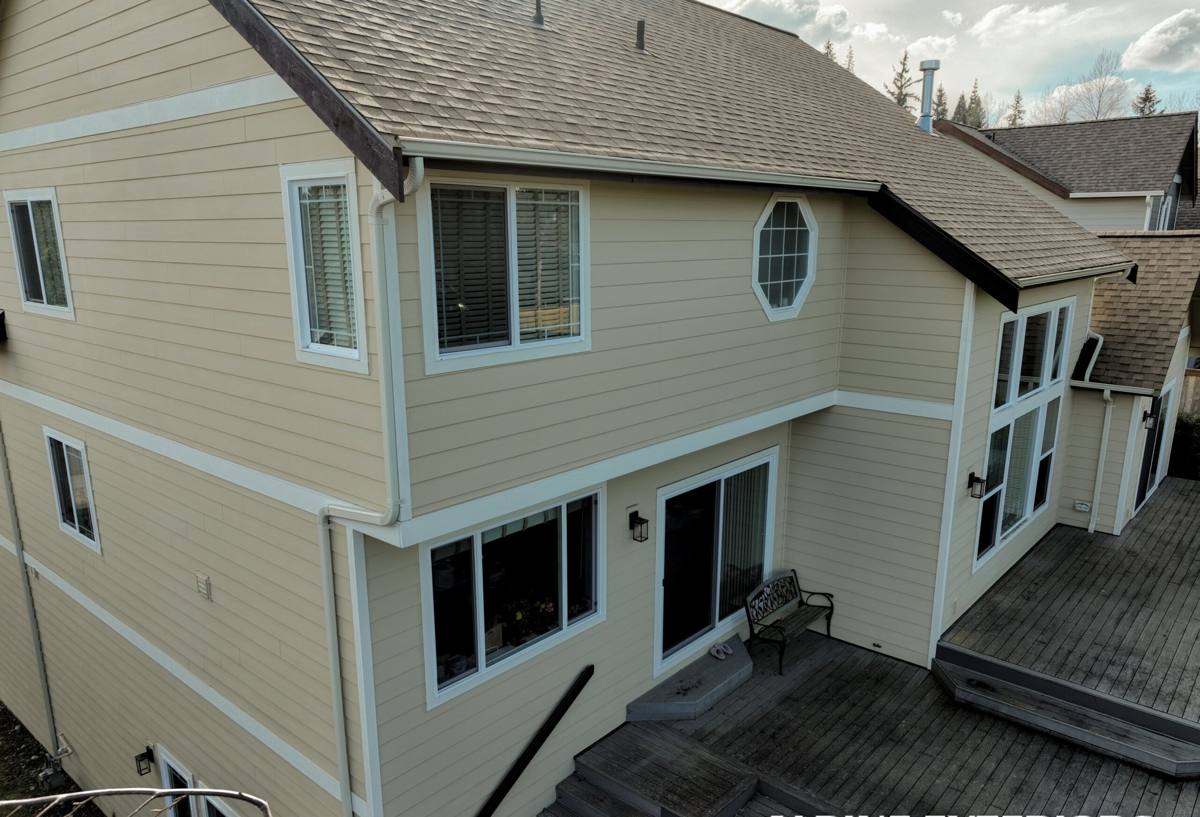
What Whatcom County's Climate Does to Windows Over Time
Windows fail here in fairly predictable ways, and almost all of them trace back to moisture management rather than the glass itself.
Driving Rain and Wind-Driven Water Intrusion
Storms coming off the Sound and up the valley don't just fall straight down — wind pushes rain sideways into wall assemblies. Older window installations, especially anything installed before modern flashing tape and pan flashing became standard practice, rely on caulk alone to keep water out. Caulk shrinks, cracks, and fails long before the window sash itself wears out. Once water gets behind the frame, it doesn't evaporate quickly in our climate — it sits in the wall cavity and starts rotting sheathing and framing from the inside, often invisible until the interior trim or drywall shows staining.
Moss, Mildew, and the Long Wet Season
Whatcom County's moss season isn't limited to roofs. Wood window sills, exterior trim, and even vinyl tracks accumulate organic growth when they stay damp for weeks at a time. On older wood-frame windows this is more than cosmetic — moss and mildew hold moisture against the wood surface and accelerate decay at the sill, which is usually the first place we see rot on a 20-30 year old window.
Condensation and Seal Failure
Salt-tinged coastal air combined with big day-to-night temperature swings in the valley puts real stress on insulated glass units. Once the edge seal on a double-pane window fails, moisture gets trapped between the panes and you get permanent fogging — no amount of cleaning fixes that, and it's a clear sign the unit needs replacing, not just the frame.
Signs a Deming Home Needs Window Replacement, Not Just Repair
- Fogging or a milky haze between the panes that doesn't clear when you clean the glass
- Soft or spongy wood at the sill or bottom corners of the frame
- Windows that won't stay open, won't latch, or have visibly warped out of square
- Noticeable draft near the frame edge even with the window fully closed and locked
- Paint that keeps peeling or bubbling on the interior sill, often a sign of trapped moisture
- Single-pane glass in a home you're trying to keep warm through a Whatcom County winter
- Visible daylight or gaps around the frame from outside
If a window shows one or two of these signs, sometimes a repair — reglazing, resealing, hardware replacement — is the honest answer and we'll say so. Full replacement makes sense when the frame itself is compromised, when multiple units in the same wall are failing at once, or when the home still has original single-pane glass that's working against your energy bills every month.
What a Correct Window Replacement Job Actually Involves
The window unit itself is maybe half the job. The other half — the part that determines whether it lasts 25 years or 5 — is the installation detailing around it.
Removal Without Damage
Old frames come out carefully so we can inspect the rough opening underneath. This is often where we find the real story: rotted sheathing, missing or failed flashing, insulation that's been wet and compressed for years. We'd rather find this now than have it become a surprise later.
Rebuilding the Opening Properly
Any soft or damaged framing gets cut out and replaced before a new window goes in — installing a new window into a rotten opening just resets the clock on the same failure. We install proper flashing at the sill (sloped so water runs out, not in), side flashing that integrates with the house wrap or building paper, and head flashing above the unit to shed water around it rather than through it.
Air Sealing and Insulation
The gap between the window frame and the rough opening gets sealed with low-expansion foam or backer rod and sealant — not stuffed with fiberglass insulation alone, which does nothing to stop air movement. This is one of the most common shortcuts we see in older installations, and it's a major source of drafts and energy loss.
Exterior Sealant and Trim Detail
Caulk and sealant beads at the exterior trim are the last line of defense against wind-driven rain. We use sealants rated for the temperature swings and UV exposure this region sees, and we detail the joints so water sheds away from seams instead of pooling at them.
Choosing Windows for This Climate
Homeowners often start by asking about brand names, but the more useful question is which frame material and glass package actually performs in a wet, moderate-temperature climate like ours.
| Factor | What to Look For Locally | Why It Matters Here |
|---|---|---|
| Frame material | Vinyl or fiberglass with a solid warranty | Resists moisture absorption better than bare wood; low maintenance through a long wet season |
| Glass package | Double-pane with low-E coating, argon fill | Cuts heat loss during cold, damp winters and reduces condensation risk |
| Weatherstripping | Compression seals rated for wide temperature swings | Valley temperature swings can stress cheaper seals over time |
| Sill design | Sloped sill with a clear drainage path | Standing water at the sill is the number one cause of premature rot here |
| Warranty structure | Clear coverage on seal failure and hardware, not just glass breakage | Seal failure from condensation stress is the most common real-world claim in this climate |
We steer homeowners away from bare wood-frame replacement windows in most cases — not because wood windows are inherently bad, but because they demand a maintenance schedule (repainting, resealing, sill inspection) that's harder to keep up with given how much of the year this region stays wet. If you want a wood look, clad options or high-quality vinyl and fiberglass finishes get you close without the upkeep burden.
Our Process for Deming Window Replacement Projects
- On-site assessment: we look at every window being considered, check for soft framing, and measure rough openings — not just the glass unit
- Honest scope: we tell you which windows genuinely need replacement, which can be repaired, and why
- Written estimate: clear line items for units, labor, and any framing repair we expect to find
- Removal and opening inspection: old windows come out, and we address any hidden rot or flashing failure before anything new goes in
- Installation with proper flashing and air sealing: the details described above, done the same way on every unit
- Interior and exterior finish work: trim, caulk, and touch-up so the finished product looks right from both sides
- Final walkthrough: every window opens, closes, and locks correctly before we call the job done
Timeline and Disruption
Most single-family homes with a handful of windows being replaced can be completed in one to a few days, weather permitting — we don't install in active driving rain since it compromises the flashing and sealant work. Whole-house replacements with framing repairs take longer. We'll give you a realistic window during the estimate rather than a generic promise.
Cost Factors Worth Understanding Before You Get Quotes
| Factor | How It Affects Price |
|---|---|
| Number of windows | Per-unit cost typically drops slightly as job size increases due to shared setup and labor |
| Frame material | Vinyl is generally the most cost-effective; fiberglass and clad options cost more upfront |
| Hidden framing repair | Rotted sheathing or framing found during removal adds labor and material not visible in an initial quote |
| Window size and type | Custom shapes, large picture windows, and specialty openings cost more than standard double-hung sizes |
| Energy performance package | Better glass coatings and gas fills add cost but reduce long-term heating expense |
| Access and site conditions | Second-story windows, tight lot access, or extensive trim work add labor time |
We'd rather walk you through these factors during the estimate than give a number over the phone that doesn't hold up once we're actually looking at your home.
Why Hiring a Crew That Already Works Deming and Sudden Valley Matters
A crew that's worked this specific stretch of Whatcom County has already seen how the local rain patterns, tree cover, and older housing stock in this area interact with window installations over time. That's not a small thing — it means we're not guessing at flashing details or sill slope, we're applying what's actually held up on homes with the same exposure your house has. We also know how to sequence work around this region's rain patterns so we're not installing during conditions that compromise the seal quality on day one.
Local availability matters too. If a seal ever needs a warranty check or a piece of trim needs attention after a hard winter, you're calling a crew that's a short drive away and already familiar with your home, not chasing down a regional company that installed once and moved on.
Get a Free, No-Pressure Estimate
If you're dealing with foggy glass, drafty frames, or soft wood around your window sills, it's worth having someone look before winter rain makes the problem worse. We'll walk your home, tell you honestly what needs replacing versus what can be repaired, and give you a clear written estimate — no pressure, no obligation. The form below gets you started.