 Sudden Valley Siding
 Building a Deck That Holds Up in Edgemoor
Edgemoor sits close enough to the water that salt air is a daily fact of life, not an occasional nuisance. Add Whatcom County's long wet season and the moss that comes with it, and a deck here is under more sustained stress than the same structure would face twenty miles inland. We build custom decks for Edgemoor homeowners with that reality built into every decision — framing, fasteners, decking material, drainage, and finish — not bolted on afterward.
A deck that looks right the first summer but starts showing rust streaks, soft spots, or slick green patches by year three isn't a bargain. It's a redo. Our approach is to spend the extra thought up front on the parts that don't show — the ledger flashing, the hardware grade, the gap spacing — so the parts that do show stay looking good for the long haul.
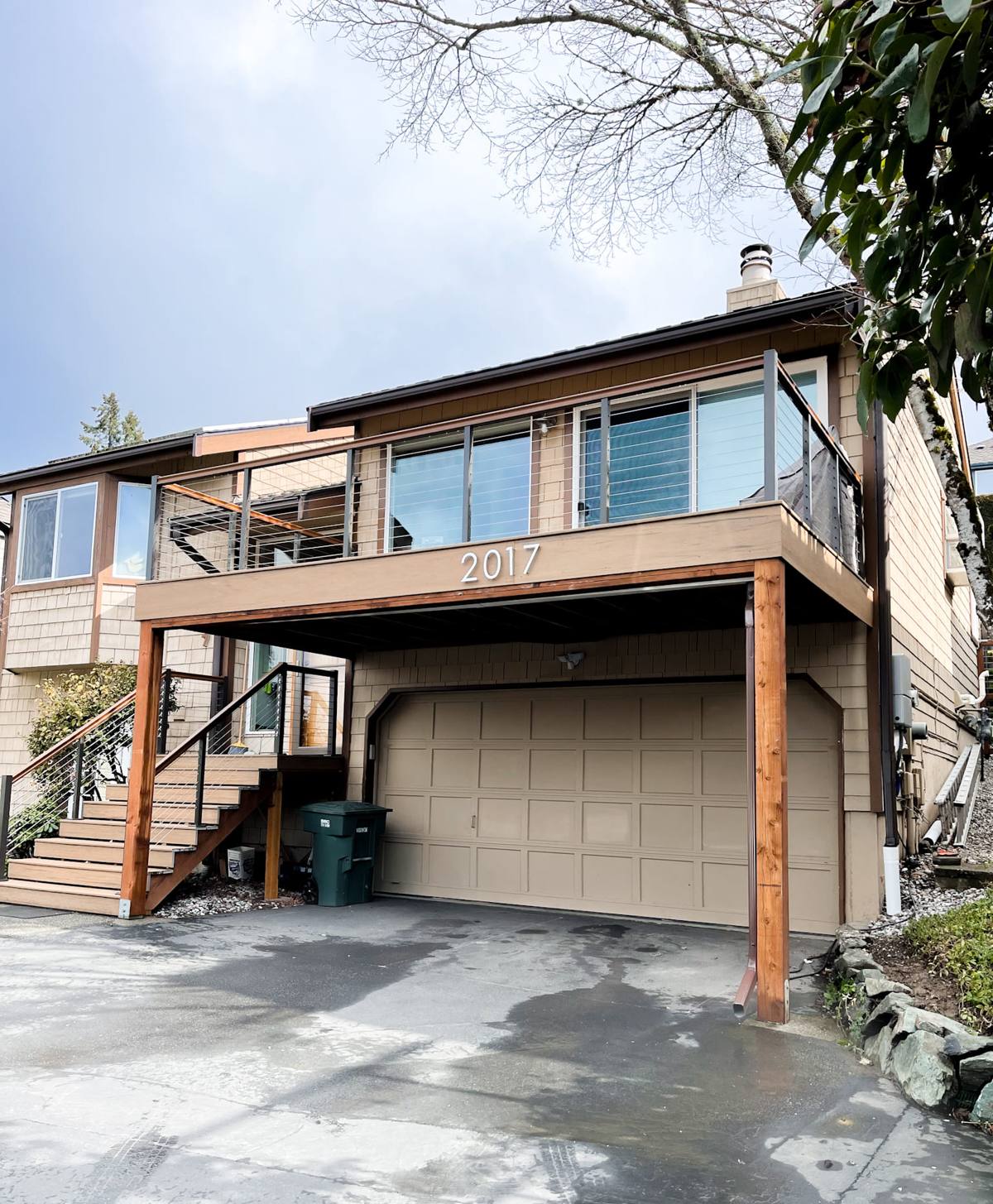
What Edgemoor's Climate Actually Demands From a Deck
Salt Air
Airborne salt accelerates corrosion on anything metal — fasteners, brackets, railing hardware, even the heads of screws that are otherwise rated for exterior use. Over a few seasons, standard exterior-grade hardware can pit and stain, which weakens connections long before the wood or composite around them shows any sign of trouble. This is the single biggest thing generic deck-building advice gets wrong for a property like this: the wood species or decking brand matters less than what's holding it together.
Driving Rain
Storms that come in sideways off the water push water into places a calm, straight-down rain never reaches — under railing caps, behind ledger boards, into end grain at butt joints. A deck built for a drier inland climate often skips details that matter here, like end-cut sealing and proper flashing behind the ledger board where the deck meets the house.
Moss Season
Whatcom County's extended damp season, especially on shaded or north-facing decks, gives moss and algae months to establish. Beyond the cosmetic issue, moss holds moisture against the decking surface and can make boards dangerously slick. Deck design that ignores airflow and drainage is designing moss a place to live.
Framing and Structure: The Part Nobody Sees
The substructure is where corner-cutting hides longest and hurts worst. For Edgemoor decks we pay particular attention to:
- Ledger board flashing — a properly flashed and sealed ledger connection keeps water from wicking into the house rim joist, which is one of the most common sources of hidden rot in older deck installs.
- Joist protection — joist tape or an equivalent moisture barrier on top of every joist, so fastener penetrations don't become entry points for standing water.
- Footings sized for saturated soil — Whatcom County's wet-season ground conditions call for footings and post bases that account for soil that doesn't drain as fast as it would in a dry climate.
- Post base hardware rated for exposure — post bases sit right where splashback and standing moisture concentrate, so they need corrosion resistance matched to a salt-air environment, not just a generic "exterior rated" stamp.
Choosing a Decking Material for This Environment
There's no single "best" decking material — there's a best fit for a given home's exposure, budget, and maintenance appetite. Here's how the common choices actually perform under salt air, driving rain, and heavy moss pressure:
| Material | Moisture & Salt Behavior | Moss Resistance | Maintenance |
|---|---|---|---|
| Pressure-treated fir/pine | Prone to checking and fastener corrosion over time near salt air | Low — porous surface holds moisture | Annual cleaning, periodic sealing |
| Cedar | Naturally rot-resistant; still needs sealed end cuts and coated fasteners | Moderate — better than treated lumber, still needs cleaning | Sealing every 1-2 years, regular cleaning |
| Capped composite | Excellent — the cap layer resists moisture intrusion and salt staining | Good — smoother surface sheds moss more easily | Occasional washing, no sealing |
| PVC decking | Best moisture performance — no wood fiber to absorb water at all | Good, though shaded areas still need washing | Occasional washing, no sealing |
We install all of the above depending on what the homeowner wants, but for a shaded, water-exposed Edgemoor lot, we'll usually steer the conversation toward capped composite or PVC unless there's a strong preference for a natural wood look — in which case cedar with disciplined maintenance is a reasonable middle ground, and we'll say so plainly rather than upsell material we don't think fits the site.
Fasteners and Hardware: Where Salt Air Wins If You Let It
This is the detail most likely to get skipped on a budget deck build, and it's the one that matters most here. Standard coated deck screws are fine in a lot of the country. In a salt-air environment they're a slow-motion problem — surface coatings wear through at the screw head first, and once that happens, corrosion works fast.
Our standard for Edgemoor builds is stainless steel fasteners and hardware wherever they're exposed to weather, with hot-dip galvanized or equivalent corrosion-rated hardware for structural connectors that stay covered. It costs more up front than mixed-grade hardware. It's also the difference between railing posts that are still solid in year fifteen and ones that need re-bolting in year five.
Drainage and Airflow: The Anti-Moss Strategy
Moss doesn't need much to get established — shade, moisture, and a surface it can grip. A deck design that fights all three at once is a deck that stays cleaner with less scrubbing:
- Proper board spacing so water drains through rather than pooling on the surface
- Under-deck ventilation so the framing and the underside of the decking can dry out between rain events
- Skirting with vents rather than solid, sealed panels, so airflow continues underneath
- Grading and drainage at ground level so water doesn't collect under low decks
- Gutter and downspout tie-ins considered during design, so roof runoff isn't dumping onto the deck surface
None of this eliminates moss entirely — nothing does in this climate — but it stretches the time between cleanings and keeps the deck safer underfoot in the meantime.
Railings, Stairs, and Finish Details
Flat or textured railing caps and stair treads are prime moss real estate because they hold water longer than a sloped or smooth surface. We favor railing profiles that shed water and finishes that don't create texture moss can grip. Composite and PVC railing systems perform well here for the same moisture-resistance reasons as decking. Where metal railing or cable systems are part of the design, every component needs the same salt-air-rated hardware standard as the deck structure itself — a beautiful railing with a corroding cable tensioner is a maintenance call waiting to happen.
Our Process for an Edgemoor Deck Build
The process itself isn't exotic, but doing each step with the site's exposure in mind is what separates a deck that lasts from one that doesn't:
- Site walk-through — we look at sun exposure, prevailing wind and rain direction, existing drainage patterns, and how close the site is to salt air exposure, since that varies even within the same neighborhood.
- Design and material selection — we talk through decking, railing, and hardware options against the homeowner's budget and maintenance preferences, with honest trade-offs on each.
- Permitting — decks typically require a building permit; we handle the application and inspection scheduling as part of the job.
- Demolition or site prep — removal of any existing structure, grading, and footing layout.
- Framing — ledger flashing, joist protection, footings, and structural connections built to the standard above.
- Decking, railing, and stairs — installed with attention to fastener placement, gap spacing, and end-cut sealing.
- Final walk-through — we go over the finished deck with the homeowner and cover the maintenance schedule that fits the material chosen.
Cost Factors to Expect
| Factor | Why It Moves the Price |
|---|---|
| Deck size and height | Larger decks and elevated decks need more framing, footings, and often stairs and additional railing |
| Decking material | Composite and PVC cost more upfront than treated lumber but need far less long-term maintenance |
| Hardware grade | Stainless fasteners and marine-grade hardware cost more than standard coated hardware but resist salt-air corrosion |
| Site access and slope | Difficult access or a sloped lot near the water can add labor and equipment time |
| Permit and inspection requirements | Structural requirements for elevated or attached decks can affect footing and framing scope |
Why an Edgemoor-Experienced Crew Matters
A deck built by a crew that hasn't worked this specific stretch of Whatcom County tends to make the same predictable mistakes: standard hardware instead of corrosion-rated, decking chosen for looks rather than moisture performance, and drainage details borrowed from a drier climate. A crew that already builds in Sudden Valley and the surrounding neighborhoods, including Edgemoor, has already made those calls on other jobs and knows which shortcuts don't hold up here.
There's also the practical side — knowing the local permitting process, having an established relationship with the county building department, and understanding how site access and lot conditions typically run in this part of Whatcom County. That familiarity shows up as fewer surprises during the build, not just a better-looking finished product.
Maintaining Your Deck Through Moss Season
Even the best-built deck needs some seasonal attention in this climate. A realistic maintenance checklist for an Edgemoor deck:
- Sweep debris and standing leaves off the surface regularly through fall, when they trap moisture against the boards
- Wash the deck surface at least once a year — more often on shaded sections — to keep moss and algae from establishing
- Check railing hardware and structural fasteners annually for early signs of corrosion, especially on components closest to the water side of the property
- Reseal wood decking or railing per the manufacturer's schedule if you've chosen cedar or another natural wood product
- Keep under-deck vents and skirting gaps clear of vegetation and debris so airflow keeps doing its job
None of this is a lot of work if it's done on a schedule. It's the decks that get ignored for a few years that end up with soft boards, rusted hardware, and a moss layer thick enough to need pressure washing rather than a simple scrub.
Get an Honest Look at Your Project
Every Edgemoor lot handles salt air, rain, and shade a little differently, and the right deck build reflects that rather than a one-size-fits-all spec. If you're planning a new deck or replacing one that hasn't held up, we're glad to come take a look, walk the site with you, and put together a straightforward estimate — no pressure, no upsell, just what the job actually needs. Use the form below to request your free estimate.