 Sudden Valley Siding
 Edgemoor's Coastal Exposure Is Hard on Decks
Decks in Edgemoor take a different kind of beating than decks fifteen miles inland. The combination of salt-laden air, driving rain off the water, and a moss season that can run half the year works on wood, fasteners, and finishes in ways that don't show up as damage right away — they show up as a slow, steady loss of grip, structure, and finish. By the time most homeowners notice a problem, it's usually been building for a season or two underneath the surface.
Whatcom County's marine climate means decks rarely get a long, dry stretch to fully shed moisture. Wood that would dry out completely in a drier inland climate instead stays damp at the joints, under boards, and around fasteners for weeks at a time. Salt air accelerates corrosion on anything metal — nails, screws, joist hangers, railing brackets — long before the wood itself looks bad. That's the trap: the decking can look fine while the connections holding it together are quietly failing underneath.
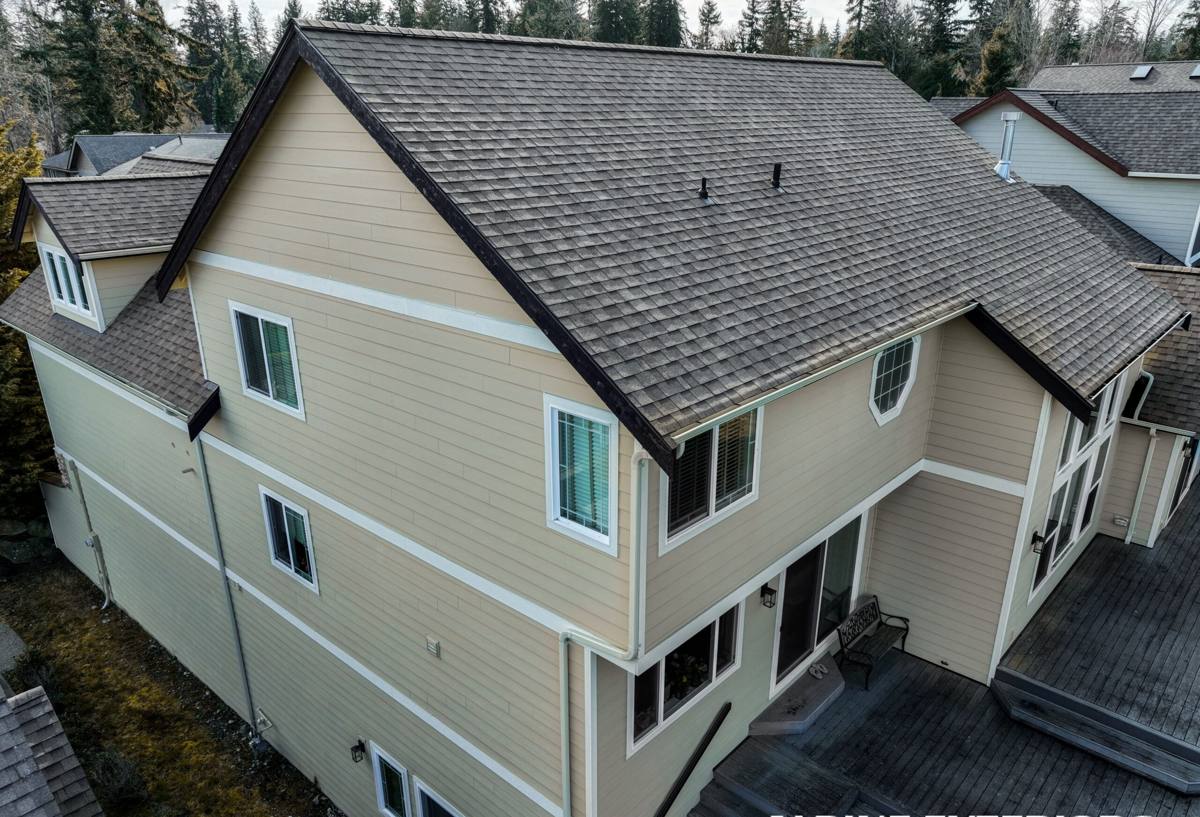
Signs an Edgemoor Deck Needs Repair
Structural warning signs
These are the ones that matter most, because they affect safety, not just appearance:
- Noticeable bounce, sponginess, or give when you walk across the deck
- Railings or posts that wiggle, lean, or feel loose when pushed
- Rust streaks bleeding out from screws, nails, or metal connectors
- Gaps opening up where the deck ledger board meets the house
- Soft or spongy spots you can press a thumb into
- Stairs that feel uneven or have started to separate from stringers
Cosmetic issues that are worth watching but usually aren't urgent
Graying wood, moss growth on the surface, faded stain, and small surface checking (cracking) are normal aging in this climate and don't necessarily mean the deck is unsafe. That said, moss holds moisture against the wood far longer than bare boards do, which turns a cosmetic problem into a structural one if it's left alone through a few wet seasons. Cleaning and re-sealing on a regular schedule is cheaper than repair, and repair is cheaper than replacement — it pays to deal with the cosmetic stuff before it becomes something else.
What a Correct Deck Repair Actually Involves
Start with the framing, not the surface
A repair that only replaces the boards you can see is a cosmetic fix, not a structural one. A correct repair starts underneath: checking joists, beams, and the ledger board connection to the house for rot, checking that joist hangers are still solid and not rusted through, and confirming the posts and footings are actually carrying load the way they were designed to. In a climate like Whatcom County's, rot tends to start at the places water collects and sits — under decking boards, where the ledger meets the siding, and at post bases in contact with concrete or soil.
Fasteners and flashing matter more than people assume
Salt air corrodes standard fasteners faster than most homeowners expect, which is why we don't reuse original hardware on any repair where it's original to an older deck. Stainless or coated exterior-rated fasteners cost more up front but hold up under the conditions decks face here. Flashing at the ledger board — the strip of metal or membrane that keeps water from getting behind the deck attachment and into the house framing — is one of the most commonly skipped details on older decks and one of the most important to get right on a repair, since it protects both the deck structure and the wall it's attached to.
Matching old work without hiding new problems
Good repair work blends in — matching board spacing, fastener pattern, and finish so the repaired section doesn't stick out. But blending in cosmetically should never mean covering up an issue that's still there underneath. We won't put new decking over framing that hasn't been checked, and we'll tell you plainly if a "repair" isn't the right call because the structure underneath has gone too far.
Deck Materials We See Around Edgemoor and How They Hold Up
| Material | How It Ages in This Climate | Typical Repair Needs |
|---|---|---|
| Pressure-treated wood | Handles moisture reasonably well if sealed regularly; untreated cuts and fastener holes are weak points for rot | Board replacement, re-sealing, hardware upgrades at weak points |
| Cedar | Naturally rot-resistant but still needs finish maintenance; grays and softens faster if neglected near the water | Sanding and refinishing, spot board replacement, railing tightening |
| Composite decking | Doesn't rot, but can trap moisture against framing underneath if ventilation is poor; moss still grows on the surface | Surface cleaning, framing inspection underneath, fastener and clip checks |
| Older/original hardware | Standard fasteners and connectors corrode faster in salt air than inland; often the first thing to fail | Full hardware replacement with corrosion-rated fasteners and connectors |
None of these materials are wrong choices — each has trade-offs. The point of a repair isn't to talk you into a different material; it's to fix what's actually failing and tell you honestly if the original material or installation is working against you.
Our Deck Repair Process
- Full inspection — framing, ledger connection, posts and footings, hardware condition, and surface decking, not just a visual walk-across
- Honest assessment — what's cosmetic, what's structural, and what can wait versus what shouldn't
- Written scope — exactly what's being repaired or replaced, in plain language, before any work starts
- Repair work — framing and hardware first, then decking, railings, and stairs, using corrosion-rated fasteners appropriate to the exposure
- Final check — confirming everything is solid, flashing is properly installed, and the deck is safe to use before we call it done
What Deck Repair Costs — and What Actually Drives the Price
| Factor | Why It Matters |
|---|---|
| Extent of hidden rot | Framing repairs cost more than surface board replacement, and you don't know the extent until the surface comes off |
| Access and deck height | Elevated decks or those over sloped ground take more time and labor to work under safely |
| Material match | Matching existing decking or railing material can affect cost if the original product is discontinued or hard to source |
| Hardware condition | Full hardware replacement adds cost but is often necessary once original fasteners show corrosion |
| Railing and stair scope | Code-related railing or stair repairs may require more than a simple tighten-and-patch fix |
Small repairs — a handful of boards, tightening railings, replacing a few fasteners — often run a few hundred dollars. Repairs that involve framing, ledger flashing, or full hardware replacement run into the low thousands depending on scope. We won't know which category your deck falls into until we've actually looked underneath it, which is why we start every job with an inspection, not a guess.
A Homeowner's Deck Maintenance Checklist
Between repairs, regular upkeep is what keeps a deck out of the "structural repair" category in the first place. In this climate, that means:
- Sweep debris and moss off the surface regularly, especially in fall and winter
- Keep gutters and downspouts clear so water isn't dumping directly onto or near the deck
- Check for standing water on the deck surface after heavy rain — pooling means drainage or slope issues
- Re-seal or re-stain wood decking on a regular schedule rather than waiting until it looks bad
- Inspect railings and stair connections by hand at least once a year
- Look underneath the deck occasionally for rust streaks, soft wood, or gaps at the ledger board
- Trim back vegetation that keeps the deck surface shaded and damp longer than it needs to be
Why Hiring a Crew That Already Works in Edgemoor Matters
Deck repair isn't a one-size-fits-all trade. A crew that mostly works drier inland climates can miss the specific failure points that show up on decks exposed to salt air and constant coastal rain — because those failure points simply don't come up as often where they usually work. Working regularly in Edgemoor and the surrounding Sudden Valley and Whatcom County area means we're used to checking the spots that actually fail here first: ledger flashing, hardware corrosion, and moisture trapped under boards through a long wet season. That's not a marketing point — it's just what happens when you see the same climate conditions on job after job.
It also means we're straightforward about what's really needed. Not every deck with a loose board needs a full rebuild, and not every deck that "just needs a few boards" is actually fine underneath. We'd rather tell you the truth in both directions than oversell a job or underquote one that comes back to bite you in a year.
If your deck in Edgemoor is showing any of the signs above — or you just want an honest opinion before winter rains set in again — we're happy to take a look. Fill out the form below for a free, no-pressure estimate.