 Sudden Valley Siding
 Siding Installation for Edgemoor Homes
Edgemoor sits close enough to Bellingham Bay that the air itself works against your siding. Salt-laden wind off the water, wind-driven rain that finds every gap in a wall assembly, and a wet season that runs long enough to grow moss on anything that stays damp too long — these three things define what a siding installation in this pocket of Whatcom County actually has to survive. A good-looking install that ignores any one of them will show problems within a few winters. We install James Hardie fiber cement siding in Edgemoor because it's the one product system we trust to handle all three at once, and because getting the installation right matters just as much as the material choice.
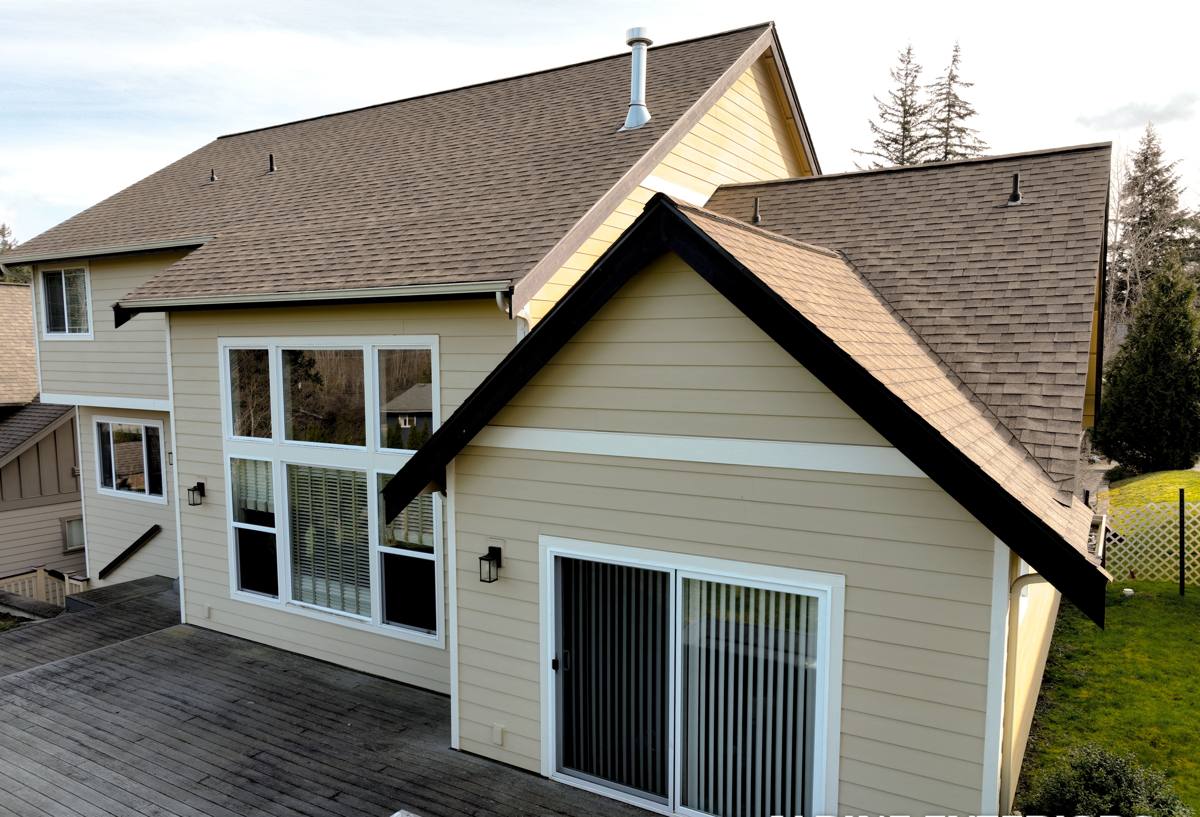
What Edgemoor's Climate Does to Siding
Homes near the water get a different weather load than homes even a few miles inland. It's worth breaking down what's actually happening to a wall over the course of a year here.
Salt Air
Airborne salt from the bay settles on exterior surfaces and accelerates corrosion on fasteners, flashing, and any metal trim that isn't rated for coastal exposure. It also degrades cheaper paint films faster than inland weathering does, which is one reason a factory-cured finish holds up better here than a job-site paint job.
Driving Rain
Storms coming off the Strait of Georgia and Bellingham Bay don't just fall — they push sideways into the wall. That means water gets forced up under laps, into unsealed butt joints, and behind trim that isn't properly flashed. A siding product that swells or wicks water when it gets wet is a liability in this kind of weather, because it's not an occasional soaking — it's a recurring, seasonal load.
Moss and Prolonged Dampness
Whatcom County's wet season stretches long, and shaded, tree-lined lots in and around Edgemoor stay damp for extended stretches. Moss and algae take hold wherever siding stays wet and doesn't get enough sun or airflow to dry out between rains. On a wood-based or wood-fiber product, sustained moisture and moss growth also mean sustained risk of rot underneath the surface — not just a cosmetic stain.
Why We Only Install James Hardie
We standardized on James Hardie fiber cement for every siding job we do, including here in Edgemoor, for reasons that come straight out of what this climate demands.
- Non-combustible core: fiber cement doesn't feed a fire the way wood-based products can, which matters for insurance and peace of mind alike.
- Doesn't rot or delaminate from moisture: unlike wood-fiber composite siding, Hardie's cement-based composition doesn't break down when it stays wet through a long rainy season.
- Factory-applied ColorPlus finish: baked-on color resists fading and chalking from sun and salt exposure far better than a field-applied paint coat, and it comes with its own finish warranty.
- Climate-engineered HZ5 formulation: Hardie's HZ5 product line is engineered for the Pacific Northwest's wet-freeze conditions specifically, not a generic all-climate product.
- Strong transferable warranty: Hardie backs the product with a warranty that can transfer to a new owner if you sell, which matters for resale in a coastal neighborhood where buyers ask about siding condition.
We don't install vinyl, LP SmartSide, Cemplank, Allura, primed spruce, or cedar. That's not a knock on every homeowner who has one of those products already — it's that when we're the ones choosing what goes on a wall we're responsible for, in a climate this demanding, fiber cement from James Hardie is what we're willing to stand behind.
What a Correct Siding Installation Involves
The product is only half the equation. A large share of siding failures we get called out to inspect aren't material failures — they're installation shortcuts that let water in behind a perfectly good product. In a driving-rain environment like Edgemoor, these details aren't optional extras; they're the difference between siding that lasts decades and siding that fails from the inside out.
Water Management Layer
Before a single piece of siding goes up, the wall needs a correctly lapped weather-resistive barrier and, in most cases, a rainscreen gap that lets any water that does get behind the siding drain and dry out instead of sitting against the sheathing.
Flashing at Every Penetration
Windows, doors, hose bibs, vents, and any other wall penetration need properly integrated flashing — installed so water is directed out and down, never trapped behind the siding. This is the single most common place we find deficient work on older installs.
Fastening and Clearances
Hardie specifies fastener type, spacing, and placement precisely, and it specifies minimum clearances from grade, roof lines, and decks. Skipping these specs can void the manufacturer's warranty even if the siding itself is installed straight and looks fine on day one.
Caulking and Joint Treatment
Butt joints and trim transitions need the right sealant, applied correctly, at the specific joints Hardie's install guide calls for — not everywhere, and not nowhere.
Our Process for an Edgemoor Installation
- On-site assessment: we walk the exterior, check the current siding and sheathing condition, and note water damage, ventilation issues, or trim that needs attention before new siding goes up.
- Removal and sheathing check: once old siding comes off, we inspect the sheathing underneath for rot or moisture damage that needs repair before we move forward — this is where hidden problems from years of driving rain often surface.
- Water-resistive barrier and rainscreen: we install a correctly lapped weather barrier and drainage gap sized for this climate's rain load.
- Flashing integration: every window, door, and penetration gets flashed to shed water outward, tied into the barrier system.
- Hardie installation to spec: siding, trim, and fasteners installed following James Hardie's published fastening and clearance requirements.
- Final detail and walkthrough: caulking, touch-up, and a walkthrough so you understand what was done and what maintenance, if any, to expect.
Why Local Experience in Edgemoor Matters
A contractor who's worked this specific stretch of Whatcom County coastline already knows which walls take the worst of the driving rain, where moss tends to establish first, and how much clearance a given lot's grading and drainage actually needs versus what a generic spec sheet assumes. That's not something you can fully substitute with a manufacturer's install manual alone — it comes from having stood on ladders in this weather, on homes like yours, and having gone back to fix work that wasn't done right the first time. Crews that mainly work drier inland areas sometimes under-detail the water management side of the job because it simply hasn't bitten them yet. In Edgemoor, it will.
Comparing Siding Options for a Coastal Whatcom County Home
| Factor | James Hardie Fiber Cement | Vinyl | Wood-Based Composite (e.g. LP SmartSide) | Cedar |
|---|---|---|---|---|
| Moisture resistance | Does not rot or swell when wet | Won't rot, but can warp/buckle | Vulnerable if seams or cuts aren't sealed | Absorbs moisture; needs ongoing sealing |
| Salt air durability | Cement composition unaffected by salt | Can chalk and become brittle over time | Wood fiber exposed at any breach in coating | Weathers and grays; needs refinishing |
| Fire performance | Non-combustible | Melts/deforms under heat | Combustible wood-based core | Combustible |
| Finish longevity | Factory-baked ColorPlus finish | Color molded in, can fade | Field or factory coating, varies | Requires repainting/staining on a cycle |
| Moss/algae resistance | Resists sustained damp growth well | Can host moss/mildew in shaded areas | Coating breach + moisture = rot risk | Prone to moss and mildew without upkeep |
What This Typically Costs
Siding installation pricing depends on your home's square footage, trim complexity, how much of the existing wall needs repair before new siding goes on, and how much site access the crew has to work with. Homes with extensive water damage behind old siding, or with complicated rooflines and lots of trim detail, cost more than a straightforward rectangular wall. We won't quote a number without seeing the house, but we're glad to walk it with you and give you an honest, itemized estimate — not a ballpark pulled from a national average that has nothing to do with your home.
Signs It's Time to Look at Your Siding
- Visible moss or algae growth that keeps coming back after cleaning
- Soft or spongy spots when you press on the siding, especially near the bottom courses
- Paint or finish that's peeling, bubbling, or chalking heavily
- Gaps opening up at butt joints or around trim
- Rising energy bills that may point to compromised insulation behind failing siding
- Visible warping, buckling, or separation from the wall
If you're seeing any of those signs on an Edgemoor home, or you're planning ahead for a siding replacement before problems start, we'd be glad to take a look. We offer free, no-pressure estimates — walk the property with us, ask questions, and get a straight answer about what your home actually needs. Use the form below to get started.