 Sudden Valley Siding
 Fairhaven's Climate Asks More of Siding Than Most Neighborhoods
Homes near Fairhaven sit close enough to the water that salt-laden air is a daily fact of life, not an occasional nuisance. Add Whatcom County's driving, wind-pushed rain and a moss season that can stretch for most of the year in shaded, north-facing spots, and you have three separate stresses working on a wall system at once: corrosion, moisture intrusion, and organic growth that holds water against the surface. Siding that performs fine forty miles inland can fail early here — not because it's a bad product everywhere, but because it wasn't built for this specific combination of exposures.
This is a local page for one reason: what "correct siding" means changes depending on where the house sits. A home a few blocks from the water needs different fastener choices, different caulking judgment calls, and a different maintenance conversation than a home tucked into a dry inland valley. We work Fairhaven and the surrounding Sudden Valley area regularly, and this page covers what that actually means on a job site.
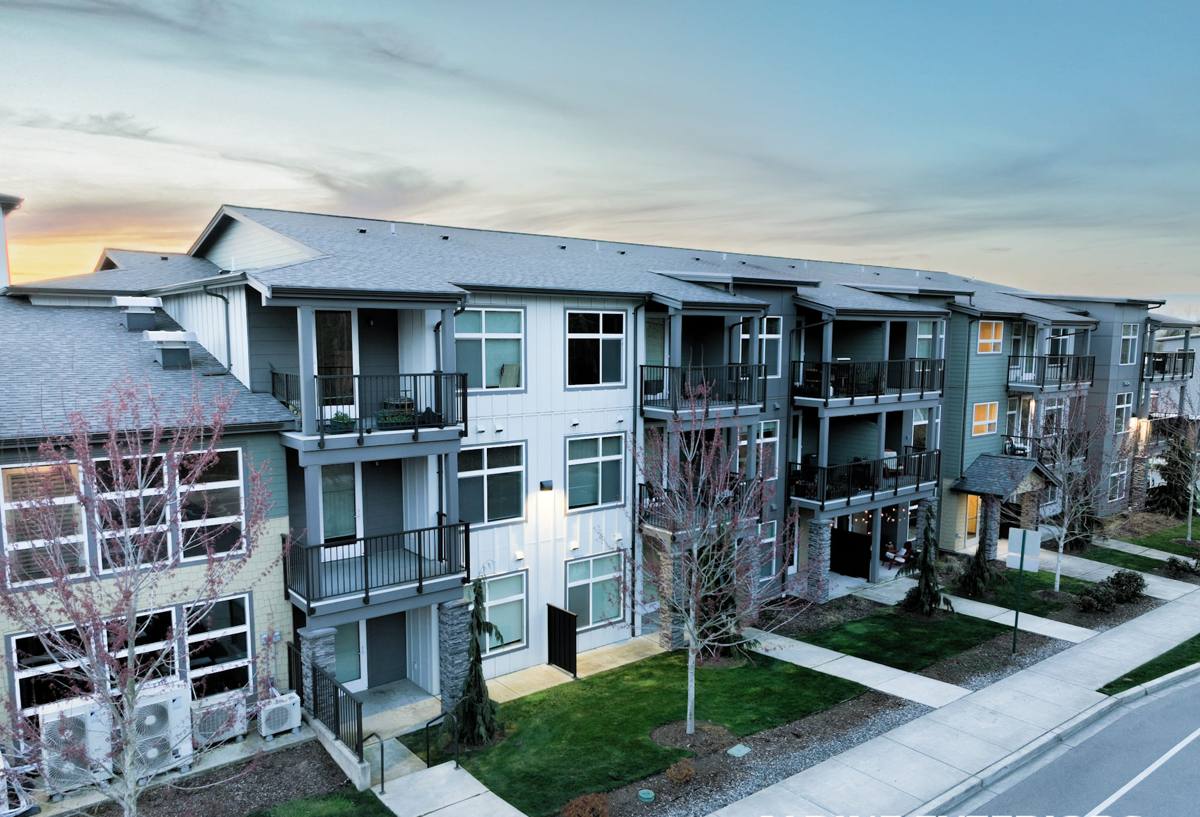
Why Fiber Cement Is the Right Material for This Exposure
Fiber cement is cement, sand, and cellulose fiber pressed and cured into a dense board. It doesn't rust, it doesn't rot, and it doesn't feed moss the way wood fiber does. That matters directly here:
- Salt air corrodes exposed metal fasteners and trim over time — fiber cement itself is inert to salt, but the fasteners, flashing, and trim details around it still need to be chosen correctly.
- Driving rain pushes water sideways into laps, seams, and penetrations that would stay dry in a calmer climate — the board has to be paired with a drainage plane that actually manages that water, not just a face that sheds it.
- Moss and algae need a damp, organic surface to colonize. Fiber cement with a factory finish gives them far less to hold onto than raw wood or a porous cementitious surface, though it isn't immune to surface growth in deep shade.
We install James Hardie fiber cement exclusively — not as a brand preference, but because Hardie engineers its HZ5 product line specifically for Pacific Northwest moisture exposure, and backs it with a factory-applied ColorPlus finish that holds up to UV and salt air far better than field-applied paint. We don't install vinyl, LP SmartSide, or unfinished cedar or spruce siding, and we're upfront with clients about why: those products each have real strengths, but none of them match Hardie's combination of moisture engineering, finish durability, and non-combustible composition for this specific climate. If you want the fuller comparison on any one of those materials, ask — we'll walk through the honest trade-offs rather than just steering you toward what we sell.
What "Correct Installation" Actually Requires Here
The board is only half the system. In a high-moisture, salt-exposed area, the installation details matter as much as the product:
- A drainable house wrap or rainscreen gap behind the siding, so any water that gets past the face has somewhere to go rather than sitting against the sheathing.
- Stainless steel or hot-dip galvanized fasteners rated for coastal exposure — standard electro-galvanized nails corrode faster near salt air and can bleed rust streaks through the finish.
- Correctly lapped and sealed flashing at every window, door, and roof-to-wall transition, since these are the points where driving rain actually gets in.
- Proper board clearance from grade, decks, and roof lines — Hardie specifies minimum gaps for a reason, and skipping them is one of the most common causes of early moisture damage we see on re-siding jobs.
- Caulking at butt joints and trim only where Hardie's install guide calls for it — over-caulking traps moisture just as much as under-caulking lets it in.
Our Process for a Fairhaven Job
1. Walkthrough and Assessment
We start by walking the exterior and looking specifically for what this climate does to houses: soft trim near ground contact, moss buildup on north and shaded walls, rust staining below existing fasteners, and any signs of moisture already behind the current siding. This tells us what the wall assembly needs, not just what color the homeowner wants.
2. Wall Prep and Moisture Management
Before any new board goes up, we address the water-management layer — house wrap condition, flashing at penetrations, and drainage behind the cladding. This is the step that gets skipped on rushed jobs and is the single biggest predictor of whether siding lasts fifteen years or fifty in a wet coastal climate.
3. Installation to Hardie Spec
Boards are installed with the fastener type, spacing, and clearances Hardie specifies for this exposure zone — not generic best practices, but the specific requirements tied to keeping the warranty intact and the wall performing.
4. Trim, Caulk, and Final Detail Pass
Corners, trim boards, and joints get finished with attention to how water will actually move across the wall in a wind-driven rain event, since that's the load this siding will face most of the year.
5. Walkthrough and Care Guidance
We walk the finished job with the homeowner and cover what routine care looks like in a salt-air, moss-prone setting — covered in more detail below.
Cost Factors on a Fairhaven Job
Every house is different, but the line items that move price the most on jobs in this area are consistent. Broad ranges below are for planning conversations only — your estimate will be specific to your home.
| Factor | Why It Moves the Price |
|---|---|
| Existing wall condition | Hidden moisture damage or rotted sheathing found once old siding comes off adds repair scope |
| Trim complexity | Bay windows, multiple gables, and dormers common on older Fairhaven-area homes mean more cutting and detail work |
| Fastener and flashing upgrades | Coastal-rated fasteners and upgraded flashing cost more than standard hardware but pay off in longevity here |
| Board profile and color | Lap width, shingle-style panels, and ColorPlus finish tiers each carry different material costs |
| Site access | Steep lots, limited driveway access, and multi-story walls affect labor time and equipment needs |
Maintenance in a Salt-Air, Moss-Prone Climate
Fiber cement is low-maintenance, not no-maintenance. In this specific environment, a short annual routine keeps the finish and the wall behind it performing:
- Rinse the exterior once or twice a year, paying extra attention to north-facing and shaded walls where moss and algae are most likely to establish.
- Keep gutters clear so overflow doesn't run down the face of the siding repeatedly in one spot.
- Trim back vegetation and tree cover that keeps a wall section shaded and damp longer than the rest of the house.
- Inspect caulking at trim and penetrations every couple of years — caulk is the first thing to wear out in a high-UV, high-moisture cycle, well before the board itself.
- Watch for any rust streaking below fasteners or trim, which signals a hardware issue worth catching early rather than after it stains the finish.
None of this is heavy work, but skipping it in a climate this active shortens the runway before repainting or repair becomes necessary.
Why Hiring a Crew That Already Works This Area Matters
A crew that installs siding across dry inland regions and a crew that works Whatcom County's coastal-influenced neighborhoods will make different default decisions — fastener grade, drainage detailing, caulk placement — unless they're specifically thinking about salt exposure and driving rain. We work Sudden Valley and the surrounding Fairhaven area regularly enough that these aren't special-case adjustments for us; they're the baseline. That familiarity shows up in fewer callbacks for moisture issues and a finish that holds its color and seal longer than a generic installation would.
It also means we can give you a straight answer about your specific lot — how much sun a given wall gets, whether a shaded side is going to need more frequent rinsing, whether your existing trim needs replacement or just repair — because we've seen the pattern on other homes nearby, not because we're guessing from a spec sheet.
Questions to Ask Before You Hire Anyone for This Job
- Will you use stainless or hot-dip galvanized fasteners, or standard electro-galvanized ones?
- What's your plan for the drainage plane behind the siding — is there an actual rainscreen gap or just house wrap?
- Who inspects flashing at windows and roof transitions before the new siding goes over it?
- What does the manufacturer's installation warranty require, and will your install meet those terms?
- Have you installed fiber cement on homes in this specific area before, and can you speak to what the local climate does to a wall over time?
A contractor who can answer these clearly, without hesitating or deflecting, is a good sign. One who can't is worth a second look before you sign anything.
Get a Straight Answer on Your Home
If you're weighing a re-side in Fairhaven or the broader Sudden Valley area, we're glad to walk your exterior, tell you honestly what condition it's in, and explain what a correctly installed James Hardie system would look like on your specific house — no pressure, no upsell script. Reach out below for a free estimate.