 Sudden Valley Siding
 Fairhaven's Roofs Work Harder Than Most
Fairhaven sits in one of the wetter, wind-exposed corners of Whatcom County, and the roofs here show it. Salt-laden air drifts through on a regular basis, driving rain comes in sideways during winter storms, and the long, damp shoulder seasons that define this stretch of the Pacific Northwest give moss and algae months at a time to get established. None of that is unusual for the area, but it adds up differently on a roof than it does on siding or trim. Roofs take the brunt of standing water, wind uplift, and organic growth all at once, and small problems left alone here turn into interior damage faster than homeowners expect.
We're based in Sudden Valley and we work Fairhaven roofs regularly, which means we're not guessing about how a roof in this pocket of Whatcom County ages. We know what fails first, what fails quietly, and what looks fine from the ground but isn't.
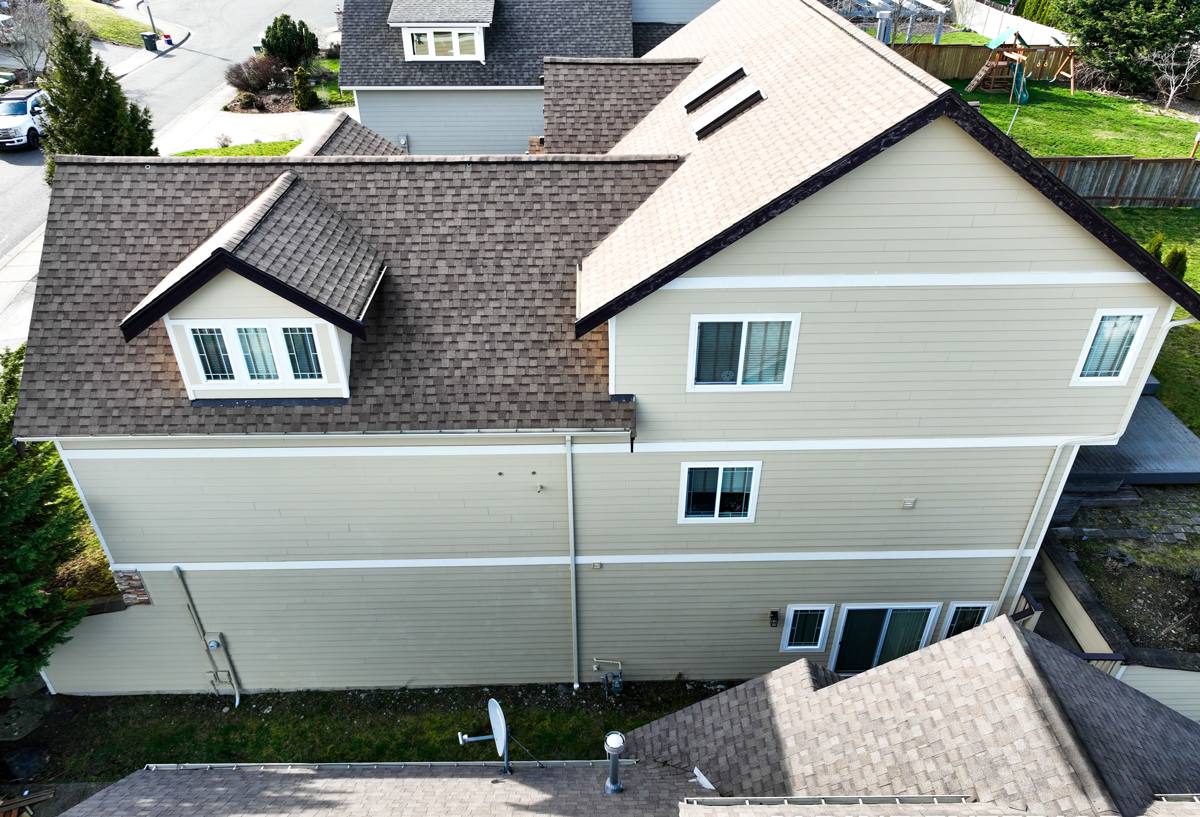
What "Roof Repair" Means Here (And What It Doesn't)
Roof repair is targeted work: fixing a leak, replacing damaged flashing, resealing a penetration, correcting a valley that's failing, or swapping out a section of shingles or panels that's past its useful life. It is not a full tear-off and re-roof, and it's not a patch job meant to buy a season before the real problem comes back. A correct repair addresses the cause of the damage, not just the spot where water happened to show up inside the house.
We'll tell you plainly when a repair makes sense and when it doesn't. If a roof has enough age or enough compounding damage that repair is just delaying an inevitable replacement, we say so up front rather than stacking small invoices on a roof that's already at the end of its service life.
The Damage Patterns We Actually Find in Fairhaven
Moss and Organic Growth
Moss doesn't just sit on top of a roof looking bad. It holds moisture against the roofing material, works its way under shingle tabs and shakes as it grows, and lifts edges just enough to let wind-driven rain in underneath. On shaded roof sections and north-facing slopes, which are common on Fairhaven lots, moss can establish itself within a single wet season if it isn't kept in check.
Flashing and Valley Failures
Flashing around chimneys, skylights, dormers, and roof-to-wall transitions is the single most common source of leaks we find. Sealant dries out and cracks, metal flashing corrodes or comes loose, and valleys that weren't detailed correctly the first time concentrate water exactly where the roof is least able to shed it. These failures are often small and quiet for a long time before they show up as a stain on a ceiling.
Wind-Driven Rain Intrusion
Storms coming off the water don't just drop rain straight down; they push it sideways and up under laps, ridge caps, and eave edges that would stay dry in a calmer climate. Roofs detailed for a milder wind exposure often show intrusion points here that wouldn't be a problem somewhere more sheltered.
Fastener and Flashing Corrosion
Salt air accelerates corrosion on exposed metal: nail heads, flashing, gutter hangers, and any fastener that isn't rated for coastal exposure. Once a fastener starts to go, the shingle or panel it's holding loses its grip, and that's an opening for water long before it's visible from the ground.
Signs You Need a Repair, Not a Full Replacement
Most homeowners call us after they've already noticed something. Here's what generally points to a fixable problem rather than a roof at the end of its life:
- A stain on a ceiling or in an attic that appears only during heavy rain or wind, not constantly
- One or two areas of visible moss or dark streaking rather than coverage across the whole roof
- Missing, cracked, or curling shingles limited to a specific slope or section
- Loose or visibly corroded flashing around a chimney, vent, or skylight
- Granules collecting in gutters from one area, not a roof-wide shedding pattern
- The roof is less than two-thirds of the way through its expected lifespan
- No sagging, soft decking, or widespread daylight visible from inside the attic
If several of these don't apply, for example the roof is old, sagging is present, or decking feels soft underfoot during inspection, we'll say so and talk replacement instead of spending your money on a repair that won't hold.
What a Correct Repair Actually Involves
A repair that actually solves the problem, rather than just covering it, generally includes:
- Finding the real entry point, which is often several feet from where the water is showing up inside
- Removing damaged material back to solid, dry decking, not just capping over it
- Checking and replacing underlayment in the affected area, since a new shingle over wet or failed underlayment won't hold
- Installing new flashing detailed for how water actually moves across that section of roof, not a generic patch
- Matching replacement shingles or panels as closely as possible in type, profile, and where reasonable, color
- Confirming the fix by checking the surrounding area for related wear, since one failure point often has a sibling nearby
Skipping any of these steps is how a "repaired" roof leaks again in the next storm season.
Our Process, Start to Finish
We keep this simple and we don't push you toward more work than the roof needs.
- Inspection. We get on the roof, not just in the attic, and look at the actual condition of the materials, flashing, and decking, not only the spot where you've seen a leak.
- Honest assessment. You get a plain explanation of what's actually wrong, what's causing it, and whether repair or replacement is the right call.
- Written estimate. Scope and cost factors laid out before any work starts, no surprise add-ons mid-job.
- The repair. We do the work to the standard above, a real fix rather than a patch, and clean up the site when we're done.
- Follow-up. We tell you what we did, what to keep an eye on, and how to reach us if anything comes up.
What Drives the Cost of a Roof Repair
Every roof and every leak is different, but the same handful of factors move the price up or down on almost every job we quote in this area:
| Factor | Why It Matters | Effect on Cost |
|---|---|---|
| Roof pitch and accessibility | Steep or high sections take longer and need more safety setup | Moderate to significant |
| Extent of hidden decking damage | Rot found once shingles come off adds material and labor | Can shift a small job into a bigger one |
| Flashing complexity | Chimneys, skylights, and multiple valleys take more time to detail correctly | Moderate |
| Material match availability | Older or discontinued shingle lines may need a closer color blend or wider replacement area | Low to moderate |
| Moss and debris removal | Heavily grown-in areas need cleaning before the repair can even be assessed properly | Low to moderate |
| Roof age relative to lifespan | Older roofs sometimes reveal a second issue once the first is opened up | Variable |
Most straightforward, single-area repairs in this area land in a modest, predictable range. Jobs involving hidden decking damage or multiple failure points cost more simply because there's more real work involved, never because of padding. We'll walk you through exactly which of these factors apply to your roof before you commit to anything.
Materials and Compatibility: Matching the Fix to the Roof
Part of doing a repair correctly is respecting what's already on the roof instead of forcing a mismatched fix onto it.
Asphalt Shingle Roofs
Still the most common roofing material we work on in Fairhaven. Repairs are usually straightforward as long as we can source a reasonably close match and the surrounding shingles are still flexible enough to work with rather than brittle from age.
Metal Roofing
Metal holds up well against moss but is more sensitive to fastener corrosion in a salt-air environment, which is why we pay close attention to fastener spec on any metal repair rather than just replacing like-for-like without checking the original hardware choice.
Cedar Shake
Cedar looks good and breathes well, but it's also the material most affected by the moss and moisture pattern common here. It holds organic growth more readily than composition materials and needs a repair approach that accounts for that, including more attention to ventilation underneath the repaired section. We'll always explain the maintenance trade-offs honestly rather than talk you into or out of a material based on looks alone.
Why a Crew That Already Works Fairhaven Matters
A roofing crew that mostly works inland or in drier parts of the state doesn't automatically know how this microclimate treats a roof. We work Sudden Valley and the surrounding Whatcom County communities, including Fairhaven, on an ongoing basis, so we already know which flashing details tend to fail first in this wind and rain pattern, how aggressively moss establishes on shaded slopes here, and which fastener and material choices hold up versus which ones look fine for a year or two and then don't. That local pattern recognition is the difference between a repair that solves the problem and one that just delays it until the next storm.
Keeping a Repaired Roof From Becoming a Repeat Job
A correct repair should last. A few habits from the homeowner side help it stay that way in this climate:
- Have moss growth addressed before it spreads across a full slope, not after
- Keep gutters clear so water isn't backing up against roof edges during heavy rain
- Trim back overhanging branches that keep sections of roof shaded and damp longer than the rest
- Get a roof looked at after any major windstorm, even if nothing looks obviously wrong from the ground
- Address small leaks the season you notice them, since decking damage compounds quickly in this level of moisture exposure
If you're dealing with a leak, visible moss, damaged flashing, or you just want an honest read on where your roof actually stands, we're glad to take a look. The estimate is free, there's no pressure attached to it, and you'll get a straight answer either way; use the form below to get in touch.