 Sudden Valley Siding
 Fairhaven Roofs Take a Different Kind of Beating
Fairhaven sits right along Bellingham Bay, which means homes there deal with a combination most inland roofs never see: salty, moisture-laden air off the water, wind-driven rain that comes in sideways during winter storms, and long stretches of overcast, damp weather that never quite let a roof dry out. In Whatcom County, that combination adds up over the year — not any single storm, but the slow, steady wear of a marine climate working on shingles, flashing, and fasteners month after month.
A roof replacement done right in this neighborhood isn't just "put new shingles on." It has to account for salt exposure near the water, near-constant moisture, and a moss and algae season that can run most of the year in the shade of mature trees. Skip any of that and you're replacing a roof that will look tired again in half the time it should have lasted.
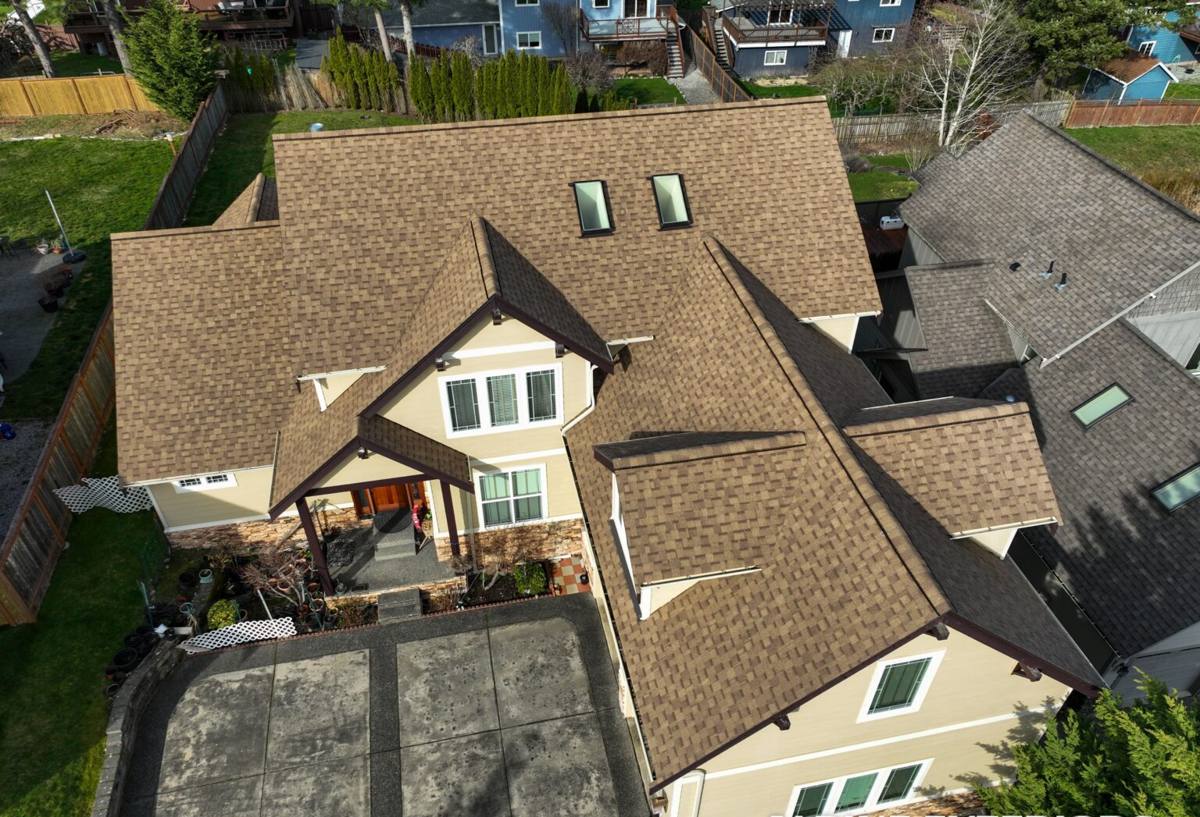
Signs a Fairhaven Roof Needs Replacement, Not Another Repair
Every roof reaches a point where patching stops making financial sense. In this climate, that point often shows up earlier than homeowners expect, because moisture problems compound quietly under the surface before they ever show up as a leak inside the house. Here's what we look for when deciding whether a roof is a repair candidate or a replacement candidate:
- Granule loss heavy enough that you can see bare asphalt on shingles, especially on south- and west-facing slopes
- Moss or algae that keeps coming back within a season or two of cleaning, even after treatment
- Shingles that are cupping, curling, or cracking, particularly near the ridge and in valleys
- Soft or spongy spots on the roof deck when walked, which usually means rot underneath
- Rusted, pitted, or failing flashing around chimneys, skylights, and roof-to-wall transitions
- Daylight visible through the roof deck from the attic, or damp insulation and dark staining on the underside of the sheathing
- A roof that's 20+ years old on standard asphalt shingles, or showing multiple recurring leak locations
One or two of these on their own might mean a targeted repair is enough. Several at once, especially deck damage or repeated leaks in different spots, usually means the underlying system has aged out and a full replacement is the more honest recommendation, even if it's the less convenient answer.
What a Correct Roof Replacement Actually Involves
Tear-off and deck inspection
We don't install new roofing over old. A proper replacement starts with a full tear-off down to the deck, because that's the only way to actually see what's underneath — soft sheathing, old water staining, undersized or missing ventilation baffles, or framing issues that a roof-over would just seal in and hide. Any damaged decking gets replaced before anything new goes down.
Underlayment and water barriers
Given how much wind-driven rain this area sees, underlayment choice matters more here than it does in drier climates. We use synthetic underlayment as the standard water-resistant layer across the field of the roof, with self-adhered ice-and-water membrane at the eaves, valleys, and any roof penetration — not because Fairhaven gets heavy snow loads, but because those are the spots where wind-driven rain and ice dams (on the rare hard freeze) are most likely to force water backward under standard shingles.
Flashing details
Flashing is where most roof failures actually start, not in the open field of shingles. Chimneys, skylights, dormers, and any wall-to-roof transition need new metal flashing as part of a replacement, not a reuse of whatever was there. In a salt-air environment, the flashing material and fastener choice affect how long that detail actually holds up.
Choosing the field material
There's no single "best" roofing material for every Fairhaven home — the right choice depends on the roof's pitch, sun and shade exposure, and how much upkeep the homeowner wants to take on. Here's how the common options compare in this specific climate:
| Material | Moss & moisture behavior | Salt air durability | Typical maintenance |
|---|---|---|---|
| Architectural asphalt shingle | Good drainage when properly ventilated; algae-resistant granules help but don't eliminate moss risk | Solid, standard choice | Periodic moss removal, gutter cleaning |
| Metal (standing seam) | Sheds moisture fast, very little surface for moss to grip | Depends on coating quality; needs corrosion-resistant fasteners near the water | Low; occasional fastener/seam check |
| Cedar shake | Attractive but holds moisture and is the most moss-prone option in a wet climate | Weathers naturally but needs regular treatment | High; regular cleaning and treatment required |
| Synthetic/composite shingle | Resists moisture absorption well; good moss resistance | Good, doesn't corrode | Low to moderate |
For most Fairhaven homes we recommend a quality architectural asphalt shingle or a synthetic composite as the practical middle ground — good moisture and moss performance without the maintenance commitment that cedar shake demands in a climate this wet. Metal is a strong option for homeowners who want the lowest long-term maintenance and are willing to pay more upfront.
Ventilation and Moisture Control — the Part Homeowners Don't See
A new roof with poor attic ventilation will fail early, no matter how good the shingles are. In a marine climate, warm moist air trapped in an attic condenses against the cold underside of the roof deck, which rots sheathing from the inside and feeds the exact moss and mildew growth homeowners are trying to avoid on the outside. Balanced ventilation — intake at the soffits, exhaust at or near the ridge — keeps air moving through the attic so moisture doesn't sit and condense.
Part of every replacement estimate includes checking existing intake and exhaust ventilation and correcting it if it's undersized or blocked, which is common in older Whatcom County homes that were built before current ventilation standards. This isn't an upsell — it's the difference between a roof that lasts its full expected lifespan and one that develops hidden rot in year eight.
Salt Air and Moss: Material and Fastener Choices That Matter
Proximity to Bellingham Bay means airborne salt is a real factor for any exposed metal on the roof — flashing, fasteners, gutters, and vents. Standard steel fasteners and uncoated flashing corrode faster this close to salt water, which is how you end up with rust streaks and eventual leaks at flashing points years before the shingles themselves are worn out. We spec stainless steel or hot-dip galvanized fasteners and corrosion-resistant flashing on homes in this area for exactly that reason.
Moss is the other constant. Whatcom County's mild, wet weather gives moss and algae a growing season that can stretch nearly year-round on shaded or north-facing slopes, particularly under overhanging trees. Algae-resistant shingle granules (usually copper-infused) help slow regrowth, and keeping gutters and valleys clear of debris removes the organic material moss needs to establish. No roof is fully moss-proof in this climate, but material choice and design details can significantly slow how fast it comes back.
Our Roof Replacement Process, Step by Step
- On-site inspection of the roof, attic, and ventilation, with photos and an honest assessment of whether repair or replacement is the right call
- A written estimate that breaks down material options, ventilation work, and any deck repair allowance
- Permit pulled with the correct local jurisdiction before work begins
- Full tear-off of the existing roofing down to the deck
- Deck inspection and repair of any soft, stained, or rotted sheathing
- Installation of underlayment, ice-and-water membrane at vulnerable areas, and new flashing throughout
- Installation of the chosen field material to manufacturer specifications
- Ventilation correction or upgrade where needed
- Full site cleanup, including a magnetic sweep for stray fasteners
- Final walkthrough and warranty paperwork
We work this neighborhood regularly, which means we already know how to sequence a tear-off around narrow lots, tree cover, and the wetter weather windows that are common near the water — scheduling and tarping decisions that matter more here than they would on a drier, more open site.
What Roof Replacement Costs Depend On
We don't quote prices without seeing the roof, because the same square footage can cost very differently depending on the details below. In general terms, a full asphalt shingle replacement on an average home runs in the range most homeowners expect for quality work with proper tear-off and flashing — metal and premium synthetic materials run higher, cedar shake highest of all once ongoing maintenance is factored in. The real cost drivers are:
| Cost factor | Why it matters |
|---|---|
| Roof pitch and access | Steep or hard-to-access roofs take longer and require more safety setup |
| Number of existing layers | Multiple layers of old roofing mean more tear-off labor and disposal |
| Deck condition | Rotted or soft sheathing found during tear-off has to be replaced before new roofing goes on |
| Material choice | Asphalt, synthetic, and metal all carry different material and labor costs |
| Flashing complexity | Chimneys, skylights, and multiple roof planes each add flashing detail work |
| Ventilation upgrades | Correcting undersized or blocked ventilation adds labor but protects the new roof's lifespan |
The only way to get an accurate number is a real inspection — anyone quoting a firm price over the phone without seeing the roof is guessing, and that guess tends to grow once the tear-off reveals what's actually underneath.
Permits and Timing in Whatcom County
Fairhaven sits within Bellingham city limits, so roof replacement permits there go through the City of Bellingham rather than Whatcom County directly — a distinction that matters if you're used to dealing with the county for other property work. We handle the permit application as part of the job so homeowners aren't left tracking down the right department themselves.
Timing-wise, the drier months tend to book up faster because everyone in the region wants roof work done before the wet season sets in, but roofing can be done responsibly in the rainy months too with proper tarping and weather monitoring — we just plan the tear-off and dry-in sequence more tightly to keep the deck protected between steps.
Why Hiring a Crew That Already Works Fairhaven Matters
A roofing crew that mostly works drier, inland areas doesn't automatically think about corrosion-resistant fasteners, algae-resistant granules, or ventilation correction as standard parts of the job — because their usual jobs don't punish those shortcuts as quickly. A crew that regularly works Fairhaven and the rest of the Whatcom County waterfront treats those details as default practice, not upgrades, because we've seen what skipping them costs a homeowner five years down the road.
That familiarity also shows up in smaller, practical ways: knowing which permit office to file with, planning around the area's weather patterns instead of being surprised by them, and recognizing early which roofs are genuinely due for replacement versus which ones just need a solid repair and a few more years of life.
If your roof is showing wear, or you just want an honest read on whether it's a repair or a replacement situation, we're glad to take a look. The estimate is free, there's no pressure to move forward, and you'll get a straight answer either way — just fill out the form below to get started.