 Sudden Valley Siding
 Siding Installation Built for Fairhaven's Coastal Exposure
Fairhaven sits close enough to the water that its homes take a different kind of weathering than siding a few miles inland. Salt-laden air off Bellingham Bay works on fasteners, caulk joints, and paint film year-round. Driving rain off the water finds every gap in flashing and trim. And the long, wet, low-sun stretch of fall through spring keeps north- and west-facing walls damp long enough for moss and algae to take hold and stay there. None of that is unusual for Whatcom County, but it means siding installation in Fairhaven has to be treated as a coastal job, not a generic one.
This page covers what that actually means: what the siding on a Fairhaven home needs to hold up long-term, what a correct installation looks like on this kind of site, how our process handles the details that matter here, and why it's worth hiring a crew that already knows this neighborhood's exposure rather than a general contractor working it for the first time.
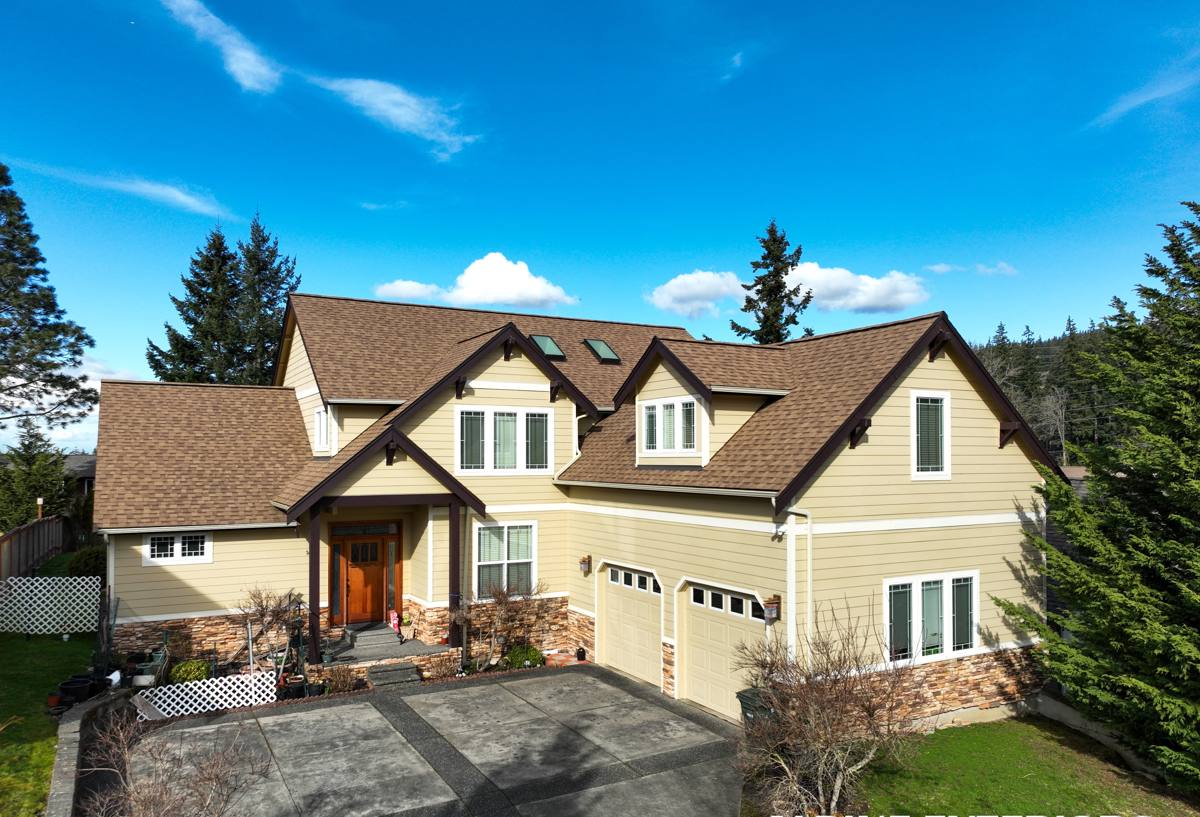
What Salt Air, Rain, and Moss Actually Do to Siding
Salt Air
Airborne salt is corrosive to exposed metal — nail heads, flashing edges, and hardware — and it accelerates the breakdown of lower-quality paint and caulk. On homes closer to the shoreline, this shows up first as chalking or fading on the sun- and wind-exposed sides, then as rust bleed at fastener points if the wrong hardware was used.
Driving Rain
Wind-driven rain doesn't just wet a wall's surface, it pushes water sideways and upward into any seam that isn't properly lapped or flashed. Siding that's merely nailed up without correct water-shedding detail at windows, trim, and butt joints will eventually let moisture behind the cladding, where it can sit against sheathing and framing.
Moss and Algae Season
Whatcom County's wet season runs long, and shaded or north-facing walls can stay damp for weeks at a stretch. Any siding material that holds surface moisture — through porous texture, failing paint, or poor drainage behind the panel — becomes a growth surface for moss and algae. Once established, it holds even more moisture against the wall, which compounds the problem.
These three factors compound each other: a coating weakened by salt air lets in more rain, and more standing moisture feeds more moss. A siding system for Fairhaven has to resist all three at once, not just one.
What a Fairhaven Home Actually Needs From Its Siding
- A non-porous, factory-cured finish that resists chalking and fade from salt air and UV exposure over decades, not years.
- Dimensionally stable material that won't swell, cup, or crack as it cycles through repeated wet-dry seasons — movement in the board is what eventually opens up seams to water.
- Correct water-shedding detail at every horizontal lap, window head, and butt joint, engineered to drain wind-driven rain rather than absorb it.
- Fastener and flashing hardware rated for coastal exposure, so corrosion doesn't create the first point of failure.
- A surface that doesn't feed moss — smooth, factory-finished cladding sheds water fast enough that organic growth has less chance to establish, especially on shaded elevations.
This is the list we're actually building to on every Fairhaven job, and it's the reason we standardized on one product system rather than offering several.
Why We Install James Hardie Fiber Cement Here — and Only That
We install James Hardie fiber cement siding exclusively. We don't install vinyl, LP SmartSide, Cemplank, Allura, or unfinished wood siding like cedar or primed spruce, and we're upfront about why: each of those products has a real place in the market, but none of them holds up to this specific combination of salt air, driving rain, and sustained moss exposure as consistently as Hardie does when it's installed correctly.
Fiber cement is non-combustible and dimensionally stable — it doesn't expand and contract with moisture the way wood-based products do, which matters directly for keeping seams tight against wind-driven rain over 20-plus years. Hardie's ColorPlus factory finish is baked on under controlled conditions rather than field-applied, which gives it better long-term resistance to fading and chalking than a job-site paint job, and it comes with a substantial, transferable finish warranty on top of the product warranty. Hardie also engineers regional HZ5 product lines specifically for climates like ours, accounting for moisture exposure rather than treating the Pacific Northwest the same as a dry inland region.
None of that means other products are without merit — vinyl is inexpensive and low-maintenance in mild climates, cedar has a look some homeowners want, LP SmartSide performs reasonably well in many parts of the country. But for a coastal Whatcom County home, we've made fiber cement our standard because it's the product we're comfortable standing behind for the long haul in this exposure.
How the Common Alternatives Hold Up in This Climate
| Material | Salt air / coastal exposure | Moisture and moss resistance | Long-term maintenance |
|---|---|---|---|
| James Hardie fiber cement | Non-combustible, factory-finished, engineered for coastal HZ zones | Dimensionally stable, sheds water at correctly lapped joints | Repaint cycle far longer than field-painted materials; caulk/inspection maintenance only |
| Vinyl siding | Can warp or become brittle with UV and temperature cycling over time | Doesn't absorb moisture itself, but seams can trap water behind panels | Low upkeep but limited repair options; fades and can't be repainted easily |
| Cedar / primed wood | Attractive but vulnerable to salt-accelerated finish breakdown | Absorbs moisture, prone to moss and rot without diligent upkeep | Frequent refinishing required to keep water out |
| LP SmartSide / engineered wood | Performs adequately but is more installation- and moisture-sensitive than fiber cement | Requires strict edge-sealing to prevent swelling at cut ends and seams | Moderate — depends heavily on installation quality and caulk maintenance |
What a Correct Siding Installation Involves
The product is only half the equation. Most premature siding failures we see — on any brand — trace back to installation shortcuts, not the material itself. A correct job for a Fairhaven home includes:
1. Substrate and Moisture Barrier
Before any siding goes up, the sheathing needs to be sound and dry, and a weather-resistant barrier installed with properly lapped and taped seams. This is the layer that actually keeps incidental moisture out of the wall assembly — the siding sheds the bulk of the water, the barrier handles what gets through.
2. Flashing at Every Penetration
Windows, doors, hose bibs, light fixtures, and any other wall penetration need correctly integrated flashing so water is directed out and down, never trapped behind the cladding. This is one of the most commonly skipped details on rushed jobs, and it's the detail that matters most in a driving-rain climate.
3. Correct Fastening and Clearances
Hardie siding has specific nailing patterns, fastener types, and minimum clearances from grade, roofing, and other transitions, all specified by the manufacturer to keep the installation warranty valid. Corrosion-resistant fasteners matter especially here given the salt air.
4. Proper Lap and Joint Treatment
Butt joints and laps need to be sized, sealed, or flashed according to spec — not just butted and caulked. This is a major factor in how well a wall resists wind-driven rain over its lifetime.
5. Ventilation Behind the Cladding
A drainage gap or rainscreen approach lets any incidental moisture that does get behind the siding dry out rather than sit against the sheathing — important in a climate where walls can stay damp for extended stretches.
Our Process on a Fairhaven Job
- On-site assessment: we walk the exterior, check existing siding condition, look for signs of past moisture intrusion, moss buildup, and note which elevations face the worst wind-driven rain.
- Scope and material plan: we spec the Hardie product line, profile, and color for the home, and identify any trim, flashing, or sheathing repair needed before new siding goes on.
- Tear-off and substrate check: old siding comes off in manageable sections so sheathing can be inspected and any damaged material replaced before it's covered up.
- Weather barrier and flashing installation: house wrap and flashing go in first, with careful attention to every window, door, and penetration.
- Siding installation to manufacturer spec: correct fastening, clearances, and joint treatment, following Hardie's published installation instructions to keep the warranty intact.
- Final detailing and walkthrough: trim, caulking, and touch-up, followed by a walkthrough so the homeowner understands what was done and what maintenance, if any, to expect.
Why Local Experience in This Area Matters
A crew that's worked Fairhaven and the surrounding Whatcom County coastline knows which elevations on a typical home take the worst of the weather, where moss tends to establish first, and how much clearance and drainage detail actually holds up here versus what's minimally required on paper. That local pattern recognition shows up in small decisions — an extra flashing detail at a north-facing window head, a wider drainage gap on a shaded wall — that a crew working the area for the first time is more likely to miss. It also means we're not guessing at how Hardie's HZ5 product line performs in this specific exposure; we've installed it here before.
What to Check Before Hiring Anyone for Siding Work
- Are they installing a manufacturer-specified system, or mixing components in a way that could void a warranty?
- Do they carry current liability insurance and any required contractor licensing for Washington?
- Will they walk you through the flashing and moisture-barrier plan before siding goes up, not just the finished look?
- Do they have experience with coastal or high-moisture exposure specifically, not just siding in general?
- Is the estimate detailed enough to show what's included — tear-off, sheathing repair allowance, trim, flashing — rather than a single lump figure?
Maintenance and What to Expect Long-Term
Correctly installed Hardie siding is low-maintenance, not no-maintenance. Homeowners should still expect to rinse off surface grime and check caulk joints periodically, especially on shaded, moss-prone elevations, and keep an eye on the usual wear points — around windows, at the base of walls, and anywhere trim meets siding. The factory ColorPlus finish means repainting isn't part of the routine the way it is with field-painted wood siding, but it isn't a reason to skip periodic visual checks, particularly after a hard winter storm season.
Cost for a siding installation project depends on the size of the home, the current condition of the substrate underneath, the Hardie product line and profile chosen, and how much trim and detail work is involved — we don't quote broad numbers without seeing the actual site, since substrate repair needs in particular vary a lot from house to house.
If you're weighing a siding project for a Fairhaven home, we're glad to come take a look, walk the exterior with you, and put together a straightforward estimate — no pressure, no obligation.