 Sudden Valley Siding
 Fairhaven's Climate Asks More of Siding Than Most Neighborhoods
Fairhaven sits close enough to the water that homes there deal with a different mix of weather stress than siding a few miles inland. Salt-laden air off the bay accelerates corrosion on fasteners and trim hardware, driving rain off Whatcom County's marine storms drives moisture sideways into seams and laps, and the shaded, damp microclimate common to older Fairhaven lots keeps moss and algae established on north- and west-facing walls for most of the year. None of these conditions are unusual on their own. Combined, and repeated year after year, they're exactly the conditions that turn small siding problems into bigger ones if repairs get delayed or done as a quick patch instead of a proper fix.
This page is about one thing: siding repair for Fairhaven homes specifically, not a general "how siding works" overview. If you're looking at a soft spot, a stained board, a section that's pulling away from the wall, or moss that keeps coming back no matter how many times it's washed off, this is what a correct repair looks like and what our process does about it.
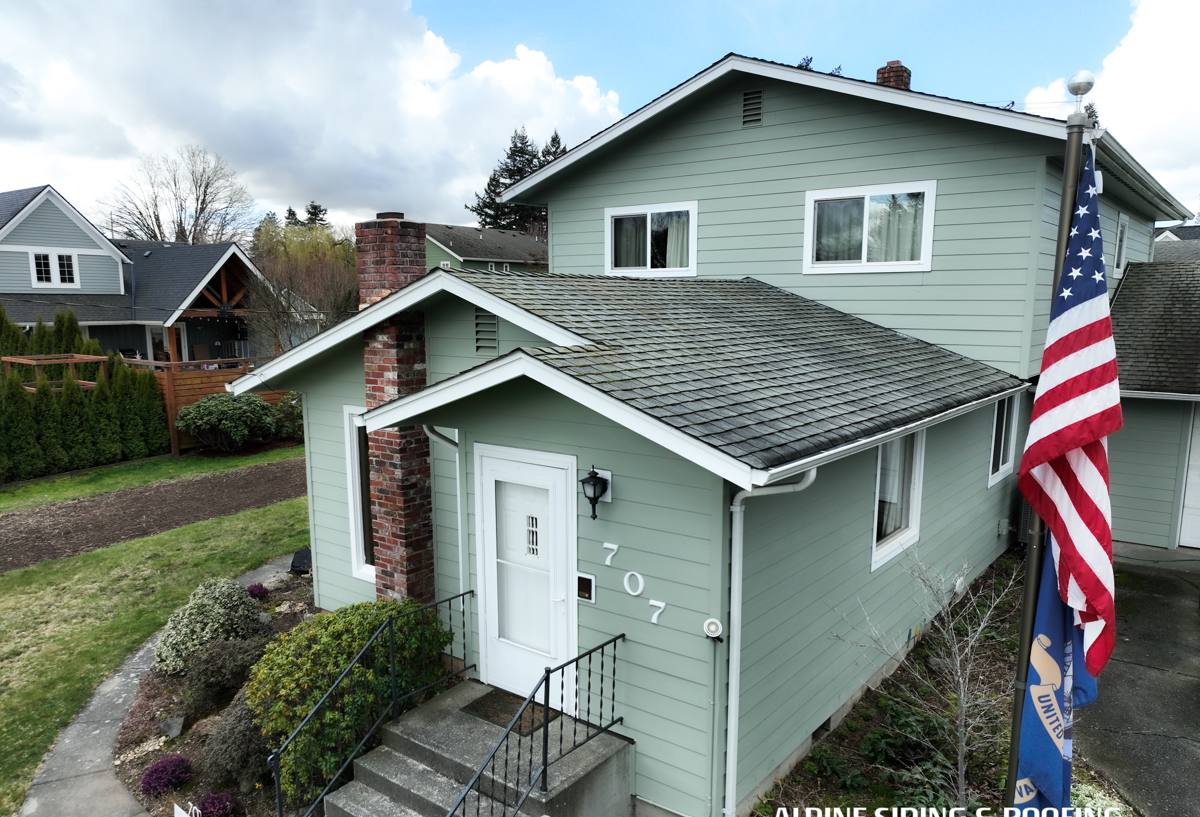
What Fairhaven's Weather Actually Does to Siding
Salt Air and Fasteners
Homes within a mile or two of Bellingham Bay see faster corrosion on exposed nails, screws, and metal trim than homes further inland. When fasteners corrode, they lose their grip, siding boards loosen, and water finds its way behind the cladding through gaps that didn't exist when the siding was installed. A repair that just re-nails a loose board with the same hardware in the same spot is a temporary fix, not a real one.
Driving Rain and Wind-Driven Moisture
Storms coming off the water don't just fall straight down — wind pushes rain sideways into laps, corners, and anywhere trim meets siding. Over time this works moisture past caulk joints that were never designed to be a primary water barrier. The result shows up as staining, soft spots, or bubbling paint at butt joints and around window and door trim long before the siding itself fails outright.
The Long Moss Season
Whatcom County's wet, mild winters and shaded lots common in older Fairhaven neighborhoods give moss and algae a long growing season with little dry-out time. Moss holds moisture against the siding surface, and on materials that aren't built to shed water quickly, that constant dampness is what eventually causes rot, delamination, or paint failure underneath the growth — not the moss itself, but what it traps against the wall.
Signs Your Fairhaven Home Needs Siding Repair
Most siding failures give warning signs well before there's a hole in the wall. Catching them early is the difference between a modest repair and pulling whole sections off to get at rotted sheathing underneath.
- Soft or spongy spots when you press on a board, especially near the bottom courses or under windows
- Visible warping, buckling, or boards that no longer sit flat against the wall
- Persistent moss or algae that regrows within weeks of cleaning, particularly on shaded or north-facing walls
- Paint that's bubbling, peeling, or cracking in a localized area rather than uniformly across the whole house
- Staining or dark streaks running down from seams, trim, or fastener heads
- Gaps opening up at butt joints, corners, or where siding meets trim, windows, or doors
- Visible corrosion or rust bleed from nails or metal flashing
- A musty smell or moisture inside on an exterior wall, which usually means water has already gotten past the siding
What a Correct Repair Actually Involves
Diagnose the Cause, Not Just the Symptom
Replacing a rotted board without figuring out why it rotted just buys time until the same failure shows up again nearby. A proper repair starts by tracing the water path: is it a failed caulk joint, a flashing detail that was never installed correctly, a fastener that's corroded through, or moisture trapped behind moss that was never fully removed? Skipping this step is the single most common reason repairs fail again within a year or two.
Check What's Behind the Siding
Once a section of siding is off, we check the water-resistive barrier (house wrap or building paper) and the sheathing underneath for soft spots or hidden rot before anything new goes back on. Siding is the visible layer, but it's not the only layer doing the work of keeping water out. A repair that reinstalls new siding over compromised sheathing hasn't actually solved anything.
Match the Material and the Finish
Repairs stand out when the new material doesn't match the old — different profile, different texture, or an obvious color seam where factory-finished siding meets field-painted patch material. On Hardie ColorPlus siding, matching means using the same product line and, where the coating has faded evenly with age, sometimes recommending a color-matched section be visible rather than pretending an exact blend is possible. We tell homeowners honestly when a patch will show versus when it will disappear into the wall.
Address Moss and Algae Properly, Not Just Cosmetically
Power-washing moss off without addressing the underlying dampness (poor drainage, overhanging vegetation, lack of sun exposure) just resets the clock until it returns. Where moss has been present long enough to hold moisture against the siding, we check for softening or delamination before assuming a simple cleaning is enough.
How Different Siding Materials Hold Up to Repair in This Climate
Not all siding repairs are equal, and the material matters as much as the workmanship. Here's an honest look at how the materials commonly found on Fairhaven homes behave when repair time comes:
| Material | How It Takes Moisture Damage | Repair Difficulty | Match After Repair |
|---|---|---|---|
| Vinyl | Doesn't rot, but can crack, warp, or fade unevenly; water can get trapped behind it at seams | Individual panels are usually replaceable, but exact color match gets harder as vinyl fades with age | Often noticeable if the original color has sun-faded |
| Cedar or wood | Absorbs moisture directly; prone to rot, especially in shaded, damp areas typical of this coastline | Repairs require careful sourcing of matching wood and ongoing repainting or staining | Can blend well initially but needs repeated refinishing to keep matching |
| Engineered wood (LP-style) | Vulnerable at cut edges and joints if not properly sealed and maintained; moisture intrusion can cause swelling | Repairs are workable but edge-sealing details matter a lot in wet climates | Reasonable match when factory-finished, but edge treatment is critical |
| James Hardie fiber cement | Non-combustible and doesn't absorb water the way wood does, but installation details (gaps, flashing, fastening) still determine how well it sheds moisture | Sections replace cleanly along factory joints; ColorPlus finish is factory-baked, not field-mixed | Strong match when the same color line and age of product are used |
This is why we install exclusively James Hardie fiber cement on new work: it gives us a consistent, engineered starting point. But we've repaired plenty of other materials on Fairhaven homes, and we'll always tell you plainly whether a repair is worth doing versus whether the underlying siding has reached the point where replacement makes more sense.
Our Siding Repair Process
1. On-Site Inspection
We look at the visible damage and the areas around it, not just the spot you called about. Moisture problems rarely stay contained to one board.
2. Moisture and Cause Check
Where damage suggests water intrusion, we check behind the siding to understand what's actually happening before quoting a fix.
3. Honest Repair-vs-Replace Recommendation
If a section of wall has multiple failure points, patch repairs may cost more over time than replacing that section correctly once. We'll tell you which situation you're in and why.
4. The Repair Itself
Damaged material comes out, any compromised sheathing or barrier is addressed, and new material goes in with attention to the flashing and fastening details that caused the original failure — not just a cosmetic swap.
5. Cleanup and Follow-Up
We clean the work area and walk you through what was found and fixed, including anything worth keeping an eye on going forward.
What Drives Siding Repair Cost
Repair costs vary enough by scope that a real number only comes from an on-site look, but the factors that move the price are consistent:
| Factor | Why It Matters |
|---|---|
| Extent of hidden damage | A single visible board can hide rot in the sheathing behind it, turning a small job into a larger one once the wall is opened up |
| Accessibility | Second-story sections, tight side yards, and areas near landscaping take longer to access safely |
| Material availability and match | Discontinued colors or profiles may require a full section replacement rather than a spot patch |
| Underlying cause | If the root cause is a flashing or drainage issue, fixing that adds scope but prevents repeat failures |
| Number of affected areas | Moss and moisture damage often show up in more than one spot on a wall exposed the same way to weather |
As a rough sense of scale: a small, contained patch repair is often a modest job measured in a few hundred dollars, while a repair that involves opening up a wall section, addressing rot in the sheathing, and replacing several courses of siding climbs well beyond that. Anyone quoting a firm number without inspecting the damage first is guessing.
Why a Crew That Already Works in Fairhaven Matters
Siding repair in a coastal, moss-prone neighborhood isn't the same job as siding repair on a dry, inland lot. A crew that regularly works this area already knows which wall orientations tend to hold moisture longest, how salt air affects fastener choice, and what moss regrowth patterns actually mean versus what's just cosmetic. That local pattern recognition shortens the diagnosis step and reduces the chance of a repair that looks fine for a season and fails again the next wet winter. It also means straight answers about whether a repair will hold up, based on having seen how similar repairs performed on similar homes in this same climate over time.
Questions Worth Asking Any Siding Repair Contractor
- Will you check behind the damaged siding for hidden rot, or just replace what's visible?
- How will the new material be matched to the existing siding's color and profile?
- What's causing this specific failure, and does the repair address that cause?
- Is this a candidate for a spot repair, or would replacing the full wall section hold up better long-term?
- What warranty applies to the repair work versus the material itself?
Keeping Repaired Siding in Good Shape Afterward
A correct repair should hold, but ongoing upkeep matters in a climate like this one. A few habits go a long way toward preventing the next call:
- Rinse shaded, moss-prone walls periodically rather than waiting for heavy growth to build up
- Keep gutters clear so overflow isn't running down the siding face
- Trim back vegetation that keeps a wall section shaded and damp
- Check caulk at trim, window, and door joints yearly and recaulk before gaps widen
- Walk the exterior after major storms to catch loose boards or new staining early
If you're dealing with damaged, stained, or moss-covered siding on a Fairhaven home, we're happy to take a look and give you a straight assessment — what's actually wrong, what it will take to fix it right, and whether repair or replacement makes more sense for your situation. Request a free, no-pressure estimate below and we'll go from there.