 Sudden Valley Siding
 Ferndale Roofs Work Harder Than Most
Ferndale sits close enough to the water and the refineries along Bellingham Bay that homes here deal with a mix most inland Washington towns don't: salt-laden air off the Strait of Georgia, wind-driven rain that gets pushed sideways under loose flashing, and a wet season that stretches long enough to grow a solid crop of moss on anything north-facing. None of that is dramatic on its own. It's the combination, year after year, that wears out a roof faster than the shingle warranty label suggests it should.
We're based out of Sudden Valley and work Ferndale regularly, so this isn't a page we wrote once and forgot about. It reflects what we actually see when we're up on Ferndale roofs: fastener corrosion near the coast, moss lifting shingle tabs, and valleys that were flashed correctly for a drier climate but not for Whatcom County's version of "rain."
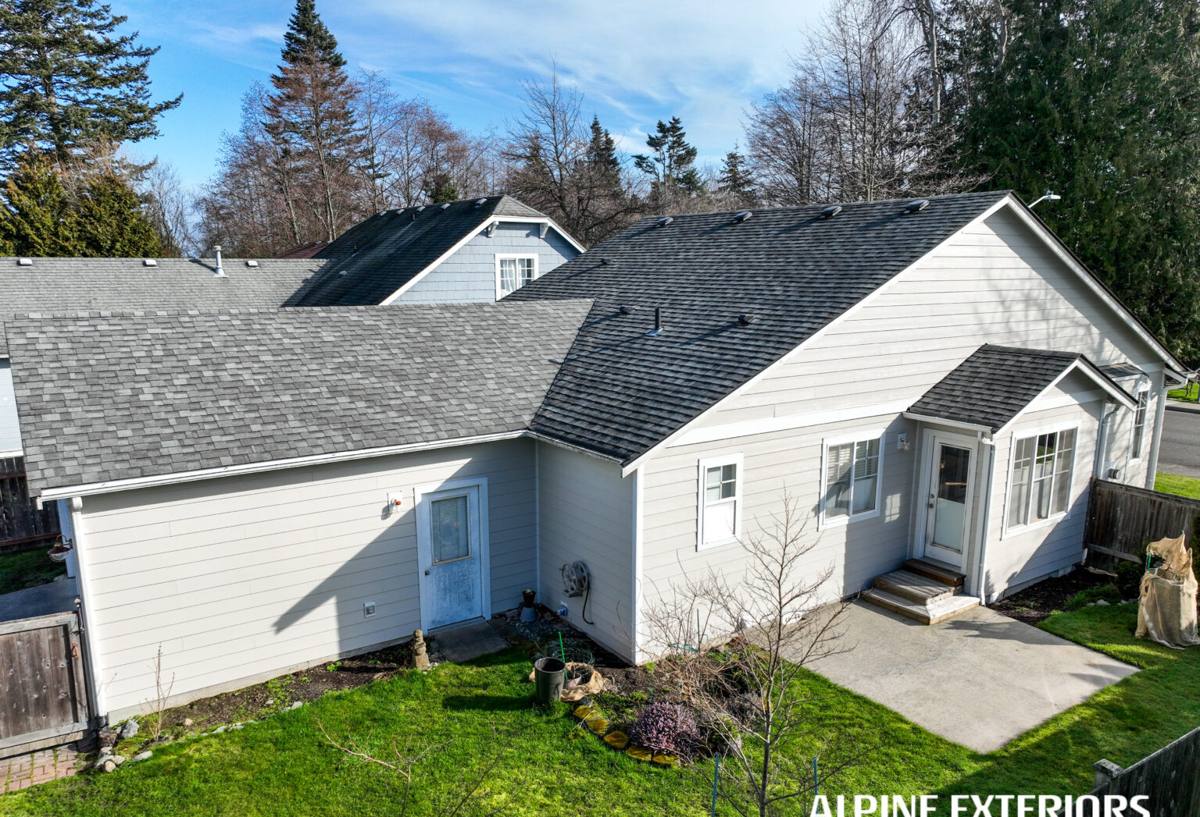
What "New Roof Installation" Actually Means
A new roof isn't just new shingles laid over the old ones. Done right, it's a full system replacement, and each layer earns its place:
- Tear-off: removing the old roofing down to the deck so we can see what's actually underneath, not guess at it.
- Deck inspection and repair: replacing any sheathing that's soft, delaminated, or water-stained before anything new goes down.
- Underlayment: a synthetic or felt water-resistive layer that becomes your real backup line of defense once the shingles start aging.
- Ice-and-water membrane: self-sealing membrane at eaves, valleys, and around penetrations, where wind-driven rain finds its way in first.
- Flashing: metal at chimneys, walls, skylights, and valleys, formed and sealed for the specific geometry of your roof, not a one-size cut.
- Ventilation: intake and exhaust that actually balance, so moisture and heat move out of the attic instead of condensing under the deck.
- Finish roofing: the shingles, metal panels, or other surface material homeowners tend to think of as "the roof."
Skip or shortcut any one of those layers and the finished roof can still look fine from the street for a couple of years. The failures show up later, usually as a soft spot in the decking or a stain on a ceiling, and by then it's a repair bill instead of a line item.
Materials That Actually Hold Up Here
Whatcom County's coastal exposure narrows the field of materials that make sense. We're not going to tell you a product is bad — every roofing material has a legitimate use case — but we will tell you honestly where each one earns its keep in a Ferndale climate and where it asks for more upkeep than it's worth.
| Material | Salt Air / Coastal Exposure | Moss & Algae Resistance | Typical Lifespan Here |
|---|---|---|---|
| Architectural asphalt shingle | Good with corrosion-resistant fasteners and flashing | Fair — benefits from algae-resistant granules and periodic cleaning | 25–30 years |
| Standing seam metal | Excellent with coated, marine-grade fastener hardware | Very good — sheds moss more easily than shingle | 40–50+ years |
| 3-tab asphalt shingle | Fair — thinner profile is more sensitive to wind lift | Fair | 15–20 years |
| Cedar shake | Requires diligent maintenance near salt air | Poor without regular treatment — moss and moisture are its main enemies | 20–25 years with upkeep |
For most Ferndale homes we install architectural asphalt shingle as the practical middle ground — good moss and wind performance, straightforward warranty structure, and a lower installed cost than metal. Where a roof has a lot of coastal exposure or the homeowner wants the longest possible service life, standing seam metal is worth the conversation. We steer away from cedar shake in this specific climate not because it's a bad product everywhere, but because the maintenance burden it demands — regular treatment against moss and moisture — doesn't fit the "install it and stop thinking about it" expectation most homeowners actually have.
Fasteners and Flashing Metal Matter More Than People Expect
This is the detail that gets skipped on a lot of "just replace the shingles" jobs. Standard electro-galvanized fasteners and flashing corrode faster in salt-influenced air than most people realize, and a corroded fastener head is exactly where a leak starts. We spec corrosion-resistant, coated fasteners and flashing on Ferndale installs as a standard practice, not an upsell.
Ventilation: The Part Nobody Sees Until It Fails
A new roof can look perfect and still trap moisture underneath if the attic ventilation isn't balanced. Warm, moist air rises into the attic year-round in this climate, and it needs somewhere to go. If intake at the soffits doesn't match exhaust at the ridge, that moisture condenses on the underside of the deck instead — which is how a roof that's only a few years old ends up with rot nobody can see from outside. Every new roof installation we do includes a ventilation check, and where the existing setup is unbalanced, we correct it as part of the job rather than leaving it as a future problem.
Moss and Algae: A Long-Term Maintenance Reality, Not a One-Time Fix
Whatcom County's extended wet season means moss isn't a one-time nuisance — it's an ongoing condition to manage, especially on north-facing slopes that don't get much sun. A new roof buys you a clean start, and there are a few things that keep it that way longer:
- Keeping overhanging branches trimmed back so shaded, damp areas of the roof get more light and airflow.
- Clearing gutters and valleys before the fall rains so water isn't sitting against the shingle edge.
- Using zinc or copper control strips near the ridge, which release trace metal ions that discourage moss growth as rain washes over them.
- Scheduling a soft wash rather than pressure washing, which can strip granules and shorten shingle life.
None of this replaces a correct installation, but it's the difference between a roof that looks new for its full warranty period and one that starts looking tired after five or six wet seasons.
Our Process, Start to Finish
- On-site inspection and estimate: we walk the roof, check the attic and decking where accessible, and give you a written estimate with no pressure to sign that day.
- Material selection: we walk through the honest trade-offs for your specific roof and budget rather than pushing one product.
- Permitting: we pull the required permit and schedule inspections through Whatcom County, so the job is documented and compliant.
- Tear-off and deck inspection: old roofing comes off, and we address any deck damage before moving forward.
- Underlayment, flashing, and ventilation: the layers that determine how the roof performs for the next 25-plus years.
- Finish roofing installation: shingles or panels installed to manufacturer specification, which is also what keeps the material warranty valid.
- Cleanup and magnetic sweep: job site cleared, yard swept for stray nails and debris.
- Final walkthrough: we go over the finished roof with you before calling the job done.
How Long It Takes
A typical single-family roof in Ferndale takes one to three days depending on size, roof complexity, and whether we run into deck repairs. Rain doesn't automatically stop work — the roof is kept protected at every stage — but a full-on Whatcom County downpour will pause shingle installation for safety and quality reasons.
Signs You Need a New Roof, Not Another Repair
Not every roof problem calls for full replacement. Here's a practical checklist for telling the difference:
- Granules collecting in gutters in noticeable amounts, especially on a roof already past 20 years old.
- Shingles that are curling, cupping, or cracking across multiple areas rather than one isolated spot.
- Daylight visible through the roof deck from inside the attic.
- Soft or spongy spots underfoot when walking the roof.
- Repeated leaks in different locations after previous repairs.
- Heavy, persistent moss coverage that keeps returning within a season of cleaning.
- Visible sagging along the roofline.
If you're only seeing one or two of these, a targeted repair may still make sense. If several apply, a repair is usually just delaying the same conversation.
Why a Crew That Already Works Ferndale Is Worth Choosing
A roofing crew that's worked Ferndale and the rest of Whatcom County knows what to check for before it becomes a problem: which fastener and flashing specs actually hold up near the coast, how far south a moss issue tends to reach depending on tree cover, and how the county's inspection and permitting process runs in practice. That familiarity shows up as fewer surprises during the job — not a sales pitch, just fewer change orders and callbacks.
Working out of Sudden Valley keeps us close enough to Ferndale that scheduling, warranty follow-up, and any post-install questions don't involve a long drive or a subcontractor handoff. The same crew that installs your roof is the one that answers the phone if something needs a look afterward.
What a Fair Estimate Should Include
| Factor | Why It Affects Cost |
|---|---|
| Roof size and pitch | More surface area and steeper slopes mean more material and labor time |
| Number of layers to remove | Tearing off two layers of old roofing costs more than one |
| Deck condition | Rotted or delaminated sheathing needs replacement before new roofing goes down |
| Material choice | Architectural shingle, metal, and premium underlayments all price differently |
| Roof complexity | Valleys, dormers, skylights, and chimneys all add flashing labor |
| Ventilation upgrades | Adding or correcting intake and exhaust vents adds material and labor |
Be cautious of any estimate that's a single flat number with no breakdown — a fair one accounts for these factors specifically enough that you understand what you're paying for and why.
If your Ferndale roof is showing its age or you just want an honest read on where it stands, we'll come take a look. The estimate is free, there's no pressure attached to it, and you can use the form below to get on our schedule.