 Sudden Valley Siding
 Why Silver Beach Homes Face Tougher Siding Conditions
Silver Beach sits in one of the more exposed pockets of Whatcom County siding-wise. Homes here deal with a combination that a lot of inland properties never see in the same intensity: salt-laden air moving off open water, driving rain that comes in sideways during winter storms, and long stretches of shade and dampness that keep moss and algae established on north- and west-facing walls for most of the year. Any one of those on its own is manageable. Together, over years, they wear down the wrong siding material fast and expose weak points in an installation that would otherwise hold up fine somewhere drier and less windy.
That's the lens we use on every Silver Beach project: not "what siding looks good," but "what siding and what installation detail will actually survive this specific exposure for the next 30-plus years." This page walks through what that means in practice.
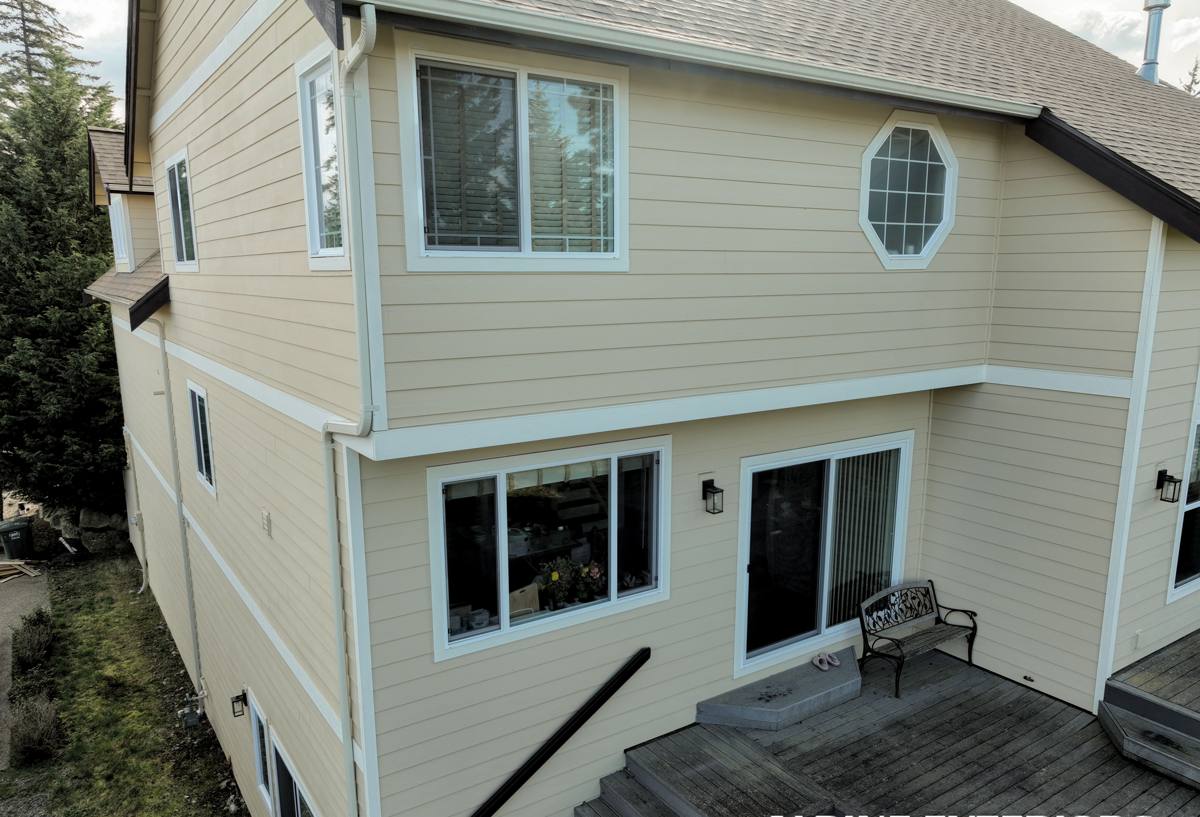
What Salt Air, Driving Rain, and Moss Actually Do to Siding
Salt Air and Metal Components
Salt air doesn't just affect the siding panel itself — it's hardest on the metal that holds everything together and directs water away from the wall: fasteners, flashing, and trim connectors. Lower-grade or under-spec'd metal corrodes faster near open water, and once a fastener starts to rust, it loses grip and can streak the siding face below it. This is why fastener spec isn't a minor detail on a Silver Beach job — it's one of the first things we check.
Wind-Driven Rain and Water Intrusion
Driving rain finds every gap a calm-weather rain would never reach. Wind pressure pushes water sideways and even slightly upward at butt joints, unsealed penetrations, and anywhere trim meets siding without proper flashing. On a home with a compromised water-resistive barrier or poorly lapped house wrap, that water gets behind the cladding — and once moisture is trapped behind siding, it doesn't matter how good the face material is. The sheathing, framing, and insulation behind it take the damage first, often invisibly, for years.
Moss, Algae, and Chronic Dampness
Shaded, north-facing walls near mature trees or close to the water stay damp longer after every rain, which is exactly what moss and algae need to establish. On porous or poorly finished siding, that growth holds moisture against the surface and accelerates whatever deterioration is already happening underneath. On a factory-finished, dense fiber cement panel, growth stays mostly on the surface and washes or scrubs off without damaging the material — but it still needs airflow, proper clearance from grade and landscaping, and a finish that doesn't give algae much to grip.
Why We Install Only James Hardie Fiber Cement
We don't install vinyl, LP SmartSide, primed wood, cedar, or the other fiber cement brands on the market. That's not a marketing line — it's a standard we hold because of what we see when we tear old siding off Whatcom County homes. Vinyl warps and gaps at fastener points under sustained wind pressure. Wood-based products are dimensionally sensitive to the moisture cycling this climate produces. Other fiber cement brands may perform reasonably well, but James Hardie is the one we've standardized on because its engineering and warranty structure match what this specific climate demands.
Climate-Engineered HZ Product Lines
James Hardie makes region-specific formulations (their HZ5 and HZ10 lines) engineered for different moisture and freeze-thaw conditions across the country. For the Pacific Northwest, that means a product designed around sustained wet weather rather than a one-size-fits-all formula. That matters directly for Silver Beach, where the material is rarely given a long dry stretch to fully shed moisture between storms.
ColorPlus Factory Finish
Most of what fails on painted siding near the water isn't the substrate — it's the paint. Field-applied paint on fiber cement or wood has to bond, cure, and hold up against salt air and UV exposure applied on-site, often in less-than-ideal conditions. James Hardie's ColorPlus finish is baked on at the factory under controlled conditions, resists fading and chipping far longer than field-applied paint, and comes with its own dedicated finish warranty. For a home that's going to see years of salt air and moss-season dampness, that factory bond is a meaningful advantage, not a cosmetic upsell.
Non-Combustible Material
Fiber cement is non-combustible, which matters for insurance considerations and for peace of mind regardless of the coastal exposure question. It's a separate benefit from the moisture performance, but it's part of why we standardized on this material system rather than a wood-based alternative.
What a Correct Installation Involves Here
The siding product is maybe half the equation. The other half is installation detail, and this is where most siding failures in wet coastal-influenced areas actually originate — not from the panel itself, but from shortcuts in the assembly behind and around it.
Weather-Resistive Barrier and Flashing
Every project starts with the water-resistive barrier: properly lapped, taped at seams, and integrated with window and door flashing so water is directed out and down, never trapped behind the cladding. Around Silver Beach's wind exposure, we pay particular attention to flashing at horizontal trim, roof-to-wall transitions, and any penetration — vents, hose bibs, light fixtures — since these are the points wind-driven rain exploits first.
Fastening and Clearances
James Hardie specifies fastener type, spacing, and embedment for a reason, and we follow that spec rather than treating it as a guideline. We also hold the manufacturer's minimum clearances from grade, roofing, and decking, because tight clearances are exactly where moisture and, in shaded areas, moss get a foothold.
Joints, Caulking, and Butt Seams
Butt joints and trim seams are where driving rain does its work if they're sealed with the wrong product or left unsealed. We use manufacturer-approved sealants at these points and detail them so water sheds rather than pools.
Our Process, Start to Finish
- Walk-through and assessment — we look at existing siding condition, water damage signs, trim and flashing condition, and sun/shade exposure on each elevation.
- Scope and product selection — plank profile, exposure width, and ColorPlus color selected for the home, with the HZ formulation appropriate for this climate.
- Tear-off and sheathing check — old siding removed, sheathing inspected for hidden moisture damage before anything new goes up.
- Water-resistive barrier and flashing installation — the step that determines how the whole system performs over time.
- Fiber cement installation — to manufacturer fastening spec, clearances, and joint detailing.
- Trim, caulking, and final inspection — every seam checked before we call it done.
Cost Factors for a Silver Beach Fiber Cement Project
Every home is different, so we don't publish flat pricing — but these are the variables that actually move the number on a Silver Beach job:
| Factor | Why It Matters Here |
|---|---|
| Tear-off vs. overlay | Removing old siding lets us inspect and repair sheathing damage from past water intrusion before it's covered up again |
| Number of elevations exposed to weather | Wind- and rain-facing sides often need more flashing and trim detail work than sheltered elevations |
| Trim and plank profile chosen | Wider reveals, shiplap, or added trim detail change both material and labor |
| Existing moisture damage | Rot or compromised sheathing found during tear-off adds repair scope before new siding goes on |
| Access and site conditions | Slopes, mature landscaping, and proximity to water can affect staging and scaffolding needs |
We give exact numbers only after a walk-through, but the honest broad range for a full fiber cement replacement on a typical single-family home runs into the tens of thousands of dollars depending on size and scope — a real investment, which is exactly why the installation detail matters as much as the product choice.
Why a Crew That Already Works Silver Beach Matters
Siding installation isn't the same job everywhere in Whatcom County. A crew that mostly works drier, inland, tree-sheltered lots doesn't necessarily think about wind-driven rain flashing or moss-season clearances the same way a crew that regularly works closer to open water does. Familiarity with how a specific area's weather behaves shows up in the small decisions — where extra flashing goes, how tight to hold clearances, which elevations get the closest attention — long before it shows up as a problem five years later. That local pattern recognition is part of what you're paying for when you hire a crew with an established track record in this specific area, not just in Whatcom County broadly.
Maintaining Your New Siding
Fiber cement is low-maintenance compared to wood or vinyl, but "low-maintenance" isn't "no-maintenance," especially with Silver Beach's moss season and salt exposure. A simple annual routine keeps the system performing the way it's designed to:
- Rinse siding with a garden hose once or twice a year, focusing on shaded, moss-prone elevations
- Trim back landscaping and tree limbs so walls get airflow and don't stay damp longer than necessary
- Walk the exterior after major storms and check caulked joints, trim seams, and flashing for gaps or damage
- Keep gutters and downspouts clear so roof runoff isn't dumping extra water onto siding below
- Address any small caulk failure or trim gap promptly, before wind-driven rain finds it
None of this requires repainting — that's the point of the factory-applied ColorPlus finish — but the routine above is what keeps a correctly installed system performing for decades instead of years.
Get a Straight Answer for Your Home
If you're dealing with worn, water-stained, or moss-covered siding in Silver Beach, or you're just weighing options before a full exterior project, we're happy to walk your home, point out what we actually see, and give you a straightforward, no-pressure estimate for James Hardie fiber cement done right for this climate. Fill out the form below to get started.