 Sudden Valley Siding
 Roof Repair Built for Lake Whatcom's Climate
Homes around Lake Whatcom sit under heavy tree cover, close to the water, and squarely in the path of the wet weather that moves through Whatcom County for most of the year. That combination is hard on a roof in ways that homes in drier, more open parts of the county don't deal with. Moss takes hold earlier and stays longer, driving rain finds its way into laps and valleys that a drier climate would never test, and moisture-laden air off the lake keeps roof decks damp longer after a storm has already passed through. Roof repair out here isn't a once-and-done errand — it's an ongoing part of owning a home in this kind of setting, and doing it right means understanding what this specific environment does to a roof over time.
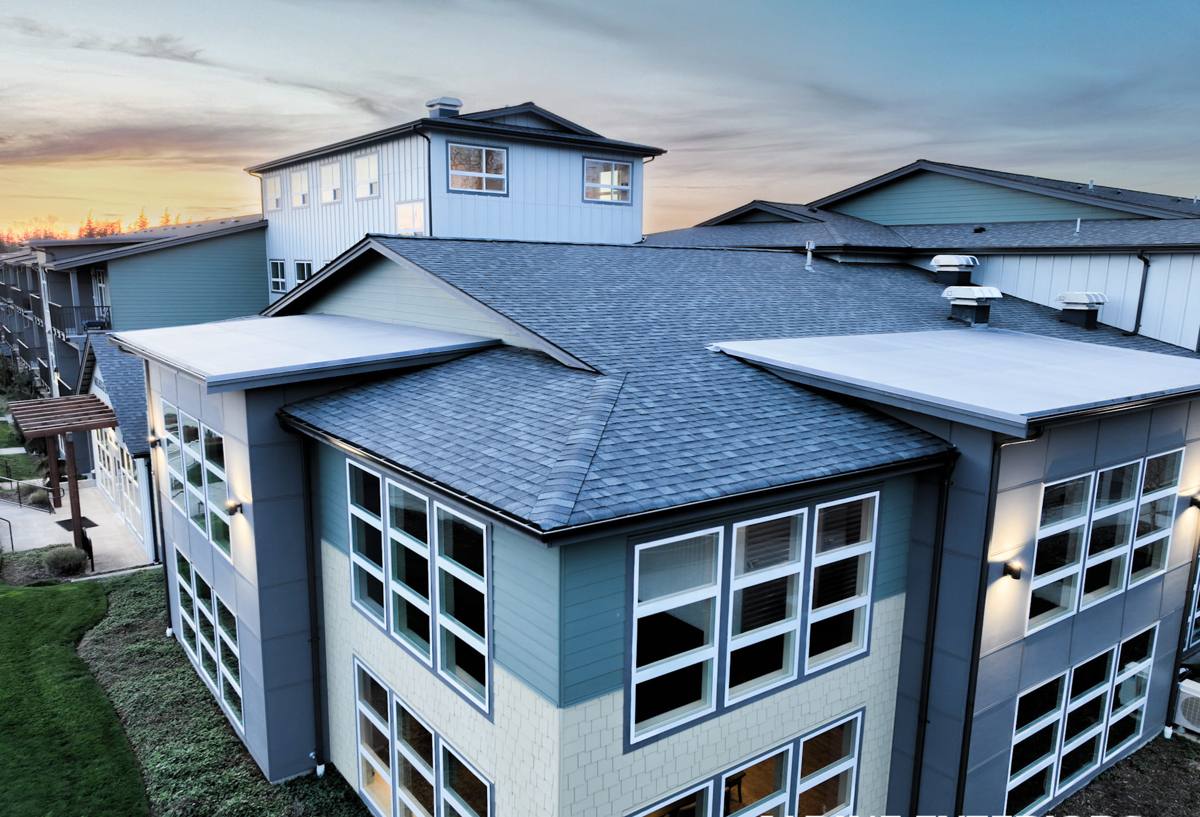
What Makes This Neighborhood Hard on Roofs
Heavy Tree Cover and Shade
Shaded roof sections dry out slower than sun-exposed ones, and slower drying is exactly what moss, lichen, and algae need to get established. Needles and leaf litter also collect in valleys and behind chimneys, holding water against the roofing material long after the rest of the roof has shed it. Left alone, that debris becomes a dam that sends water sideways under shingles instead of down and off the roof.
Moisture That Doesn't Let Up
Whatcom County's wet season runs long, and the humidity that hangs around a lake environment stretches it further. Roof decking that stays damp for weeks at a time is more prone to soft spots, and repeated freeze-thaw cycles in the colder months can wedge open shingle tabs, nail heads, and flashing seams that were already borderline. A leak that shows up in January is often the result of small movement that started back in November.
Wind-Driven Rain at Edges and Valleys
Storms coming off the water don't just fall straight down — they push rain sideways into eaves, valleys, and anywhere two roof planes meet. Those are the spots where a roof depends most on correct flashing and shingle lap, and they're the first places to leak when installation or repair work cut corners.
Common Roof Repair Calls We See Around Lake Whatcom
The type of repair a roof needs usually comes down to what it's covered with. We see all of the following in this area, and each one fails in its own way.
Composition Shingle Roofs
The most common call is moss or algae that has lifted shingle tabs enough to let wind-driven rain underneath, along with granule loss on older roofs and nail pops that show up as small raised bumps or early leaks. Valleys on shingle roofs also take more wear than open field areas because that's where water concentrates.
Cedar Shake Roofs
Cedar shake is common on older homes in this area, and it needs a different kind of attention. Individual shakes split, cup, or curl over time, moss holds moisture directly against the wood instead of shedding it, and ridge caps are usually the first place wear shows up. Shake repair is about replacing the compromised pieces without disturbing the surrounding courses, which takes more care than shingle work.
Metal and Low-Slope Sections
Porches, additions, and mudroom roofs around here are often metal or low-slope material, and the usual issues are fastener backout, sealant that has dried and cracked at seams and penetrations, and rust starting at cut edges. These sections are small but they're common leak sources because they're often tied into a different roof plane at an odd angle.
What a Correct Repair Actually Involves
A lot of roof "repairs" are really just surface patches — a bead of sealant over a visible gap, or a quick moss wash with no follow-up. That buys a season, maybe less, and doesn't address why the problem started. A repair done right generally includes:
- Removing the damaged material back to sound decking, not just covering over it
- Replacing underlayment or ice-and-water membrane at valleys, eaves, and other vulnerable points, not just the visible shingles or shakes
- Correcting flashing laps and fastener placement so water sheds the way it's supposed to, rather than resealing a flashing that was installed wrong in the first place
- Matching material type, profile, and color as closely as possible so the repair doesn't stand out or perform differently than the surrounding roof
- Treating moss and algae at the root rather than just cleaning what's visible, so it doesn't return to the same spot within a year
Skipping any of these steps doesn't save real money — it just moves the cost of doing it right down the road, usually alongside a bigger repair bill once water has had more time to work its way in.
Repair or Replace? What We Look At
Not every roof problem calls for a full replacement, and not every leak can be solved with a patch. We look at the whole picture before recommending either one.
| Factor | Points Toward Repair | Points Toward Replacement |
|---|---|---|
| Roof age | Well within expected lifespan for the material | Near or past the material's typical service life |
| Extent of damage | Isolated to one section, valley, or penetration | Spread across multiple sections or slopes |
| Decking condition | Solid, dry decking under the affected area | Soft, delaminated, or repeatedly wet decking |
| Moss and staining history | First occurrence or recently treated | Chronic, returning moss despite past treatment |
| Budget and timeline | Targeted fix needed now, replacement plannable later | Repeated repairs already adding up to replacement cost |
Where a roof falls on this table depends on an honest inspection, not a guess from the ground — which is why we walk the roof before giving a recommendation either way.
Our Process, From Call to Cleanup
- Initial assessment. We talk through what you're seeing — a stain on the ceiling, moss on the north slope, a missing shingle after a windstorm — and get a rough sense of what we're dealing with.
- On-site inspection. We get on the roof and, where accessible, check the attic or decking underneath. Leaks often show up somewhere different than where the water actually entered, so this step matters.
- Written scope and options. You get a clear explanation of what's causing the problem and what fixing it correctly involves, in plain terms, before any work starts.
- The repair itself. We remove damaged material, address the underlying cause, and rebuild with matched materials and correct flashing detail.
- Cleanup and haul-away. Old material, moss debris, and fasteners are cleared from the roof, gutters, and ground before we leave.
- Final walk-through. We show you the completed work and answer any questions before calling the job done.
Why a Crew That Already Works Lake Whatcom Matters
Roof repair in a shaded, lake-adjacent neighborhood is a different job than roof repair on an open, sunny lot across town, and a crew that works this area regularly recognizes the pattern faster. We know which roof ages and materials are common in this neighborhood, which failure points tend to recur given the shade and moisture here, and how to work around the driveway access and tree-lined lots that are typical in this kind of setting. If your property falls under community association exterior guidelines, we're used to working within those requirements rather than treating them as a surprise mid-project. That local familiarity translates into fewer surprises, a more accurate first estimate, and a repair that's built for the conditions it actually has to survive rather than a generic fix.
Simple Maintenance That Extends a Repair's Life
A correct repair holds up a lot longer with a little regular attention, especially in a climate that gives moss and moisture every advantage. Homeowners can stay ahead of most problems with a short seasonal routine:
- Clear valleys, gutters, and downspouts each fall before the heavy rains set in
- Trim back overhanging limbs that keep roof sections shaded and slow to dry
- Schedule moss treatment before spring growth picks up, not after it's already spread
- Check gutters periodically for granule buildup, which signals shingle wear
- After a major windstorm, look for lifted or missing shingles from the ground
- If you can safely access the attic, check for daylight, staining, or damp insulation after heavy rain
None of this replaces a professional inspection, but it catches the early signs before they turn into a bigger repair.
If you're dealing with a leak, visible moss, or storm damage on a Lake Whatcom roof, we're happy to take a look and give you a straight answer on what it needs. Reach out for a free, no-pressure estimate using the form below.